
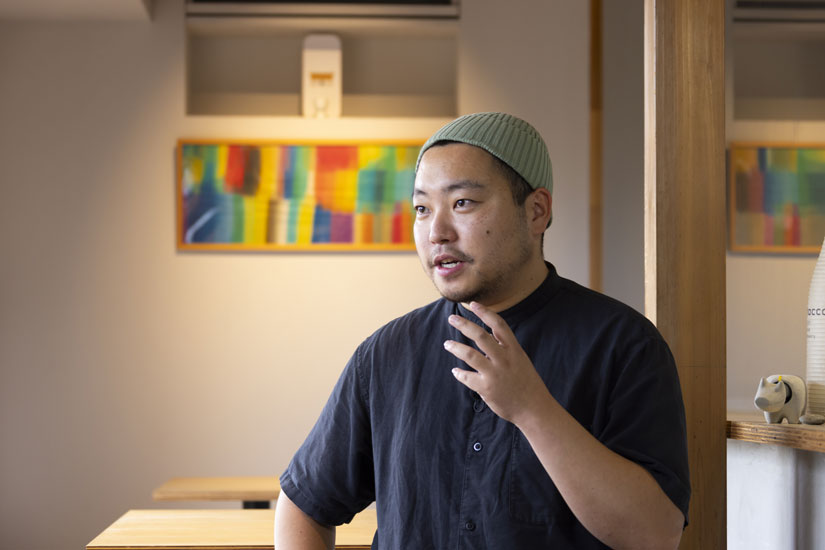
Pure clarity and a first taste of deliciousness. The craft saké brewed by haccoba-Craft Sake Brewery in Minamisoma, Fukushima Prefecture, instantly captivates you. The representative of the brewery, Taisuke Sato, lightly enjoys the experimental and free brewing of sake in the area he has moved to. The young brewer has a big dream to go global with craft saké and a passion for the region’s reconstruction after the Great East Japan Earthquake.
Sake brewing from scratch in Minamisoma, where reconstruction efforts are underway
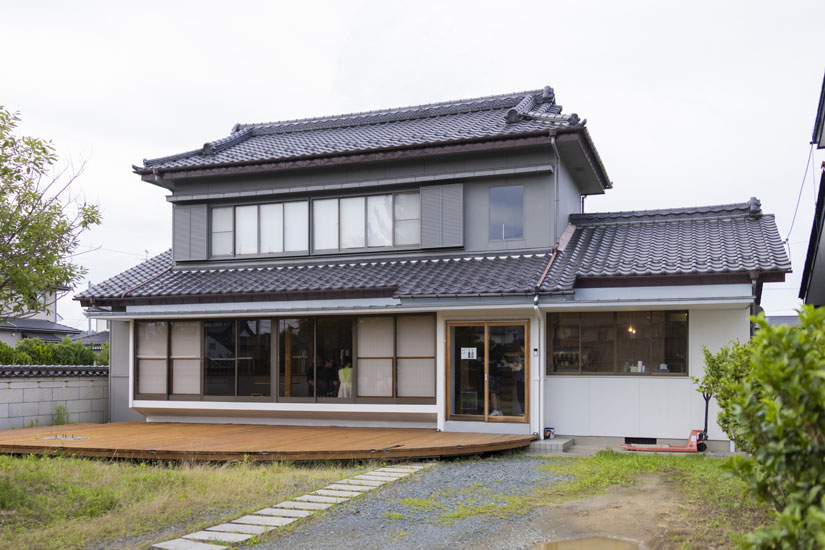
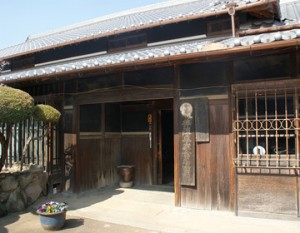
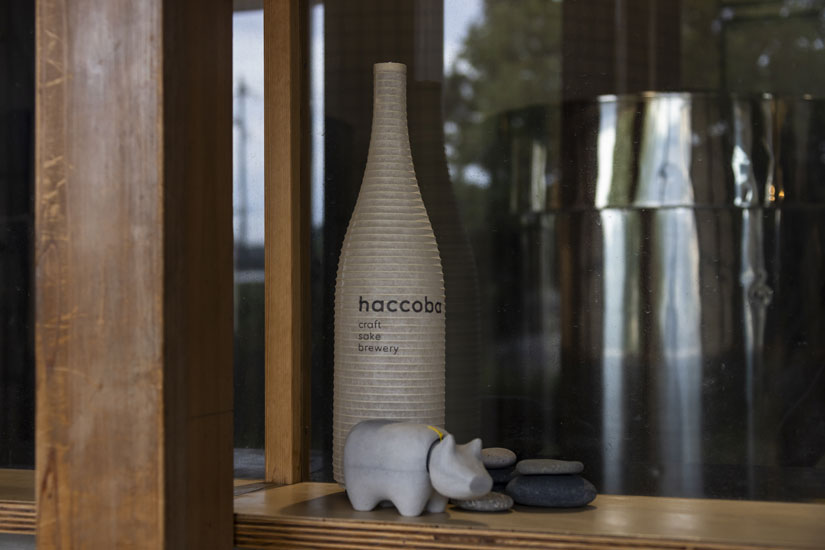
haccoba-Craft Sake Brewery” (haccoba) was established in February 2021 under the concept of “a sake brewery that grows together. The brewery, which was renovated from a 50-year-old house, is located in Odakaku, Minamisoma City, Fukushima Prefecture, an area where all residents were temporarily evacuated due to the nuclear power plant accident after the Great East Japan Earthquake in 2011.
In fact, my birthday is March 11. I was living in Saitama at the time of the disaster, and every year on my birthday, I feel frustrated that I have done nothing to help the affected areas, and I wanted to someday engage in activities that would help the recovery of the region,” he says.
Enthralled by the Beauty of Fermentation Culture, Entered the Sake Brewing Business
After getting hooked on sake as a university student, Mr. Sato worked for an IT company after graduation, and later found a “sake start-up” at a company he changed jobs at. There, he learned that he, too, could create a new sake brewery, and he set his sights on opening a sake brewery where he could make his living from the sake he loves. The reason for this, he says, “was because I was impressed by the beauty and depth of fermentation culture through my favorite sake.
In opening the business, he was once again impressed by the “world’s best tasting sake” after drinking it at an izakaya. He visited Abe Shuzo (Kashiwazaki City, Niigata Prefecture), the brewer of REGULUS sake, which is known for the Koshino-Oyama and Abe series of sake, and learned sake brewing techniques. After one year of training, he established his own sake brewery at his current location at the age of 27.
Sato was positive about starting from scratch as a local sake brewery, and his encounter with Tomoyuki Wada, the head of Odaka Workers Base, who had been working to create a business in Odaka Ward, Minamisoma City since 2014, also helped accelerate the launch of haccoba. Mr. Wada introduced us to this house when we were struggling to find a good property for a sake brewery,” said Mr. Wada.
He met many people who were sincerely involved in the regional development and reconstruction of the areas affected by the nuclear power plant disaster, and the fact that there were many people who supported him was also a deciding factor in his decision to choose this location. The support for starting a business from the local government also brought a sense of security. In addition, his wife, Mizuki, is from Iwaki City, Fukushima Prefecture, which made him feel more familiar with the area.
Today, in Minamisoma’s Odaka Ward, in addition to residents who have lived there for a long time, young entrepreneurs from all over the country have come to start their own businesses, and new business and community development efforts are underway.
Craft saké,” in which the maker’s individuality shines through, is also appealing in its range.
Under the Sake Tax Law, the craft saké produced by haccoba is classified as “other brewed sake” rather than “sake,” and thus cannot be called “sake. In addition, currently, sake production licenses are rarely issued to new brewers, so the younger generation of sake brewers is finding a way to make their dreams come true in the craft saké business. Mr. Sato is one of them.
However, the Sake Tax Law will be revised in 2020, and new sake production licenses will be issued only for brewing sake to be sold for export, not for domestic distribution in Japan. We expect that these trends will lead to changes in laws and regulations in the future,” he said.
Craft Sake, a New Genre of Sake Growing in Popularity
Sake (sake) is made from strained “moromi,” a fermented mixture of rice, rice malt, and water, and there are limits to what other ingredients can be used, such as brewer’s alcohol and sugar. The process of making sake is different from that of sake.
According to the Craft Sake Brewery Association, “craft saké” is a new genre of rice-based sake that is based on sake (seishu) production technology and incorporates processes that cannot legally be employed in conventional sake. The number of sake breweries producing craft saké has been increasing in recent years, and the quality of the sake has improved dramatically, steadily expanding its popularity and power.
The strength of craft saké is the freedom to take on new challenges. Our brewery focuses on direct sales, so we can be adventurous with sake that would normally be considered difficult to sell, and we can make it fruity, dry, or smoky depending on the secondary ingredients we add, such as herbs, hops, and fruit.
A Modern Take on Folk Sake Making
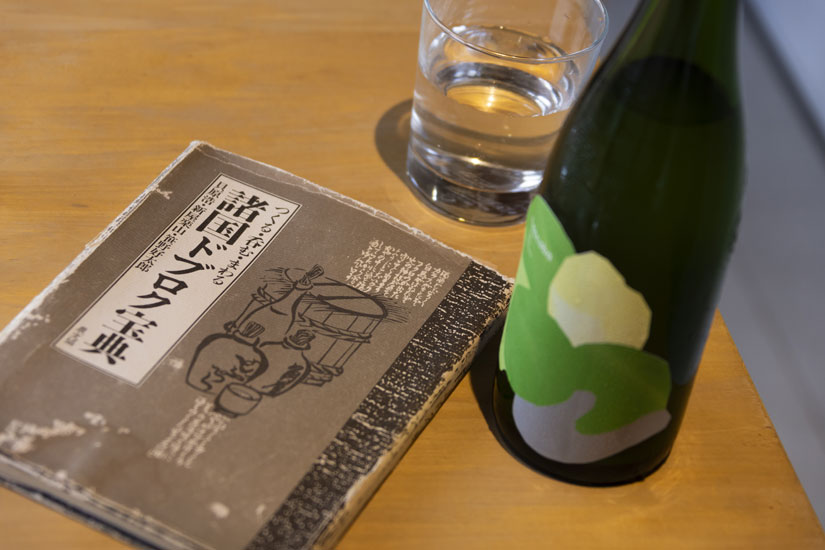
There was once a time in Japan when each household enjoyed “dobrok” (the original form of sake) made from a variety of ingredients. However, since sake brewing became licensed in the Meiji era (1868-1912), it has become difficult to freely make sake. One of the purposes of haccoba’s sake brewing was to express such a folkloric way of sake making in a modern way.
One of the books that Sato loves to read and cherishes as a reference for his recipes is “The Do Brokk Treasured Book of Countries. I was intrigued by the unique and free ways of making it, such as using calahanasaw, which grows in the mountains of Tohoku, and using fruits such as millet, Japanese millet, and mountain grapes, in addition to rice,” he says. The idea of starting a sake brewery in a private home was also an extension of the home brewing process, he says.
A Small Brewery Enjoying Evolution and Change
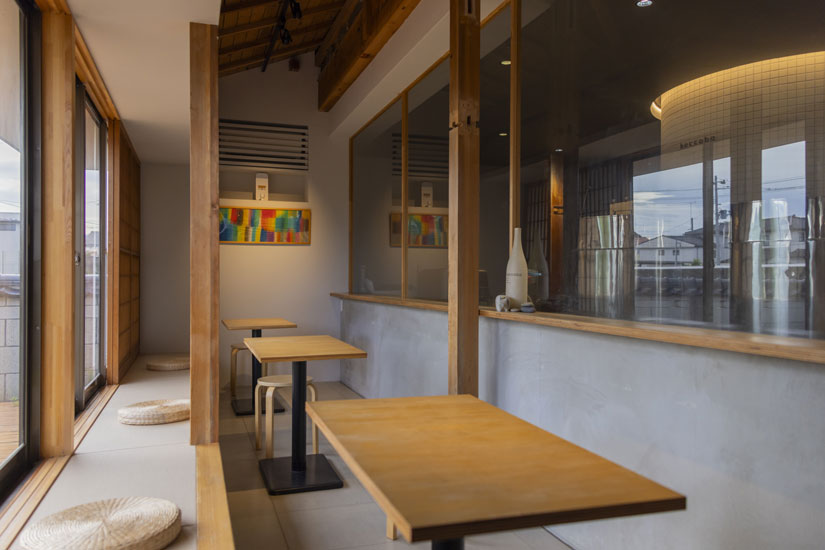
Located in Odaka-ku, Minamisoma, is a small, 40-square-meter glass-fronted brewery, an adjoining pub (open Friday, Saturday, and Sunday by reservation only), and a store with a wide variety of products. The brewery has three 300L thermal tanks, one for brewing and one for storage, from preparation to completion.
Due to the steady increase in orders for new products since its establishment, the company is building a brewery in the neighboring town of Namie in 2023 and making sake at two locations. The standard time from preparation to completion is about one month. As soon as the tanks are empty, they begin the next round of brewing, releasing new products and collaborative products as they go along.
This year, we are trying our hand at old sake for the first time,” says Sato, smiling happily, “by keeping a close eye on the fermentation process and letting the sake mature. Always remembering to evolve and change, he takes on the challenge of sake brewing.
Passing on the baton from the producers to create safe sake with organic rice
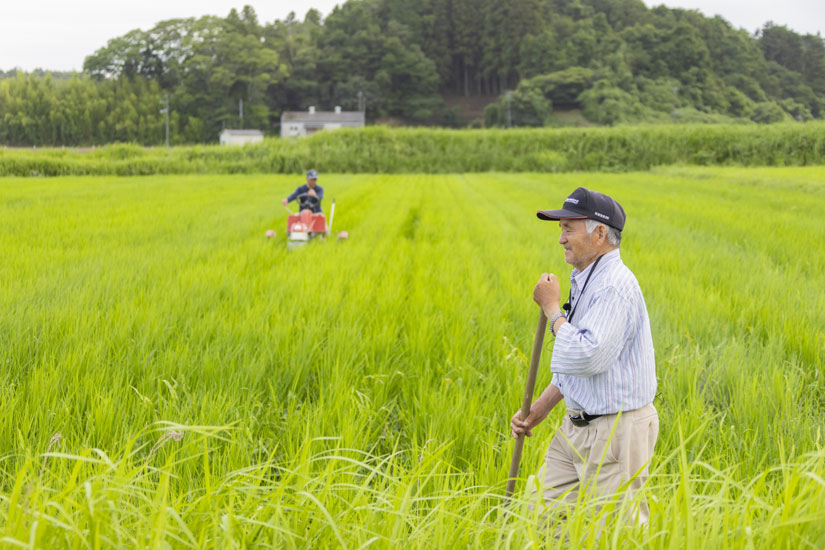
The rice used as a raw material is one of the specialties of the company. The rice used includes “Omachi” from Nemoto Organic Farm in Minamisoma City, “Amanotsubu” from Toyoda Farm, and “Sasashigure” from Tsuchiya Farm in Inawashiro Town, all of which are contract farmers.
Beautiful ears of rice were waving in the wind in the rice paddies of Nemoto Organic Farm in Odaka-ku, Minamisoma City. Koichi Nemoto, the owner of the farm, is currently working on organic farming with his son, Gomi.
Nemoto’s rice is so delicious that I feel it naturally makes sake taste good as well,” he said. I want to pass on the baton by expressing the precious rice that is grown organically and deliciously to the maximum extent possible in the form of sake without wasting it,” says Sato.
Koichi says calmly, “It’s been 70 years since I started growing rice, but every year I treat it as if I were a first grader. Mr. Sato moved to the area and started a sake brewery, which uses the rice we grow, and also employs young local people, which helps to revitalize the community. As a sake brewery rooted in the community, haccoba is already happily connected to a multicultural and multigenerational community.
Beautiful Sake Brewed with Originality Enriches and Adds Color to Everyday Life
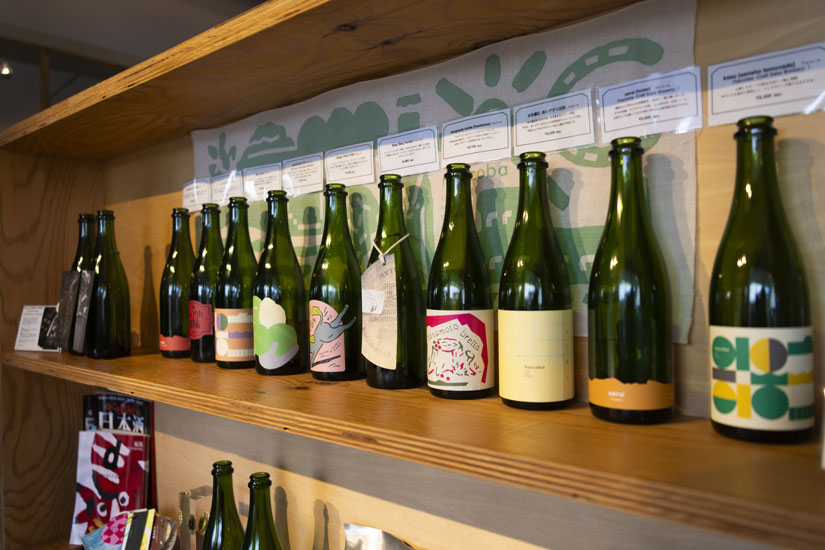
Starting with “Hananuta Hops,” a standard sake since its establishment, haccoba has released a succession of unique flavors and collaborative products such as “kasu [sansho lemonade],” “haccoba coffee shop,” and “Shokolashu,” which have been attracting attention.
Most of the products are 500 ml in size. The unique and cute labels have many fans and are also appreciated as gifts. The alcohol setting is set at 10-13℃ because they want even wine lovers to enjoy their wines casually. We base our wines on taste and quantity so that they can be enjoyed with meals. He often collaborates with people from other industries, sharing ideas and creating recipe designs, ultimately aiming to create an enjoyable experience through alcohol.
A taste with depth combined with native plants and trees of Fukushima
haccoba has steadily grown into a sake brewery whose name is always mentioned when “craft saké” or “botanical sake” is mentioned. haccoba’s deep flavor, which combines native plants and trees of Fukushima, is attracting attention both in Japan and abroad.
The standard sake “Hananuta Hops” is a bottle that combines the refreshing citrus aroma and clear sweetness of rice by crossing “hanamoto,” a fantastic production method handed down in Tohoku, and “dry hops,” a beer technique that extracts a gorgeous aroma. In addition to aroma hops, the brewery is particular about the use of calahanaso, a type of vine grass also known as oriental hops. The hops are boiled from a dried state, and the boiled juice is added to the brewing water to make the malt. The hops are also soaked in the tank during the latter stages of fermentation, leaving a strong aroma in the finished product. The style is a unique flavor that has been perfected by combining craft beer production methods with an awareness of reproducing the “Hana-Hashiro” style.
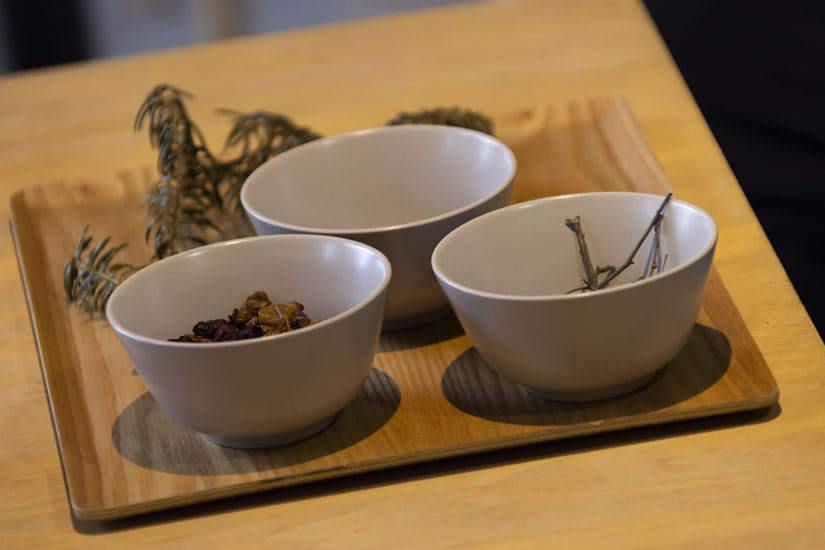
In 2024, the company will introduce a new series of standard sake called “zairai (indigenous). Brewed with a variety of native ingredients, the sake is made with local herbs encountered with mountain owners in the mountains of Fukushima Prefecture. For example, kaya leaves, cedar bokkuri, aburachan branches, and mugwort flowers are fermented together with rice. The finished product has a gentle aroma, a good balance of coolness and astringency, and a pleasant lingering taste.
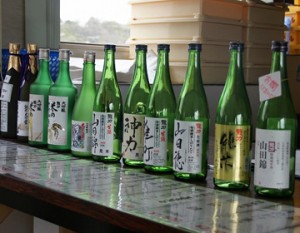
More than 6 to 10 varieties are always available at haccoba’s store and online store, and can also be purchased and enjoyed at stores in Tokyo.
From Fukushima to the world. Challenge to open a brewery in Belgium
The next goal of haccoba, which expresses craft saké through free brewing, is to expand into Belgium. We have been working on a plan to establish a brewery in Belgium since the very beginning. Belgium is a region where each region has its own recipe for beer, and they have built a culture similar to the Japanese dobrok, so I would like to take on the challenge of creating a sake that is a fusion of our drinks,” he says enthusiastically.
With a free spirit that is reminiscent of the folkloric dobrok of the past, haccoba is aiming for the world, and we can’t wait to see what kind of delicious sake they will produce.