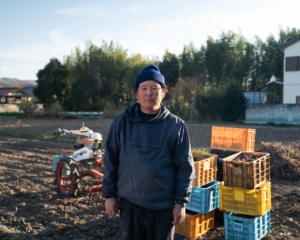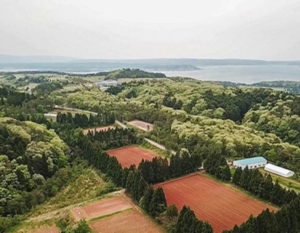

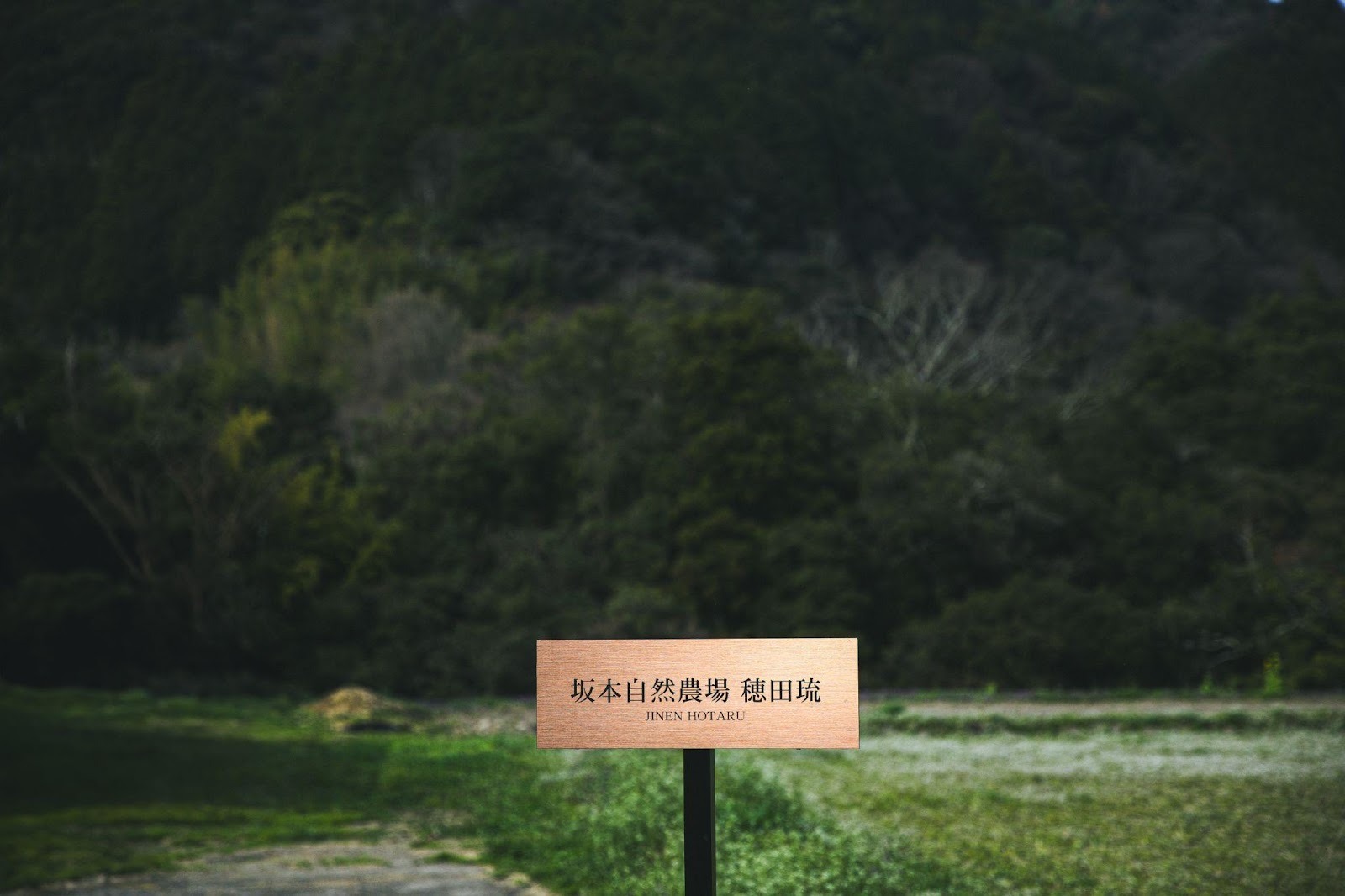
The Amataki-Ondan Terraced Rice Fields in the Ondan district of Kawauchi, Toon City, Ehime Prefecture, designated as a “Connecting Terraced Rice Field Heritage.”The “Hotaru Mai” rice grown here has received high acclaim, including consecutive Gold Awards in the 22nd (2020) and 23rd (2021) editions of the “International Rice Taste Analysis and Appraisal Competition – International Comprehensive Division.”
Farming to preserve the terraced field landscape
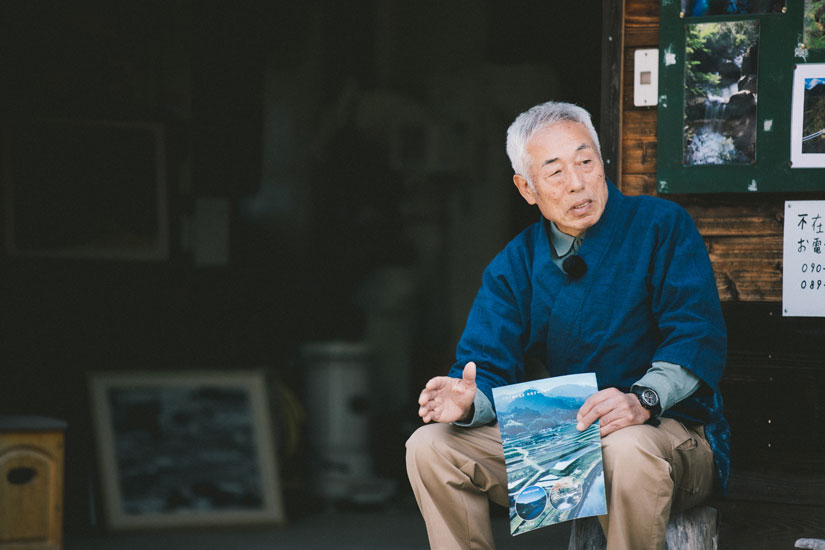
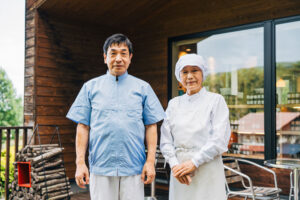
My family home is a farm in Toon City that cultivates rice and shikimi (an evergreen tree used in Buddhist ceremonies). In my youth, I strongly yearned for the city and had no intention of taking over the family business. After graduating from university, I ended up working for the local Toon City government. While working in the Agriculture and Forestry Promotion Division, I became deeply involved in community activities, including the maintenance of terraced rice fields. There, I faced the reality of agriculture declining year by year and the loss of the landscape of the past.Onda is a small village of about 40 households. Its farmland totals just over 10 hectares. After the war, the entire Kawauchi area had about 80 hectares, but currently only about 50 hectares are cultivated. Driven by the desire to “preserve the terraced rice field landscape,” he took early retirement at age 58 and began seriously pursuing rice farming.
Shortly after starting rice cultivation, he had agricultural cooperative staff measure the taste score of his rice. Unexpectedly, it scored a high 88 points. This high score from his first harvest gave him great confidence that the terraced fields of Amataki and Onda were indeed a place capable of producing delicious rice.
Clear Streams and Terraced Fields Nurtured by Forests and Valleys
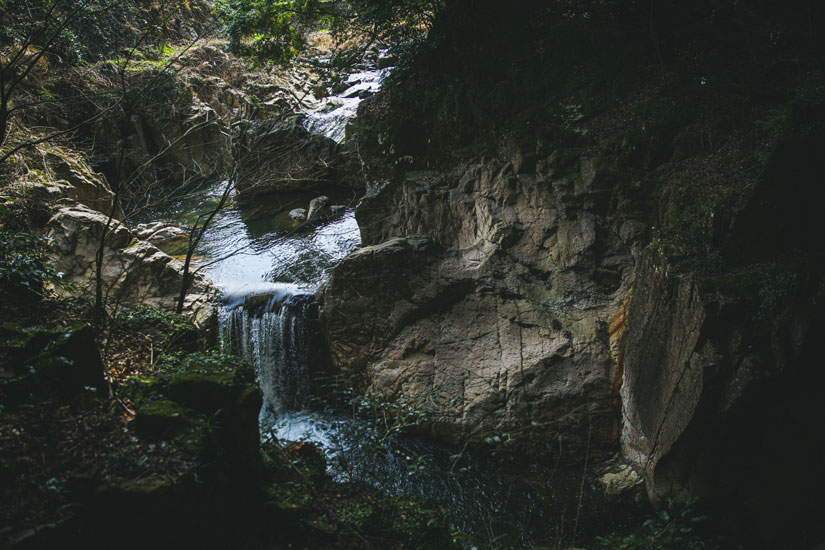
The Onda terraces possessed all the conditions necessary for growing delicious rice. Located at an elevation of 250 meters, they experience significant temperature differences between day and night and enjoy excellent sunlight. Furthermore, the soil has good water retention properties, making it well-suited for rice cultivation. Above all, the area boasts exceptional water quality.
Right beside the farm lies a small waterfall called Amataki, once a sacred site for rain-praying rituals. Other abundant water features dot the landscape, such as Shirai Falls, Karakai Falls, and Kubo no Fuchi. Nestled in mountains surrounded by broadleaf forests, these sources provide the paddies with pure mountain water rich in nutrients and minerals.A testament to the purity of these streams is Amataki Hotaru no Sato (Firefly Village), located near the terraced rice fields. On summer nights, countless fireflies dance here, offering a profound sense of nature’s abundance.
The Birth of Hotaru Mai Rice
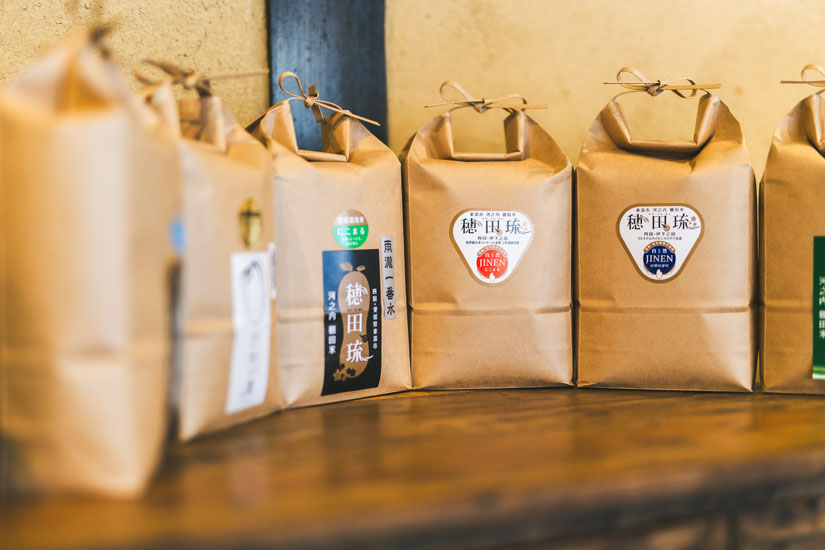
Despite benefiting from a rich natural environment, rice cultivation in terraced fields is not highly efficient due to burdens like grass cutting and damage from harmful birds and animals. To continue, it was necessary to enhance the rice’s value and establish it as a brand. Named “Hotaru Mai” (Firefly Rice), meaning “rice shaped by the landscape,” it was first entered in 2013 into Japan’s largest international rice competition, the “Rice Taste Analysis and Appraisal Contest.”This competition evaluates rice’s deliciousness from two perspectives: numerical analysis of moisture, protein, amylose, etc., using specialized machinery; and sensory evaluation of taste perceptions like umami, sweetness, and richness when eaten. “It was sweet. At first, it was nothing,” he recalls of that time. Afterwards, he traveled to the competition’s venue, visited farmers nationwide, and learned techniques through dialogue with many producers.
Transitioning to reduced-pesticide and organic cultivation, leading to a gold medal
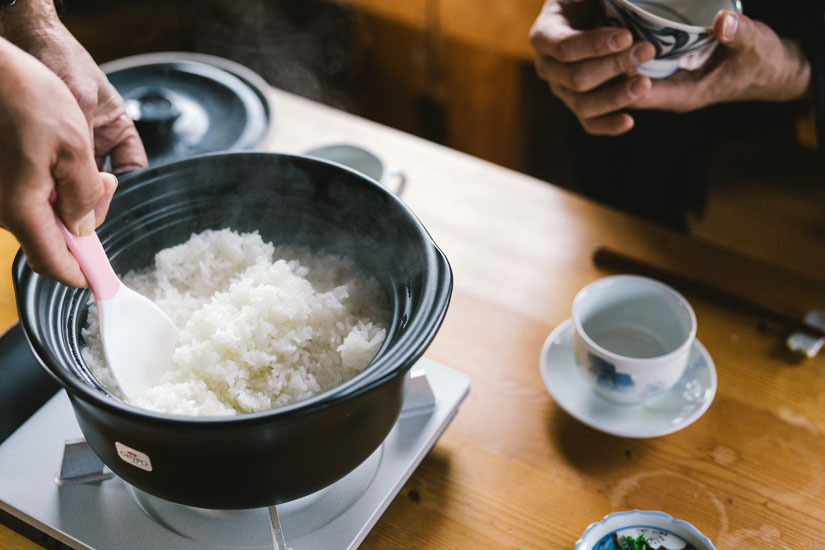
“Hoda Ryu Rice” began with conventional farming using pesticides and chemical fertilizers. Through repeated exchanges with farmers nationwide, interest in reduced-pesticide and organic farming gradually grew.Through extensive analysis—including cultivation methods that suppress nitrogen in fertilizers and soil preparation using organic mineral fertilizers—he aimed for delicious rice with low protein content and excellent stickiness. Rice with less protein allows starch to blend well with water, resulting in fluffy, soft grains with a pleasant texture. “I was good at collecting and analyzing data. I absorbed the subtle differences unique to each farmer and refined them in my own way.”
After several years of organic farming, in 2020 and 2021, the “Niko Maru” variety from Sakamoto Natural Farm’s “Hotaru” rice won the Gold Prize in the International Comprehensive Division at the “Rice Taste Analysis and Appraisal Contest.” Following the taste value assessment at the contest, a taste index evaluation measuring the “sticky layer” is conducted.The sticky layer refers to the viscous layer formed on the surface of rice grains when starch dissolves during cooking. Rice with a robust sticky layer exhibits greater luster, stickiness, mouthfeel, and perceived sweetness. “The taste value increased after switching to organic farming and eliminating chemical fertilizers. It didn’t suddenly blossom after going organic; it was gradual. We’ve gotten closer to the flavor we pursued.”
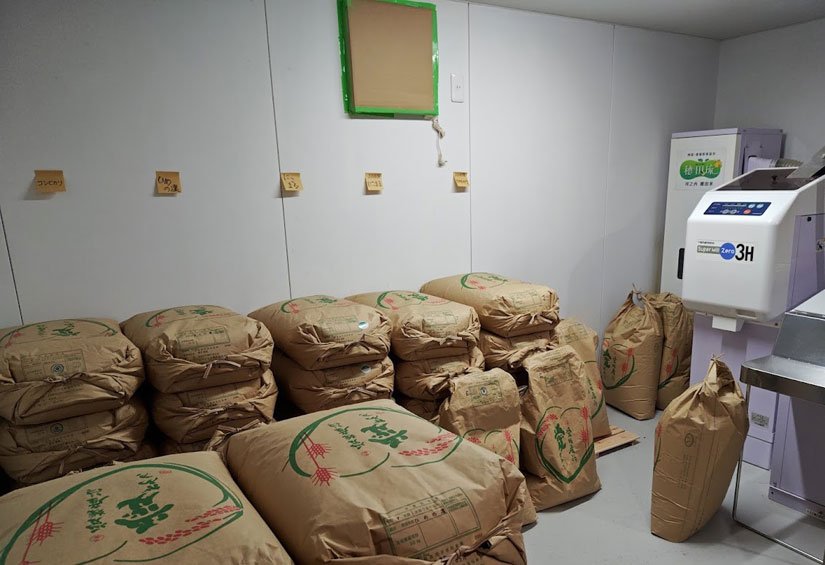
“Hoda Ryu Rice” is rice meticulously crafted for taste, safety, and quality. Quality control extends all the way to the consumer.The rice is milled in a climate-controlled milling room using cold milling and stored year-round in refrigerated warehouses maintained below 14°C (57°F). This prevents condensation from forming during winter due to temperature differences between the interior and outside air. Furthermore, even the rice bran used as fertilizer, which is prone to insect infestation under normal conditions, is carefully stored under temperature control.
JINEN (Nature): Where Nature and People Coexist
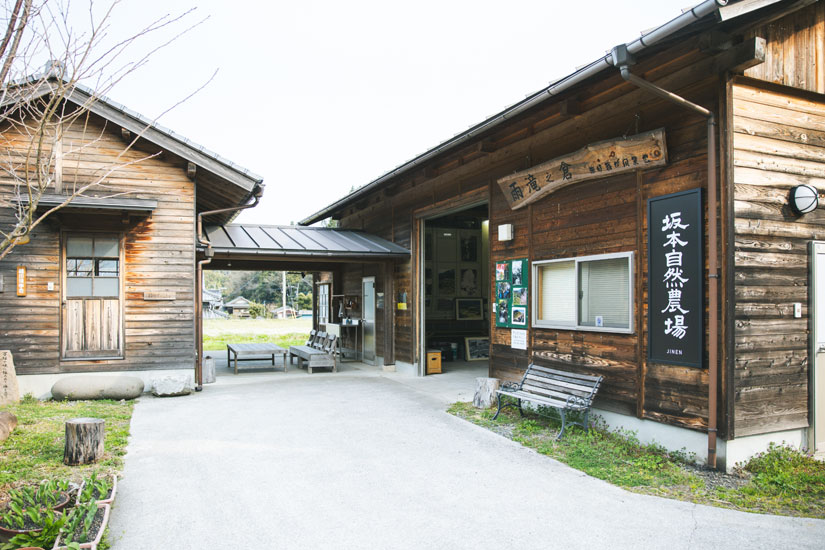
Currently, “Hoda Ryu Rice” cultivates four varieties across six brands, divided into two types: “Rice with 80% Reduced Pesticides (compared to Eco Ehime standards)” and “Pesticide-Free Rice · JINEN (Nature)”. Both are grown without chemical fertilizers, using only organic fertilizers that return to the fields, such as straw, rice bran, and rice husk charcoal.
The unique brand “JINEN (Nature)” embodies the desire to cultivate rice alongside all life forms inhabiting this land, including microorganisms and flowers blooming along the field borders. “Rice should grow naturally. Instead of forcibly adding unnecessary fertilizers, we gently supplement only what is lacking. That is our authentic approach to rice farming. We want to produce rice worthy of this landscape,” they explain.
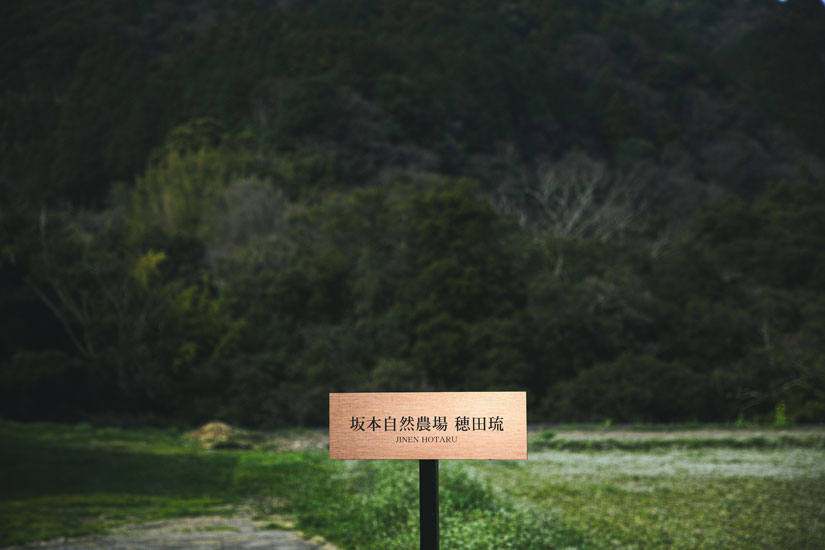
One variety within JINEN, “Ondasennen Rice,” is cultivated using natural farming methods. It employs “single-seedling cultivation,” relying solely on self-harvested seeds and completely avoiding fertilizers and chemicals. Every step is done by hand, truly nurtured by the power of people and nature alone.Due to its mountainous cultivation, the yield is extremely low, about 4 to 5 bales per tan (approx. 1000m²). While modern farming typically yields 8 to 10 bales per tan on flat land, this significantly lower harvest forms the foundation of Sakamoto’s rice-growing cycle.
Rice Farming in Terraced Fields: Restoring Pride to Rural Communities and Connecting to the Future
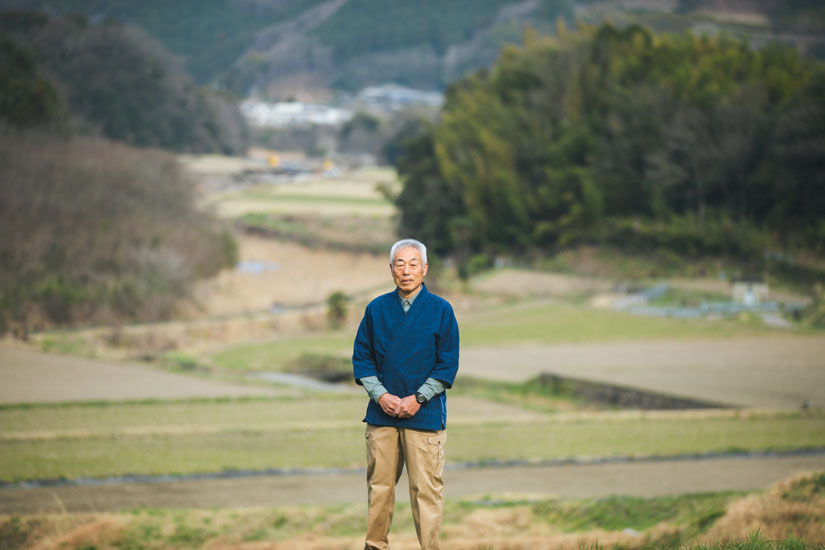
The reality is that almost no new farmers are starting rice cultivation. Utilizing old, narrowly structured terraced fields as farmland presents many challenges, including the maintenance of irrigation channels. What began as rice farming driven by the desire to “protect this landscape” has now expanded beyond a personal challenge into a hope for the entire region.
Sakamoto Natural Farm Hoda Ryu established the “Hotaru Club,” a rice ownership program, creating a system where people can engage with rice farming from the very beginning. Participation is possible even with small tasks like weeding, allowing people to be involved in rice farming as a side job without needing initial investment or farmland. Participants, especially parents with children, are particularly conscious of creating “a future where children can safely eat rice without worry.”Learning, growing, and eating. Through this experience, they feel that having an environment where rice can be grown is a step toward protecting children’s futures.
“The most important thing is restoring pride to the rural community. We need to be able to take pride in the fact that we are the ones creating this landscape.” To that end, they spare no effort in enhancing the value of the rice grown here.In the “Amadake Onda Terraces,” an environment ideal for growing delicious rice, maximizing the potential of this land’s natural resources holds the possibility of developing a globally competitive rice brand. “It might be the generation after mine that makes it happen. Passing this legacy forward is my dream now.”
In December 2025, the group, previously operating as a production and sales association, incorporated as a company, establishing “Hoda Ryu Co., Ltd.” This move allows the company to aim for business expansion, focusing on broadening sales channels with an eye toward exports, processing agricultural products, and even engaging in satoyama conservation activities. It marks the step into a phase dedicated to passing on the region’s resources to the next generation.