

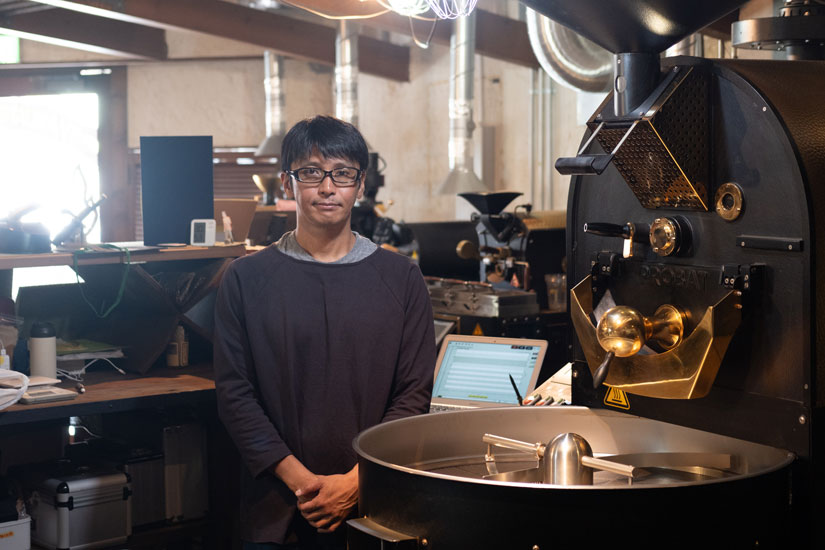
Okinawa has long been influenced by American culture, and coffee has been a beloved staple there for generations. Discovering the story behind Okinawa’s “coffee beans” is another way to experience a new side of the island. Yoshiyuki Nakamura, owner and roaster at “Mame Pole Pole,” shared with us the appeal of Okinawan coffee as it emerges into the spotlight.
To Koza, and Then to the Highlands
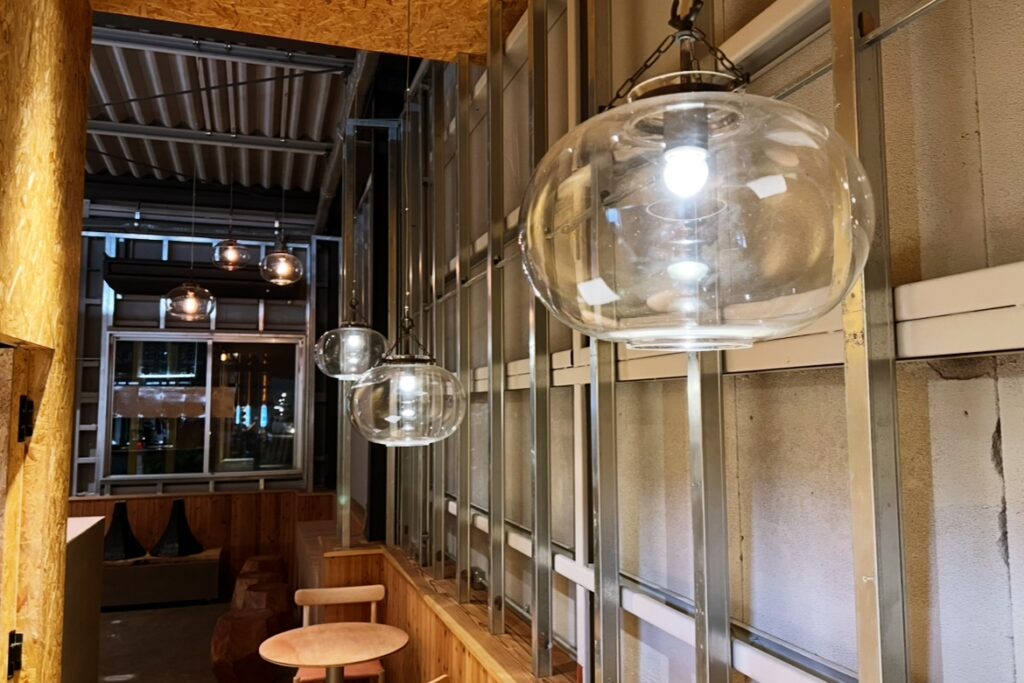
“Coffee isn’t just bitter; it can have chocolatey or fruity notes—it’s a diverse and fascinating world,” says Nakamura. Since opening his shop in Okinawa City, located in central Okinawa Prefecture, in 2010, he relocated once to accommodate a new roasting machine, and in 2024, due to the aging of the original building, he established a new shop in the Takahara district of the same city.
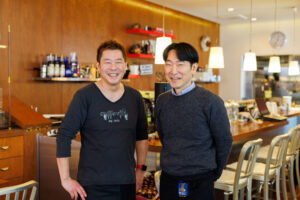
The old shop in Koza was built on the site of the New York Restaurant, which opened in the 1950s and was the first in Okinawa to serve Western-style cuisine. The design made use of that charm, allowing visitors to feel the history. The original sign and blue rust were deliberately left as they were, the roaster sat majestically at the back of the shop, and the aroma that lingered inside made you want to breathe deeply.Mr. Nakamura himself was particularly fond of the space, where the balance between old and new felt just right, allowing visitors to experience the atmosphere of that era—a blend of Okinawan and American cultures. Naturally, that same aesthetic has been carried over to the new shop in Takahara.
Roasting Skills Recognized Worldwide Through Dedication
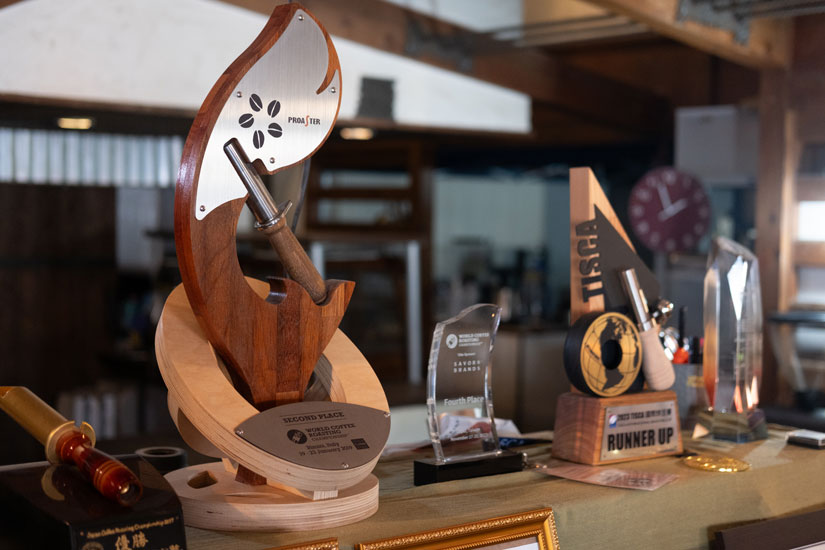
Mr. Nakamura was deeply impressed by Vietnamese coffee he encountered during his college graduation trip and gained experience as a barista after returning home. Being the type of person who, once he starts something, is determined to master it, he taught himself through repeated trial and error.Seeking roasting techniques unavailable in Okinawa, he traveled all over Japan. It was during this period of training that he began competing in the “Japan Coffee Roasting Championship” (JCRC). He won the JCRC in 2017, and subsequently represented Japan at the WCRC (World Coffee Roasting Championship) held in Italy in 2019, where he took second place in the world on his very first attempt.
As a roaster, Nakamura focuses on creating a clean finish and a sweet aftertaste. “Whether it’s a light roast or a dark roast, I take care to ensure the finish ends on a sweet note,” he says. People now travel from all over Japan to seek out Nakamura’s beans.
Bringing Out the Bean’s Character: A Dialogue with Coffee
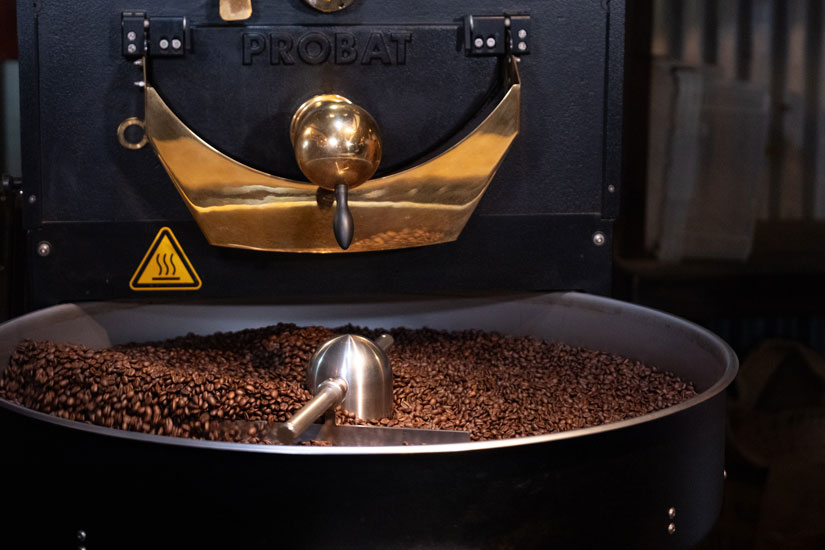
Coffee is a luxury item. Everyone has their own preferred taste, and how the flavor is perceived changes depending on the environment and time of day. As a roaster, Nakamura pursues quality while engaging in a dialogue with the beans in this world without a single “correct” answer, drawing out their potential and individuality.
Even beans from the same variety at the same farm can transform into something entirely different depending on the post-harvest processing methods. For example, sun-drying the beans while still attached to the fruit imparts a rich, berry-like sweetness and body, whereas washing them to remove the pulp brings out a clean, crisp acidity.
Furthermore, the fermentation process—which has garnered attention in recent years—also plays a key role in shaping the flavor. By blocking oxygen and activating microorganisms, complex aromas reminiscent of wine and spices—unseen in traditional coffee—are brought to the fore. Mr. Nakamura says that the appeal of coffee lies in controlling these countless variables to weave the story of each cup.
“Coffee beans, just like us humans, aren’t all the same. Their individuality changes depending on the environment in which they were grown,” says Nakamura.
The roasting time also varies depending on the bean. He explains that he assesses the bean’s condition—such as its size and hardness—to discern its character, visualizes how to finish it, and then determines the roasting method. Depending on the bean’s individuality, not only does the roast level (dark or light) change, but even the recommended way to drink it varies. For instance, if the body is strong, it works well in a cappuccino where it holds its own against the milk.
Farmers take great care during the “processing” stage, which involves extracting the seeds (the part that becomes the coffee bean) from harvested coffee cherries (the fruit) and drying them. Furthermore, the flavors and acidity you experience when drinking the coffee are rooted in the taste of the land where the beans were grown. Because Nakamura values his dialogue with the beans, he confirms where they were born and the environment in which they grew, checking their moisture content and fermentation levels.
As the moisture evaporates, the sound changes.
The beans from “Mame Pole Pole” undergo this relay of care before being roasted in a meticulously selected German roaster.
Okinawa’s World-Renowned Specialty Coffee
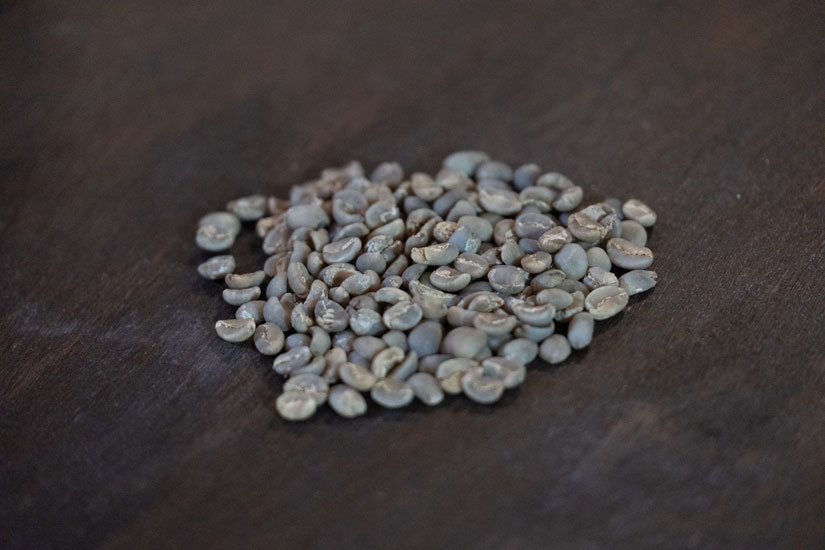
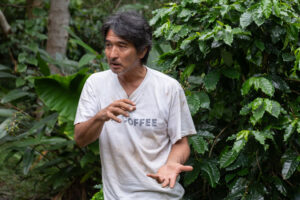
What truly surprises Nakamura is the coffee bean “Akachichi” from ADA Farm, a coffee farm located in the Yanbaru Forest in northern Okinawa—the first in Japan to receive specialty coffee certification.
“Akachichi” derives from “akatsuki,” the Okinawan word for dawn. Mr. Nakamura named it with the hope that this would not just be a passing trend, but a dawn that leads to the future.
The intense acidity and fruity flavor characteristic of high-quality coffee beans are created by temperature fluctuations. These fluctuations harden the beans, locking in sugar and making them sweet. Indeed, coffee is a fruit. However, Okinawa has low elevation and minimal temperature variation.It cannot be said to be blessed with an ideal environment for growing coffee beans, and cultivating specialty coffee was considered difficult. So why was Akachichi grown in Okinawa and certified as specialty coffee? The answer lies in the dedication and passion of Mr. Tokuda of ADA Farm, who is meticulous about the ripeness of every single bean.
“Ensuring that every cup of coffee consumed by the customer has a wonderful flavor and is satisfyingly delicious.”
The essence of specialty coffee, as defined by the Specialty Coffee Association of Japan (SCAJ), lies not only in the quality of the beans but also in thorough management and sustainability from production to extraction.The beans from “ADA Farm,” nestled in the deep forests of Yanbaru, embody this ideal. And the roasting by “Mame Pole Pole” connects the producer’s passion and the breath of the forest to us in the finest possible state. Beans grown in the forests of Okinawa and recognized worldwide are roasted by someone who loves this island, bringing out their unique character. Then, they are carefully brewed using the water of this land.The dedication of these two individuals converges to create the ultimate luxury: “satisfying deliciousness.”
To deliver “a cup of coffee that can only be made here and will astonish the world,” they continue to walk alongside the forest today, pouring their passion into every single bean.