

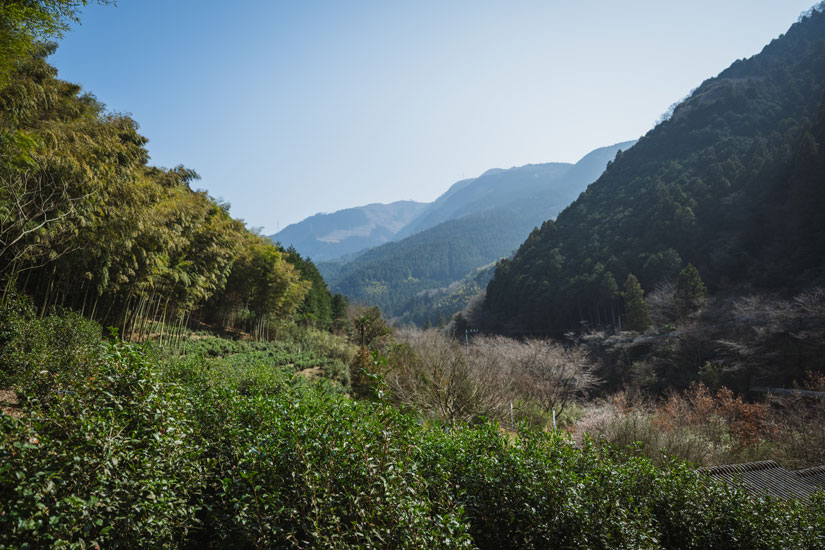
At the foot of Mount Ishizuchi—the highest peak in western Japan—there is a type of tea said to have been introduced by Kōbō Daishi Kūkai. It is called Ishizuchi Black Tea. The Ishizuchi Black Tea Satsuki Association has carried on the traditional production methods that date back to the Edo period, and to this day, every step of the process is done by hand.
One of only four “post-fermented teas” in Japan

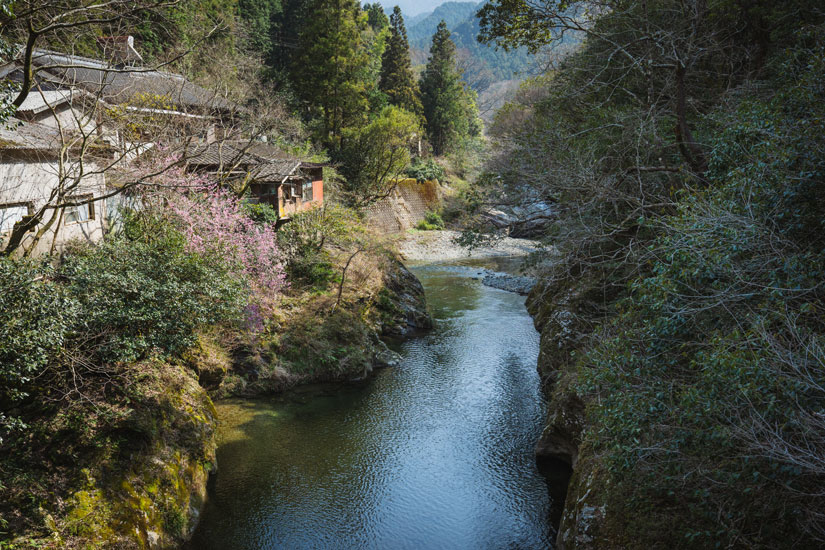
Mount Ishizuchi, the highest peak in western Japan. At its foot lies the Kurose district of Saijō City, Ehime Prefecture. Ishizuchi Black Tea, produced in this region, is one of only four post-fermented teas in Japan, alongside Toyama’s Batabata-cha, Tokushima’s Awa-bancha, and Kochi’s Goishi-cha.
Post-fermented tea refers to tea in which freshly picked tea leaves are immediately heated to halt the activity of oxidase enzymes, after which they are fermented using microorganisms such as lactic acid bacteria and koji mold.
Ishizuchi Black Tea, in particular, is characterized by a rare production method known as “two-stage fermentation,” which involves primary fermentation (aerobic fermentation)—where organic matter is broken down and fermented while exposed to air—and secondary fermentation (anaerobic fermentation), conducted in an oxygen-free environment.
“I’ve heard that, even on a global scale, Goishi-cha and Ishizuchi Black Tea are the only teas confirmed to undergo a two-stage fermentation process,” says Kumi Toda, chairperson of the Satsuki Association. This rarity played a major role in Ishizuchi Black Tea being designated as an Intangible Folk Cultural Property in 2018.
Handcrafted tea production in the mountains during the height of summer
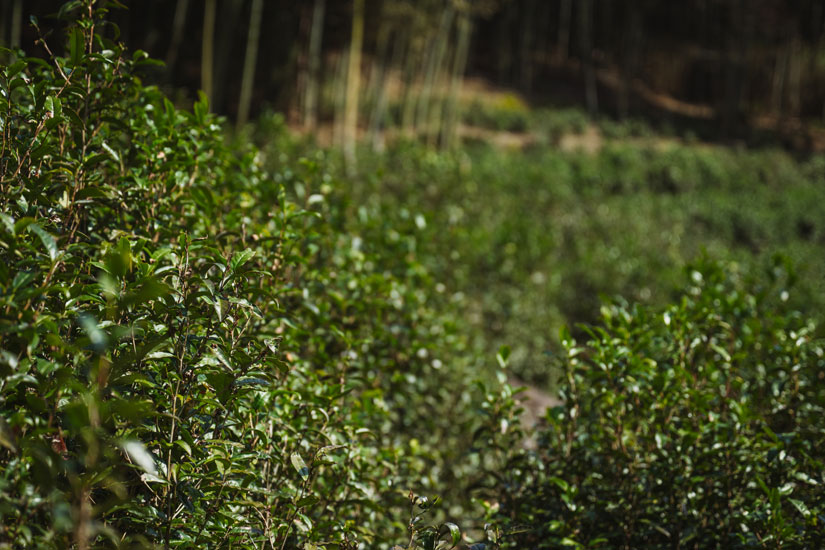
At Satsuki-kai, they adhere to traditional production methods that date back to the Edo period, performing every step by hand. They remain committed to a tea-making process that has nothing to do with efficiency or mass production—one that relies entirely on the local climate and the passage of time.
Production of Ishizuchi Black Tea begins from late June through early July. The variety used is “Yabukita,” a representative variety of Japanese tea. Unlike sencha, fermented teas use hardened tea leaves known as “kowaba.” Consequently, the harvest period is later, and the work is concentrated from around the end of the rainy season through midsummer.
Workers manually cut the hard leaves—along with the branches—from tea bushes that have grown as tall as a person, bundle them together, carry them down from the mountain on their backs, and load them onto light trucks. Harvesting takes place from 6:00 a.m. to around 8:00 a.m. They reportedly harvest enough to fill three light trucks in a single day. It’s quite hard labor.
Primary Fermentation: Leaving It to the Mountain Microorganisms
Once the tea leaves are brought down from the mountain, they are trimmed, washed, and then sent to the steaming process at the processing facility.
After the tea leaves are steamed, they are placed in wooden barrels for fermentation, where primary fermentation (aerobic fermentation) takes place. Natural microorganisms and filamentous fungi—oxygen-loving organisms that inhabit the barrels—take in oxygen, which drives the decomposition and fermentation process.
It is said that the microorganisms inhabiting a particular location determine the flavor of the tea. Even if the production process is identical, the flavor will differ depending on the location. That is precisely why Kumi is so committed to the traditional methods passed down through the generations. “As long as we call it ‘Ishizuchi Black Tea,’ the tea leaves, water, and fermentation site must all come from the Ishizuchi mountain range. This is one thing I absolutely cannot compromise on,” she states firmly.
After undergoing the unique rolling process characteristic of Ishizuchi Black Tea, the tea proceeds to secondary fermentation.
After the first fermentation is complete, the tea leaves undergo a rolling process before the second fermentation. “Ishizuchi Black Tea is the only tea among those that undergo a two-stage fermentation process that involves this rolling step. That’s why I believe it’s the most labor-intensive tea in the world,” Kumi says with pride.
Once the rolling process is complete, the tea leaves are transferred back into wooden barrels, covered with a lid and weighted down to prevent air from entering, and left to undergo secondary fermentation. This anaerobic fermentation, carried out by lactic acid bacteria that do not require oxygen, produces the tea’s distinctive tartness and aroma.
After secondary fermentation—which takes about 10 to 14 days—the tea leaves are spread out on straw mats and sun-dried. This process, which involves carefully turning the leaves to dry both sides thoroughly, takes another 2 to 3 days.
The Ishizuchi Black Tea produced in this way is delightful for its fresh, tangy flavor right after it’s made, but it’s also wonderful to enjoy the changes in flavor that develop as it ages for two or three years. “It gradually becomes mellower, and the sweetness increases. When I drank a 10-year-old batch, I was really surprised by how sweet it was.”
The Satsuki Association: Preserving a Culture on the Brink of Disappearance

Although Ishizuchi Black Tea is now referred to as the “phantom tea,” it was once a tea that was routinely produced and consumed in every household at the foot of Mount Ishizuchi.
However, as the population declined, that culture quietly faded away, and by 1996, there was only one producer left. “When talk arose that even the last remaining household was going to stop production, we felt it would be far too wasteful, so a local lifestyle research group took the lead in preserving the technique,” .
This is how the Satsuki-kai was born. Initially, the group was led by Kumi’s mother’s generation, who inherited the production methods from the last remaining household and began manufacturing through a process of trial and error.
Around 2012, Kumi and others—representing the daughters and daughters-in-law of the original members—took over production. Around the same time, research conducted by Ehime University revealed that Ishizuchi Black Tea possesses functional benefits, such as regulating digestion and boosting immunity.
Aiming to make tea an integral part of daily life, just as it once was
Ishizuchi Black Tea is not yet widely known throughout the country. That is precisely why the Satsuki Association is putting a lot of effort into promoting it in various ways. They have received cooperation from local pastry shops that are developing prototype cakes and cookies using Ishizuchi Black Tea, as well as from the women’s division of the Chamber of Commerce and Industry. The association is also actively collaborating with Ehime Prefectural Komatsu High School in Saijo City; students there have developed a jelly made with Ishizuchi Black Tea as a summer product. After repeated prototyping, they have even begun selling it.
“The high school students are taking on all sorts of challenges to help spread the word about Ishizuchi Black Tea. I’m truly grateful for that,” says Kumi, her face breaking into a smile.
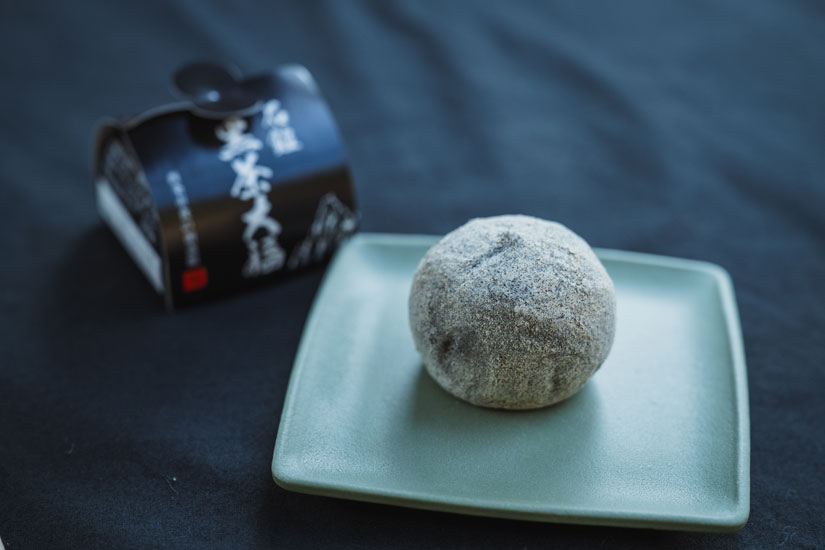
In addition, the “Kurocha Daifuku,” created in collaboration with the local radio station FM Ehime, went on sale in September 2024 and generated a huge response.
This treat features Ishizuchi black tea powder kneaded into the mochi dough, enveloping a filling of lightly sweetened fresh cream. The surface is also generously dusted with Ishizuchi black tea powder.
Engaging Supporters Nationwide to Create “Everyone’s Ishizuchi Black Tea”
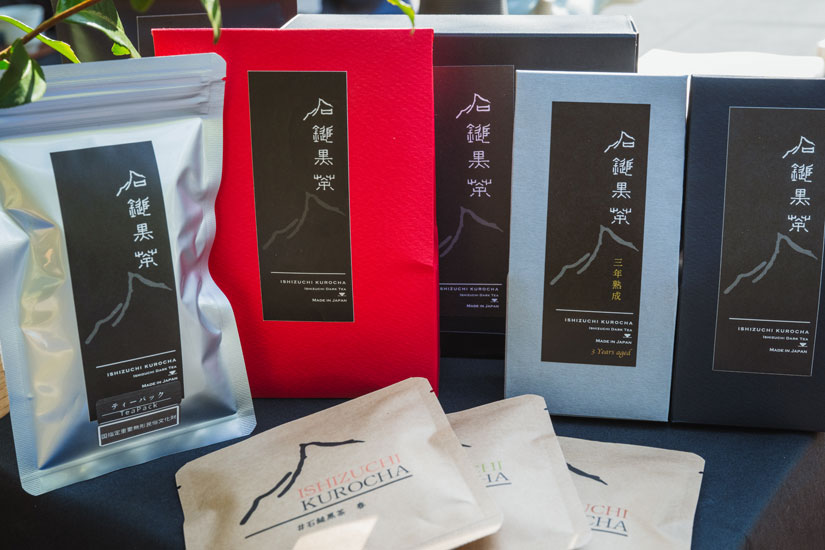
The Satsuki Association also participates in exhibitions held in Tokyo and other locations, working to promote Ishizuchi Black Tea nationwide. Coupled with the recent fermentation trend, the response from health-conscious consumers has been very positive. The connections forged in various regions have not only expanded the consumer base but have also provided valuable support to the production process.
The production of Ishizuchi Black Tea is entirely done by hand. As a result, annual output is limited to about 300 kilograms. Labor shortages are a constant challenge. However, in recent years, people from outside the prefecture who have experienced the appeal of Ishizuchi Black Tea at trade shows and other events have begun visiting to participate in the production process. In 2023, more than 120 people in total were involved in the production. “It’s no longer just the Satsuki-kai’s tea—it’s everyone’s tea. The connections forged through Ishizuchi Black Tea are a treasure that money can’t buy.”
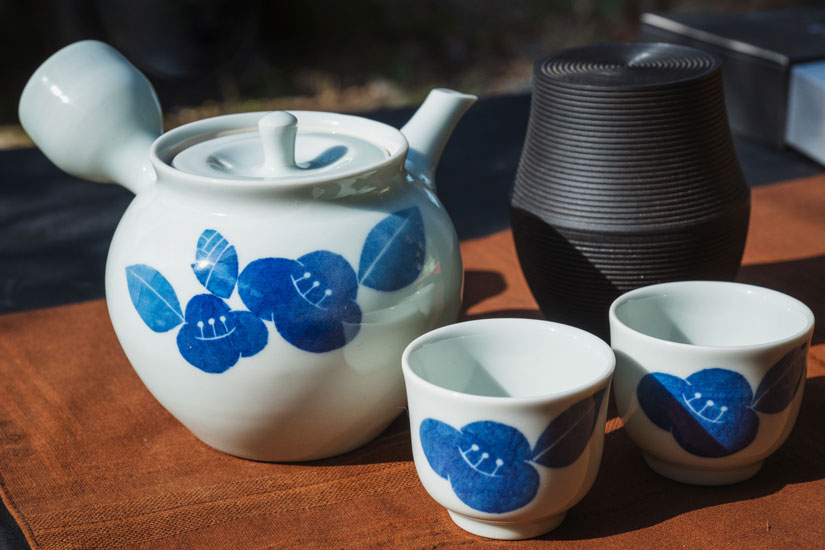
Not only do visitors experience the entire process—from harvesting the tea leaves to steaming, fermentation, and rolling—but, driven by the desire for them to “take home lasting memories,” the team works together to extend a warm welcome. Between tasks, everyone enjoys chilled watermelon together, and they even take trips to try their hand at painting Tobe-yaki, a traditional craft of Ehime. Once you’ve experienced this warmth, you’ll undoubtedly want to come back for more.
Whenever they hold an exhibition, people they’ve connected with through past workshops or events rush to show their support. “We give a hand towel as a gift to everyone who comes for a workshop, and when they come to cheer us on with it tied around their necks, I’m so happy it brings tears to my eyes,” says Kumi. Tokyo, Chiba, Kanagawa, Kyoto… the circle of people brought together by Ishizuchi Black Tea is spreading far and wide.
Looking toward the future, we never stop moving forward

What can be done year-round to promote Ishizuchi Black Tea, which can only be produced for about two months in the summer? Kumi is constantly thinking about this. “I’ve never once felt satisfied with what I’ve done. I’m always thinking about what I can do next.”
Her ultimate goal is a future where Ishizuchi Black Tea is no longer something special, but rather something that blends seamlessly into everyday life—a culture that the next generation will naturally carry on. Weaving this vision together, the organization celebrated its 30th anniversary in 2026.
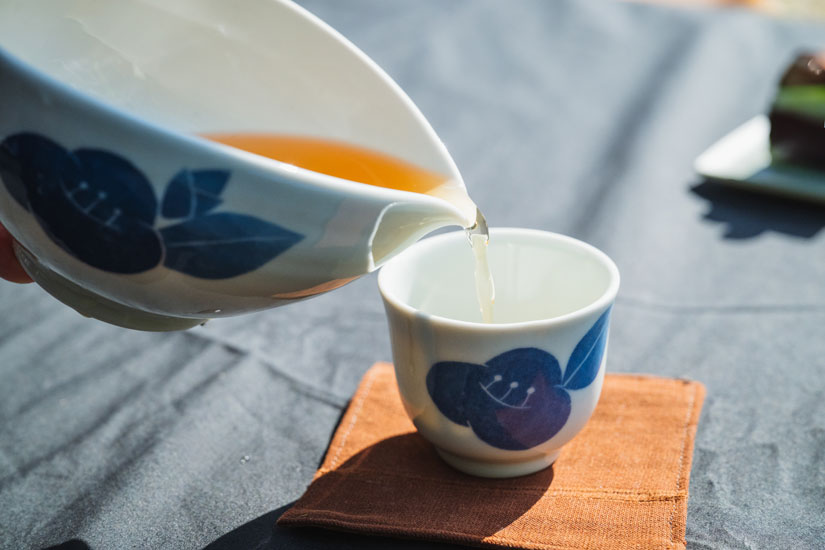
A cup of tea nurtured by Mount Ishizuchi and perfected by human hands. Ishizuchi Black Tea is filled with the memories of the land, the daily lives of its people, and the passionate dedication of the Satsuki-kai.