

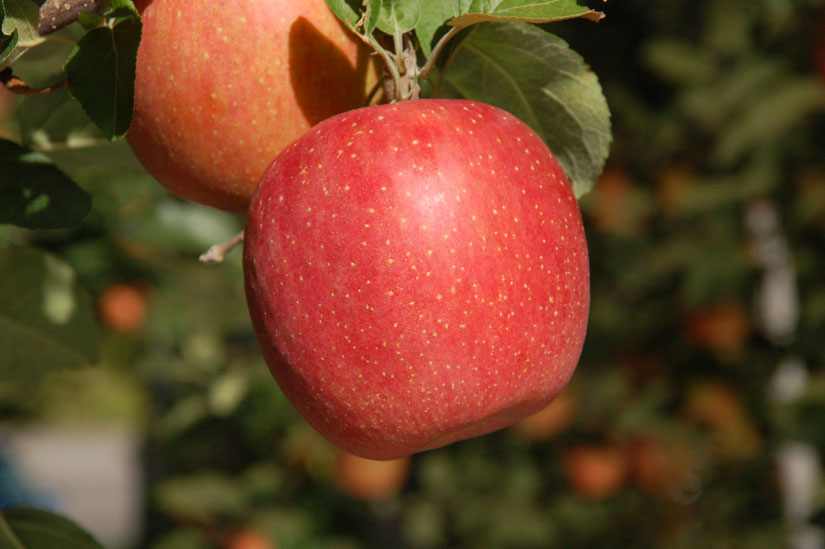
Aomori Prefecture is known as Japan’s leading apple-producing region, accounting for approximately 60% of the nation’s total apple output. Within the prefecture, about 50 varieties are cultivated, primarily including “Fuji” apples, which offer a good balance of sweetness and tartness, and “Tsugaru” apples, which are juicy and tender.To maintain apple yields, pest and disease control measures and breed improvement are essential. The research for these efforts is conducted by the “Aomori Prefectural Industrial Technology Center Apple Research Institute” (hereinafter referred to as the Aomori Prefectural Industrial Technology Center Apple Research Institute), located in Kuroishi City, Aomori Prefecture. This facility has become indispensable to apple farmers in Aomori Prefecture.
A facility that supports and safeguards the quality of apples within the prefecture
It is said that apples originated in the region stretching from the Tianshan Mountains in China to the Caucasus region of Russia. From there, apples spread to Greece, Rome, Europe, and eventually to America. Around that time, the Meiji government in Japan imported saplings of various fruit trees from abroad and distributed them nationwide. At the time, apples were mainly imported from the United States, France, and the United Kingdom, and the saplings distributed to this prefecture were American apple varieties suitable for fresh consumption.This marked the beginning of apple cultivation in Aomori Prefecture, with a focus on apples for fresh consumption. In particular, the Tsugaru region—including Kuroishi City and Hirosaki City in the western part of the prefecture—is well-suited for apple cultivation due to its cool climate and significant temperature differences between day and night, which enhance the fruit’s sugar content.
However, as cultivation expanded from the 1890s onward, diseases and pests made harvesting difficult, leading to an increase in farmers abandoning their orchards. Consequently, to ensure effective pest and disease control, the “Heika (Apple) Experiment Station”—meaning “apples introduced from the West”—was established in 1931.In 2009, it was renamed the “Aomori Prefectural Industrial Technology Center Apple Research Institute,” and in addition to pest and disease control, it also conducts research on developing new varieties.
Sharing research results with farmers to ensure a consistent annual harvest
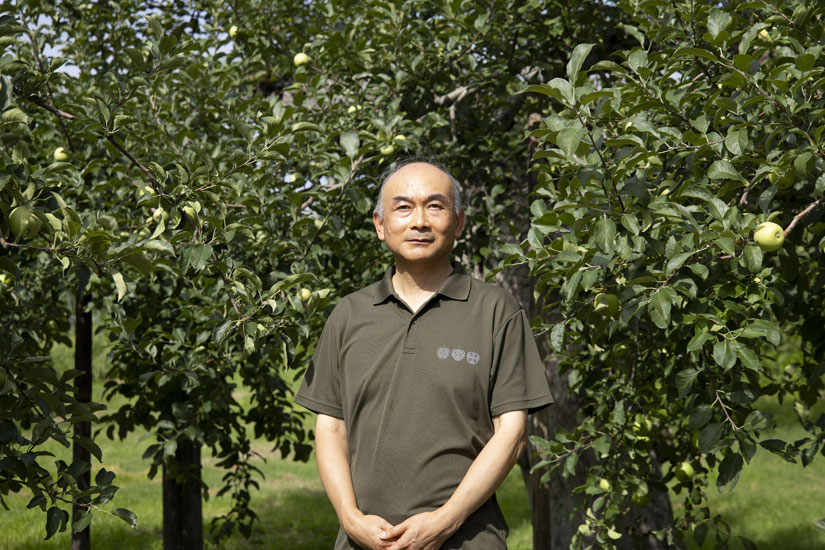
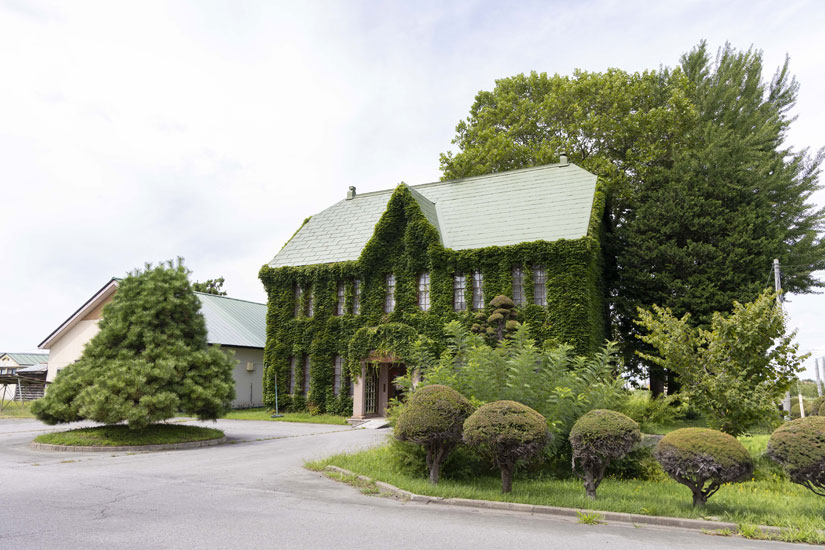
The Aomori Prefectural Industrial Technology Center Apple Research Institute is located in the lush natural environment of Kuroishi City, Aomori Prefecture, and owns 24.8 hectares of farmland on its premises.“Here, we cultivate a wide variety of apples—including ‘Fuji,’ ‘Ohrin,’ and ‘Jonagold,’ which are in high demand among consumers and have high cultivation rates (in fact, we grow hundreds of varieties). We conduct year-round research on tree conditions, fruit set, pesticide application, and the timing of pest outbreaks, and by sharing these results with farmers, we help ensure stable yields,” says Director Noriaki Fukuda.
They quantify factors such as temperature fluctuations, precipitation, hours of sunshine, and snowfall, and conduct detailed research on leaf fall, budding, growth conditions, ripening progress, and quality. “Since the climate varies even within the prefecture, we conduct surveys for each region. It’s painstaking work, but it’s very important research,” he says. It is precisely because of this detailed data that they can accurately convey apple cultivation methods to farmers.
Apple cultivation involves pruning during the winter while considering sunlight exposure, and limiting the number of flowers in the spring when they bloom. This process ensures that each apple receives sufficient nutrients. Then, in the fall, leaves touching the fruit are removed, and the fruit is rotated—a process called “tama-mawashi”—to expose it evenly to sunlight, resulting in a uniform red color throughout. By carefully performing these maintenance tasks, they are able to achieve a consistent harvest every year.
Efforts to reduce pesticide use while combating pests
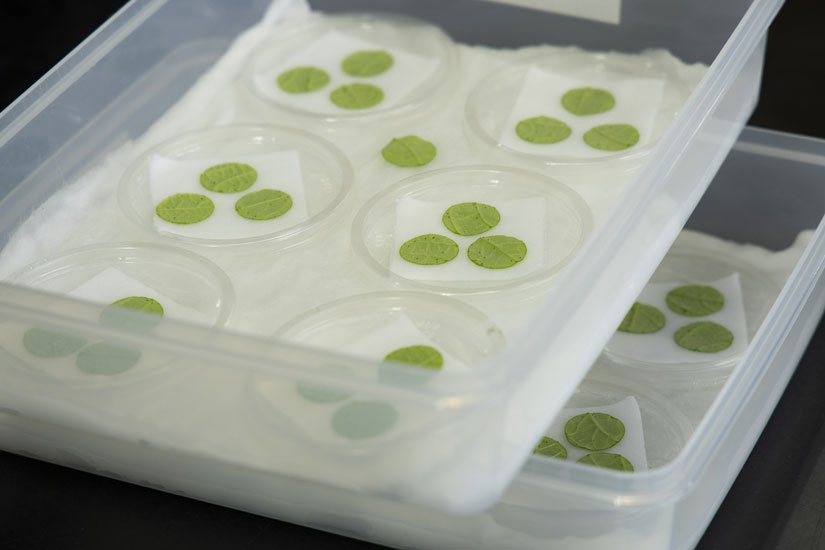
“It is said that pests and diseases are the biggest weakness of apples, making pesticide-free cultivation very difficult. Of course, we support farmers who wish to reduce pesticide use, but due to factors like global warming, we are now seeing insects and diseases that were previously unseen, so reducing pesticide use is not easy,” he explains the current situation.
He explains that the most troublesome pests include “spider mites,” which parasitize leaves and inhibit photosynthesis, and the “peach fruit moth,” which burrows into the fruit. Since damage from these pests renders the fruit unsellable, they are the farmers’ worst enemies. While pesticides and mating disruption are the primary control methods, Mr. Fukuda notes that a major current problem is the persistence of infestation sources due to the increasing number of neglected orchards—left unmanaged because of an aging population and a shortage of workers.
Continuing research on pesticides that can withstand diseases previously unseen
Research is also being conducted on disease control, not just pest control.In addition to measures against “black spot disease”—which causes mold growth, cracks, and deformities—he notes that due to global warming, diseases previously unseen in Aomori Prefecture are now emerging. These include “brown spot disease,” which causes premature leaf drop and weakened tree vigor; as well as “anthracnose” and “ring spot disease,” which rot the fruit—diseases that were once only found in warmer regions.
Since diseases can change depending on the climate and other factors, relying on the same measures all the time can lead to pesticides becoming ineffective. Therefore, it is necessary to continue researching which pesticides work against specific diseases and when and how often to spray them effectively—making this a never-ending battle.
Efforts to Address the Shortage of Successors
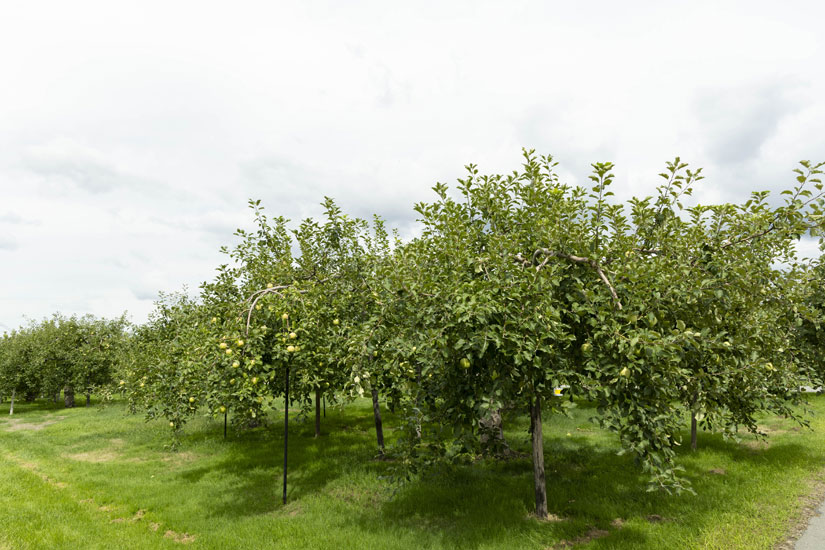
“We are undertaking various initiatives to prevent the number of neglected orchards from increasing,” explains the Apple Research Institute. To make it easier for new farmers to enter the industry, the institute has created an “Apple Pest and Disease Control Calendar” that clearly outlines pesticide application schedules and pest and disease control measures. This calendar has been well-received even by veteran farmers and has reportedly become an indispensable tool for apple growers.
Additionally, to help the general public feel more connected to apples and to encourage new entrants into the industry, the institute holds an annual “Apple Research Institute Open House.” To foster interest in both the local area and the fruit, the event features public tours of the farmland, exhibitions of research findings, and consultations on fruit tree cultivation. “We’d be delighted if even a few more people became interested in apple farming and felt inspired to try it themselves,” they say with hope.
Meeting standards for taste and cultivation methods, and taking on the challenge of breeding varieties for the next generation
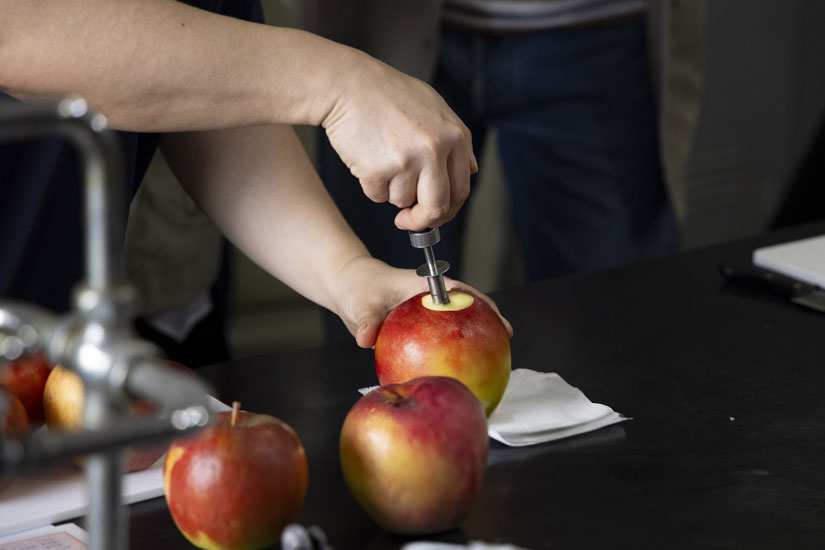
There are many apple varieties, and currently, “Fuji” is the best-selling variety, followed by “Tsugaru,” “Jonagold,” and “Ohrin,” with these four varieties accounting for about 80% of the market. Driven by the desire to “create the next big hit apple,” a new variety called “Benihatsumi” was developed in recent years. It is characterized by a rich flavor and a tart aftertaste.
Developing a new variety involves comprehensively evaluating factors such as firmness, acidity balance, and juice content. Mr. Fukuda expresses his enthusiasm for “Benihatsumi,” which took many years to perfect, stating that he aims to increase the number of growers and expand consumption. The Apple Research Institute conducts a wide range of activities, including research on cultivation techniques and pests and diseases, as well as providing guidance to farmers.Apple research is often highly detailed, and the results that can be produced in a single year are limited. However, these research findings are indispensable information for apple farmers and serve as a foundation for the next generation. Currently, efforts are underway to develop new varieties that are resistant to climate change and disease, so anticipation is growing for what delicious apples will be born in the future.