

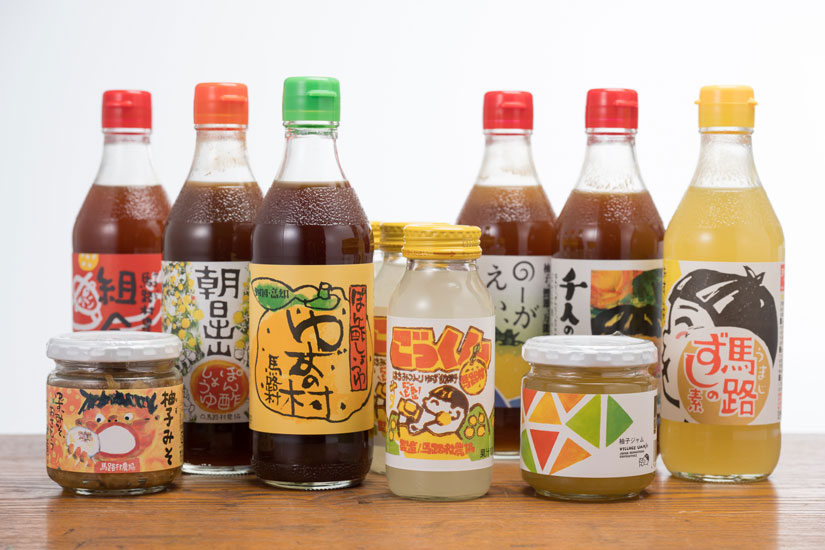
Kochi Prefecture is known as the “Yuzu Kingdom,” accounting for about half of the nation’s total production. With an annual output of approximately 10,000 metric tons, it boasts an overwhelming market share and a presence that stands head and shoulders above the rest. Among the villages in the prefecture, Umaji Village ranks only fifth in terms of production volume within Kochi Prefecture, but it has gained nationwide fame thanks to popular products such as the yuzu drink “Gokkun Umaji Village” and the ponzu soy sauce “Yuzu no Mura.”
Once a small mountain village where forestry was the primary livelihood, it has transformed over the past 60-odd years into the “Yuzu Village” that attracts so many visitors.
A Turning Point for a Village Where 96% Is Forested
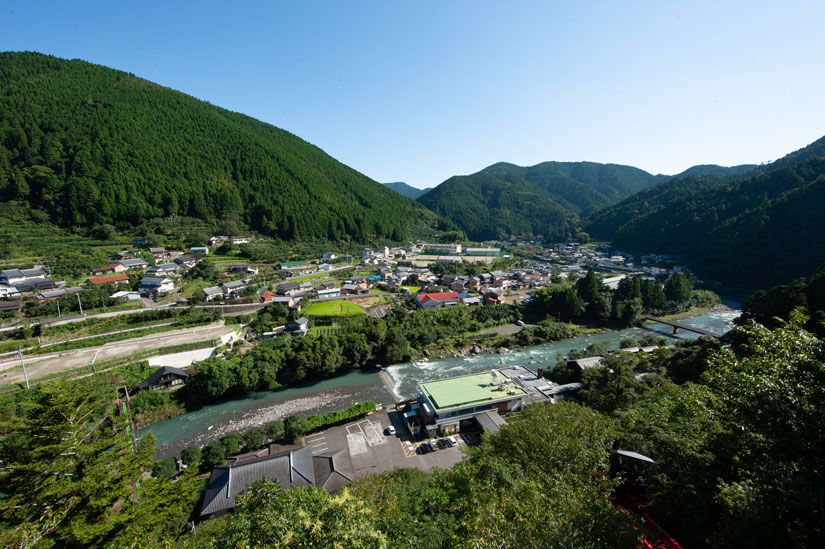
Maji Village is about an hour and a half’s drive east from Kochi City. You drive deeper and deeper along winding mountain roads before finally arriving. It is one of Japan’s rainiest regions. Surrounded on all sides by mountains over 1,000 meters high, the village is 96 percent forested. Houses and fields are clustered together on the remaining 4 percent of flat land in the narrow valleys.
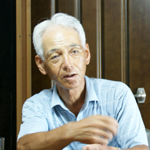
“It really is deep in the mountains,” laughs Momota Nagano, chairman of the Maru Village Agricultural Cooperative, which supports the village’s economy.
The village has a history dating back to the Warring States period of producing the prized “Yanase cedar,” which was even presented to Toyotomi Hideyoshi. At its peak, it is said that 3,500 people lived here. However, from the 1940s onward, the forestry industry declined as it was unable to withstand the tides of change—including dam construction for postwar reconstruction, the decommissioning of the forest railway, and the influx of imported lumber. And so, the new path they chose was “yuzu.”
A Small Yuzu’s Journey, Which Began 60 Years Ago
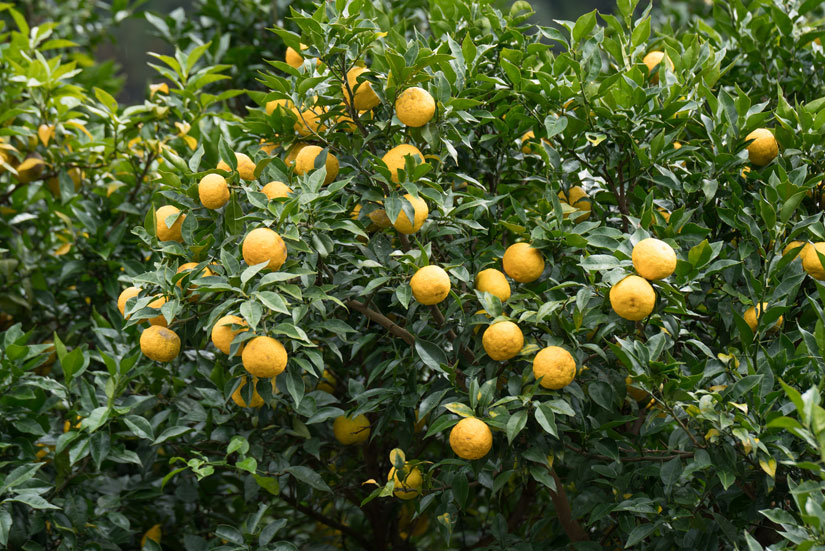
According to Mr. Nagano, it is said that yuzu seeds were originally brought to Shikoku—including Kochi Prefecture—by “fugitives of the Heike clan,” and that they were introduced to Maru Village approximately 800 years ago. While yuzu is relatively easy to cultivate almost anywhere, from coastal areas to mid-mountain regions, its quality reportedly varies remarkably depending on the growing region.
In Maru Village, where daylight hours are short and temperature fluctuations are extreme, yuzu grow to be small. However, it is precisely this small size that leads to a more intense aroma. When squeezed with the peel still on, a large amount of essential oil is released, resulting in a strong fragrance. This was the “distinctive character” bestowed by the deep mountainous terrain.
The village began full-scale cultivation in Showa 38. Initially, it was said to be a series of hardships.
Since they were latecomers to yuzu cultivation within the prefecture, they sought sales channels outside the prefecture. However, at that time in Japan, yuzu was not yet a widely known citrus fruit, and days went by without it being appreciated. “How should we market this?” The village agonized over the question, thought it through thoroughly, and eventually created the yuzu beverage “Gokkun Umaji Village” and the ponzu soy sauce “Yuzu no Mura,” both of which would later gain nationwide recognition.
Promoting the Countryside: The Birth of “Gokkun Umajimura”
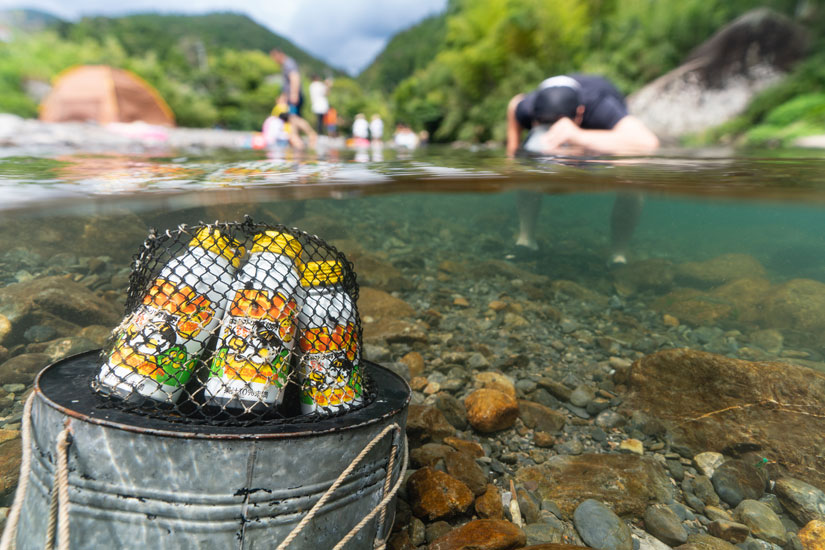
Although they succeeded in developing products made with yuzu, they struggled to expand their sales channels afterward. In the Showa 60s, the village made a major decision. Rather than chasing after the city, they shifted course toward “turning the rural charm of Umaji Village into a selling point.”
“After talking with a designer, we decided to ‘sell the countryside.’” It was a major decision.
The packaging captured the rustic atmosphere of Maru Village exactly as it was. They named the product “Gokkun Maru Village.” Although supermarket buyers harshly criticized it, saying, “We can’t tell what kind of juice this is,” the village stuck to its decision.
The ingredients are simply yuzu, honey, and water. The shelf life is a mere four months. The philosophy of “being a place of origin rather than a manufacturer” is embedded in both the taste and the approach. Rather than adopting a manufacturer’s mindset that prioritizes ease of distribution and long shelf life, they focused on the intrinsic quality of the yuzu. That was their pride as a producing region.
Gradually, the product began to sell. Eventually, despite limited funds, they produced a TV commercial that showcased the village’s natural beauty. It became a hot topic within the prefecture, and “Gokkun Umaji Village” grew to become one of Kochi’s signature beverages. The commercial marked a turning point for the small village as it turned its way of life into a commercial product.
We will continue to value warm, heartfelt communication with our fans
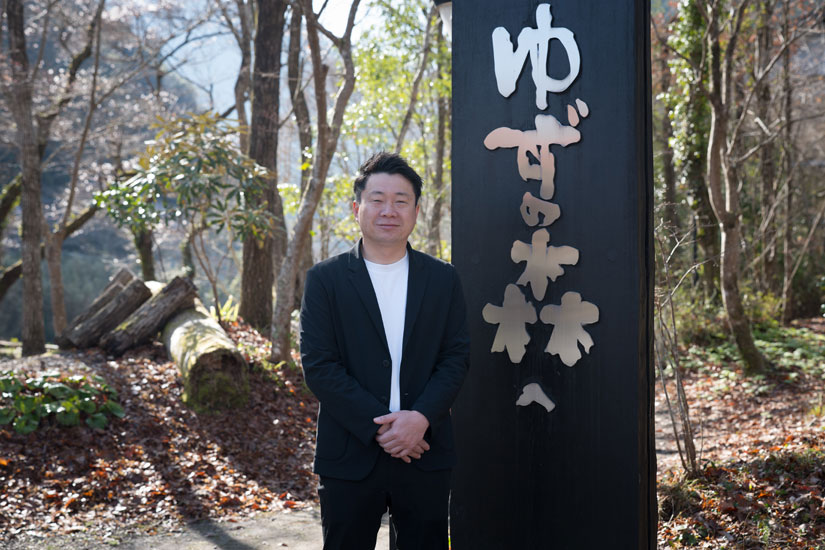
Over the course of about 30 years since its launch, “Gokkun Marumura” has grown into a nationally recognized product, and the village’s total annual sales of processed yuzu products have reached 3 billion yen. Sales have remained steady at that level for the past 20 years. “The target range—which allows us to maintain stable production using yuzu grown within the village and provide benefits to both the yuzu farmers and the village—is between 3 billion and 3.5 billion yen. “We have no plans to source raw materials from other regions to increase production,” says Mr. Nagano. Since 2006, the agricultural cooperative has offered “Yuzu no Mori Processing Plant Tours” to give visitors a behind-the-scenes look at the production line. Additionally, the call center responsible for customer service places great importance on “person-to-person interaction” over the phone.
“I feel that our fans in Umaji Village are looking for our ‘voices,’ not just automated responses,” said Mr. Nagano. “Sometimes they ask, ‘How’s the scenery in Umaji Village these days?’ I think being able to have that kind of back-and-forth conversation is something unique to this village’s call center.”
The village continues to steadfastly deliver its “rural charm” to this day.
A “Major Industry” Created by a Small Village
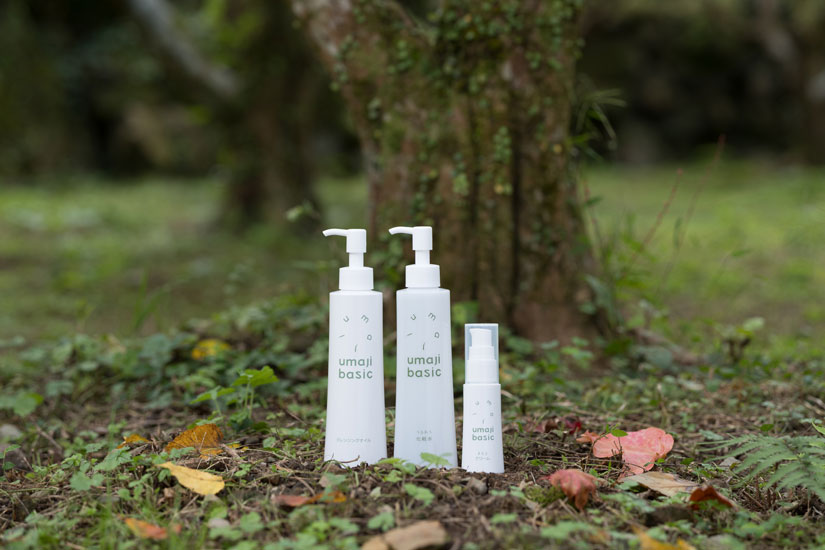
Producing processed yuzu products is not merely about creating local specialties. It was an “industrialization” effort that created jobs in the village and supported people’s livelihoods. Mr. Nagano explains that the village office, the agricultural cooperative, and the producers have worked together to develop this into a major industry to replace forestry.
“Simply selling raw materials doesn’t create jobs. It’s through processing that jobs are created within the village.”
Currently, the Umaji Village Agricultural Cooperative employs about 90 people. It is remarkable that a village with a population in the 700s has generated this many jobs. Ponzu, beverages, jams, marmalades, yuzu kosho—over 100 different products are produced at the village’s factory.
The latest hit is canned chu-hai. True to Maji Village’s commitment to recreating the flavor of yuzu without additives, Mr. Nagano says with delight, “We’ve finally perfected a yuzu chu-hai that we’re truly satisfied with.” Sales have already reached 12,000 cases.
Furthermore, cosmetics made with “seed oil” extracted from yuzu seeds are also popular. “By putting these seeds—which previously had no use—to good use, we can give back to the farmers. We want to continue focusing on these efforts to minimize waste,” says Mr. Nagano. Yuzu has become a driving force supporting the village’s future.
The Pride of Organic Farming
All yuzu grown in Maru Village have been organically cultivated since 2001. No chemical pesticides, chemical fertilizers, or herbicides are used.
“Precisely because we use the fruit with the peel intact, we want people to be able to eat it with peace of mind. That’s why we chose organic farming.”
However, organic farming tends to result in “black spots” on the fruit’s surface, which can sometimes put the produce at a disadvantage in the market. Even so, the village has remained committed to growing yuzu in a way that stays true to nature.
“It’s easier to convey the value of organic farming through yuzu tea and products made from the peel. Going forward, we want consumers to choose ‘peace of mind’ over appearance,” says Mr. Nagano.
The village also produces compost by mixing cedar bark with yuzu pulp and allowing it to ferment. This initiative, which recycles the bounty of the mountains, is characteristic of Maru Village.
The Future Illuminated by Yuzu: Where the Village Is Headed
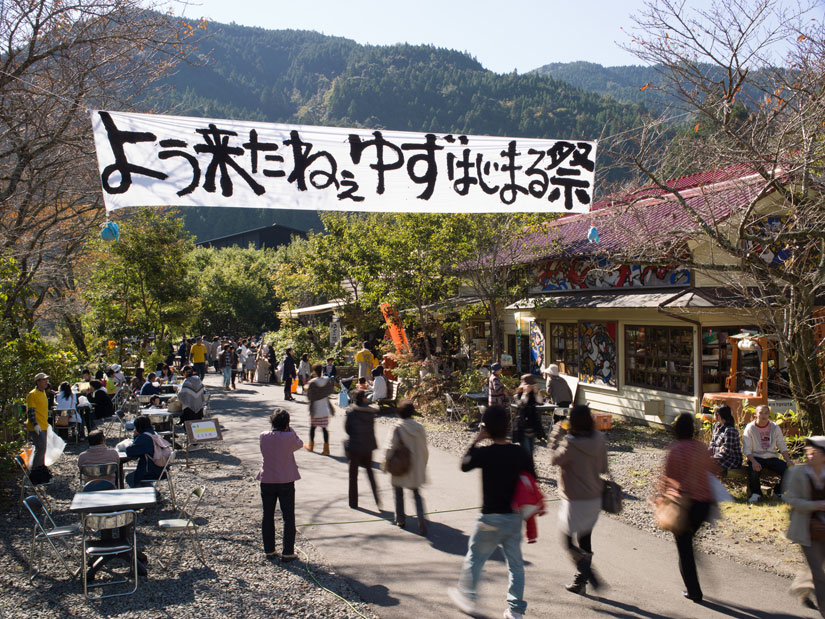
Thanks to the yuzu industry, Umaji Village has become a “village where people can live comfortably.” Currently, there are reportedly 190 yuzu farming households, including those who farm part-time. Since yuzu is used as a raw material for processing, it has the advantage of being easy for even people in their 70s or 80s to continue farming. For seniors, it’s said that life in the mountains is perfectly sustainable if they have supplementary income of 1 million to 2 million yen from yuzu, in addition to their pension. Since the village offers employment opportunities at the agricultural cooperative and the town hall, there are actually a surprisingly large number of young people here.
“Actually, I moved here from another region too,” Mr. Nagano says with a smile. “Maru Village is a truly rural area with a population in the 700s. However, it has a solid business foundation. I don’t think there are many other municipalities of this size that offer such opportunities.” You can choose either rural life or business in this mountainous area, or you can enjoy both. Furthermore, the fact that it’s possible to work in agriculture as a side job is quite unique. In addition, even though the forestry industry has declined, it still exists, and we’re seeing cases where young people are starting to work in the mountains. I want to promote both the livability and the sense of fulfillment here.”
I want to increase the number of people who feel, “I’m glad I live in Maro Village.”
However, the population decline continues. There are challenges that cannot be solved by yuzu alone. Looking to the future, Mr. Nagano said, “Going forward, I want the agricultural cooperative to be the force that solves the village’s challenges. I believe it is our role to work on education and welfare as well, and to preserve the village’s prosperity. I want to increase the number of people who feel glad they live here.”
Plans are underway to renovate Umaji Onsen in collaboration with Snow Peak. The goal is to attract even more tourists than the current annual total of over 60,000. “While yuzu is only available in November, essential oils are available year-round. I think a hot spring featuring the scent of yuzu would be an interesting idea,” said Mr. Nagano, as his vision expands.
Mountain villages across Japan are struggling with depopulation. Umaji Village has forged a path to prosperity by diversifying its primary industries and promoting the unique character of its remote mountain setting. The challenges facing this village of 700 residents will continue for some time to come. We can’t take our eyes off its future.