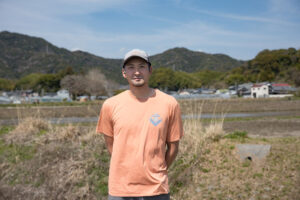


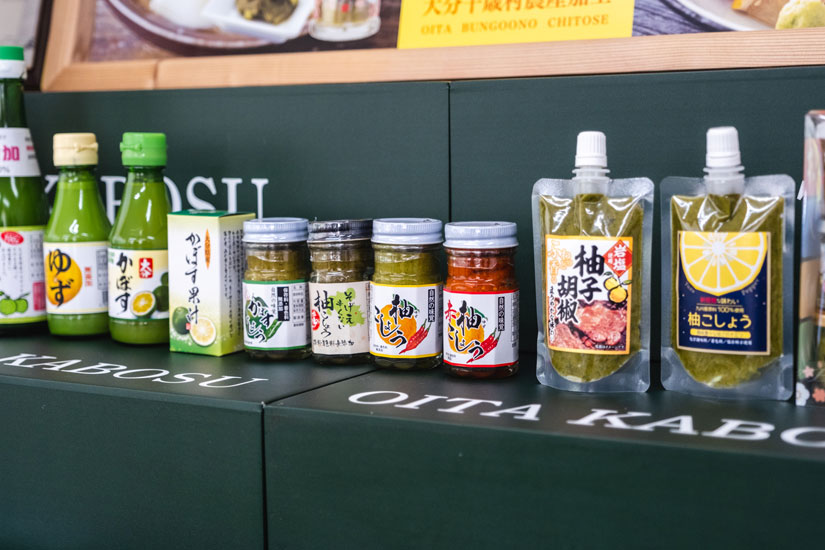
Chitose-cho, Bungo-Ono City, Oita Prefecture. In this area rich in natural beauty, an agricultural processing company produces “Yuzu Pepper”—a seasoning with a spicy kick that enhances the flavor of dishes. Gozo Tomonaga of Oita Chitose-mura Agricultural Processing, who oversees production, is working tirelessly to revitalize local agriculture under the motto, “Let’s make this the star of the table.” Behind those words lies a deep passion for the region’s agriculture and food culture.
The taste of home, born in the mountains of Kyushu
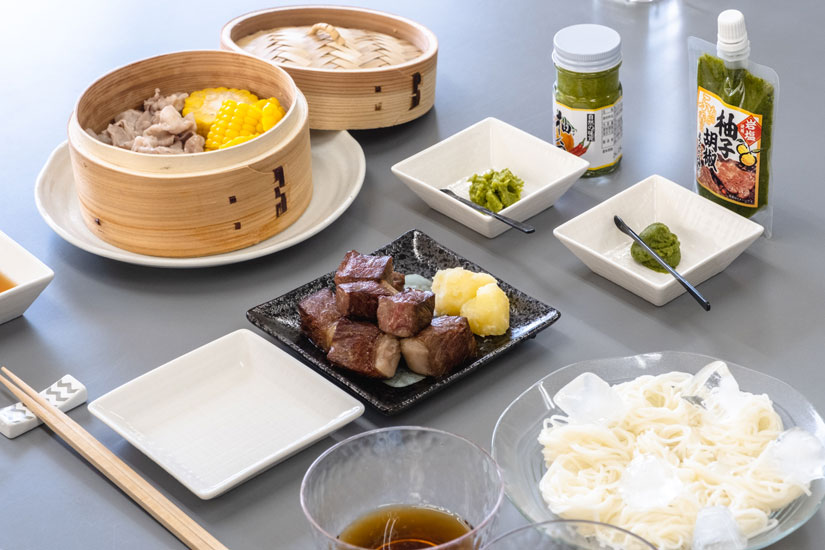
Hot pot, yakitori, udon. Just a tiny bit of yuzu kosho added to a dish can completely transform its flavor profile. Once a condiment known primarily in Kyushu, yuzu kosho has gradually made its way onto dining tables across Japan.
The ingredients are surprisingly simple: yuzu peel, chili peppers, and salt—that’s all there is to it. Yet the flavor created by the interplay of these three ingredients is anything but simple.
Yuzu Pepper, which had its own unique flavor in every household
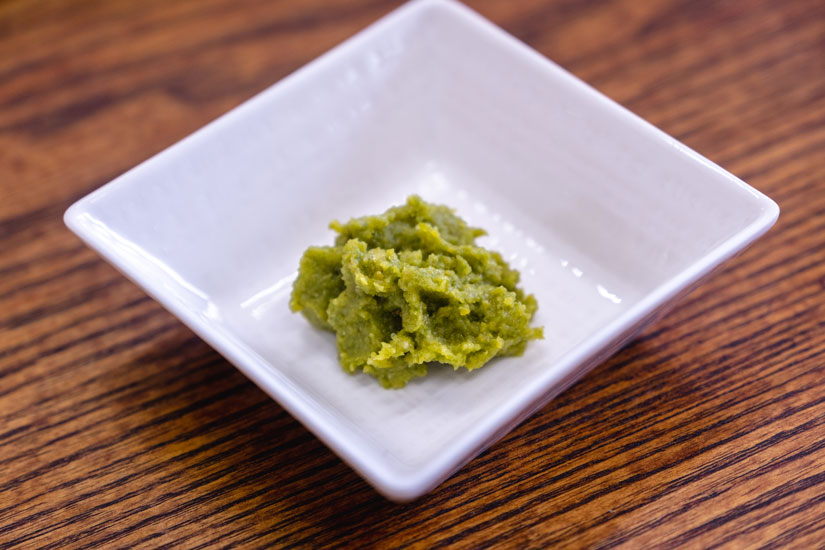
Originally, yuzu pepper was a preserved food made by farmers in the mountainous regions of Kyushu. Some theories suggest it originated in Oita Prefecture. When yuzu are in season, the peel is grated, mixed with chili peppers and salt, and packed into jars. The amount of yuzu, the heat of the chili peppers, and the amount of salt vary from household to household. That is precisely why the flavors, of course, differed as well. In some parts of Kyushu, there is a custom of calling chili peppers “kosho,” and it is said that the name “yuzukosho” originated from this.
A Company Born in the City of Citrus
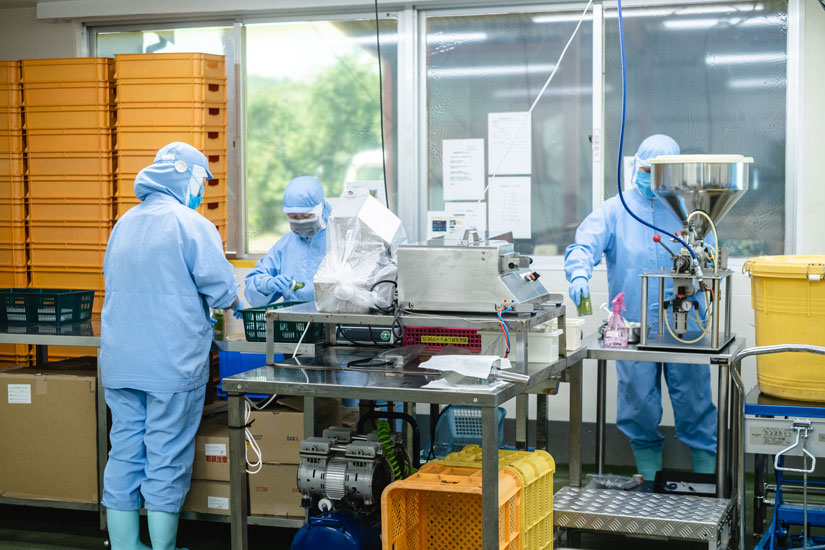
Bungo-Ono City is known as a major producer of kabosu citrus, as well as sweet potatoes, taro, and mitsuba, and is a region with a thriving agricultural sector, boasting one of the nation’s highest production volumes of green bell peppers. It was in this region, in April 1998—when what is now Chitose Town was still known as “Chitose Village”—that “Oita Chitose Village Agricultural Products Processing” was founded.
At the time of its founding, the company’s operations were limited to the manufacture and sale of kabosu products. The company was established based on the idea of processing the harvests brought in by local producers in this region, which had long been a major kabosu-producing area. According to Mr. Tomonaga, kabosu is a “citrus fruit that excels at bringing out the flavors of other ingredients while playing a supporting role.” On the other hand, yuzu—the raw material for yuzu kosho, which has become the company’s flagship product—is described as “a citrus fruit with a vibrant aroma that stands out on its own.” These two citrus fruits, with their contrasting characteristics, have shaped the company’s journey.
Although the company started out with just a single product—100% kabosu juice—it eventually faced difficulties operating on a single product line and decided to seek support from other companies to restructure. At that time, Maruichi Seika Co., Ltd. served as their consultant. At the time, Mr. Tomonaga’s father was the company’s representative, and the firm acted as a wholesale distributor of produce at the public market in Oita. After getting back on its feet by utilizing existing staff and receiving executive support, the company began manufacturing and selling yuzu kosho in 2006. The catalyst was a proposal for business diversification from an executive dispatched by Maruichi Seika, who suggested, “Why don’t you try making yuzu kosho?” Approximately four years after the business succession, this advice became a major turning point for the company.
Authentic Yuzu Pepper Made with Just Three Ingredients
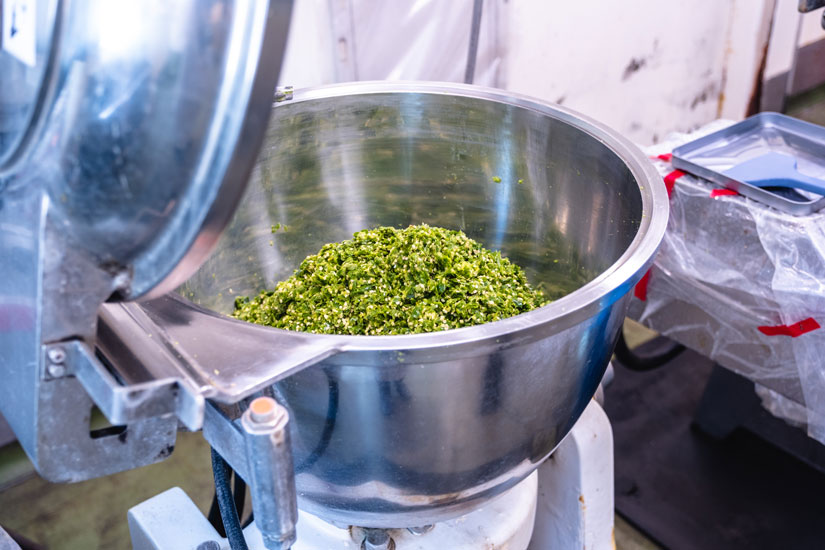
Yuzu Kosho, produced by Oita Chitose Village Agricultural Processing, is made using only three ingredients: green yuzu and green chili peppers—primarily from Oita Prefecture—and salt from Nagasaki Prefecture. Regarding the green yuzu, the company reports that due to a shortage of raw materials resulting from expanded production, it now sources them not only from Oita Prefecture but also from other prefectures across Kyushu. Prepared using traditional storage methods and free of artificial flavors and colorings, it is a seasoning that closely resembles a genuine, natural product.
Problems Faced at Yuzu Pepper Production Sites
The yuzu used isn’t the yellow, ripe variety; the reason for deliberately using green yuzu is that its crisp, sharp flavor complements the heat of the chili peppers. Additionally, while “Taka no Tsume” chili peppers were initially used, the team switched to a variety called “Hot Purs EX”—which yields about twice as much as the original—since a single “Taka no Tsume” plant yields only about 1.5 kg. The salt used is “Namishio” from Nagasaki Prefecture. While “Namishio” has a slightly sharp edge hidden beneath its saltiness, it reportedly pairs well with the flavor of the chili peppers. These three ingredients form the foundation of Mr. Tomonaga’s yuzu kosho.
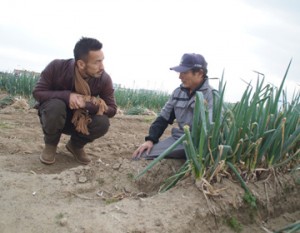
However, sourcing these ingredients is becoming more difficult with each passing year. Although Oita Prefecture boasts one of the highest shares of yuzu production nationwide, the shortage of raw materials is becoming more severe as demand for yuzu kosho rises. While Mr. Tomonaga remains committed to using yuzu from Oita, he also sources raw materials from production areas in Kumamoto, Miyazaki, and Kagoshima. Furthermore, with an eye toward securing future supplies, he is working to expand production areas within the prefecture by providing yuzu saplings to farmers free of charge and encouraging them to grow the fruit. He also secures 60 to 80 metric tons of chili peppers annually while supporting producers through initiatives such as providing seedlings.
Chili peppers are a relatively flexible crop: seedling production begins in January, transplanting takes place in May, and harvesting occurs from July to November, allowing for relatively flexible adjustments to increase production. However, yuzu takes 8 to 10 years from planting to harvest. While “yuzu pepper” spread nationwide, riding the wave of the “spicy food boom” around 2005, the challenge of securing raw materials weighs more heavily as its popularity continues to rise.
Smoothness and richness born of time and effort
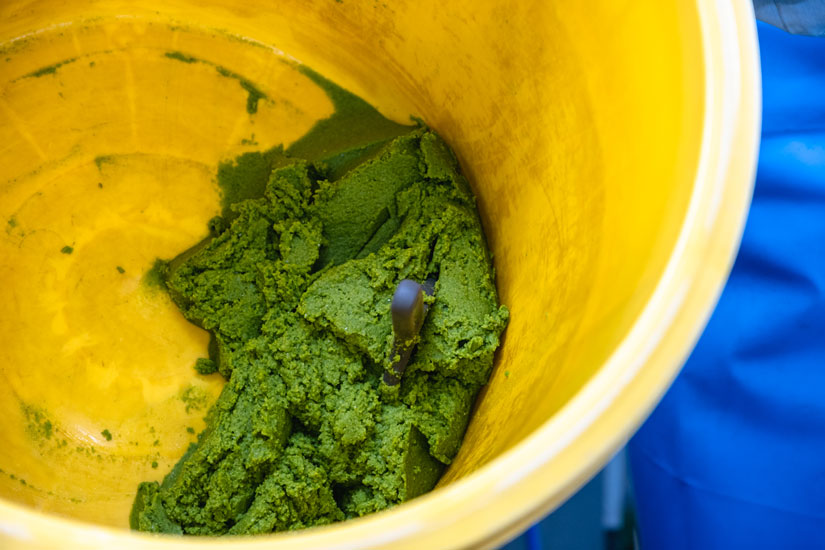
“Since chili peppers contain a lot of moisture, we remove it before using them,” says Mr. Tomonaga. “That’s what reduces off-flavors and adds depth of flavor.”
Yuzu fruits, which begin to grow larger around July, are harvested and prepared over a period of about one month starting in late September. Immediately after harvesting, the peel is removed, and the fruit is salt-cured and stored for one year. Chili peppers are also salt-preserved in the same way; they are carefully blended in a mixer until all seeds and other impurities are removed, then mixed with the other ingredients. It is precisely this time-consuming process that creates the smooth texture of Oita Chitose Village Agricultural Processing’s yuzu kosho.
They are also particular about the ingredient ratios. Since green yuzu has little peel, they use a larger amount of green chili peppers; and because they do not use additives, they set the salt concentration high to control microbial growth. While many other companies use a 1:1 ratio of green yuzu to chili peppers, Mr. Tomonaga intentionally increases the proportion of chili peppers. This is to create a sharp flavor where the spiciness comes through directly. “Although the product itself becomes slightly firmer due to the removal of moisture, I use this manufacturing process because I really want to achieve a concentrated flavor.”
Mr. Tomonaga’s dedication is evident in every single step of the manufacturing process.
Making Agriculture an Industry People Want to Join
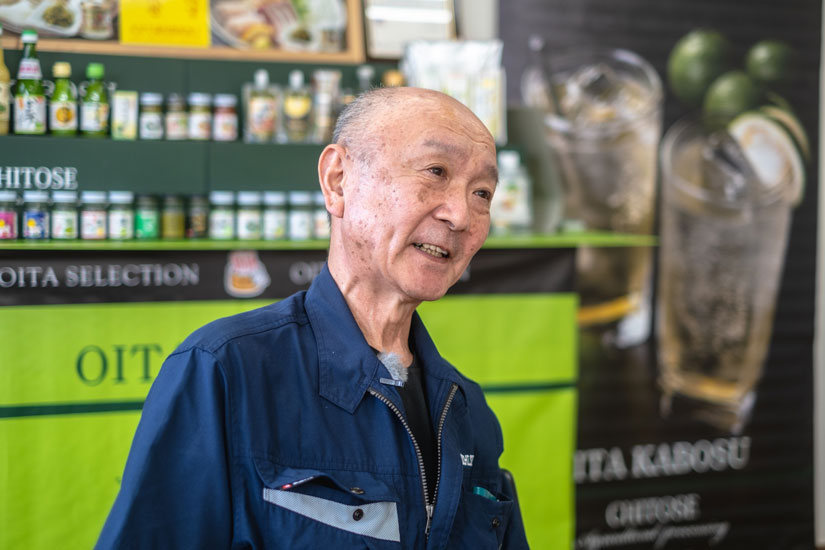
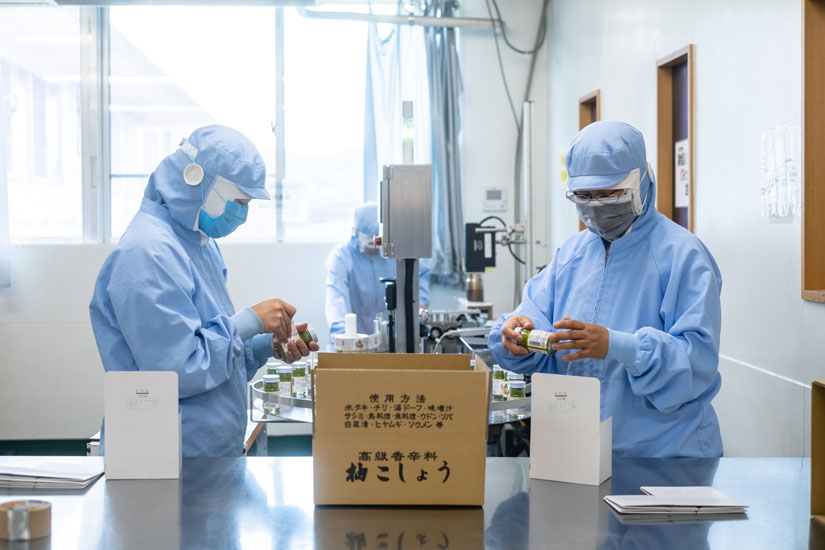
In addition to raw material shortages and challenges in the manufacturing process, Mr. Tomonaga has another concern: labor. Chitose Town has a population of about 2,600. Many of the workers are elderly, and handling highly pungent chili peppers places a heavy physical strain on them. The building used as the factory is a former school site; before that, it was a precision watch factory, so it is not optimized for food production. Furthermore, the filling process is semi-manual and capping is done by hand, meaning the products cannot be completed without the help of part-time employees. Mr. Tomonaga strongly feels the need for automation in the future.
In recent years, climate change and soaring prices for imported fertilizers and materials have also weighed heavily on the business. Price adjustments alone are not enough to absorb the rising costs, and there are times when he has to make unreasonable demands on producers. He says he feels deeply distressed every time this happens.
Initiatives to Engage Young People
For agriculture to remain sustainable, it is essential to create an environment where farmers can continue their businesses. What matters is not whether prices are “high” or “low,” but rather establishing a system where the cycle from production to consumption functions properly. Unless farmers can stabilize their livelihoods through their year-round work and enjoy a certain degree of financial comfort, agriculture will not be passed on to the next generation.
“I believe agriculture needs to become an attractive industry—one that people actually want to be a part of. It must become an industry that attracts successors. While government support is certainly necessary for that, I’m thinking about what I can do myself.”
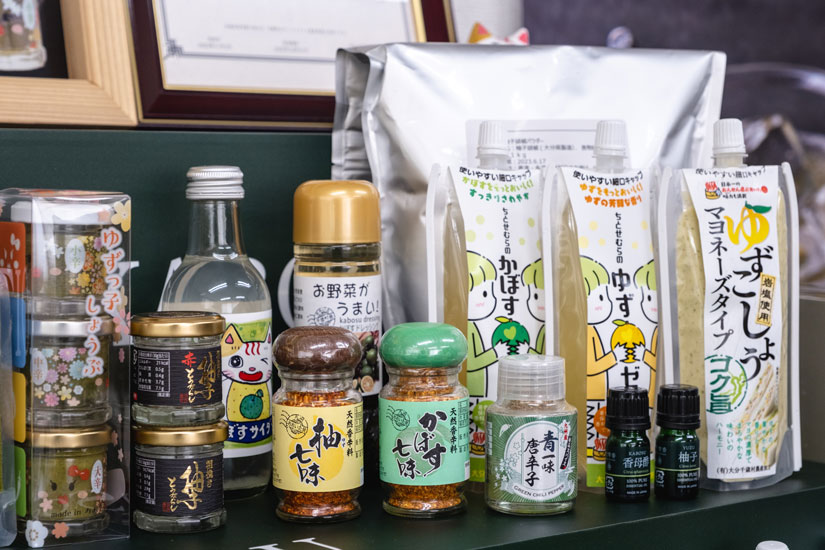
As he grapples with this question, one of the initiatives Mr. Tomonaga is pursuing is the development of new products and collaborations with other companies. He also wants to move away from the industry’s traditional, staid image and create labels and concepts that appeal to younger generations. As a first step in this direction, he has already begun selling pouch-style jellies made with kabosu juice that you can suck on.
The scenery of this land, captured in a small bottle
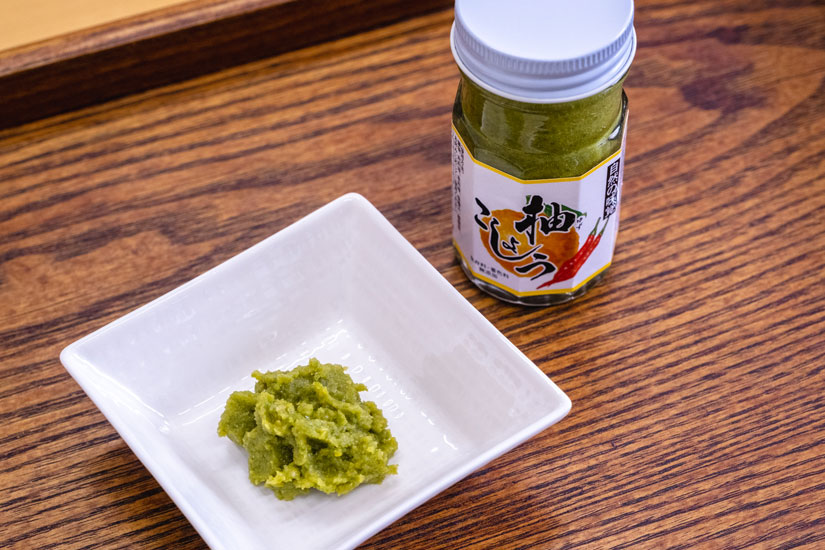
Yuzu kosho, produced in the small town of Chitose, has now spread throughout the country. Inside each small jar lies a glimpse of the local landscape: yuzu trees, chili pepper fields, the hands of farmers, and the factory where it is transformed into a condiment.