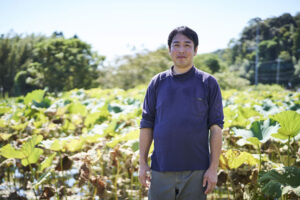


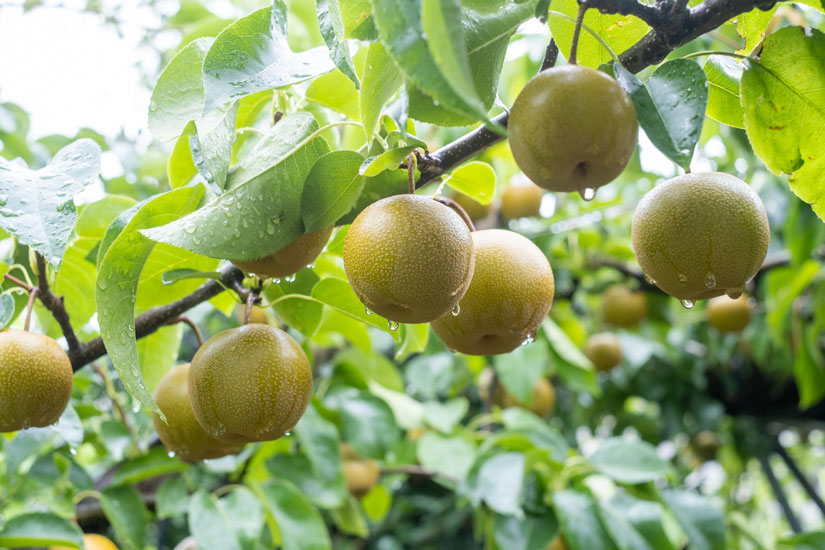
Nestled in the mountains of Hita City, Oita Prefecture, “Houkouen” has been growing pears for 70 years. Tomomi Nakama, the third-generation owner, is dedicated to preserving the sweet, juicy pears nurtured by the land’s vitality and her unwavering commitment to “sharing delicious food with her customers.”
“Hita Pears Throughout the Seasons”
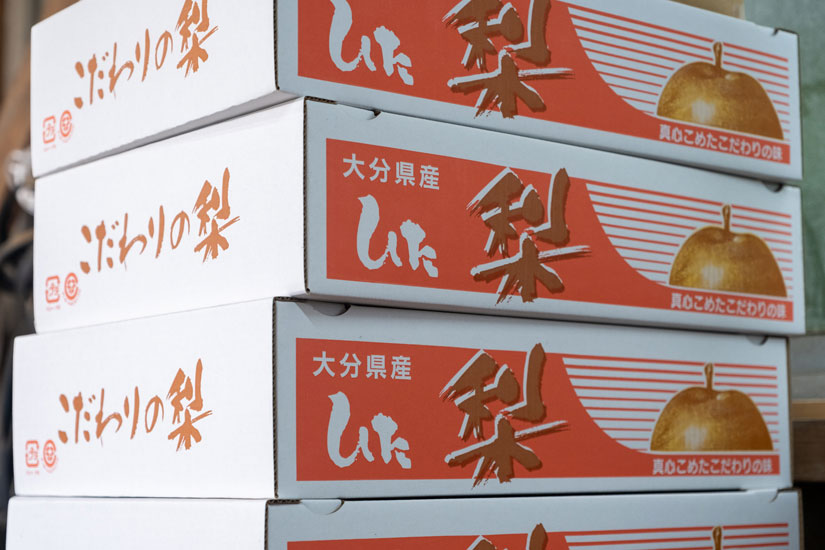
In the northwestern part of Oita Prefecture, in the inland region of Kyushu bordering Fukuoka and Kumamoto, lies a town called Hita. Nestled deep within a basin surrounded by mountains, this area has long been blessed with abundant water and, due to its proximity to the headwaters of the Chikugo River, has been called the “Land of Water.” During the Edo period, it flourished as a territory directly administered by the shogunate, and even today, its historic streetscape and hot springs—which retain traces of that era—welcome visitors. In Hita, with its abundant natural beauty, there is a popular local product: pears.
Tomomi Nakama of “Houkouen” is the third-generation pear grower who has devoted his heart and soul to pear cultivation in this region. Driven by the single-minded desire to “share with customers the delicious fruits I enjoy eating myself,” his pear farming has attracted many repeat customers and garnered such strong support that he receives inquiries every year asking, “Are they ready yet?”
Houkouen began growing pears about 70 years ago, during the generation of Mr. Nakama’s grandfather. Mr. Nakama himself began working at his family’s farm immediately after graduating from college. “I always thought I would take over the business,” she explains. Having become involved in the family business at a young age, Mr. Nakama continues to dedicate herself to the unique art of pear cultivation specific to this region.
A region where various natural conditions make it ideal for pear cultivation
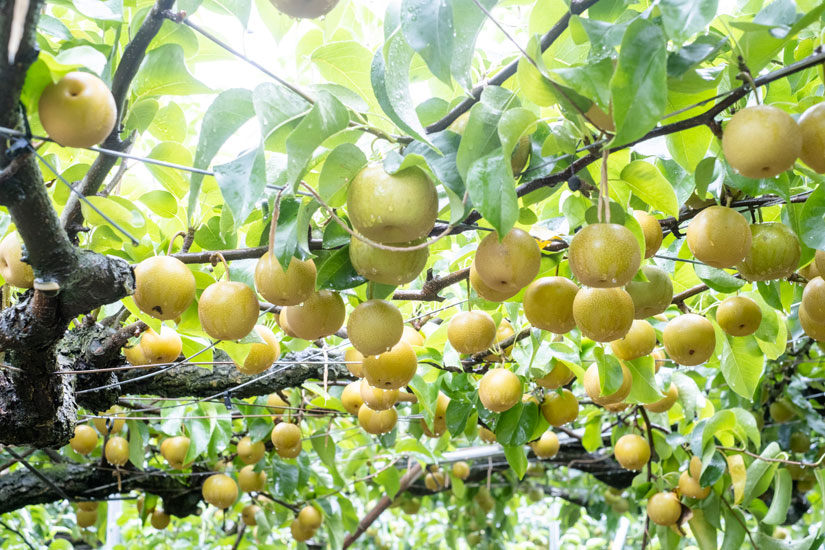
When it comes to pear-producing regions, Tottori and Chiba Prefectures are the first to come to mind. In terms of production volume by prefecture, Oita Prefecture ranks around 10th. However, in Hita City, a variety of pear cultivars are grown that can be shipped from late July through around December, and the local JA Pear Committee promotes this rich selection under the slogan “Hita Pears All Year Round.”
So why is it possible to grow such high-quality pears in Hita City? When I asked Mr. Nakama, he replied, “It’s the power of the land.”
Located in a basin, Hita City experiences significant temperature differences between morning and evening, with nighttime temperatures sometimes dropping to 12–13 degrees during the summer. The lower the nighttime temperature, the more sugar the fruit can store from what it has accumulated during the day. This is why areas with large temperature fluctuations are said to be ideal for fruit production. Then there’s the water. Hita City, blessed with both high-quality water and abundant water supply—so much so that it’s known as the “Land Polished by Water”—provides the perfect conditions for pear cultivation. And then there’s the soil. This region’s red clay soil, rather than sandy soil, has the ability to retain nutrients, serving as the foundation for a bountiful harvest. Temperature differences, water, and soil.
It is the convergence of these three elements that gives rise to Hita’s pears.
At Houkouen, we currently cultivate six main varieties for shipment: starting with Kosui, followed by Houzui, Shinko, Akizuki, Atago, and Okusan-kichi. In particular, the late-ripening Okusan-kichi was once cultivated throughout Japan, but because it is labor-intensive to grow, the number of producers has plummeted. As a result, it now accounts for less than 1% of total pear production, with the vast majority reportedly grown in Oita Prefecture. While Okusan-kichi has a moderate acidity, consumers have recently shown a preference for sweeter varieties with less acidity, and these changing times are reflected in the selection of varieties.
While trying to figure out what the pear tree wants,
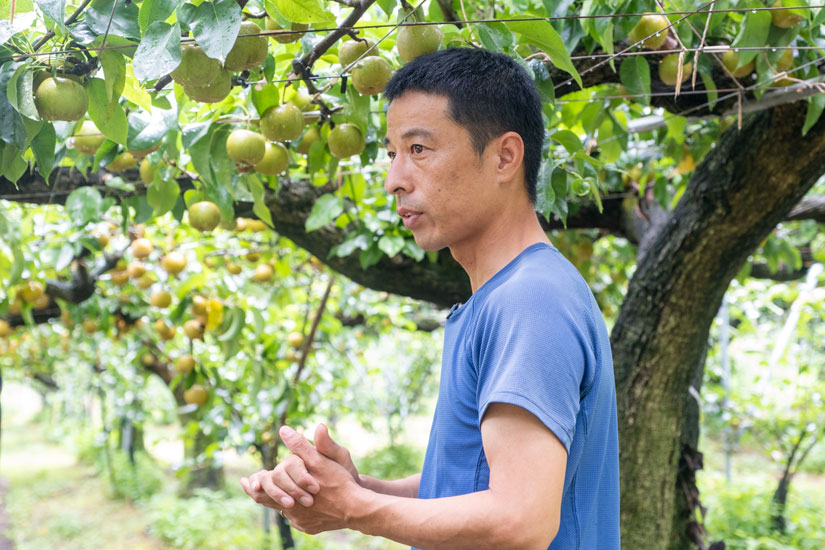
“I look at the tree and try to determine whether it needs water or nutrients—similar to the supplements people take,” says Nakama. “I consider what to do while assessing these factors.”
Pear saplings begin to bear fruit little by little around their third year after planting. They bloom around the same time as cherry blossoms, and the sight of seven or eight blossoms opening from a single branch resembles the way cherry blossoms bloom. Harvests peak when the trees are about 20 years old, and although yields decline gradually thereafter, some trees are said to continue bearing fruit even after they are over 100 years old. To ensure the fruit grows large and firm, and to transform the sugars produced through photosynthesis into sweetness, there is no alternative but to constantly watch over the orchard and the trees, applying meticulous care at every step. It is this accumulation of time and effort that yields sweet pears.
The key is soil preparation
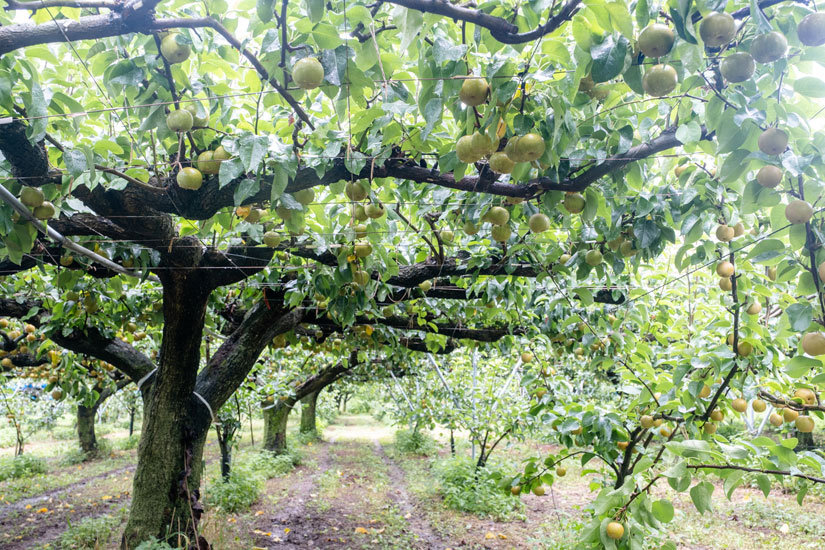
At Houkouen, we use organic fertilizers such as compost mixed with cow manure and sawdust, as well as fish meal and rapeseed oil cake. Continued use of these materials softens the soil, improves drainage, and promotes the healthy growth of microorganisms. While chicken manure compost is another option, we have chosen cow manure compost because it has a long-term effect on the soil, whereas chicken manure compost, though it provides immediate results, does not last as long.
Furthermore, instead of using herbicides on weeds growing in the fields, they are cut with machinery. This allows earthworms to thrive in the soil, and their castings provide organic matter that serves as food for microorganisms. Additionally, as the earthworms move around, they aerate the soil, promoting the decomposition of organic matter by microorganisms. In this way, living, fertile soil is created.
However, Mr. Nakama notes that even in this region, where various conditions for pear cultivation are ideal, there are still challenges that must be addressed.
Challenges Facing Pear Cultivation
When asked about the challenges they face in pear cultivation, three answers emerged: climate change, tree diseases, and labor shortages.
As for the climate, temperatures have been high in recent springs, causing pear trees to bloom earlier. The flowering period is the most delicate stage; if a late frost occurs at this time, the pistils turn black and wither, potentially preventing fruit from setting. Excessively hot summers, prolonged periods of rain, and then sudden, heavy downpours in a short span of time. The weather in recent years has become increasingly unpredictable, further exacerbating conditions that weaken the trees. Mr. Nakama confides that while he adapts flexibly by monitoring the weather to adjust fertilization and water management, it remains quite challenging.
Tree diseases are another source of concern. As a result of repeated breeding efforts to improve flavor, there are now more varieties that are susceptible to disease. He considered switching to organic farming, in line with global trends in agriculture, but had a bitter experience when he tried it with pears: disease spread rampantly, and the effects lingered for several years. He says he struggles to strike the right balance between using pesticides and ensuring safety.
And then there’s the labor shortage. Houkouen is no exception. Typically, pears grow about 180 cm above the ground. This means workers must keep their faces and hands raised the entire time they’re working, placing a considerable strain on their necks, shoulders, and lower backs. In the past, they could rely on local seniors and housewives who would come during peak season, but now there’s no one left to turn to. Currently, they’re managing by relying on a few local residents and bringing in workers from outside the prefecture only during peak season.
Changing the way trees are pruned to reduce the burden on workers
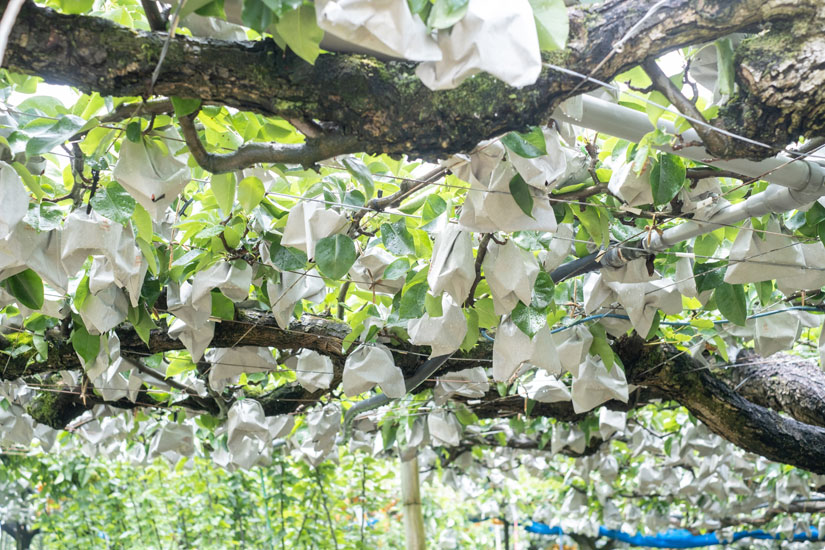
Faced with a workforce largely made up of inexperienced workers, Mr. Nakama changed the way the trees were pruned. “Normally, trees grow upward. However, if you bend the branches down at an angle of about 30 to 40 degrees, the fruit will grow at a slightly lower height than before. When the fruit grows at a height of about 90 cm, it makes the work easier even for inexperienced workers.”
He is shifting toward a cultivation method that allows anyone to harvest the fruit. While keeping costs down, he is also considering the future introduction of harvesting robots. Mr. Nakama is steadily exploring a path that will allow the operation to function even without human labor.
As demand for fruit continues to decline year after year,
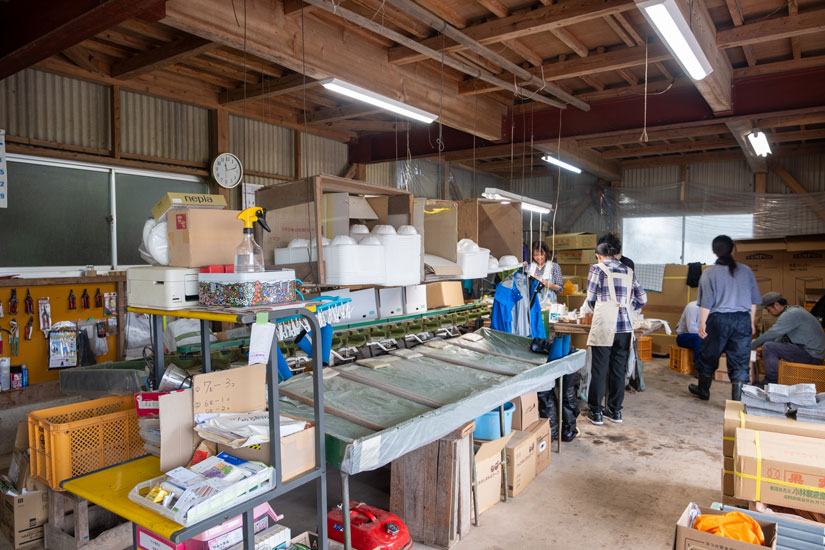
Along with labor shortages, Mr. Nakama is facing a decline in demand for the fruit itself. For pears in particular, the fact that they must be peeled before eating is a major hurdle. While many people say they “like pears,” that doesn’t necessarily translate into purchases. He has noticed that younger generations, in particular, simply aren’t buying them; in fact, whether in stores or through online sales, about 70 percent of buyers are in their 50s or older. While varieties like Shine Muscat—which can be eaten with the skin on and have no seeds—are gaining popularity, demand for fruits that require extra effort to prepare is declining, partly due to their status as luxury items. This is Mr. Nakama’s analysis.
As a solution to this problem, Mr. Nakama is working to broaden the appeal of pears.
To Convey the Charm of Pears
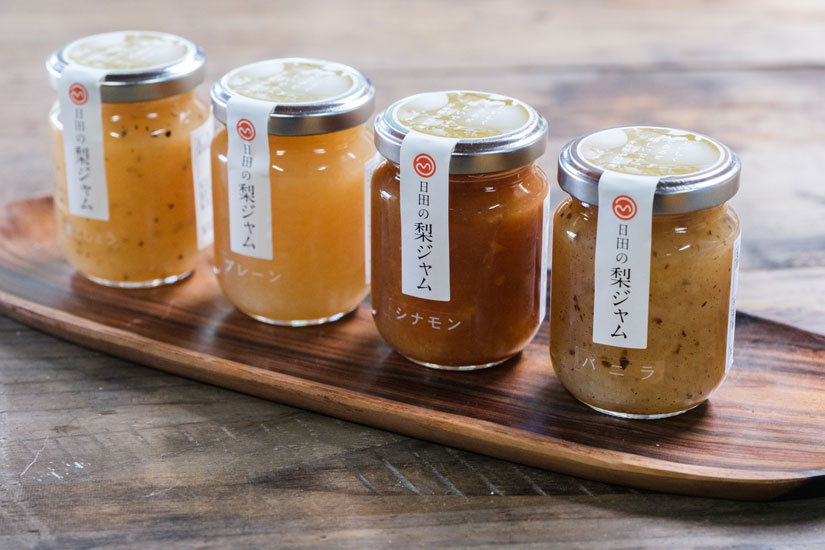
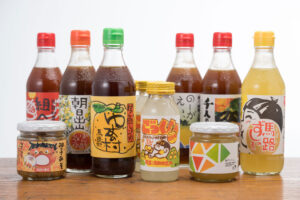
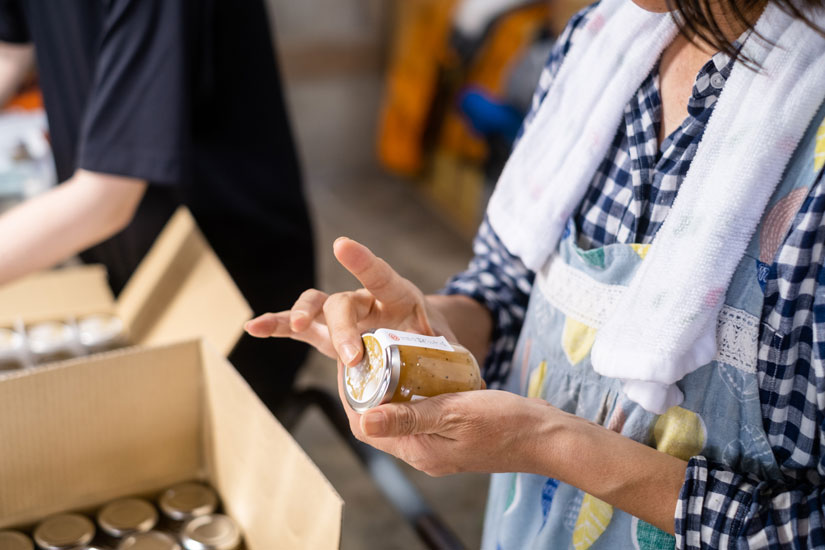
In addition to selling fresh pears, Houkouen also handcrafts processed products such as juice, jam, and dried fruit. Although they can’t produce large quantities, these items are very popular because they allow people to enjoy the delicious taste of pears year-round. “Making these processed products is kind of like a hobby,” Mr. Nakama says with a laugh, but behind those words lies a sincere desire to share the appeal of pears with as many people as possible.
Among these products, “pear vinegar” is particularly unique. As the name suggests, it is vinegar made from pears. It was born from a simple idea: “If wine can be turned into balsamic vinegar, why not pears?” These unusual products have garnered a good reputation, leading to increased media coverage of Houkouen. When exhibiting at events, she brings both fresh pears and processed products. Some people choose the juicy pears, while others reach for the processed items—each person discovers the pears in their own way. Nakama says that every time she sees this, she realizes that the appeal of pears is gradually spreading.
For the Future of Pear Cultivation
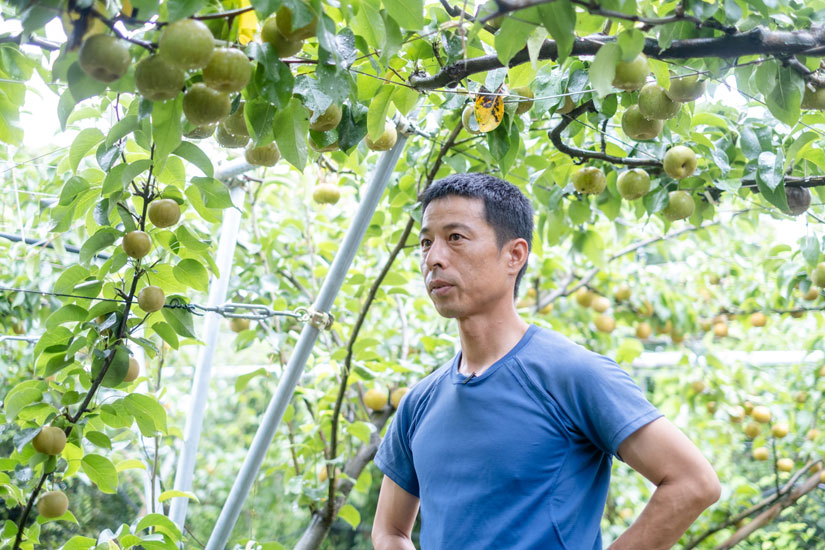
Although there are currently about 100 pear farms in Hita, that number continues to decline year by year. One reason for this is that the generation that experienced a period about 15 years ago—when prices hit rock bottom to the point where farmers could no longer make a living from market sales alone—is no longer passing the business down to their children. Mr. Nakama himself has a son, but he doesn’t feel strongly that his son must take over the farm. “When I’m old enough to retire, if there’s someone who wants to take over, I’ll hand it over to them”—that is his honest sentiment. That is precisely why he is steadily continuing his efforts to adapt his cultivation methods so that production and harvesting can be managed even without ample labor or experience.
No one knows at this point what the future holds for pears. Nevertheless, with an eye on the future, Mr. Nakama continues to tend to his pears day after day. “As long as people say they’ll miss pears if they become scarce, I’ll keep going. I can’t let down the expectations of customers who buy them because they’re ‘delicious,’ so I’ll never cut corners.”
“Hita pears, all year round.” A key part of this tradition is the presence of farmers like Mr. Nakama, who pour their hearts into pear cultivation. For the sake of those eagerly awaiting this year’s pears, Mr. Nakama stands in his Hita orchard once again today.