

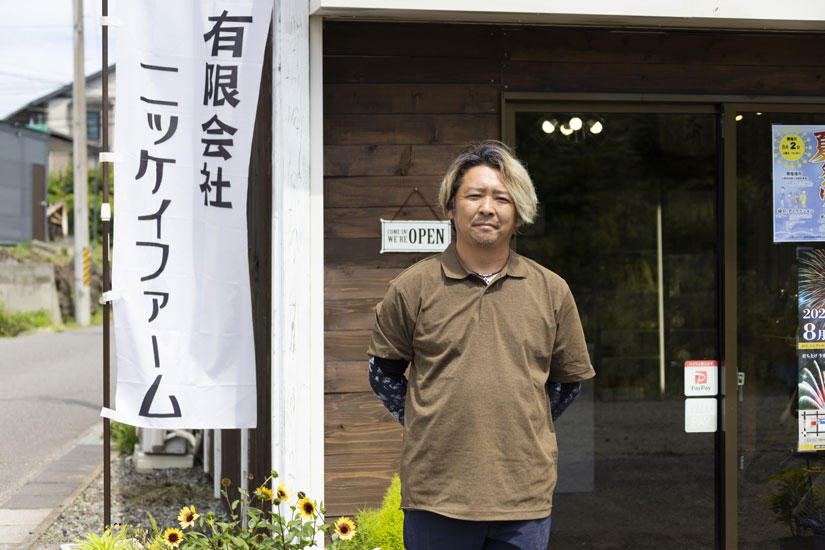
“I don’t want to show my children a field where not even insects appear, so I don’t use pesticides,” says Hideyo Ohtake, representative of “Nikkei Farm,” with conviction. Having dedicated himself to agriculture for over 17 years, he is committed to growing vegetables using only organic fertilizers and no pesticides whatsoever. He now cultivates as many as 100 varieties of vegetables annually and is one of the leaders shaping the future of agriculture in Koriyama City, Fukushima Prefecture. He is also known for his “Legend Spinach,” which won the Grand Gold Award at the 2024 “Vegetable Sommelier Summit,” and has garnered attention from across the country. Together with his wife, Shiho—who manages sales at their farm’s direct-sales shop while he tends the fields—and his staff, he is dedicated to growing vegetables that bring joy to people.
I switched careers from hairdressing to farming. In terms of bringing joy to people, it was the same.
As it turns out, Ms. Otake’s first job after graduating from high school was as a hairdresser. “Back in high school, when a hairdresser helped me solve a problem with my hair, the words ‘Thank you’ just naturally came out of my mouth. I thought to myself that someday I’d like to make people happy as a hairdresser too, so I became an apprentice.”
Even back then, the Ohtake family owned a vegetable garden, but when his mother—who had been involved in farming—became too ill to tend the fields, he took over the farm. Driven by a sense of gratitude for having been able to pursue a career as a hairstylist, he eventually decided—after much deliberation—to leave the beauty industry and dedicate himself to farming.
“I never imagined I’d quit hairdressing to pursue farming, so I’m surprised even by myself. At first, I didn’t want to do it—I thought getting covered in mud was uncool. But when someone who ate our vegetables said, ‘That was delicious. Thank you,’ I realized that whether as a hairdresser or a farmer, the act of bringing joy to people is the same. That’s when the desire to make people happy through farming began to take root,” she recalls with a smile.
The creatures living in the soil are our vital partners, indispensable to agriculture.
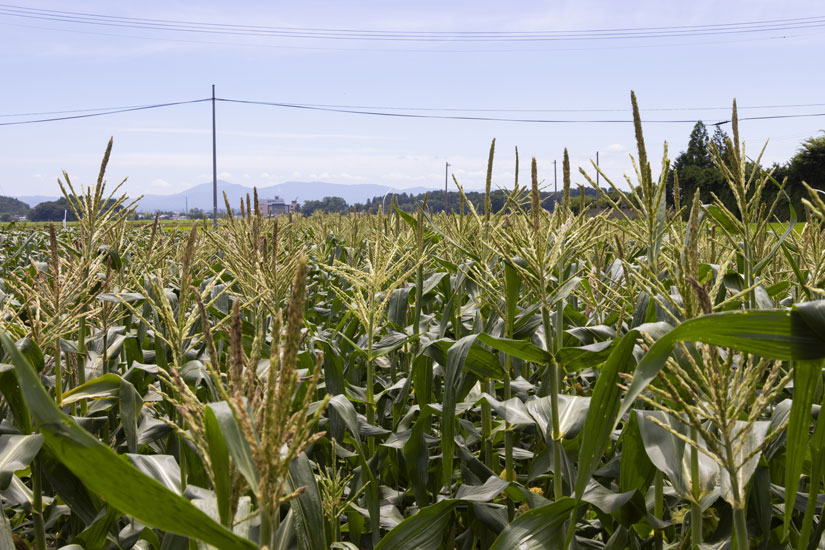
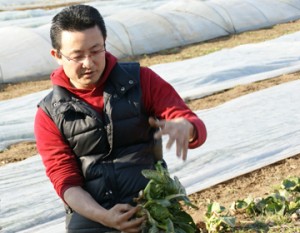
Frustrated by people telling him that “pesticide-free farming is difficult,” Mr. Otake started by planting 1,000 corn stalks. However, the corn was completely wiped out by damage from palm civets, crows, and insects. Drawing on that experience, he devised strategies such as installing electric fences to keep out palm civets, and gradually increased his success rate. “When you cultivate crops while nurturing microorganisms, it seems that problems caused by continuous cropping—such as vegetable pathogens and stunted growth—don’t occur,” he says, confident in his unique organic farming method.
It has been about 17 years since he became a farmer. With his eager-to-learn and determined personality, Mr. Otake has taken on the challenge of growing a wide variety of vegetables. He began by simply learning about farming, gaining experience through conversations with veteran farmers and receiving guidance, and gradually developed his own style through trial and error.
What Mr. Ohtake values most in vegetable farming is preserving traditional farming methods without using pesticides. However, he is by no means opposed to pesticides. He says that his childhood memories of fun experiences have influenced this perspective.
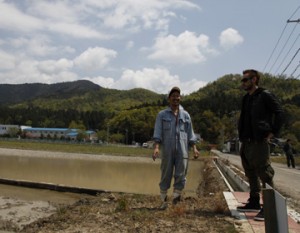
“I’ve always loved insects; I used to catch rhinoceros beetles and dragonflies. It used to be normal to see frogs in the rice paddies and insects in the fields, but perhaps because people started using pesticides, they disappeared before I knew it. Through my hands-on experience in farming, I’ve learned that it’s the soil that grows the vegetables. By changing how we prepare the soil, the soil microorganisms also change, leading to healthy soil. “When the soil is healthy, the insect population naturally increases. So, in fact, I get hints on how to grow vegetables from the insects themselves. I’m proud to show my children the fields where the insects thrive,” he says with a cheerful smile. He explains that, for insects, the fields are like a restaurant. Rather than selfishly using pesticides, he minimizes interference with the soil and gradually increases the microbial population through green manure. He has built his current farming style on the philosophy that “I am privileged to grow vegetables using soil that is home to insects.”
Overcoming the hardships following the earthquake, they are preserving agriculture with passion
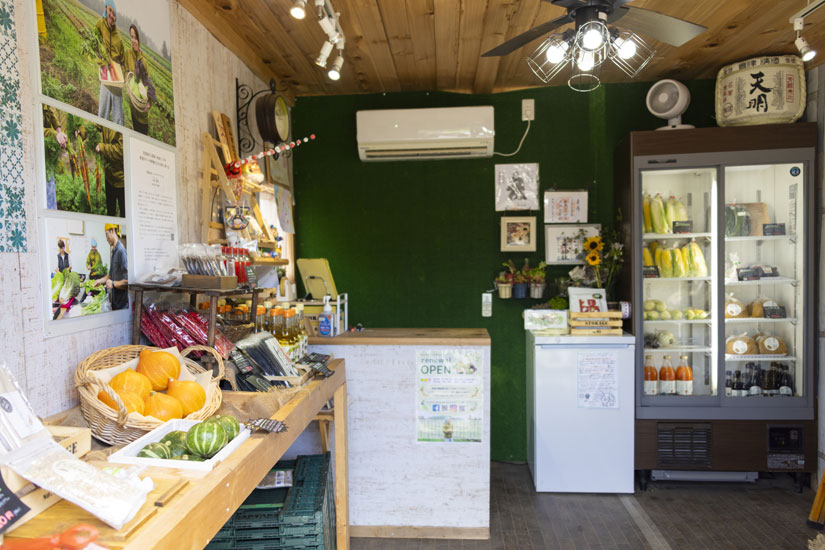
While studying agriculture, Mr. Otake has also pursued his own standards when it comes to distribution. After exploring ways to deliver pesticide-free vegetables and rare, diverse varieties to those who seek them, he decided against supplying markets or agricultural cooperatives (JA). Instead, he has maintained a unique business model of selling directly to contracted retailers and restaurants, while also offering seasonal vegetables at his farm’s own retail outlet.
While Nikkei Farm may appear to have followed a smooth path in agriculture, over the past 17 years it has weathered the reputational damage following the Great East Japan Earthquake and the COVID-19 pandemic, overcoming numerous difficult situations where they were forced to discard the vegetables they had grown.
“Before the earthquake, about 80 percent of our sales came from supplying restaurants in Tokyo through a broker specializing in the foodservice industry, while the local market accounted for about 20 percent. However, due to the reputational damage caused by the earthquake and the nuclear accident, that 80 percent vanished overnight,” he recalls. Since even residents of Fukushima Prefecture were shunning locally grown vegetables at the time, his wife, Shiho, says, “When I think back on those days, I still can’t hold back my tears.” For a while, their daily routine consisted of growing produce only to throw it away, which took a heavy toll on them both physically and mentally. The company was operating at a continuous loss and was barely viable, but they were supported by the reopening of local restaurants and have been taking small steps toward recovery ever since.
“It was truly painful and difficult for about 10 years. However, while many people were forced to give up farming after the disaster, we resolved that we must carry on the agricultural traditions of Fukushima Prefecture and Koriyama into the future,” he says, expressing his feelings for his hometown.
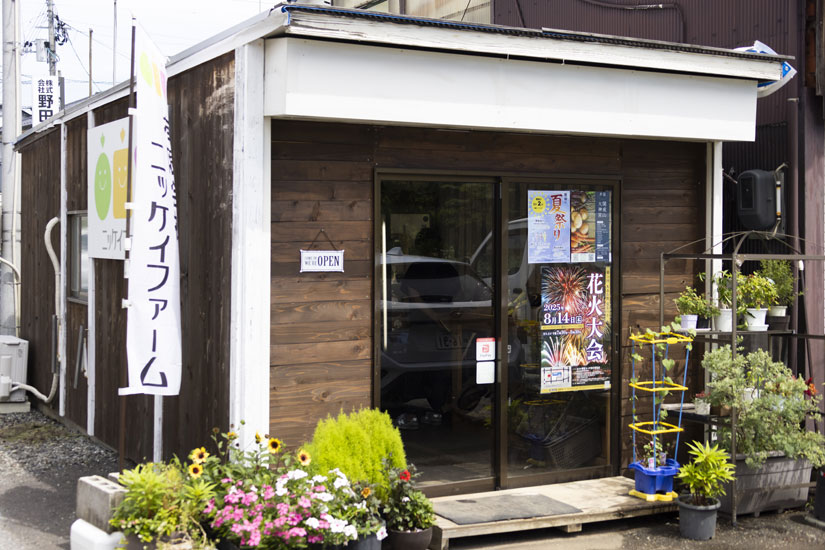
At our farm stand, we sell fresh, seasonal vegetables grown with organic fertilizer.
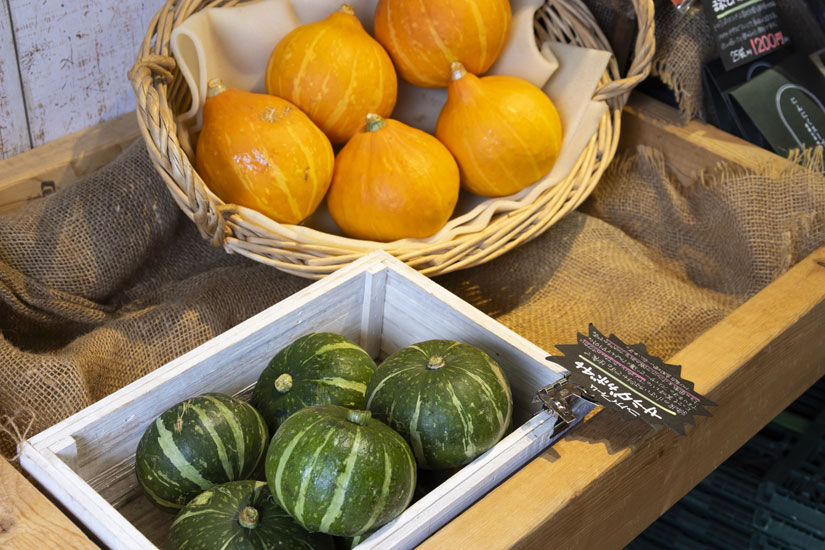
Tucked away in a quiet residential neighborhood in Otsuki-cho, Koriyama City, the Nikkei Farm direct sales shop carries a wide variety of vegetables—primarily their own, but also those from other producers who grow delicious produce. The small shop is lined with colorful vegetables and rare varieties rarely seen elsewhere, bringing smiles to visitors’ faces. Grown without pesticides and using organic fertilizers, the vegetables are packed with the bounty of nature, boasting rich flavors and aromas. During the summer, in addition to edamame, zucchini, and green beans, colorful cherry tomatoes, beets, and “Kyomanju” (eggplant) make their appearance. The round, adorable salad squash and freshly picked corn are so fresh they can be eaten raw.
“Although it’s just a verbal recommendation, I introduce customers to several recipes they can enjoy using the vegetables we sell,” says Shiho, who runs the farm stand, with a smile. “It’s fun to talk to them directly, and I’m happy to be able to convey the appeal of our vegetables.” She adds that many people visit the stand after tasting dishes made with Nikkei Farm’s vegetables at local restaurants and wanting to try cooking with them themselves.
It’s as sweet as fruit. Corn you can eat raw
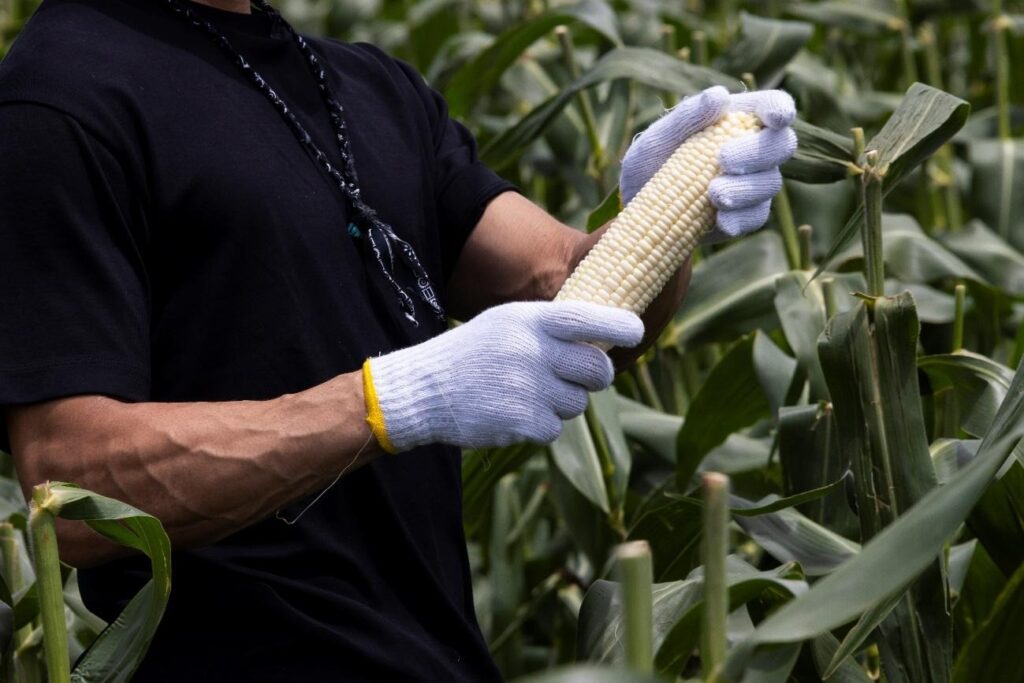
Nikkei Farm, which cultivates as many as 100 varieties annually, operates on a “small quantities, wide variety” model; however, even among these, its flagship product—corn—accounts for shipments of as many as 26,000 ears. During the three-month summer peak season, the farm harvests the corn every day around 3:00 a.m. and ships it while it’s still fresh and just-picked. This is because corn accumulates starch (sugar) overnight, and it is at its sweetest in the morning. In addition, corn harvested early in the morning has a higher moisture content, making it easier to maintain freshness and helping to prevent quality deterioration caused by the daytime heat.
At Nikkei Farm, corn is grown for about 10 days longer than usual, which concentrates the sweetness and deepens the flavor. The white corn variety “Pure White” maintains a high sugar content of 22.5 degrees, while the yellow corn maintains 21.5 degrees.
“We harvest the corn by feeling the top of the cob to make sure the kernels are firm, checking the base, and judging by the dryness and color of the silks,” says Mr. Otake, holding a cob of Pure White. He explains that by taking measures such as cutting the stems and reducing the number of leaves to prevent the corn earworm—a well-known corn pest—pest damage has been dramatically reduced.
“I recommend eating white corn raw. You can enjoy its juiciness and fresh sweetness. For yellow corn, cooking it slightly brings out more sweetness,” he told us.
I want to move many people with the taste of vegetables.
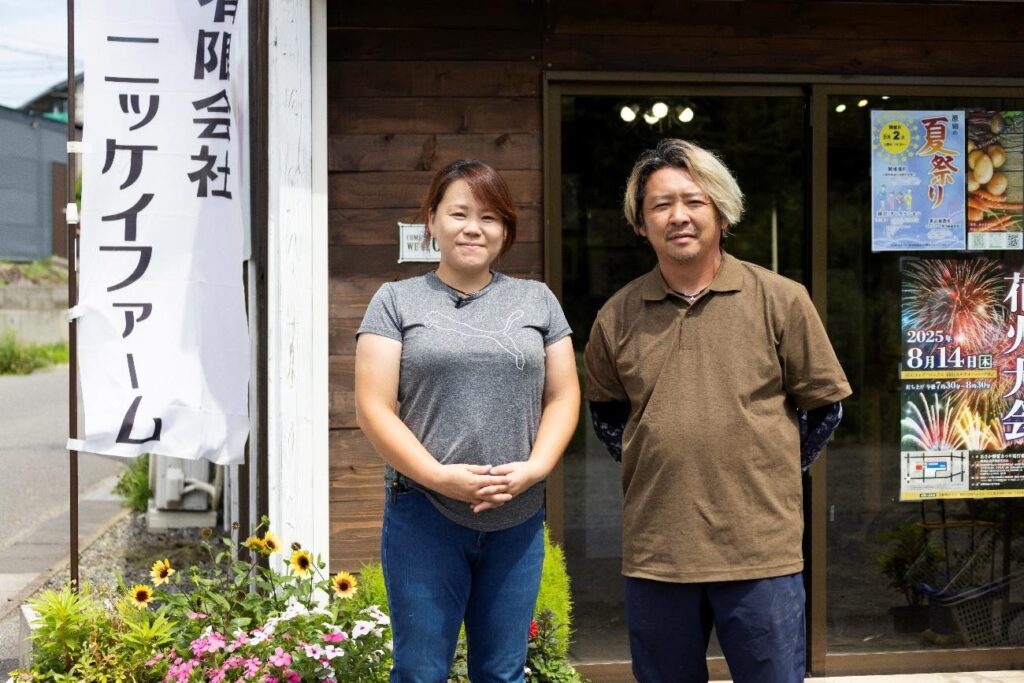
“I still have so many dreams,” says Mr. Otake with a smile. One of those dreams—which has become his own farming philosophy—is to move people with the taste of his vegetables.
He hopes to become the kind of farmer where parents and children don’t view eating or serving vegetables as a chore, but rather—just as children ask for candy—think, “The vegetables over there are delicious,” or “I want to eat that corn, so please buy some for me.”
“I believe that if I can convey the fun and message of farming through childhood experiences, the fields will continue to be places where vegetables are grown for generations to come. It also makes me happy when people say they’d like to visit the fields again.”
Furthermore, he notes that the current situation—where consumers take cheap vegetables for granted—is certainly not what farmers want, adding, “It’s also important for people to understand the challenges farmers face and change their mindset.”
“I’ve overcome many difficulties, but looking back now, I’m glad I chose farming. If there’s something I can do for others, I’ll do my best,” says Mr. Otake. Shiho, sitting beside him, nods vigorously in agreement. To continue seeing those smiling faces that say, “That was delicious!” they will press forward on their unique path in agriculture, finding fulfillment in their work every day.