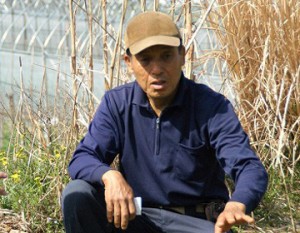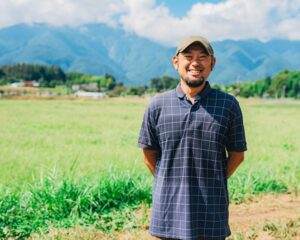


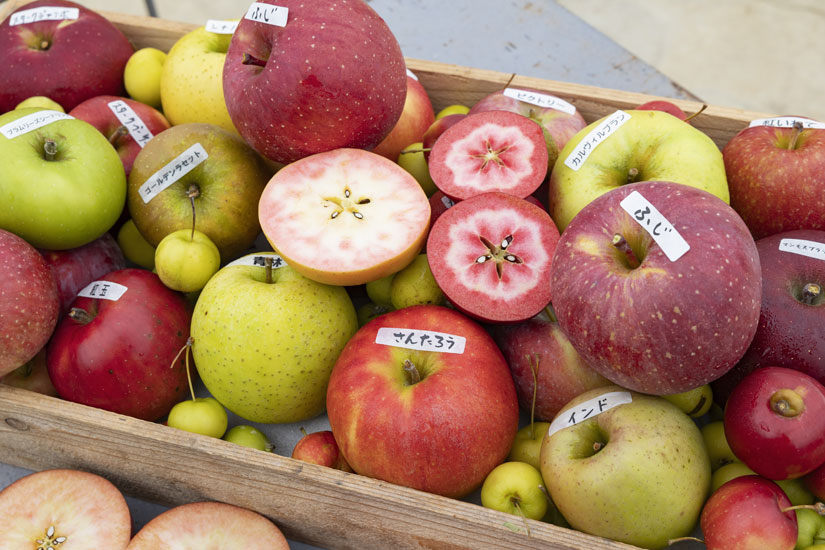
Based in Morioka City and Shiwa Town in Iwate Prefecture, “Sun Farm” Ltd. produces fruit trees and rice. Guided by the philosophy of “doing things differently,” President Satoshi Yoshida cultivates a wide variety of apples, including rare overseas varieties. The collection includes a staggering 140 varieties—it’s practically an apple museum.
“Sun Farm”: Committed to Iwate, Starting with “Soil Preparation”
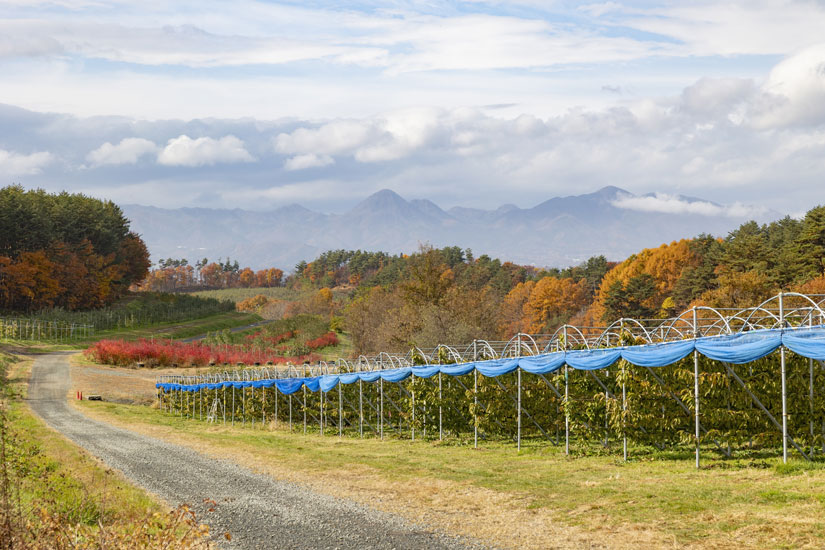
Iwate Prefecture is a major apple-producing region, second only to Aomori and Nagano prefectures. Its history of apple cultivation predates that of Aomori and Nagano; apple cultivation is said to have begun in Morioka City in 1872.
“Sun Farm” is an agricultural corporation based in Morioka City—which boasts the highest apple production volume in the prefecture—and the neighboring town of Shiwa to its south. The company grows apples and other fruit trees, as well as rice. It was founded by a family of farmers whose lineage has continued in this region for generations, and is currently led by Satoshi Yoshida, the 11th-generation head of the family.
Under the concept of “Iwate from Soil Preparation Onward,” the company practices circular agriculture using compost and oyster shells produced within Iwate Prefecture. Its apples and rice have earned “Special Cultivation” certification, which requires that pesticide use be kept to less than half that of conventional farming. The company also operates tourist farms where visitors can pick cherries and blueberries; people come from the local area, the Tokyo metropolitan area, and even overseas to enjoy the harvest experience.
140 Varieties of Cooking Apples, Curated by a Former Trading Company Employee
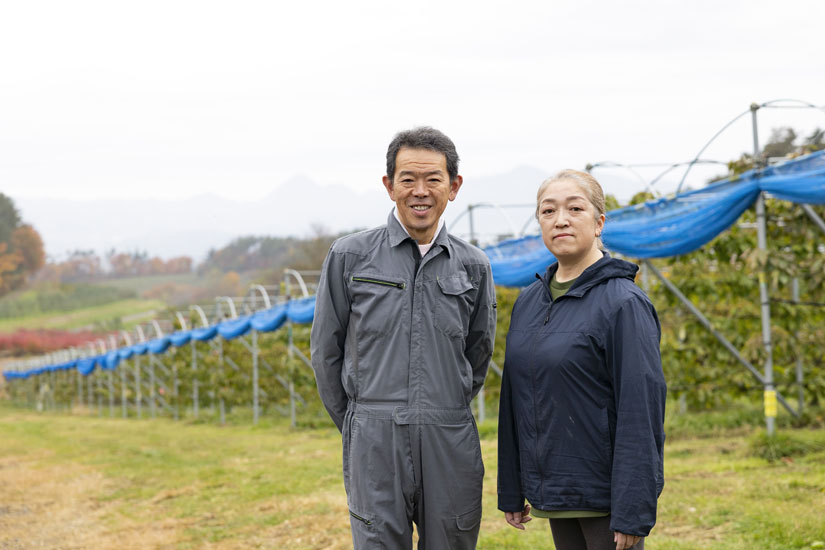
Mr. Yoshida is originally from Joetsu City in Niigata Prefecture. After graduating from the Faculty of Agriculture at Yamagata University, he joined a trading company specializing in aquaculture equipment. Following his marriage in 1995, he moved to Morioka City—the hometown of his wife, Mika—and joined Sun Farm, a business run by his father-in-law. Starting with no prior experience, he plunged into the world of agriculture and dedicated himself to mastering cultivation techniques, while also working to reform the business by launching initiatives such as a tourist fruit orchard and a direct-sales operation.
Among his initiatives, he has placed particular emphasis on cooking apples. He cultivates approximately 140 varieties, focusing primarily on rare varieties with a strong tart flavor. “In terms of the number of varieties we handle, I believe we’re probably number one in Japan,” Mr. Yoshida says with pride.
I’m a relative newcomer to apple farming. That’s exactly why I want to do things differently from everyone else.
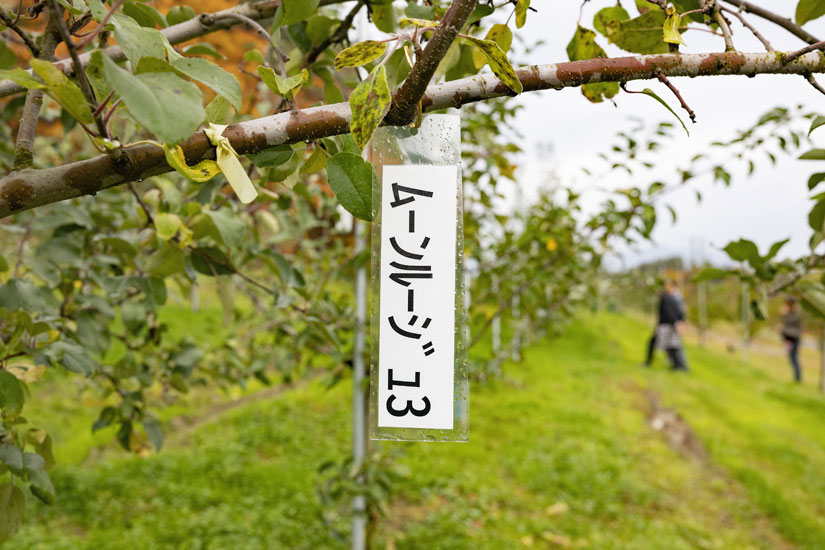
Morioka City in Iwate Prefecture was one of the first places in Japan to introduce “dwarfing cultivation,” and the adoption rate there is over 90 percent. “Dwarfing cultivation” is a method in which fruit trees are grafted onto “dwarfing rootstocks”—which naturally suppress plant growth—and trained to grow at a low height. The benefits of this method include easier cultivation management and harvesting due to the trees’ compact size, as well as the ability to grow high-quality fruit because sunlight reaches every part of the tree.
Although the area has a long history of apple cultivation, the orchard was not growing apples when Mr. Yoshida began helping out there. “Our family has been farming for generations, but we didn’t start growing apples until 2009. Compared to our neighbors, we were latecomers,” says Mr. Yoshida. That is precisely why he says he makes a conscious effort to focus on “doing things that others aren’t doing.”
“The JA cooperatives in Iwate Prefecture handle 22 varieties of apples. Most apple farmers grow one of these 22 varieties, and the apples they grow are lumped together with those from other producers and distributed to the market. I felt that made it hard to stand out and wasn’t very interesting. So I decided to compete on a completely different playing field, and starting the following year—2010—I began expanding our variety selection.”
Most apples grown and distributed in Japan are sweet varieties meant for fresh consumption, such as Fuji and Jonagold. Mr. Yoshida decided to “go in the opposite direction” and focused on varieties with a strong tartness that are well-suited for cooking. He believed there was significant demand, particularly among restaurants, for cooking apples whose flavor is enhanced when heated. Therefore, he set his primary target audience as chefs and pastry chefs and visited restaurants and pastry shops across the country to understand their needs.
“As I spoke with various chefs, I came to realize that the characteristics required in apples differ depending on the intended dish or use—for example, apples that don’t release much moisture when baked, or those that break down easily when made into jam. So I started by searching for varieties suited to each specific need.”
The 140 varieties currently grown include classic British varieties such as “Bramley” and “Cox’s Orange Pippin,” as well as “Calville Blanc,” which originated in France. While the focus is on foreign varieties, they also handle rare domestic varieties such as “Moon Rouge,” which originated in Nagano Prefecture. In addition, they have set aside a portion of the orchard as a test plot where they trial-grow new varieties every year.
“Many of the countries of origin for these foreign varieties have drier climates with less rainfall than Japan. It’s difficult to grow them in Japan’s hot and humid climate, and there are some varieties we’ve had to give up on,” says Mr. Yoshida. Rather than trying to forcefully overcome the differences in the fruits’ characteristics through technical means, he explains, “We select and grow varieties that retain their unique characteristics and subtle nuances even when cultivated in Japan’s climate.”
Furthermore, the farm is reportedly working on breeding its own original varieties, which are derived from the foreign varieties they currently grow.
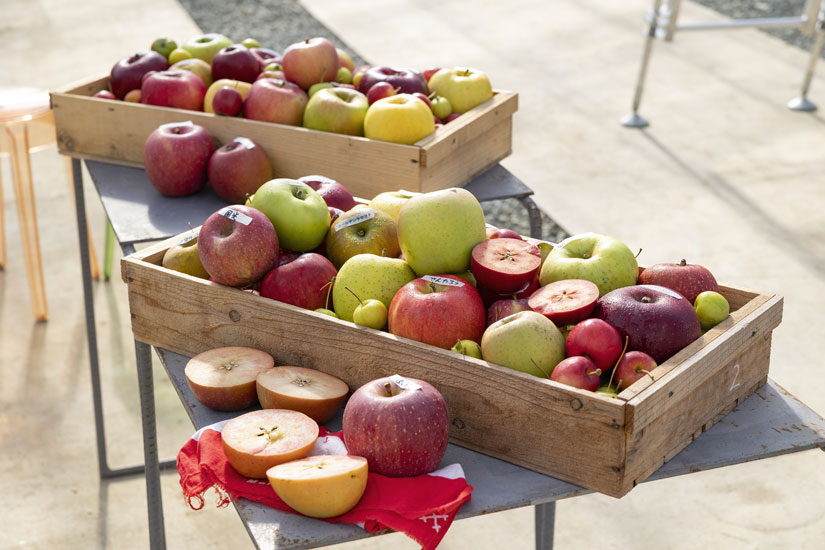
These apples are primarily supplied to restaurants and patisseries, including three-star restaurants and renowned hotels. The company’s reputation grew through word of mouth from chefs who actually used the apples on their menus, following a steady sales effort that began by visiting each establishment one by one. In addition, apples that do not meet standard specifications are sold wholesale as primary processed products—such as peeled, sliced, or grated apples—for commercial use. This helps San Farm reduce food waste and also helps its restaurant customers lower their labor costs. In addition, the company now sells directly to consumers through farm-to-consumer e-commerce sites such as Tabechoku.
“When we ship to organizations like JA, the distribution system makes it difficult for our rare varieties to be properly appreciated. But with direct sales, we can leverage our strength in handling a wide variety of apples to meet specific needs,” says Mr. Yoshida. The company enjoys strong trust from chefs and pastry chefs, and currently, 90 percent of Sun Farm’s sales come from direct transactions.
Furthermore, participating in the national “Hometown Revitalization Global Project” gave him a firsthand sense of the demand for Japanese apples overseas. Since then, by partnering with a fruit-specialized distribution company, he has experienced in-person sales at shopping centers in Thailand and appearances on TV shopping programs, allowing him to truly grasp the potential of Japanese apples in the global market.
“Red-fleshed varieties, such as ‘Beni no Yume,’ are particularly popular. While red-fleshed varieties from overseas tend to be astringent when eaten raw, people are delighted to find that Japanese ones are much easier to eat.”
Apple Picking in the City Center? A Collaboration with “Hobonichi”
Sun Farm’s efforts in growing a wide variety of crops also led to a collaboration with “Hobonichi,” a company headed by copywriter Shigesato Itoi.
The “Maybe It’s an Apple-Picking Exhibition,” held annually by “Hobonichi” since 2021, takes place at Shibuya PARCO and offers a simulated apple-picking experience. Sun Farm provides a variety of apple varieties for this event every year.
At the venue, a wide range of varieties—from sweet to tart, and varying in size and color—are on display. Visitors can choose and purchase their favorite apples from the selection and eat them right there.
“We have many varieties on display that you rarely see in supermarkets. Children often eat tart apples without batting an eye. Even when parents try to stop them by saying, ‘That’s sour,’ the kids will reply, ‘I like this one.’ I’d be happy if people could discover the many charms of apples without being bound by the preconception or standard that ‘sweet equals delicious,’” says Ms. Yoshida with a smile.
Addressing Climate Change and New Challenges
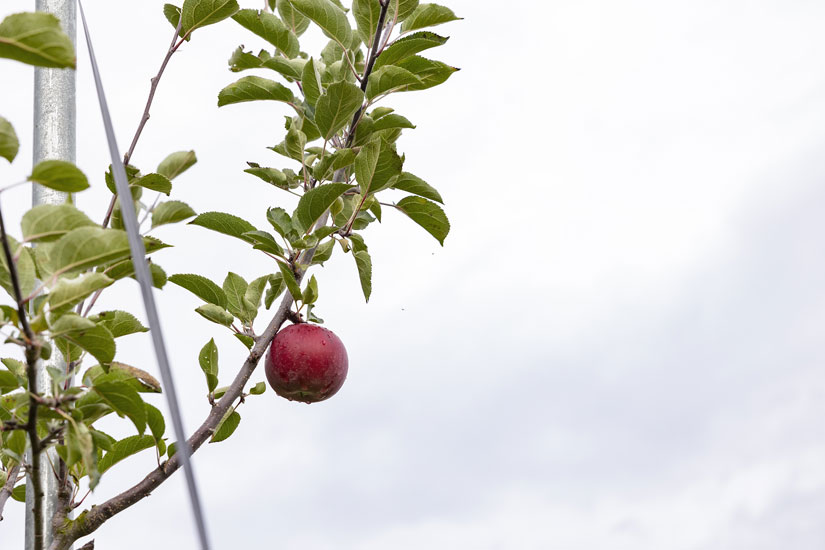
Sun Farm has earned the trust of chefs and pastry chefs across the country, including those at renowned restaurants and patisseries. While the farm’s operations appear to be going smoothly, there are challenges. Among them, adapting to climate change is a pressing concern.
“In recent years, both apples and cherries have been plagued by heat-related issues—such as softening fruit and poor color development—caused by extreme heat. Rising temperatures in early spring are also a problem. Flower bud development is progressing faster than usual, causing the timing of blooming to coincide with late-spring frosts. Cherry flower buds, in particular, are vulnerable to frost; if the flowers die from frost, the trees won’t bear fruit. To address this, we’ve installed anti-frost fans and, on days when a cold snap is expected, we use the ‘burning method’—lighting fires to warm the entire orchard.”
Even if these efforts prevent spring frost damage, a prolonged heatwave in the summer is highly likely to cause heat stress. If global warming continues at this rate, cherry and apple yields will likely decline in the future. Anticipating this, Mr. Yoshida has reportedly begun cultivating heat-tolerant fruits such as peaches and nectarines.
I want to prove that “farming is profitable” and pass this on to the next generation.
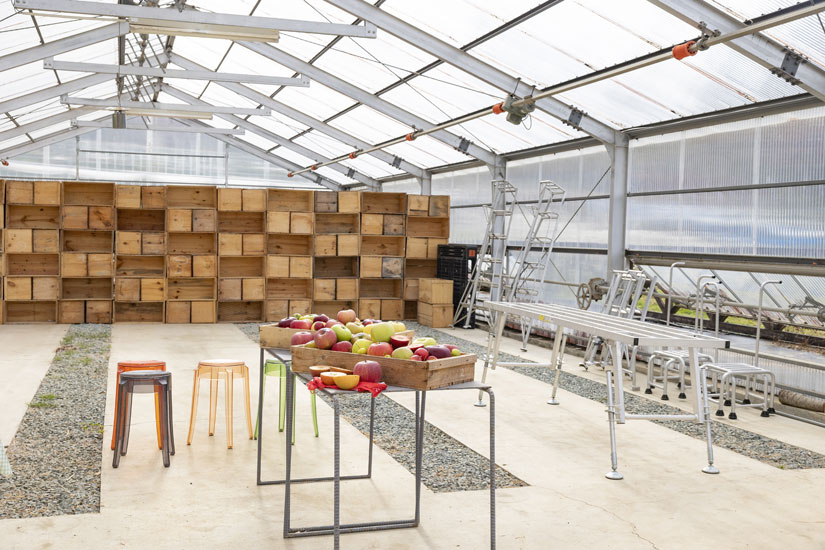
“Farming is a process of trial and error,” says Mr. Yoshida. “And you only get one chance to try each year.” It’s been about 30 years since he left his corporate job to become a farmer. I asked him what kind of future he envisions at the end of this journey of challenges he’s built up one by one.
“I don’t mind if my own children don’t take over the farm. However, I want to establish a solid business model so that employees who are interested—or the next generation—can successfully carry on the legacy. If I can prove that farming is a genuinely profitable business, young people will naturally be drawn to it.”
Mr. Yoshida says that what he “wants to do most right now” is to open a café on the farm.
“I want guests who come for cherry or blueberry picking to be able to stay at the farm after their experience—to relax at the café or take a stroll and enjoy a leisurely time,” he says.
Now in his mid-50s, Mr. Yoshida says, “I want to be ready to pass the baton to the next generation in about 10 years.” So that apples can continue to be grown on this land, no matter how the climate changes or who takes over. Mr. Yoshida’s journey continues.