

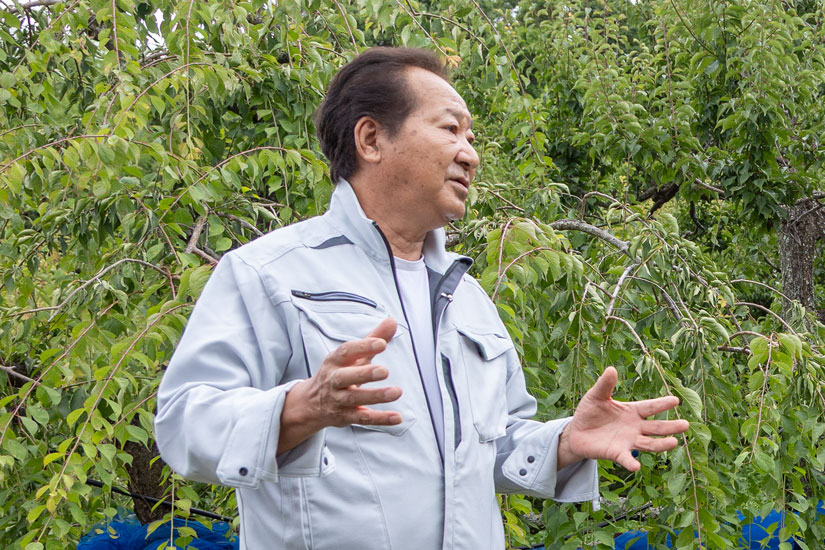
Located in Minabe Town, Wakayama Prefecture, “Kishu Takada Orchard” has been cultivating plums since Meiji 35 (1902). As the birthplace of the Nanko plum—one of Japan’s most representative plum varieties—the orchard pursues “authentic flavor” through organic cultivation and processing. We take a closer look at the challenges and aspirations of President Satoshi Takada as he works to share plums with the world and pass them on to future generations.
Nanko Ume, grown in a region with a history of plum cultivation dating back to the Edo period
Wakayama Prefecture is a major plum-producing region that has ranked first in harvest volume for 61 consecutive years and accounts for approximately 60 percent of Japan’s total plum harvest. In particular, the area encompassing Minabe Town and Tanabe City in the central part of the prefecture boasts the highest plum production volume in the prefecture, with a cultivation history dating back to the Edo period.
Facing the Pacific Ocean and blessed with a warm climate, the Minabe and Tanabe area was unsuitable for rice cultivation due to its steep, forested slopes and rocky, nutrient-poor soil. During the Edo period, Naotsugu Ando, the lord of the Tanabe domain within the Kishu clan who governed this area, implemented a policy of preserving firewood and charcoal forests near the mountaintops while clearing land at the mountain’s base to cultivate plum orchards—marking the beginning of plum cultivation.
Since these firewood and charcoal forests enhance the mountains’ water retention capacity and the wild bees inhabiting the mountains play a major role in pollinating the plums, the plums in this area thrive and have grown into a major industry. Even now, more than 400 years later, they continue to support the livelihoods of the local people. In 2015, the “Minabe-Tanabe Plum System” was recognized as a Globally Important Agricultural Heritage System (GIAHS) by the Food and Agriculture Organization of the United Nations (FAO), a specialized agency of the United Nations, in recognition of its innovative farming methods and the culture and landscape that have evolved from the plum industry.
The Nanko Ume, the flagship variety of the Minabe-Tanabe area, is characterized by its beautiful, large fruits with a faint reddish tint, thick flesh, soft skin, and fruity aroma. It accounts for about 80 percent of the plums produced in Wakayama Prefecture and is a nationally renowned variety.
The “creator” of the Nanko Ume is “Kishu Takada Orchard,” which has been cultivating plums in Minabe Town since 1902. Satoshi Takada, the company’s representative director, explains, “The plum saplings planted by my grandfather, the founder Sadagusu Takada, marked the beginning of the Nanko Ume.”
A single tree planted by a plum farmer grew into the “Nanko Ume,” one of Japan’s most representative varieties.
Before the Nanko Ume was developed, the Minabe and Tanabe areas were home to a wide variety of plum cultivars, with each farm growing different types. “At Takada Orchard, too, among the plum trees my grandfather planted, there was one that bore an abundance of beautiful, large plums. We called it the ‘Takada Ume,’ and we carefully nurtured it while increasing the number of trees through grafting,” Mr. Takada recalls.
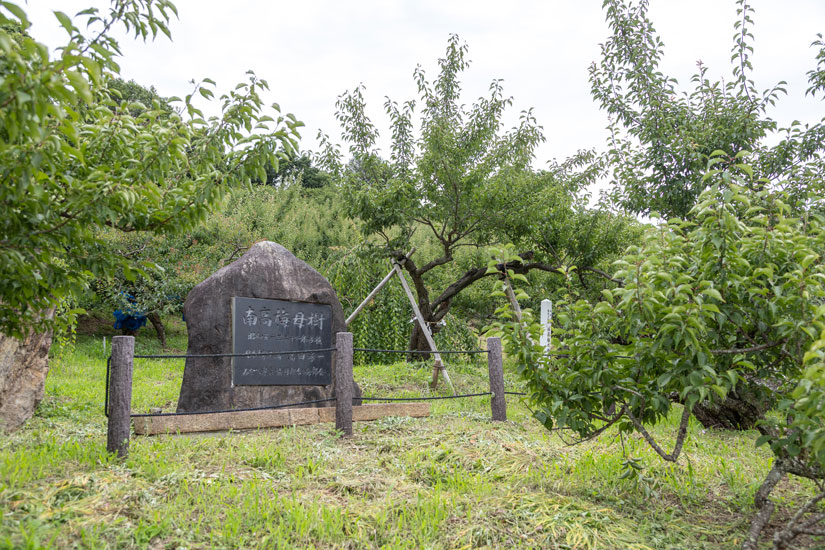
Amid this situation, in 1950, the “Committee for the Survey of Superior Plum Trees” was established with the goal of standardizing the region to a single variety best suited to the local climate, in order to enhance the brand value of the production area and ensure a stable supply of high-quality plums. At the time, the committee surveyed 114 varieties cultivated in the region, evaluating them based on criteria such as “stability of yield,” “fruit quality,” “adaptability to the climate of the Minabe and Tanabe areas,” and “ease of cultivation.” After a review process spanning five years, the Takada Plum was evaluated as “the finest variety best suited to the local climate.” Subsequently, the new variety was named “Nanko”—combining the “Nan” from “Minabe High School,” a local high school that assisted in selecting mother trees for propagation, and the “Ko” from “Takada Ume”—and the variety name was registered in 1965. What began as a single plum tree at Takada Orchard has since grown in popularity to the point where people now say, “When it comes to umeboshi, it’s got to be Nanko plums.”
As the farm where the Nanko Ume originated, we grow each exquisite fruit using organic farming methods.
Takada Orchard, which handles everything from plum cultivation to processing and sales, has been committed to organic farming for over 10 years. Currently, 80 percent of its approximately 9-hectare farm is dedicated to growing plums without the use of chemical fertilizers or pesticides. The company’s plums have received “Organic JAS” certification, a national standard awarded to agricultural products grown by harnessing the power of nature.
The company’s commitment to organic farming stems from Mr. Takada’s strong conviction: “As the farm where the Nanko plum originated, we want to deliver the very finest fruit.” By enriching the soil with handmade compost, pruning the trees to ensure the fruit receives ample sunlight, and sparing no effort in these meticulous care practices, the trees yield an abundant harvest of large, beautiful plums.
At Takada Orchard, they harvest both green plums—while the fruit is still firm—and fully ripe plums that have turned yellow and softened, processing them to bring out their respective characteristics. For example, their flagship product, umeboshi (pickled plums), is made using fully ripe plums, which result in a mellow flavor and smooth texture. For plum wine, they blend green plums, which provide a refreshing aroma, with fully ripe plums, which add depth and richness.
Speed is everything when it comes to pickling. Umeboshi made from fully ripe plums
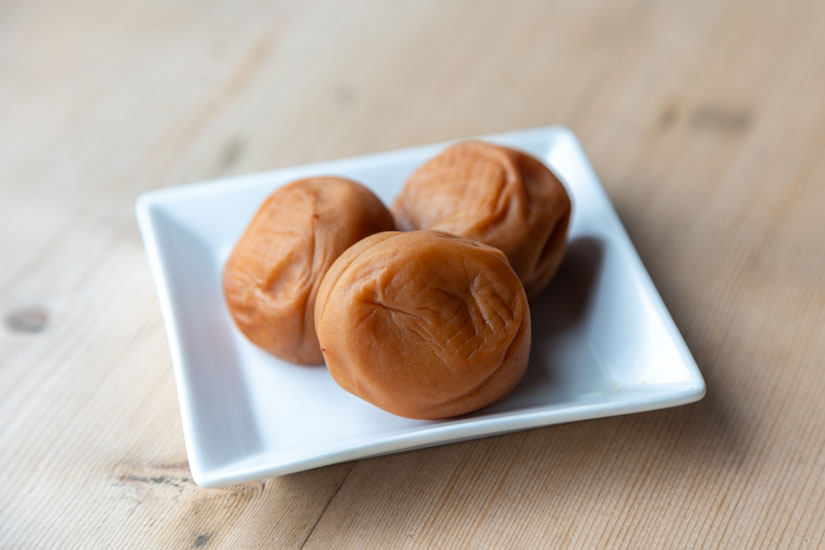
The plums used for umeboshi are not picked from the tree; only those that have ripened and fallen naturally are used. Mr. Takada explains the reason: “For us, the moment they fall after ripening—having grown on the tree until the very last possible moment—is the sign of ‘perfect ripeness.’ “In terms of aroma, skin, and flesh, they are in a class of their own,” explains Mr. Takada. These fully ripe plums—so ripe that even when eaten raw, they have a faint sweetness—exude a sweet, peach-like fragrance and feature thin skin and soft flesh. When made into umeboshi, their mellow flavor stands out, resulting in a smooth texture.
However, the softness of the flesh also means the fruit spoils quickly. Driven by the desire to act “even one second faster,” Mr. Takada and his team harvest fallen plums regardless of the weather and always salt-cure them on the same day. According to plum farmers, fully ripe plums spoil just as quickly as fresh produce, so speedy harvesting and salt-curing are directly linked to quality.
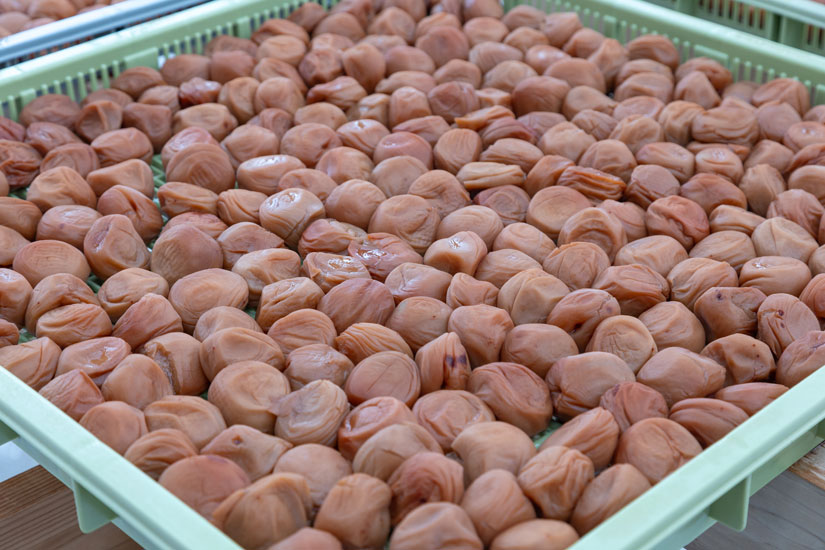
The company produces a total of eight varieties of umeboshi, including “Kuradashi Shirohiki Ume,” which is cured using only natural salt; “Traditional Shiso Umeboshi,” pickled between leaves of shiso grown organically on the company’s own farm; “Kinume,” made with large Nanko plums and acacia honey; and “Magokoro,” made with hundred-flower honey. Recently, due to improvements in preservation technology and changing tastes, there has been a trend toward preferring umeboshi with lower salt content or those pickled in seasoned brines such as honey or dashi. However, the company’s “Kuradashi Shirohiki Ume” and “Traditional Shiso Umeboshi” remain popular products with many repeat customers. To highlight the delicious flavor of the organic plums, both varieties have a salt content of 18%. These are exquisite products that offer a mellow richness even amidst their tartness.
Highly acclaimed at international competitions. Aiming to create a plum wine that stands up to global standards.
In 2008, Minabe Town was designated a “Plum Wine Special Zone.” Taking advantage of the relaxed minimum production volume requirement for a liquor manufacturing license when producing plum wine within the town using locally grown plums, Takada Orchard began making plum wine in 2011.
What Mr. Takada values most in umeshu production is a simple, pure flavor that allows the natural taste of the ingredients to shine through. The company consistently produces its umeshu without adjusting the flavor, color, or aroma, using only organically grown plums from its own orchard, sugar, and alcohol. Since the umeshu is brewed exclusively with plums harvested in the same year, one of its distinctive features is the ability to enjoy the variations in aroma, acidity, and body that occur from one vintage to the next.
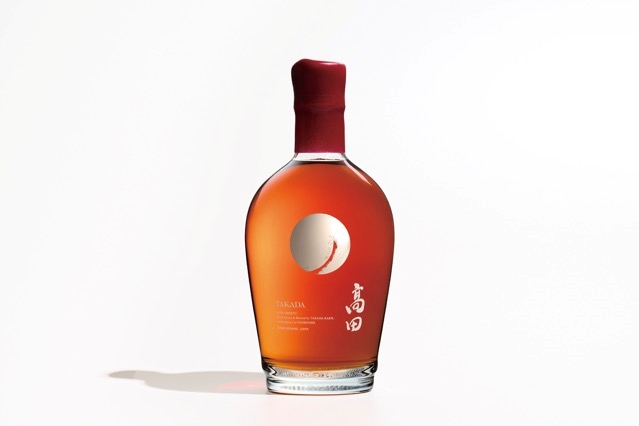
Currently, the company produces four varieties of plum wine. Among them, “Aged Plum Wine Takada TAKADA”—made with organic plums, domestically produced brandy, and rock sugar, and aged for over seven years—is one of the company’s flagship products, having won both the Platinum Award and the Excellence Award in the 2025 plum wine competition at “Kura Master,” a Japanese spirits competition held in France. While many plum wines have a heavy “body” due to their high sugar content, “Aged Plum Wine Takada TAKADA” is characterized by a clean, crisp finish. The purity of the organic plums, free of any off-flavors, blends seamlessly with the brandy.
Since 2023, Takada Orchard has been actively submitting its plum wines to international competitions. Mr. Takada explains the reason behind this: “It stemmed from the question: ‘Will plum wine be accepted worldwide?’” “Kura Master,” where sommeliers, chefs, and representatives from top-tier hotels active in Europe judge the taste and aroma, is a competition with strong influence in the European market. Although “Aged Umeshu Takada TAKADA” was selected for the Excellence Award—given to the top three brands—Mr. Takada looks toward even greater heights, stating, “When it comes to whether people around the world are actually drinking umeshu, we still have a long way to go. I want to keep taking on new challenges, always striving for an even better flavor.”
Born from this spirit of challenge is “Teinoku,” the brand’s premium umeshu line. Named after the founder, this umeshu employs a two-stage brewing process: fresh plums are steeped in a base liquor—made by aging organic plums, brandy, and rock sugar in oak barrels—before being added to the mixture. Designed to be “a glass that redefines the concept of umeshu,” it offers a rich, deep flavor with vanilla notes derived from the oak barrels. This brand received the “Magnifica Award” (a special prize awarded to the most outstanding bottle among the Platinum Award winners in each category) at the “Milan Sake Challenge 2025,” an international Japanese spirits competition where Italian sommeliers conduct a multifaceted evaluation of factors such as compatibility with Italian cuisine and design.
Bringing authentic flavors to the world and to the next generation.
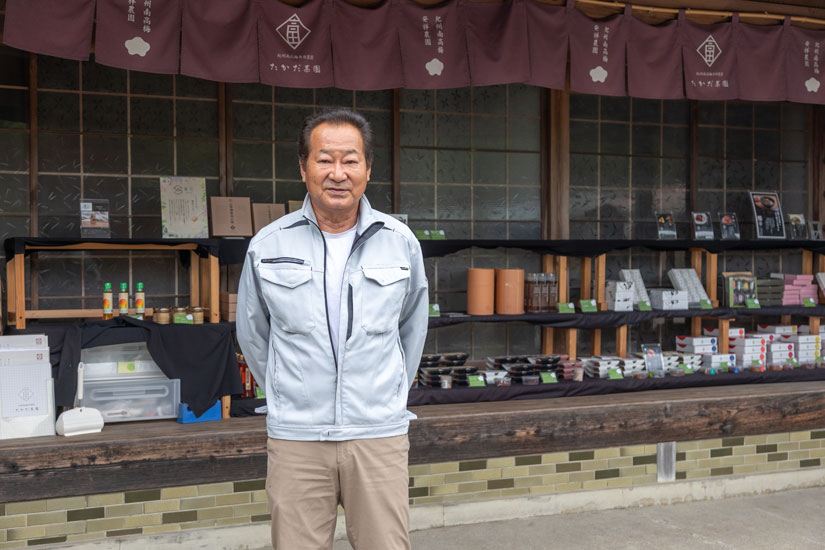
Although ume plums have long been cherished as part of Japan’s culinary culture, their value is not yet widely recognized around the world. As the founder of the farm where Nanko Ume originated, Mr. Takada’s greatest dream is to share the appeal of ume plums with the world.
Ume trees do not bear abundant fruit immediately after being planted. Similarly, umeshu—a plum wine that requires long-term aging—takes many years to reach maturity. Although he may not immediately see the results of the initiatives he has just begun, Mr. Takada is enthusiastic, saying, “I want to keep implementing measures that will pave the way for the future.” He will continue to work diligently with the ume, create new products, and share the appeal of Nanko Ume both domestically and internationally. This challenge also connects to carrying on the spirit of his grandfather, Teikan—who carefully nurtured the ume trees—and passing it on to the next generation.
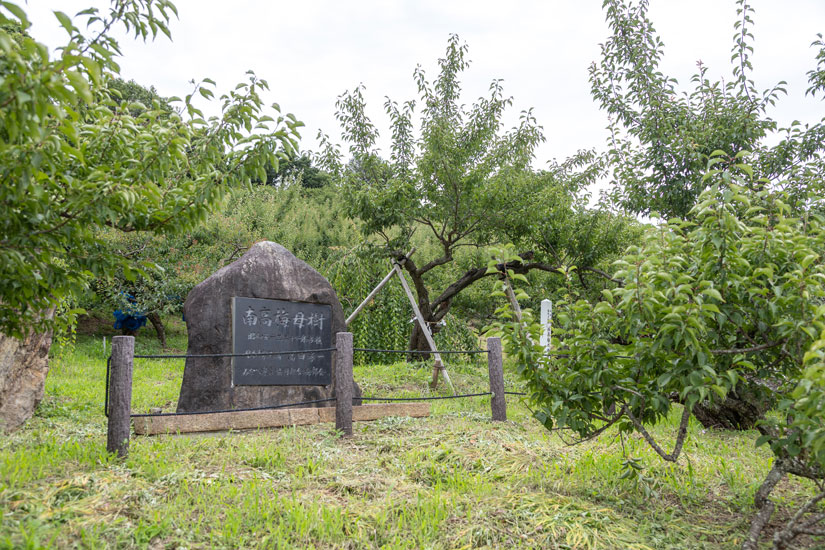
The mother tree that laid the foundation for the Nanko Ume plum variety continues to bloom and bear fruit every year at Takada Orchard, even now that it is over 130 years old. The story of the Nanko Ume, which began with a single plum tree, continues to spread its branches across the world and into the next generation.