

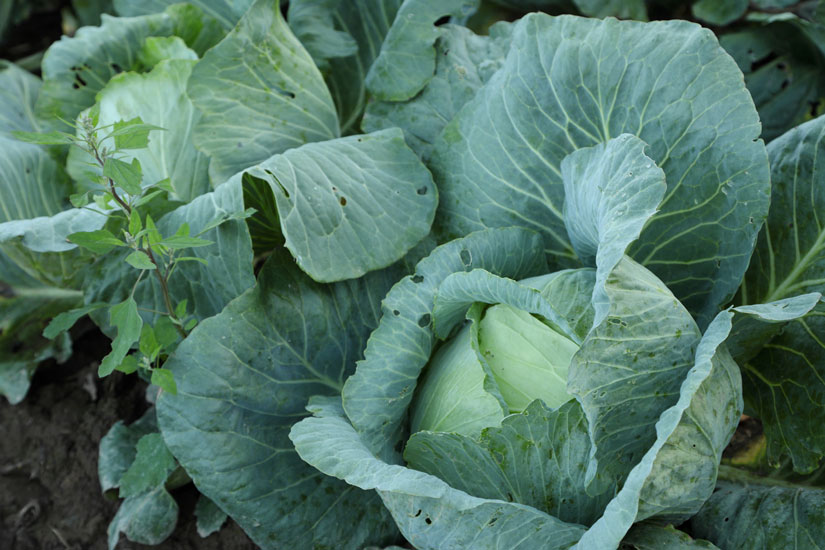
Koganezaki Farm produces more than 30 varieties of vegetables—including leafy greens, potatoes for processing, and seed potatoes—on one of the largest plots of land in the country. Its client list includes major corporations, and in 2025, its cabbage became the first in Aomori Prefecture to receive JGAP certification. The farm continues to demonstrate the true potential of locally grown vegetables and support the next generation of farmers.
Agriculture that embodies the spirit of Aomori, making the most of its vast land and convenient location
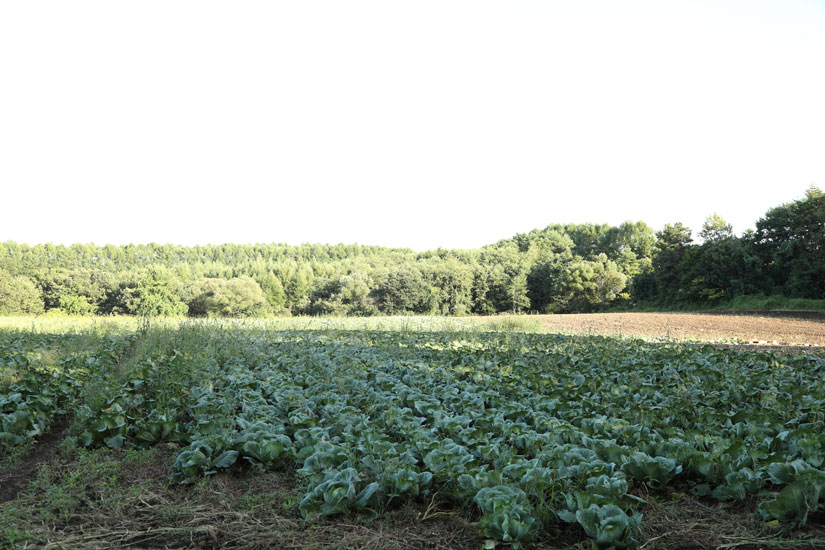
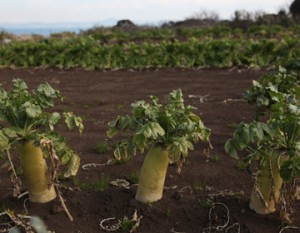
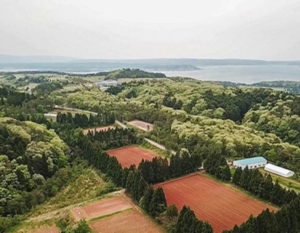
Koganezaki Farm, which operates on 500 hectares of land (equivalent to 100 Tokyo Domes), supplies over 30 varieties of seed potatoes—as well as potatoes, cabbage, daikon radishes, and other crops—to customers across Japan. Its client base spans from Hokkaido to Okinawa and includes major companies such as Calbee and Koikeya, as the farm continues to cultivate crops that take full advantage of Aomori’s unique soil and climate.
Beyond its scale and quality, the farm boasts advantages unique to Aomori. It was these advantages that caught the attention of founder Kimio Sasaki and three other farmers. They aimed to establish a sustainable agricultural business by leveraging the climate, which resembles that of Hokkaido, and the convenience of the land.
Farmers earning salaries comparable to those of office workers
Mr. Sasaki founded the company in 1976, when he was in his twenties. Concerned about the instability of the weather and vegetable prices, he and four colleagues discussed the idea of “whether it was possible to run a farm with a stable income, like that of a salaried employee,” and established a corporate entity. They believed this would allow them to expand their operations and reduce costs, and that any profits generated would translate into salaries.
From the very beginning, they adopted land-intensive agriculture. Land-intensive agriculture is a farming method that utilizes vast tracts of land and incorporates large-scale machinery and smart farming to improve operational efficiency. It also aims to mitigate the effects of crop rotation problems—where continuous cultivation of the same crop in the same field leads to changes in the soil environment and poor growth—by rotating crops. Their goal was to create a large-scale farm modeled after those in Hokkaido. One reason they envisioned a scale similar to Hokkaido’s was the similarity in climate. Many potato varieties thrive in cool regions, and Aomori’s significant temperature difference between day and night is said to be ideal for producing high-quality potatoes.
Furthermore, Aomori’s greatest strength is the ability to distribute produce via land transport. Since it is crucial to deliver leafy vegetables as quickly as possible—even by a single day—this gives them an advantage over Hokkaido when dealing with clients in the Kanto region. They planned to leverage these climate and distribution strengths to establish large-scale farms unique to Aomori.
With the characteristic drive and speed of young entrepreneurs, Sasaki and his team quickly found a plot of land and immediately launched their corporate farming operation. The land they found was on the hills of Koganezaki Cape in Fukaura Town, facing the west coast. They spent their days clearing the land from morning to night while intensively studying cash flow management. Although the instability of farmers’ incomes has always been a challenge, they pressed forward with the goal of resolving this issue and fostering the next generation of young farmers.
From “Profitable Farming” to “Farming That Doesn’t Lose Money”
They cleared the land and grew a variety of vegetables—including potatoes, carrots, melons, and watermelons—which they took to market, but the income didn’t meet their expectations. Compounded by cold snaps and other setbacks, they found themselves in a situation where they could barely make ends meet. Faced with a critical decision, Mr. Sasaki and his team chose to stop shipping their produce to the market. Rather than being at the mercy of market prices, they decided to set their own prices and sell directly to consumers. This was about six years after they had started their business.
One of Japan’s highest-quality seed potatoes
Along with expanding their customer base, they also began producing high-quality seed potatoes. Seed potatoes are potatoes planted for propagation; initially, they had been producing potatoes for processing, but the quality of the seed potatoes they used was poor, and they reportedly couldn’t achieve satisfactory results. That’s when they decided to start growing their own seed potatoes from scratch. The quality of the seed potatoes is crucial for growing high-quality potatoes.
However, it is often said that “growing seed potatoes is even more difficult than growing potatoes,” as disease management is extremely strict, and preventing infection by viruses and bacteria is an absolute requirement. Furthermore, thorough quality control is essential, including selecting a cool location with a low risk of natural disasters and maintaining sufficient distance between different varieties to prevent cross-contamination. Although it was a challenge in a difficult field, they persisted through trial and error, driven by a desire to protect the quality of domestically grown potatoes.
Among their strengths, their vast land proved particularly valuable. It minimizes the risk of cross-contamination even when planting different varieties of seed potatoes and helps prevent crop rotation problems.
Those efforts gradually bore fruit, and today, Koganezaki Farm supplies seed potatoes to potato farmers across the country. Since there are very few farms that cultivate such a wide variety of seed potatoes, it may not be an exaggeration to say that they are supporting Japan’s potato production.
“Koganezaki Farm has become so well-established that some people now associate the name directly with potatoes,” says Masahiro Higashi, the current President and CEO. “However, we also need to understand the characteristics of each variety and have facilities capable of air-drying and cold storage.” He explains that they are continuing to build a system for stable supply by collaborating with corporate representatives and seeking their advice.
A Legacy for Future Generations
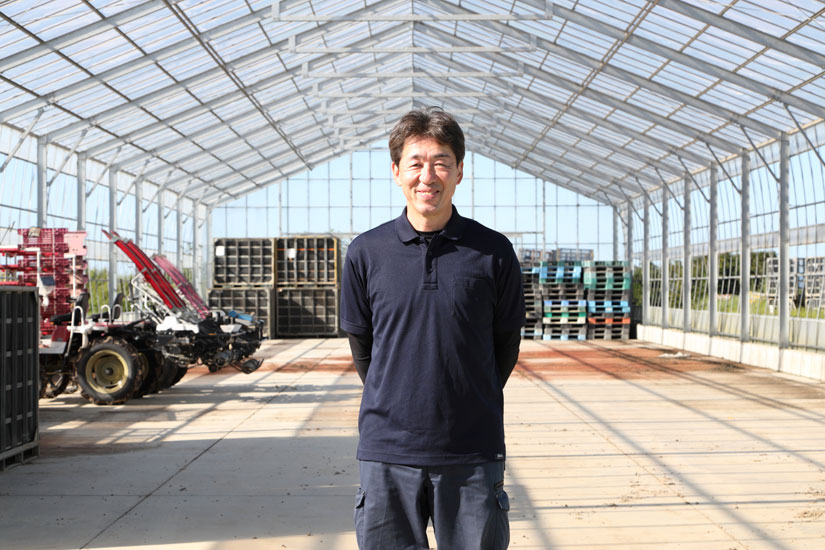
“Last year, our cabbage for processing obtained JGAP certification. I believe this will help build trust among both businesses and consumers,” says Kazunori Okura, Senior Managing Director. JGAP is a Japanese agricultural production process management certification system, an acronym for “Japan Good Agricultural Practice.” It is a set of standards designed to reduce risks in agriculture—such as pesticide management, foreign object contamination, and workplace accidents—and to ensure the stable production of safe and reliable agricultural products.
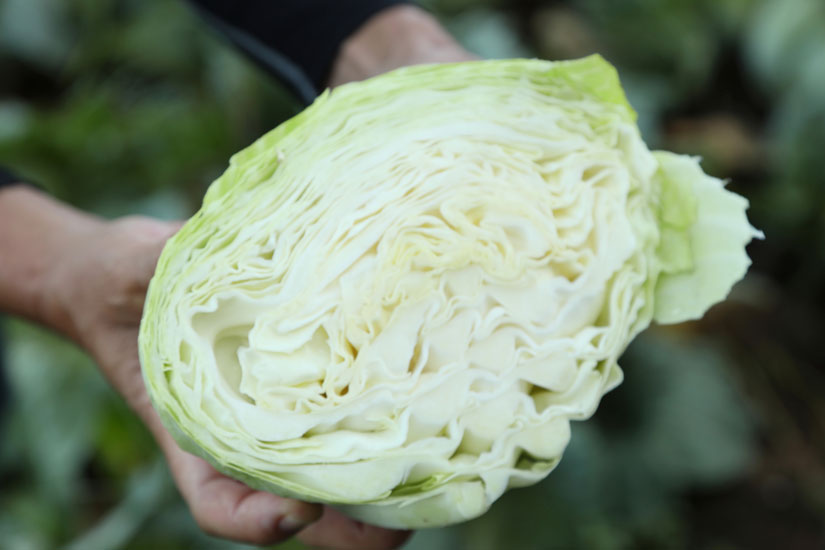
The cabbage the company primarily ships for cut vegetables is the “Okina” variety, which is also used in shredded cabbage commonly found in supermarkets. Its firm leaves retain volume even when finely chopped for dishes like coleslaw, offering a crisp texture and satisfying bite. It is reportedly also used in the gyoza served by nationwide chain restaurants.
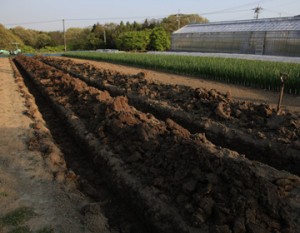
“Soil preparation is crucial, but given the size of the fields, it takes a lot of time. With large fields of about 18 hectares each, we have to make numerous passes with the tractor, so I’m considering whether we can automate that process using AI or similar technologies,” says Mr. Okura. While there are cost considerations, he explains that precisely because of the large scale, he wants to actively adopt drones (delivered on May 7, 2026) and machinery to build systems suited to the times and improve the farming environment.
Furthermore, the vast expanse of land offers the advantage of allowing him to experiment with various crop varieties. Although the onions he tried growing last year did not turn out as well as he had hoped, Mr. Okura remains enthusiastic: “There’s always a reason for failure, and I believe that if we can solve it, we’ll succeed. Someday, this might even become a major production area.” It may be this attitude—one of learning from failure rather than fearing it—that has allowed Koganezaki Farm to grow to where it is today.
The Future of Agriculture, as Envisioned by Mr. Sasaki
In fact, Mr. Okura moved here from Ibaraki Prefecture and decided to join the company because he was drawn to Mr. Sasaki’s vision. “I used to work in sales for about 30 years. But I came here because I was attracted to Mr. Sasaki’s character and his passion.”
Mr. Sasaki’s long-standing dedication to securing the future of farming and his tireless efforts to build a bridge to the next generation seem to have touched the hearts of many people. Although Mr. Okura passed away shortly after joining the company, it is said that Mr. Sasaki entrusted him with his vision, hoping he would pass the baton on to the next generation.
“There may still be challenges facing agriculture, such as labor shortages and an aging population. Nevertheless, I want to contribute to the development of local agriculture to help support Japan’s food supply and highlight the importance of domestically grown vegetables.”
The dream of farming that Mr. Sasaki envisioned has been firmly passed down to the current generation. The creation of systems that allow those who support Japan’s food supply to continue their work looks set to expand even further in the future.