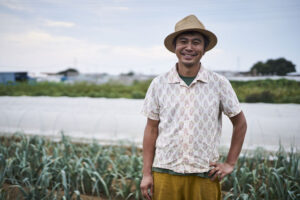

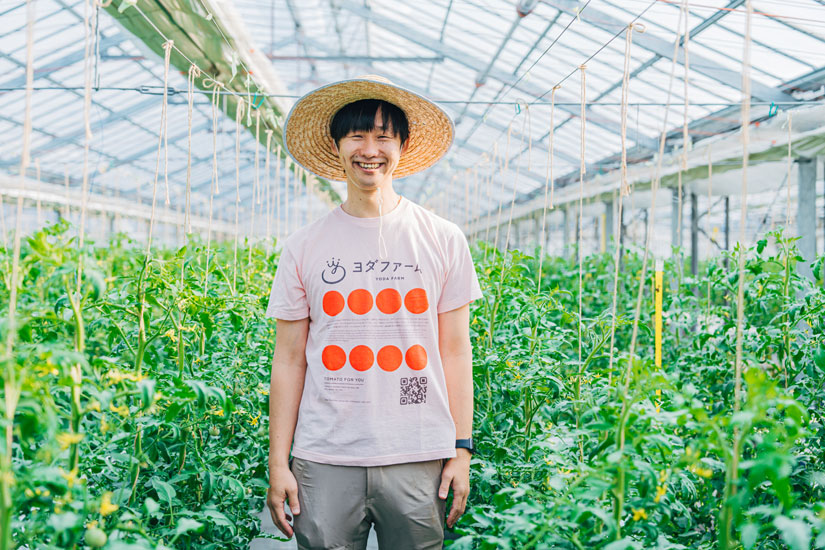
Located in the center of the Kofu Basin, Chuo City in Yamanashi Prefecture has long been a thriving agricultural region, thanks to its abundant sunshine and mineral-rich water. Here, Yoda Farm has been dedicated exclusively to growing tomatoes for nearly half a century. With the addition of his son-in-law, Takayuki Kunugi, six years ago, the farm continues to strive daily to share the deliciousness of its tomatoes.
The taste of the tomatoes my father-in-law grew
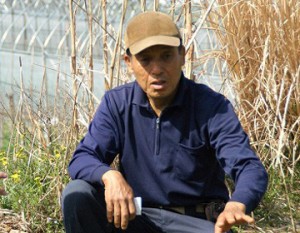
What led Mr. Kunugi to start farming at Yoda Farm was his meeting with his wife, the daughter of the farm’s manager, Katsumi Yoda. When he visited to formally introduce himself before their marriage, he tasted the tomatoes grown by his father-in-law, Katsumi, and was deeply impressed by their deliciousness. However, Katsumi’s remark that “tomato farming ends when your physical strength runs out” made him keenly aware of the reality facing the aging agricultural industry. “I can’t let such delicious tomatoes disappear,” Kunugi resolved. He decided to resign from the agricultural cooperative where he had worked for 13 years and began farming to become the farm’s successor.
Dedicated to tomatoes, with a commitment to quality
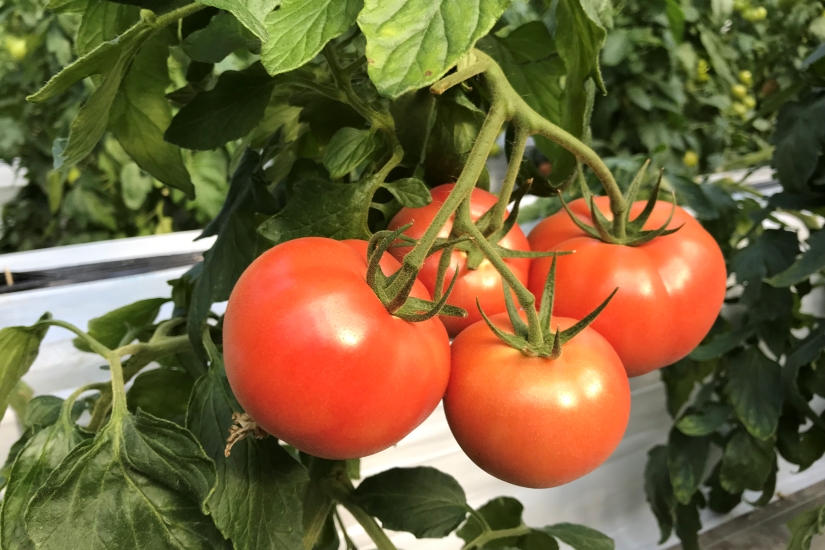
For 60 years, Yoda Farm has specialized exclusively in growing “Momotaro Tomatoes.” These large tomatoes are characterized by their perfect balance of sweetness and acidity. While varieties like “fruit tomatoes” with intense sweetness are currently in vogue, Yoda Farm has consistently pursued the cultivation of tomatoes that offer “more than just sweetness.” Yoda Farm’s tomatoes are distinguished by their rich flavor, bursting juiciness, thin skin, and the perfect balance between the flesh and the gelatinous pulp—every detail is meticulously crafted.
Their approach to tomato cultivation—which prioritizes “quality” over mass production—reveals ingenuity cultivated over many years. While a single plant typically yields about 70 tomatoes, they limit the harvest to half that amount, creating tomatoes with a rich flavor that concentrates the umami and nutrients of two tomatoes into a single fruit. Furthermore, to grow tomatoes in conditions as close to nature as possible, they exercise extreme caution in pesticide use and actively work to create an environment that does not hinder the activity of the bumblebees responsible for pollination. Behind this approach of growing a limited selection of tomato varieties lies a commitment to “maximizing the quality of our produce by fully leveraging the experience we’ve accumulated, rather than spreading our cultivation resources across various varieties.” And this philosophy has been passed down from Katsumi to Kunugi, spanning two generations.
What do tomatoes grown using hydroponics taste like?
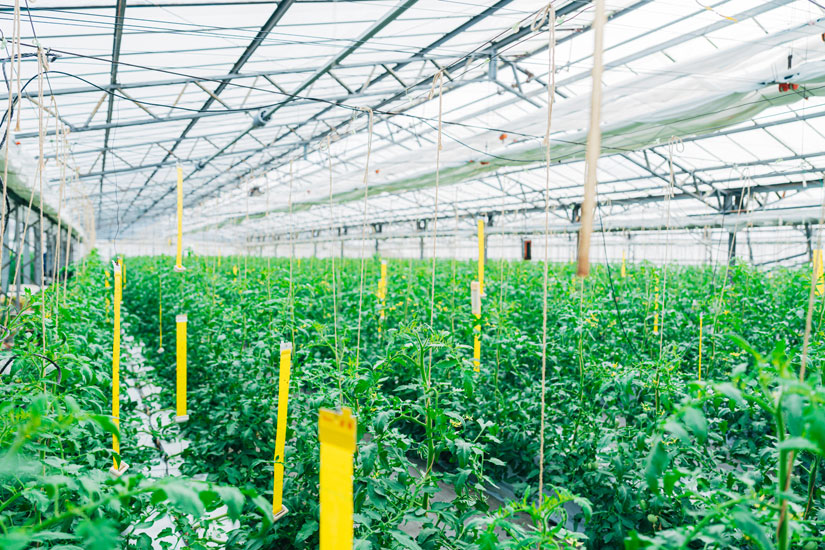
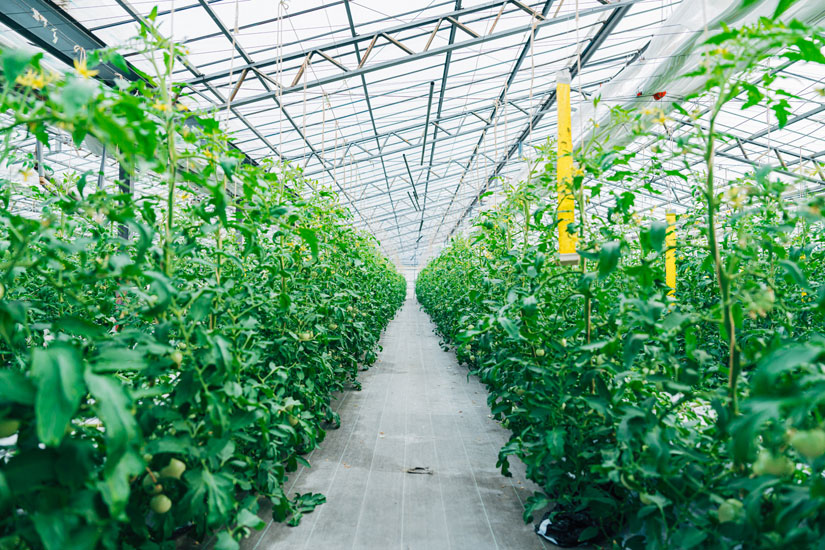
Yoda Farm, which has been in the family since Katsumi’s predecessor’s time, originally practiced soil cultivation, growing crops directly in the ground. However, this method has the drawback of being highly susceptible to bacteria and pests in the soil, requiring significant costs for disinfection and pesticides as a countermeasure. To produce tastier and safer tomatoes, Katsumi decided to try hydroponics, which was not yet widely adopted in Japan at the time. This method involves circulating a nutrient solution—a mixture of water and dissolved fertilizers—to the plant roots, and its major advantage is the ability to minimize the use of pesticides. However, when he first started hydroponics, there was a strong negative perception that “while the plants grow large when watered, they lack flavor.” Unlike soil, the medium cannot be allowed to dry out, so care must be taken not to overwater; however, by deliberately restricting watering during periods of intense sunlight to induce stress, he brings out the tomatoes’ natural sweetness. Inside the two plastic greenhouses, it gets quite hot in the summer. However, by continuing to let in sunlight without using air conditioning to promote photosynthesis, they produce tomatoes with a sugar content of 5 to 6 degrees Brix—tomatoes that are exceptionally sweet.
“We Want to Deliver Delicious Tomatoes”: Crowdfunding Campaign Launches
“Is there a way to share the deliciousness of these tomatoes, which my father-in-law has grown with such care, with more people?” To further expand his business channels, Mr. Kunugi set up a stall at the Aoyama Farmers’ Market in Tokyo—a venue where farmers from across the country gather—and began selling his produce directly to customers. Although the market attracts many food connoisseurs seeking fresh, delicious produce, he had only about 30 seconds to interact with each customer. “I’m confident in the quality of my tomatoes, and I generate decent sales, but I couldn’t convey the ‘passion’ behind them,” says Kunugi. Was there no way to convey the dedication poured into production? It was under these circumstances that he launched a project on the crowdfunding service “Makuake.”
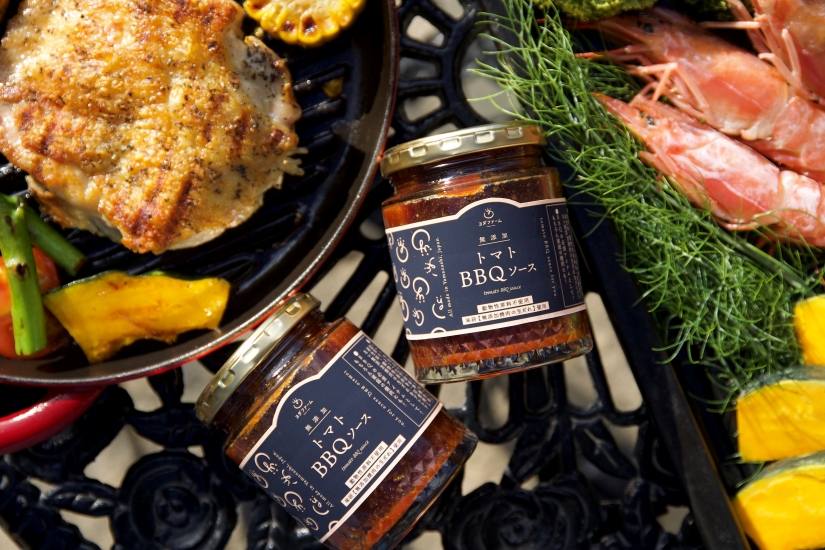
Makuake is a system where creators present the passion and dedication behind their products, and people who want to support those products or services contribute funds. Yoda Farm’s project began with its first campaign in August 2019, and by the ninth campaign, the total number of supporters had exceeded 3,000, with total funding reaching approximately 24 million yen. For their processed food project on Makuake, they focused on creating “Rare Dry Tomatoes,” which are lightly dried to concentrate their umami while retaining a fresh, juicy flavor in perfect balance. They also launched a variety of other creative products, including “Tomato ‘Mi’”—a new category designed to be used as a versatile seasoning, sauce, or dressing—and “Tomato Koji Curry,” made without water. He developed the products with the help of those around him, refining them through trial and error based on advice from a friend who is a culinary researcher, and even entrusting the packaging design to a high school classmate. Among the processed food project’s offerings, “Tomato Ketchup,” “Tomato Salt Koji,” and “Barbecue Sauce”—which garnered particularly strong support—have grown into popular bestsellers on the Yoda Farm website. Recently, Kunugi happily notes that he often receives casual messages of encouragement from supporters—ranging from comments like “This is delicious” to “How are you doing?”—and feels that his relationship with existing customers has grown stronger since the success of the Makuake project.
Creating products that bring out the natural flavor of tomatoes
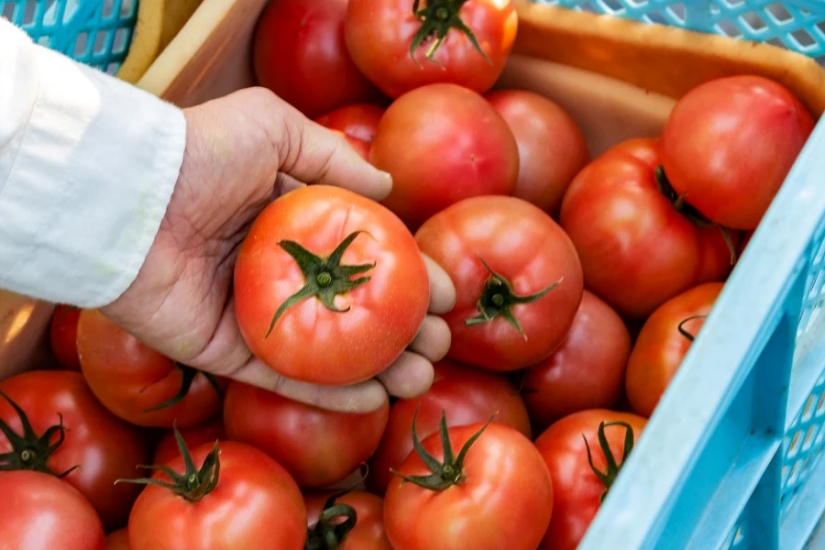
Another reason Mr. Kunugi decided to take on the challenge of developing new processed products was the problem of food waste, which was occurring on a massive scale. Of the approximately 10% of the annual production—amounting to 5 tons—that consisted of irregularly shaped produce, the items that could not be sold in the market were, with a heavy heart, turned into fertilizer for the fields. Even though their shape may be imperfect, their flavor potential is still very high. Precisely because he is confident in the quality, he uses absolutely no additives or other unnecessary ingredients during processing, instead devising ways to bring out the tomato’s natural flavor. In 2020, the first collaboration with a company that shared Mr. Kunugi’s passion for reducing food waste was realized. Among the products, the one that garnered the most attention was “Tomato Shio-Koji,” developed in partnership with Yamanashi Meijo—the brewery behind the sake brand “Shichiken”—which combines the brewery’s shio-koji with tomatoes. By blending it with shio-koji in an exquisite ratio, the product highlights the tomato’s natural flavor and has been well-received by supporters and many other users. Another product, “Melt-in-Your-Mouth Tomato Ketchup,” uses not only the koji used in brewing Shichiken but also wine vinegar from Asaya Foods, another local company. By allowing “non-standard” tomatoes to ripen fully and using the equivalent of about 10 tomatoes per bottle, the ketchup boasts a truly outstanding tomato flavor. While working on various collaborative products, the team reportedly always prioritizes their commitment to “making the tomato the star.”
That said, he admits that in his eagerness to come up with novel products, he often received candid feedback that his creations were “too gimmicky.” While innovation is necessary, striking a balance that truly highlights the quality of Yoda Farm’s time-honored tomatoes is essential. Looking back on that period, Mr. Kunugi reflects that he learned a great deal from the product development process.
Amid the hardships faced by farmers
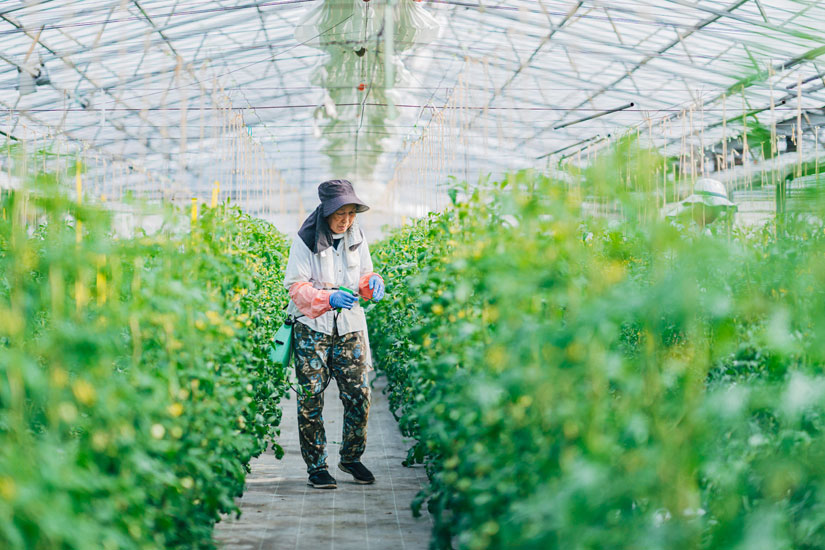
Given the current global climate, Japan faces significant challenges, including a decline in production motivation due to soaring material and utility costs, as well as a dwindling number of farmers resulting from an aging population. Mr. Kunugi witnessed firsthand at the market how these factors have led to a reality where the focus is not on the “quality” of agricultural products but on “quantity,” driven by the pursuit of greater efficiency. For Yoda Farm, which has limited both its crop varieties and production volume in order to maintain high quality, this situation could be described as a headwind. In this context, moving away from the general market—where producers have no control over pricing—and instead selling directly to consumers or through crowdfunding, where they could reflect the true value of their tomatoes in the price, was undoubtedly a highly rewarding initiative. Their crowdfunding efforts even caught the attention of supermarkets within the prefecture, leading to requests for Yoda Farm’s tomatoes. By the spring of 2023, they had succeeded in establishing their own sales channels, relying almost entirely on them rather than the general distribution system.
I want to create opportunities for people to appreciate good food
Mr. Kunugi says he wants to propose more experiential projects that allow him to connect directly with customers. For his most recent Makuake project, he devised an agricultural experience ticket titled “First-Generation Yoda Farm Farmer’s Rights” as a reward. In addition to a harvesting experience where participants can actually do farm work and taste freshly picked tomatoes, the rewards include product discounts and vegetable subscription plans. In addition, he plans to build a café and processing facility, with the goal of offering services where customers can have freshly harvested tomatoes cooked and served on the spot. This marks a shift from online interaction to a new phase where people actually visit the farm in person. Mr. Kunugi’s vision of “letting people experience the reality of farm life” is becoming increasingly tangible.
The value of tomatoes that only Yoda Farm can produce
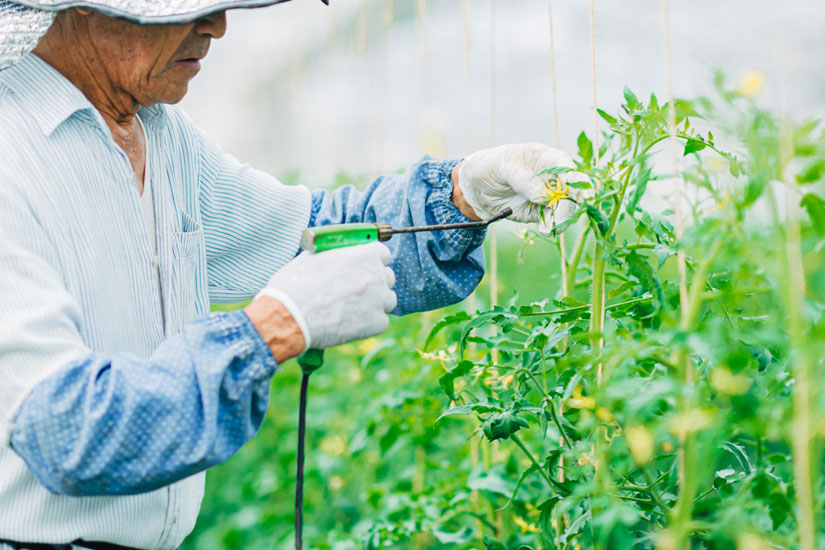
When choosing tomatoes, consumers likely have a variety of reasons—from taste and cultivation methods to price. Yet, as mentioned earlier, the reason Yoda Farm’s tomatoes continue to be chosen is that they embody the expertise cultivated over half a century and a deep commitment to “creating delicious produce.” Katsumi-san reportedly even traveled overseas in the past to study tomato cultivation. By combining the accumulated experience and skills of such artisans with the influence of communicators like Kunugi-san—who takes on innovative initiatives and challenges like crowdfunding—they are proposing new value for tomatoes.
Issues such as distribution and the shortage of farmers are by no means limited to tomatoes. To address these challenges, Kunugi says he wants to create opportunities for people to connect with the thoughts and feelings of the growers behind the vegetables they eat every day. He wants to convey through his own efforts that safe and delicious products are created only through the hard work and involvement of many different people. He also hopes to show that sustainable agriculture can be built through a new approach that incorporates flexible thinking, without being bound by traditional mass-production and distribution models.
As the value of agricultural products is reevaluated, farmers will prosper, and even higher-quality vegetables will be produced. A future awaits us where this leads to a virtuous cycle of increased domestic food self-sufficiency and a growing number of people entering the farming industry.