

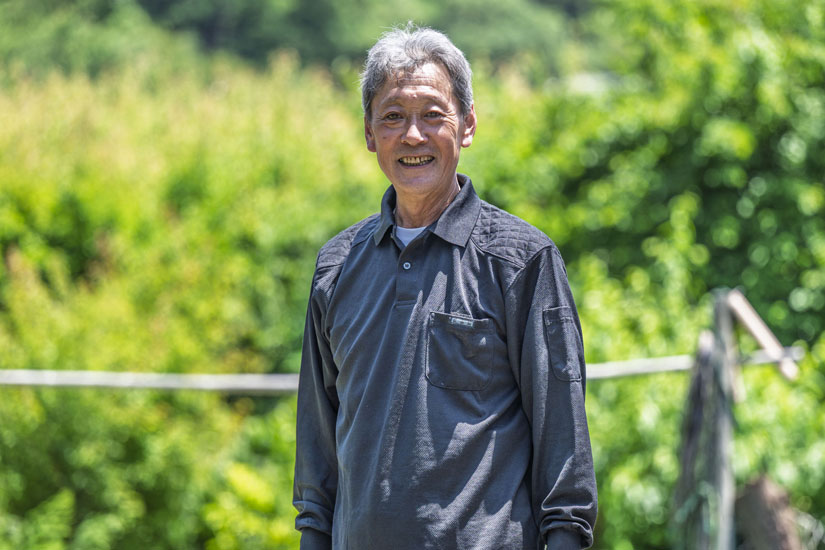
The Soga district of Odawara City, Kanagawa Prefecture, is renowned as a prime plum-growing region. Its “Juro Ume” plums, particularly prized for their thick, tender flesh, are considered the highest grade variety for umeboshi pickling. Mr. and Mrs. Saito Tokutaro continue to uphold the traditional craft of waiting until these plums are fully ripe before harvesting them, pickling them solely in salt, and drying them while exposing them to the night dew. Their proven skills, backed by numerous awards, and their sincere approach attract many devoted fans.
The History of Plums Rooted in Odawara
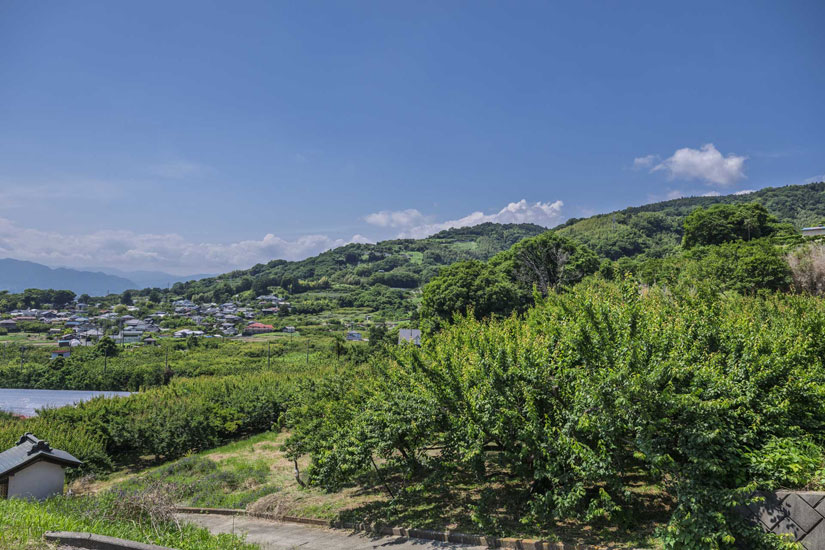
Odawara City in Kanagawa Prefecture has long been renowned as a prime plum-growing region. During the Warring States period, Hojo Soun utilized umeboshi as military provisions, supporting his soldiers with this long-lasting food source. The plums’ medicinal properties and ability to prevent spoilage also made them indispensable on the battlefield.By the Edo period, umeboshi had spread among the common people for medicinal and culinary use, becoming a staple souvenir for travelers passing through Odawara-juku. Umeboshi, useful for preserving lunch boxes and maintaining health, gained enduring popularity as an indispensable preserved food in daily life.
The Soga Plum Grove and the Bustle of the Plum Festival
Against this historical backdrop, vast plum groves formed in the Soga district of Odawara. The three groves of Soga Bessho, Hara, and Nakagawara are collectively called the “Soga Plum Grove,” now home to approximately 35,000 white plum trees.Plums include ornamental varieties like the deciduous Chinese flowering plum (Hanaume) and edible/medicinal varieties like the fruit plum (Miume). Most trees in this area are cultivated for edible plums, producing fruit processed into umeboshi pickles and plum wine for local distribution.
However, Soga Plum Grove aims to leverage not only the harvest but also the beauty and fragrance of the blossoms as a tourist attraction, hosting a “Plum Festival.” The plum trees in full bloom across the landscape from February to March captivate visitors, linking with local specialty sales and tourism to generate regional vibrancy. This scenery, where plum production and tourism are integrated, truly symbolizes Odawara’s plum culture.
The Odawara-born Juro Ume, recognized by the Agency for Cultural Affairs as a “100-Year Food”
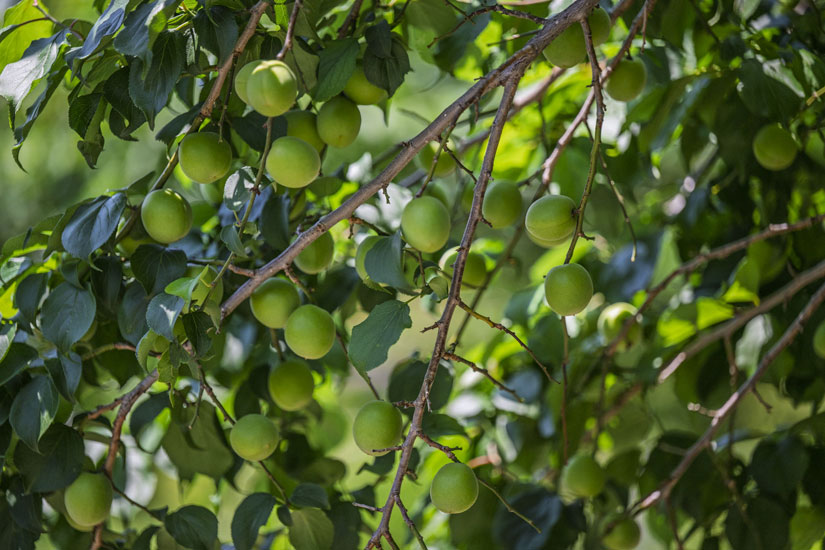
While varieties like Shirokaga, Nanko, and Baigo are cultivated in Odawara, the Juro plum stands out as particularly special.Though not yet widely known nationwide, it is actually considered the pinnacle variety for umeboshi (pickled plums). Its thick, soft flesh and small seeds make it easy to eat, and when pickled, it develops a mellow acidity and deep umami flavor. Many who experience its melt-in-your-mouth texture for the first time are surprised, exclaiming, “There’s a plum like this?”
This plum originated in the 1950s. Selected from native seedlings in Ashigarakami District within Odawara City, it was named “Juro Ume” after Soga Juro, a character from the Soga Monogatari, a military tale from the Muromachi period.Perfectly suited to Odawara’s soil and climate, this plum is truly a regional brand to be proud of. Furthermore, to pass on the history and appeal of these “Soga Umeboshi” to the next generation and promote them widely, they were submitted to the Agency for Cultural Affairs’ “100-Year Food” initiative. They were recognized in the “Traditional 100-Year Food Category: Local Cuisine Continuing Since the Edo Period.”
A Producer’s Nightmare
On the other hand, the Juro plum is also notoriously difficult to handle, earning it the nickname “producer’s nightmare.” Its skin is extremely thin, prone to bruising even from slight contact with branches. Harvesting requires picking each plum by hand, and cushions must be placed in the harvest baskets. Furthermore, flipping them during sun-drying is a nerve-wracking task. Because they are fully ripe, the skin tears easily, demanding constant vigilance until the very end.
Furthermore, the fruit sets inconsistently, leading to years with wildly varying yields. This means producers must remain constantly vigilant, from cultivation through processing. Yet, they persist in cultivating Juro Ume because of its unique flavor profile, unmatched by any other plum. Those who have actually pickled Juro Ume plums are captivated by their tenderness and deep, complex flavor. It’s said that after experiencing this, they declare, “I can only use Juro Ume from now on.”
Proven Excellence, Recognized with Multiple Governor’s Awards
In the Bessho district of Soga Ume Forest, Tokutaro Saito dedicates himself to umeboshi production. Together with his wife, they have preserved the traditional method of making umeboshi using Juro plums. Their reliable craftsmanship is widely recognized locally and has earned high praise over the years.
Saitō’s umeboshi have consistently placed at the Odawara Umeboshi Competition, winning awards in both 2023 and 2024. He has also previously received the Minister of Agriculture, Forestry and Fisheries Award and the Kanagawa Prefectural Governor’s Award. As a regular top-ranking entrant at the Odawara Umeboshi Competition, his skill and earnest approach are unquestionable.
Points Evaluated at the Competition
The Odawara Umeboshi Competition rigorously judges appearance, including size, uniformity of the plums, skin condition, and color. During tasting, the balance of softness, acidity, and saltiness is evaluated. Mr. Saito’s umeboshi are characterized by meltingly soft flesh and a mellow flavor where the saltiness is perfectly rounded. They are highly regarded not only by judges but also by consumers.
A commitment to refining technique
The competition is not just about results; it’s a stage reflecting the accumulation of daily effort. It demands meticulous attention to detail: how to achieve both softness and uniformity in size, how to harmonize acidity and saltiness. Mr. Saito states, “I’ve exhausted all possible innovations. Now it’s just about continuing without cutting corners.” While lacking flashiness, it is precisely this accumulated experience and sincere work that leads to recognition.
A Foundation Built Over 10 Years as a Plum Farmer
Saitō Tokuo’s family farm cultivated plums, mandarin oranges, and kiwis. A large soy sauce brewery stood next to their home, immersing him in food and fermentation culture from childhood.
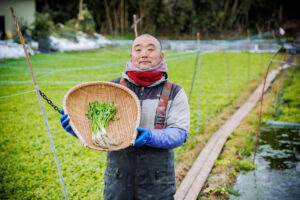
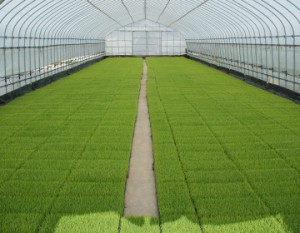
After entering the workforce, he pursued a career as a chef. However, his father passed away early, leading him to decide to take over the family business in his late 40s. It was at this point he began seriously engaging in agriculture. In reality, he has only been fully dedicated to farming for about 10 years. Nevertheless, he shifted to a life centered around the fields, cultivating primarily plums, along with Kanagawa Prefecture’s “Harumi” rice and the “Hayward” kiwi, renowned for its excellent balance of sweetness and acidity, adapting to each season.
Family and Commitment Supporting the Farm
After his transition, he has continued his journey alongside his mother and wife, sharing the work and tending the fields together.There was a period when he worked as a chef during the week while helping with farm tasks, but since becoming a full-time farmer, his days revolve around checking the weather forecast and planning his work accordingly. He has a particular dedication to pruning, which improves sunlight exposure and airflow to prevent pests and diseases. He finds great satisfaction when his pruning yields good fruit. Though his history as a farmer is still short, his experience in the food industry and his family’s support form a strong foundation for Mr. Saito’s farming.
Capturing the moment of perfect ripeness: Drawing out the flavor of Juro plums with salt and sun
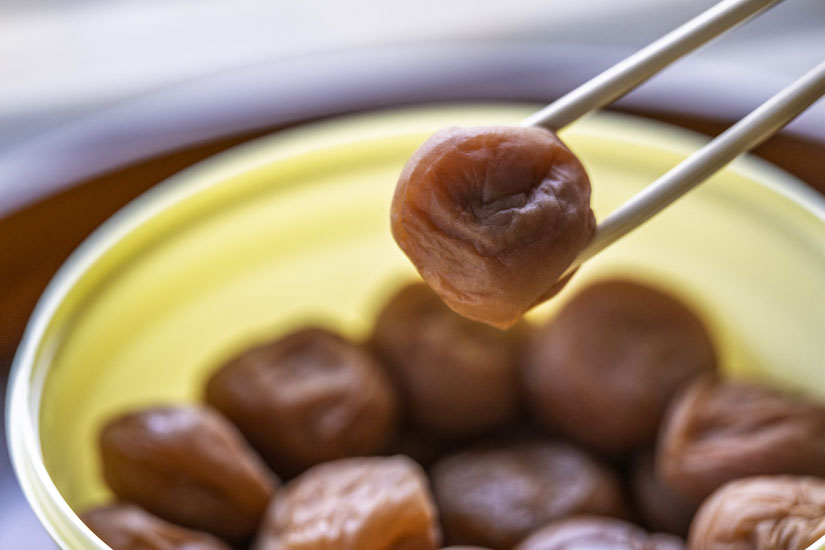
Saitō’s approach to making umeboshi begins with a unique dedication right from harvest. He meticulously gathers only plums that have ripened to the point of nearly falling from the tree naturally. The fruit, turning from yellow to orange and beginning to release its fragrance, has soft flesh that yields melt-in-your-mouth umeboshi. Judging this point is no easy task, requiring daily observation of the orchard.As they are highly susceptible to rain and wind, even the slightest timing discrepancy directly impacts quality. Mr. Saito’s approach is to never cut corners here.
Traditional flavor with 18% salt content and summer sun drying
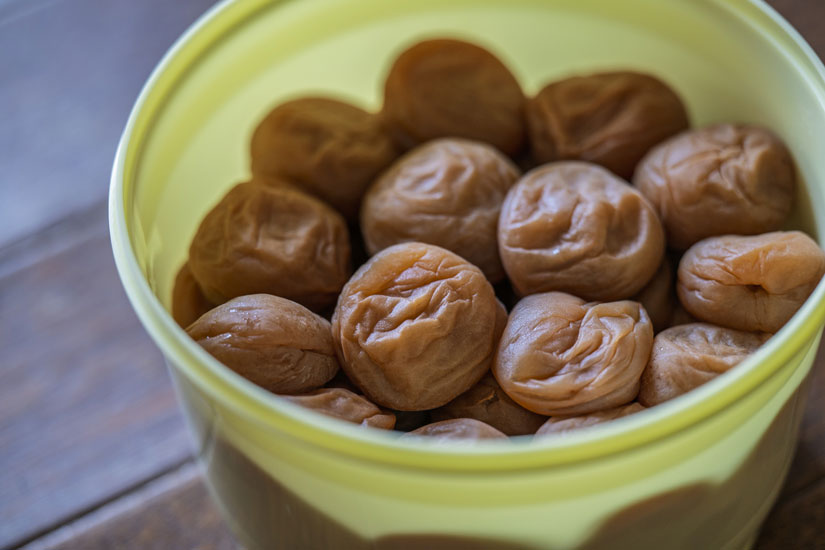
After harvesting, the plums are carefully selected, coated in salt, and pickled under a weight.The salt content is kept at 18% as a standard, adhering to the traditional method that balances preservation and flavor. The “white umeboshi,” finished with salt alone, is a serious challenge with no room for compromise, unlike the mellow-tasting umeboshi made with added honey or other ingredients. Extracting the softness of the flesh and the mellow acidity requires judgment backed by experience.
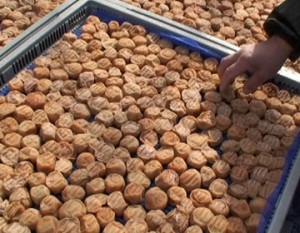
After the rainy season ends, the next step is sun-drying. Saito-san places great importance on “Doyou-boshii” drying, where the plums are exposed to the night dew for three days and three nights.The repeated exposure to strong daytime sunlight and nighttime humidity softens the skin and concentrates the umami in the flesh. The drying process requires turning each plum over individually, a nerve-wracking task for the Juro plum, whose skin is prone to tearing. Still, Mr. Saito insists, “This extra effort determines the flavor,” and continues to uphold the traditional method.
Characteristics of the Finished Product
The finished umeboshi are characterized by a melt-in-your-mouth softness and uniformly large, plump plums. The acidity is mellow, the umami is richly pronounced, and the saltiness is rounded into a deep, complex flavor. It’s precisely this assured quality that leads many who taste them to agree: “Nothing but Juro plums will do.”
The Premium Brand ‘Unjou’ – Only a Few Kilograms Certified from 2 Tons
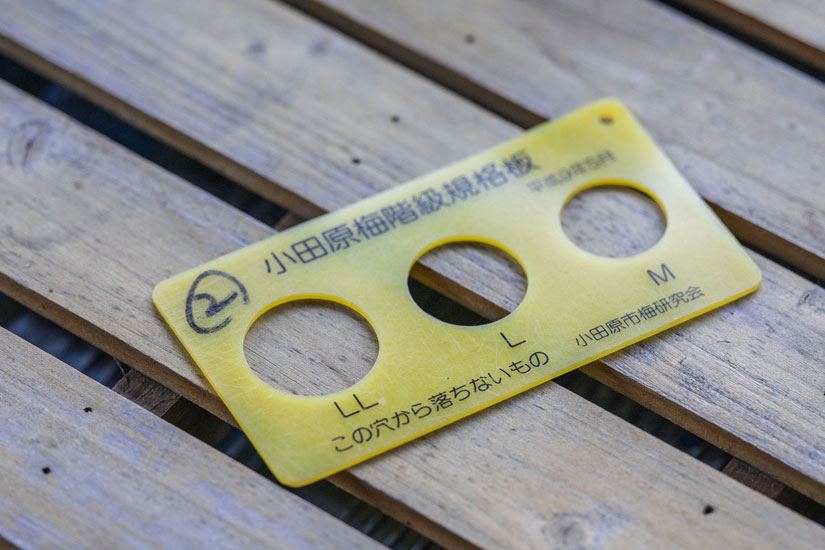
Mr. Saito’s umeboshi are also selected for the Odawara City-certified regional brand ‘Unjou’. The standards are so strict that even after pickling 2 tons, only a few kilograms from his family’s batch are certified, meaning only a very small portion of the umeboshi are chosen. The conditions are rigorously checked: the fruit must be at least 4L size (42mm diameter), have a uniform shape with a clean, taut skin, possess beautiful color, and deliver a reliable taste.Salt content is another key criterion. “Then there’s the salt content,” Mr. Saito explains. “We pickle them at 18%, and they must finish below 20%. They absolutely must be under 20%.” He strictly adheres to this standard. Ujō-certified umeboshi are sold individually packaged as a premium product, priced around 300 yen per plum. Being selected this way is also a badge of honor, an achievement only a limited number of farmers within the city can attain.
Pride Spreading with the Community
Once certified as ‘Unjō’, the umeboshi are sold as the city’s official brand in department stores and elsewhere, increasing consumer exposure. This isn’t merely sales promotion; it enhances trust in Odawara’s agricultural products and builds pride for the entire region. Mr. Saito himself strongly feels that “my umeboshi represent the region” and carries a sense of responsibility to pass this legacy on to the next generation.
A Future Built on Each Plum’s Dedication
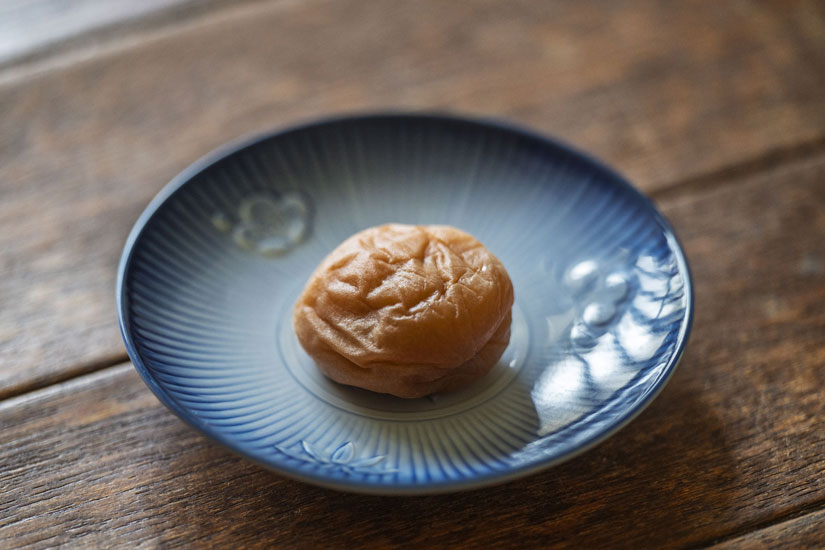
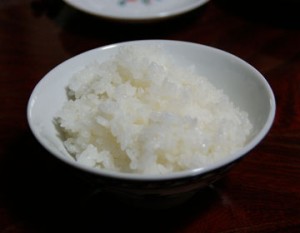
Saito’s farming journey has been walked alongside his family’s support. The experience and ingenuity accumulated over the years have forged the reliable techniques that draw out the charm of the Juro plum. His traditional white umeboshi, pickled only in salt, delivers a finish that perfectly preserves the flesh’s softness and deep umami. Served alongside freshly steamed hot rice, it makes you unable to stop eating.”I can’t do anything flashy, but continuing earnestly is what matters,” says Saito, infusing each and every plum with sincerity. It is this quiet passion that will continue to be the driving force supporting Odawara’s plum culture.