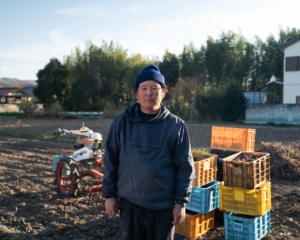


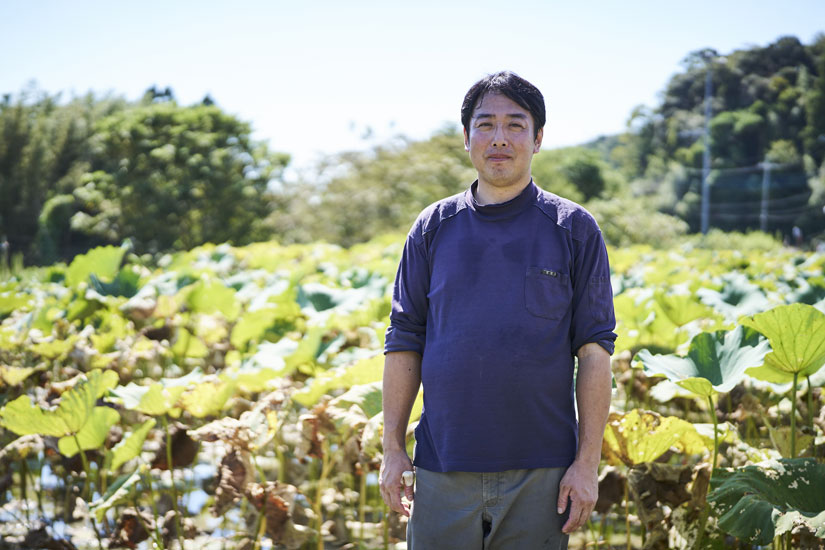
In 2021, lotus root grown in Chonan Town, Chiba Prefecture, attracted attention after recording a sugar content of 9 degrees—one of the highest levels in the country. The producer is Akihiro Kanesaka. Although he had experienced social withdrawal, he took up farming following the death of his father, who was a prominent figure in the industry. He established a natural farming method that utilizes the activity of soil microorganisms without the use of fertilizers or pesticides, and markets his lotus root under the brand name “Kanesaka Renkon.”
From a Reclusive Online Gamer to a Lotus Root Farmer
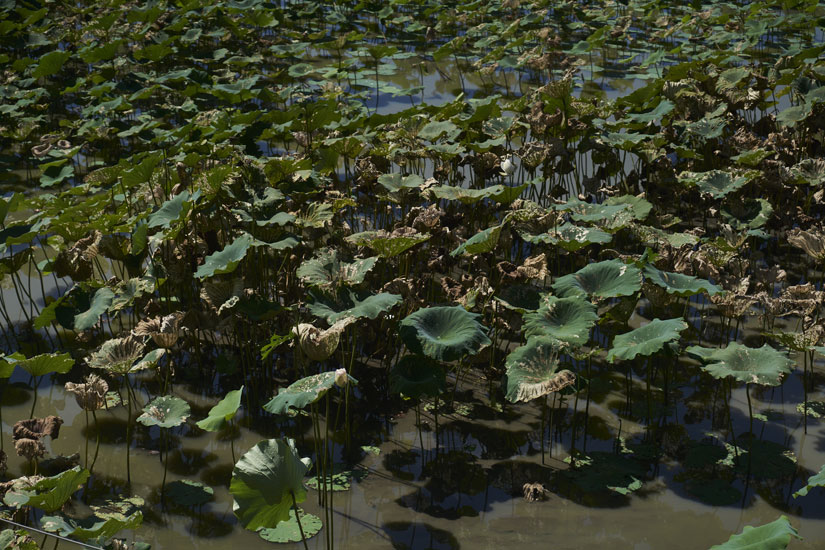
Located in the inland region of the Boso Peninsula, Chonan Town is a mid-mountainous area where valley paddies stretch along mountain valleys; it is a major lotus root production center in Chiba Prefecture, where agricultural cooperatives are also active. In Chonan Town, the Kanasaka family—spanning two generations—has been cultivating lotus roots and continues to bring a breath of fresh air to the lotus root industry.
Lotus root is the edible, swollen portion of the lotus rhizome, which grows beneath the surface of muddy ponds known as “hasuda.” During harvest, farmers wade into these muddy ponds and use a hose to apply water pressure, flushing away the mud and causing the lotus roots to float to the surface. However, since the conditions beneath the water’s surface are obscured by the mud, the work must be done by feel. In such an environment, the roots must be dug up without damaging them. “If you apply too much water pressure, it leaves bruises on the lotus roots,” says Mr. Kanesaka, explaining the difficulty of the task.
My father was a dedicated farmer whose name lives on in the name of a crop variety.
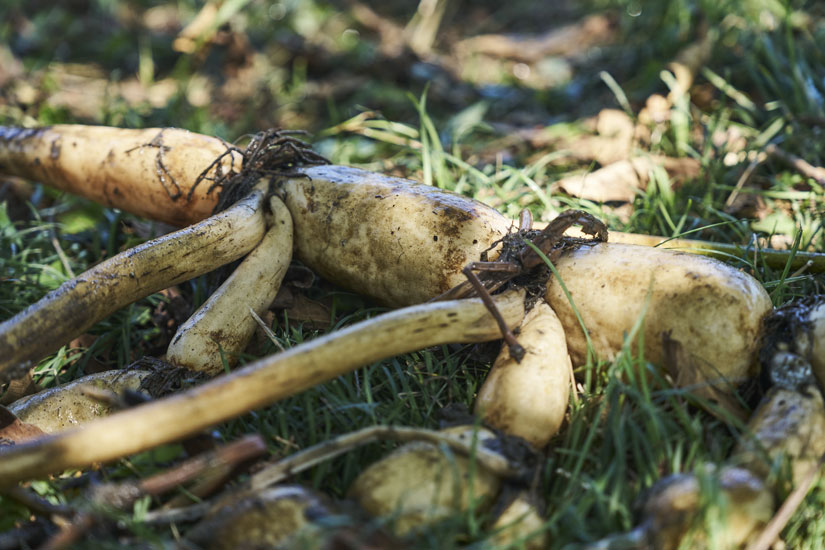
Takasumi Kanasaka, Mr. Kanasaka’s father, is a well-known figure in the lotus root industry as a dedicated farmer who developed a new variety of lotus root. The first variety, “Kanasumi No. 1”—named after his own name—was registered in 1985. After further improvements with No. 2 and No. 3, the Kanasumi series now accounts for about 70 percent of the lotus root produced in the Kanto region.
While Takasumi developed these varieties with a focus on disease resistance, yield, and ease of harvesting, he says that “flavor” was his top priority. “My father was always looking for sweetness and a crisp texture. Ever since I was a child, my father’s simmered lotus root often appeared at the dinner table—but it never contained chicken. That was so he could check the flavor and texture of the lotus root itself.” Although Mr. Kanesaka grew up under such a father, he would actually go on to experience a period of social withdrawal.
My Days as a Shut-In Obsessed with Online Games
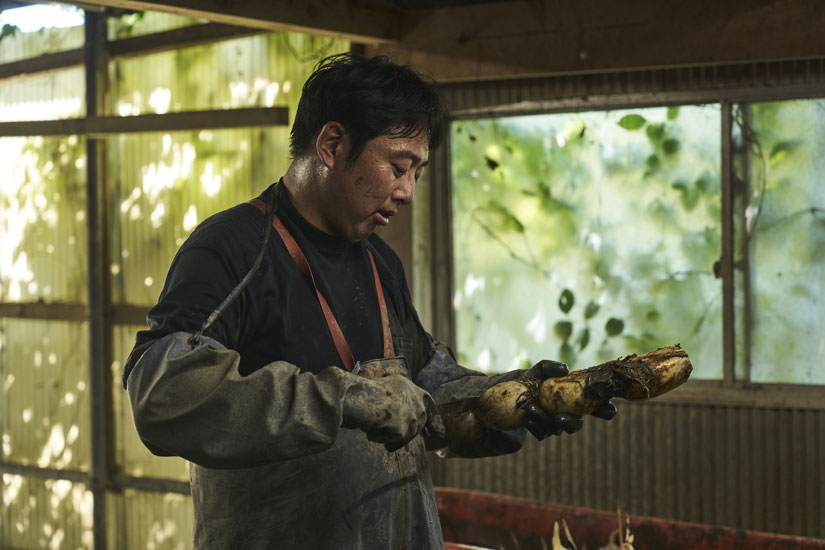
Mr. Kanesaka had never originally planned to take over the family business. He studied programming at a vocational school and got a job at an IT company. However, the workplace had such harsh working conditions that several of his colleagues from the same hiring class quit. To take his mind off things, he became obsessed with online gaming and was eventually forced to resign. Looking back on that time, Mr. Kanesaka says, “It was a period of online gaming when I had given up on life. I had even become afraid to check my email or answer the phone.”
The turning point in his nearly three-year period of social withdrawal came with his father’s sudden death. “Since neither my older brother nor my older sister had taken over my father’s business, I started thinking about him a lot after he passed away. I guess I must have sensed the presence of a father figure from a young age.” At his father’s funeral, Mr. Kanesaka told his older brother, “Maybe I’ll be the one to take over the lotus root farm.”
Overcoming the Pressure of Being the Son of a Famous Father
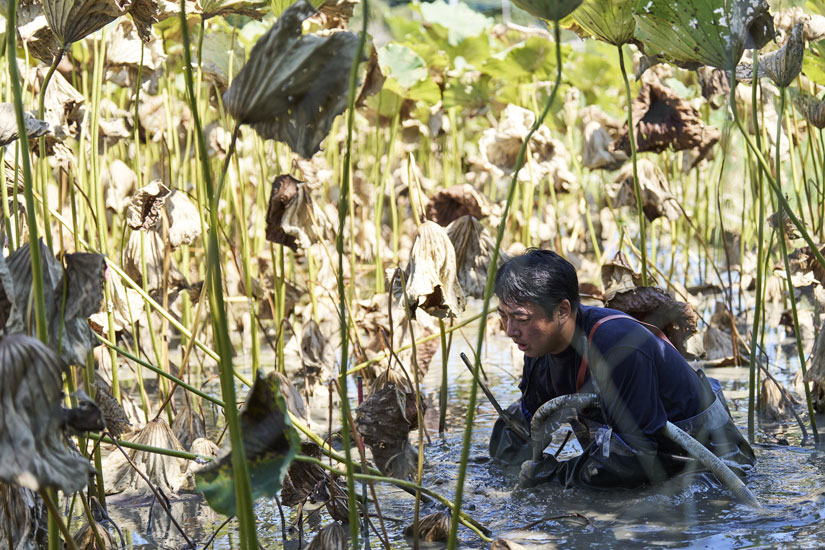
However, he said he struggled for several months over whether to actually take up farming. Having spent so much time as a shut-in, he lacked confidence that he could stick with it. “I was afraid people would say, ‘Kanesaka’s son started farming, but he quit.’” Precisely because his father’s presence loomed so large, the pressure to take over the lotus root farm weighed heavily on him.
Even after finally deciding to become a farmer, he found himself in a cycle of working for one month, taking three months off, then working for another month, and taking half a year off. “There were times I cried, wondering why I couldn’t push myself harder.” Amid these days of inner conflict, he came to realize: “If my sole purpose was to preserve the variety my father created, I’d never be able to surpass him, and farming would just be a struggle. I can only surpass my father by throwing myself into what I truly want to do and expressing my own identity.” Something she could become completely absorbed in and devote herself to. For Ms. Kanesaka, that meant taking on the challenge of naturally cultivating lotus root.
Nationwide top-class lotus root grown using natural farming methods
Because Nagaminami Town is characterized by a landscape dotted with valley paddies nestled among the mountains, it cannot compete with Ibaraki Prefecture—Japan’s largest lotus root production area, where the crop is cultivated on vast flatlands—in terms of work efficiency or yield. In the market, lotus roots from Ibaraki Prefecture—which enjoy high brand recognition—command higher prices than those from Chiba Prefecture. Given this reality, Mr. Kanesaka had been searching for a way for local agriculture to survive. The conclusion he reached was to produce high-quality lotus roots using natural farming methods and add value to them.
Organic Farming with a Focus on Microorganisms
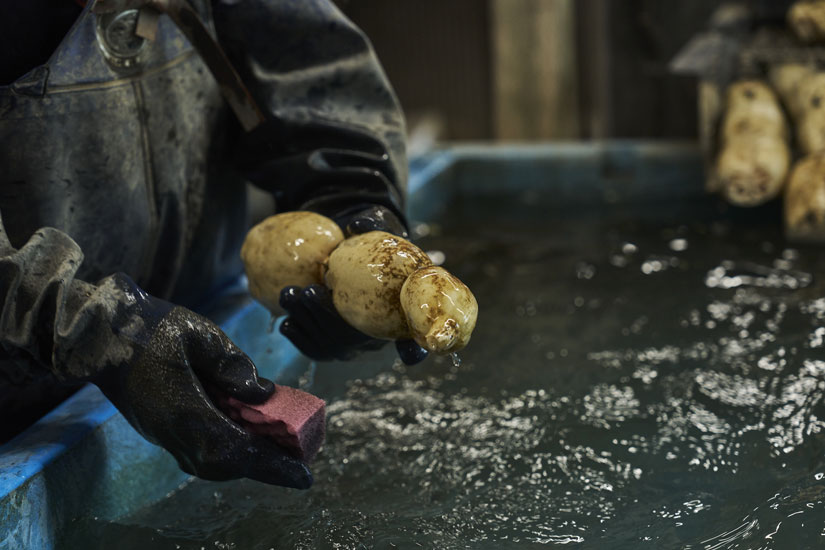
While interviewing elderly lotus root farmers about traditional farming methods, Mr. Kanesaka made an important discovery: about 60 years ago, farmers did not use pesticides or chemical fertilizers, but instead used fallen leaves from the mountains as compost. This discovery sparked Mr. Kanesaka’s interest in natural farming. As a first step, he chipped bamboo—which grew abundantly in the local area—to use in place of fallen leaves, adding it to the lotus fields to restore the soil’s fundamental fertility.
As he continued farming, he learned that some of Japan’s top lotus root producers were focusing on microorganisms. Mr. Kanesaka came to believe that the activity of microorganisms in the growing environment influenced factors such as flavor and resistance to pests and diseases. To maintain the balance of soil microorganisms and stimulate their activity, he gradually transitioned to natural farming—free of pesticides and chemical fertilizers. The lotus roots grew steadily, and he was able to harvest large, plump specimens. While acknowledging that “there is still much we do not understand about the role of microorganisms,” Mr. Kanesaka positions his farming method as “microorganism-centered cultivation”—distinct from “cultivation based on the use of fertilizers and pesticides.”
Lotus root with a sugar content of 9 degrees, among the best in the country
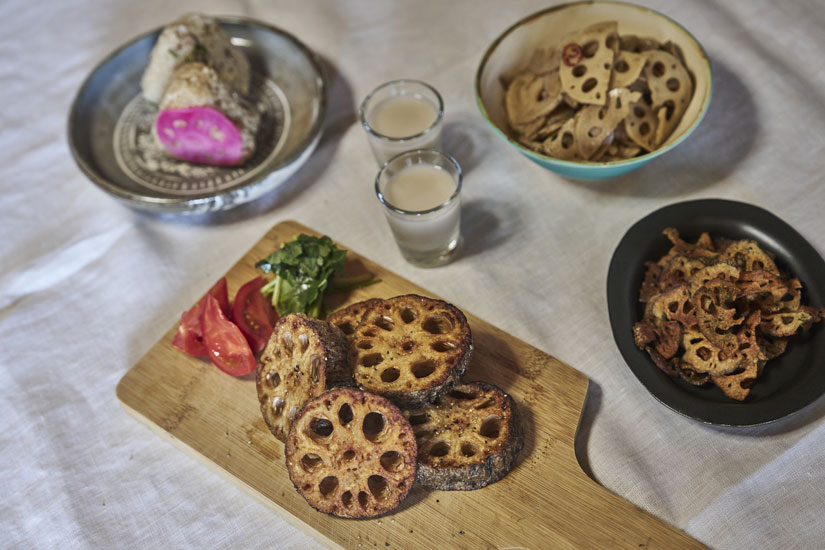
The cultivation methods Mr. Kanesaka developed have been proven to produce excellent flavor, as confirmed by analytical results. In 2021, Mr. Kanesaka’s lotus root recorded a sugar content of 9 degrees—the highest level in Japan. Conversely, levels of nitrate ions—which are considered the source of bitterness and astringency—were kept low. This remarkable achievement, especially given that the sugar content of typical lotus root is generally around 6 to 7 degrees, attracted significant attention; his lotus root is now used as an ingredient even at hotels that have earned five Michelin stars.
He uses an online store to sell to the general public. Drawing on skills he acquired during his time as a company employee, he designs the labels himself. The product name, “Kanesaka Renkon,” was given to him by his online gaming friends during his time as a shut-in. He adopted it as his favorite brand name, representing lotus root infused with the “soul” he poured into it after overcoming past struggles and trial and error.
I want to continue taking on new challenges and help develop the local industry.
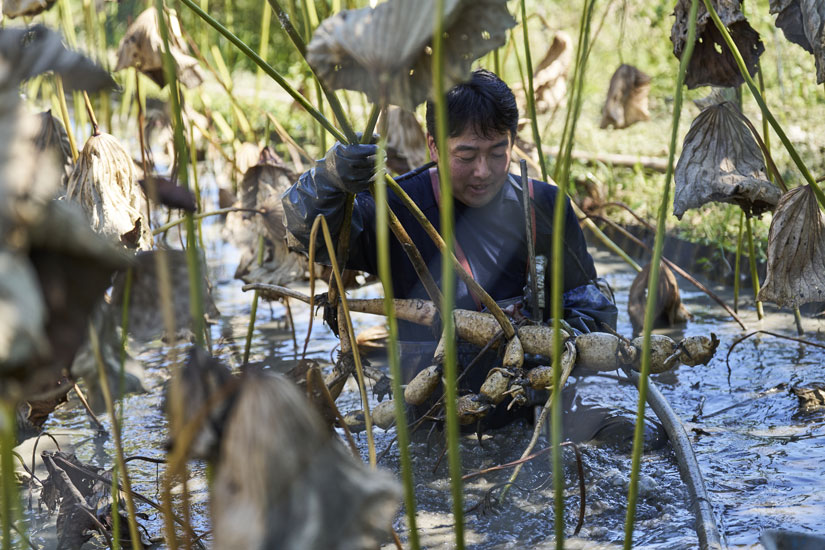
Although Mr. Kanesaka has achieved success with his natural farming techniques for lotus root, challenges remain—such as crayfish, which had previously been controlled with pesticides, now causing damage to the lotus root—leading him to note, “There are still things I need to research.” Even so, unlike during his reclusive days, ideas for new projects he’d like to tackle are now constantly coming to mind. “Going forward, I’d like to move forward with initiatives such as hosting agricultural experiences for people who have been socially withdrawn and developing agritourism programs. In the long term, after developing processed lotus root products, I’d like to grow this into a regional trading company that safeguards local industries and employment.” We can’t wait to see what he accomplishes next.