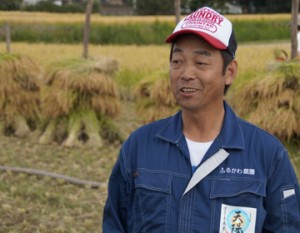

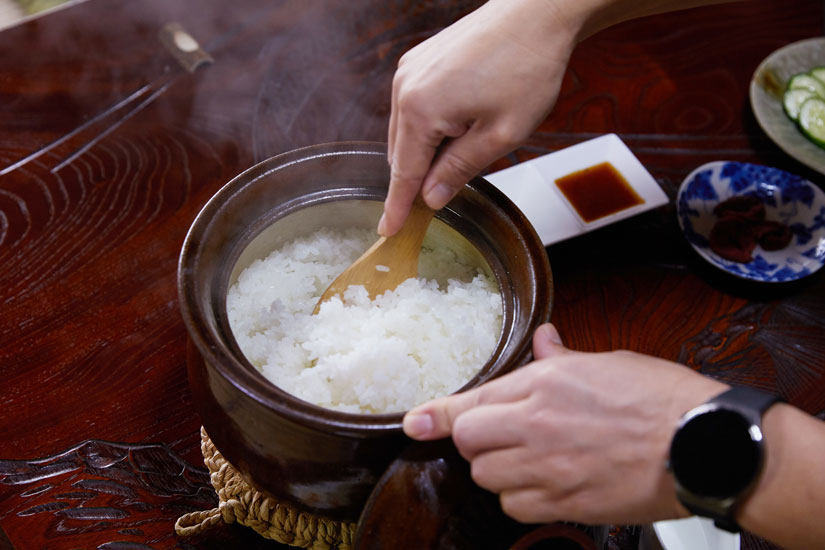
Otawara City in Tochigi Prefecture ranks first in the prefecture for rice production. Among its producers, Masahide Akutsu of Akutsu Farm boasts a track record of awards at the “Rice Taste Analysis and Appraisal Competition” and has received numerous other accolades, including certification as “Toyo Rice World’s Best Rice 2022.” Given that rice from Tochigi Prefecture is not particularly well-known, why is the rice produced by Mr. Akutsu so highly regarded?
Land Suitable for Rice Production: Otawara City
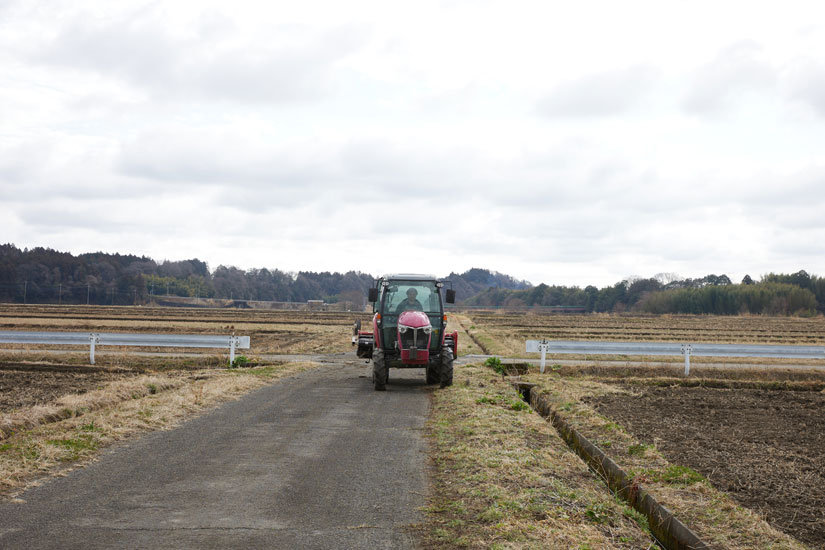
Otawara City is located on a vast alluvial fan in the Nasu region of northern Tochigi Prefecture, known as “Nasuno-gahara.” It is home to the Nasu Irrigation Canal, one of Japan’s three major irrigation canals. The water flowing from the Nasu mountain range is groundwater rich in minerals. Thanks to this abundant water source, the area is well-suited for rice cultivation.
Of course, it’s not just about the water. The area has fertile soil, and its climate—with sufficient temperature and sunlight in summer to promote rice growth and winter cold that suppresses pest infestations—combined with a flat terrain that facilitates water management and allows for the development of large-scale rice paddies, has made it a prime rice-growing region.
The name “Otawara City” is said to derive from “O-tawara” (large rice bale), reflecting the fact that this has long been a region with a thriving rice production industry.
Rice from Tochigi Prefecture: High on the Rice Production Rankings, Yet Little Known
According to data on “Crop Conditions and Yields of Paddy and Upland Rice by Season (by Agricultural Region and Prefecture Nationwide)” released by the Ministry of Agriculture, Forestry and Fisheries in 2021, Tochigi Prefecture ranks eighth nationwide in rice production by yield. However, rice produced in Tochigi is not particularly well known. This is because the prefecture capitalizes on its proximity to the Tokyo metropolitan area, with rice for commercial use being the mainstay of its production.
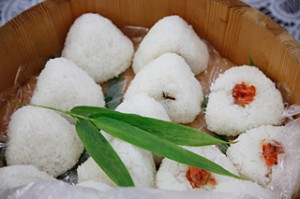
Commercial rice refers to rice used in restaurant chains, convenience store bento boxes, and school lunches—not the rice sold for home use in supermarkets and other retail outlets. Although we have many opportunities to consume it, we rarely see the place of origin or brand name when eating it, which makes it difficult for “Tochigi rice” to gain widespread recognition.
In fact, according to 2017 data from the Ministry of Agriculture, Forestry and Fisheries, Tochigi ranked first among the top 10 prefectures with the highest proportion of sales for commercial use, with nearly 70 percent of its rice sales going to that sector.
A region that isn’t well-known but produces delicious rice
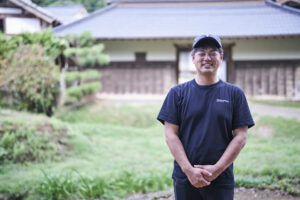
Mr. Akutsu grows rice in this environment. Since his family ran a farm, he began working in agriculture after graduating from college—and it’s been about 20 years since then. He has now succeeded his father, with whom he currently grows rice, becoming the fifth-generation farmer.
The turning point came about eight years ago when he entered the “Rice Taste Analysis and Appraisal Contest” for the first time.
Although Mr. Akutsu was aware of the competition’s existence, he had never entered it until then. However, he says he had a firm confidence that “the rice from this region is delicious”—and above all, that “the rice from my own farm, which I eat every day, is even more delicious!” So, upon learning that anyone could enter, he recalls thinking, “If I enter, maybe I’ll win a prize?” and submitted his entry with a lighthearted attitude.
However, in 2016—his first year of entry—at the “18th Rice Taste Analysis and Appraisal Competition,” he immediately won the Special Excellence Award in the “Prefectural Representative Rice Championship” category. He was particular about the Koshihikari he grew and had confidence in it. While he thought, “See? If I enter, I can win after all,” he also sensed the limits of achieving a top ranking with “Koshihikari.”
This is because Koshihikari is the most widely cultivated variety in Japan, so the number of entries in the competition is overwhelmingly high, with producers from all over the country flocking to submit their rice. Just as he was feeling that “it would be difficult to aim any higher with Koshihikari,” he began searching for “something else” on his own—and that’s when he discovered “Yudai 21.”
My Encounter with “Yudai 21,” a Variety Developed at Utsunomiya University
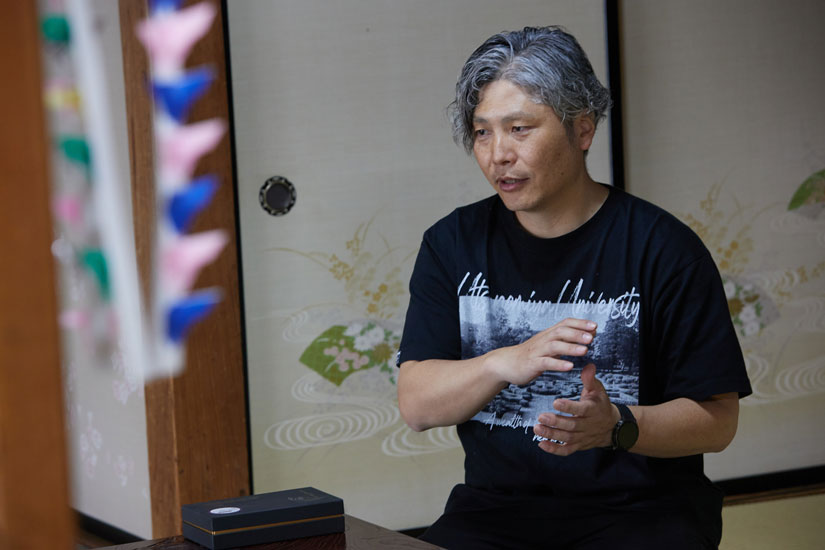
Around that time, the “Rice Taste Analysis and Appraisal Competition” began awarding the Gold Prize in the International General Category to a variety called “Yudai 21.”
Yudai 21 is a rice variety developed at a national university; it was created over a period of 20 years from a rice plant discovered by chance at the farm affiliated with the Faculty of Agriculture at Utsunomiya University in Tochigi Prefecture, and was registered as a variety in 2010. Although it is considered difficult to cultivate—as the plants grow tall and are prone to lodging, and fertilizer and water management require delicate care and technical skill—it truly shines in environments where careful attention can be given, such as in mid-mountainous areas, and is a variety capable of achieving yields and quality on par with or exceeding those of Koshihikari. Furthermore, Yudai 21 has a strong sweetness and a rich, distinctive flavor, leading us to intuitively recognize its potential for acceptance among general consumers. Consequently, we decided to begin cultivating Yudai 21 the following year (2017).
Initiatives Undertaken Before the Creation of Yudai 21
Even before establishing Yudai 21, Mr. Akutsu had become increasingly determined to “grow rice without using pesticides” and had been working toward pesticide-free cultivation. He says this effort was inspired by his desire to help alleviate his family’s allergies.
Pesticide-free cultivation—which involves the arduous task of weeding—took some time to gain the understanding of his father, the previous generation of farmers, but by starting with a small plot of land, he gradually earned his father’s approval.
Yudai 21 is also adopting pesticide-free farming practices
Given this background, Yudai 21 began cultivation on 3 tanbo (roughly the size of 12 tennis courts) without using any pesticides.
The farm gradually increased its production, and by the fourth year of cultivation, it was growing Yudai 21 on more than half of the approximately 4 hectares dedicated to rice for staple food consumption.
Why Is “Yudai 21,” Made by Mr. Akutsu, So Delicious?
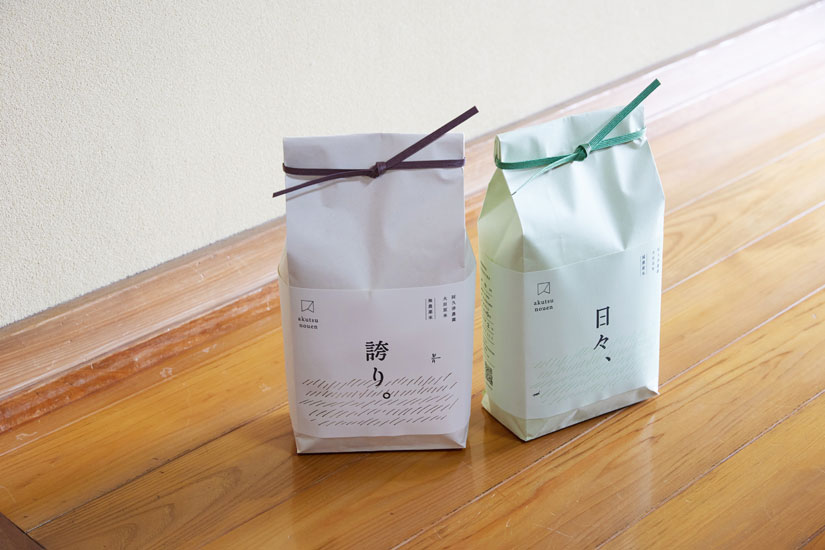
Yudai 21 is characterized by its large, glossy grains and attractive appearance. When tasted, it is praised for its rich umami flavor and well-balanced taste, with a sweetness that becomes more pronounced the more you chew.
Demand has been growing year by year as people who have actually tasted it say it’s “delicious,” and Akutsu Farm is reportedly expanding its cultivation area every year.
Why “Akutsu Farm” Was Chosen, Even Among Highly Rated Varieties
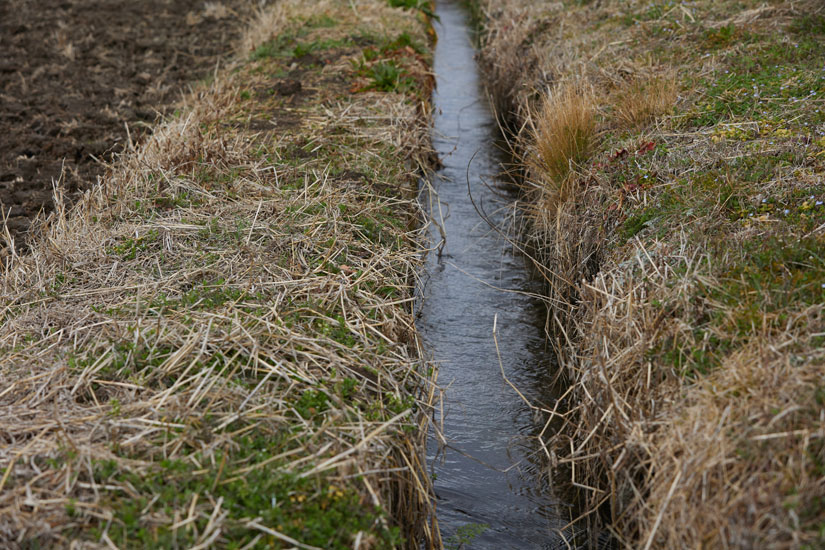
As mentioned earlier, Otawara City, where Akutsu Farm is located, is an ideal region for growing rice. It is said that when nighttime temperatures drop, the rice absorbs nutrients that enhance its flavor and transports them to the ears.
Akutsu Farm is surrounded by mountains and sits at an elevation of 200 meters. The significant temperature difference between day and night is believed to influence the flavor. Additionally, water is drawn into the rice paddies from the nearby Sabi River; for about 4 km upstream from Akutsu Farm, this river flows underground. As a result, the water can be drawn into the paddies while it is still cold, and this low water temperature helps lower the nighttime air temperature, which is said to further enhance the flavor.
Furthermore, Akutsu Farm’s rice paddies are situated on a river floodplain, where the soil is rich in minerals and highly fertile—a factor that likely makes the already delicious “Yudai 21” even more flavorful.
Pesticide-free cultivation has maximized the potential of Yudai 21
But that’s not all. Mr. Akutsu’s commitment to pesticide-free farming is likely another reason.
He says the most difficult part of pesticide-free farming is weed control.
To make weed control possible, he spaces the plants farther apart so that weeds can be removed from both the front and back. While typically 50 seedlings are planted per tsubo, the pesticide-free “Yudai 21” variety uses a “37-seedling-per-tsubo” planting method, reducing the number of plants by about 40 percent.
With this sparse planting method, the wider spacing between plants creates a V-shaped space where the ears of rice spread out, allowing sunlight to reach even the leaves at the base of the plants. Additionally, because nutrients are distributed more evenly, the ears are more likely to grow large.
Furthermore, the improved airflow between plants makes it harder for diseases such as “rice blast” and “sheath blight” to take hold, resulting in the production of robust rice plants.
Of course, no herbicides are used; instead, natural substances such as yeast, natto bacteria, and lemongrass extract—which repels insects—are sprayed to achieve pesticide-free cultivation. Even so, depending on the season, Mr. Akutsu enters the rice paddies every day to weed by hand.
Mr. Akutsu’s “Yudai 21,” cultivated with great care and effort, has earned high praise and is supplied to stores such as Mitsukoshi, Isetan, and The Ritz-Carlton Nikko. In 2025, it began being carried by “the rice factory,” a specialty store for Japanese rice with locations in New York and Los Angeles.
Demand for pesticide-free rice is particularly high overseas, and Mr. Akutsu’s efforts are highly regarded.
“Yudai 21” has been highly acclaimed since its first year of cultivation
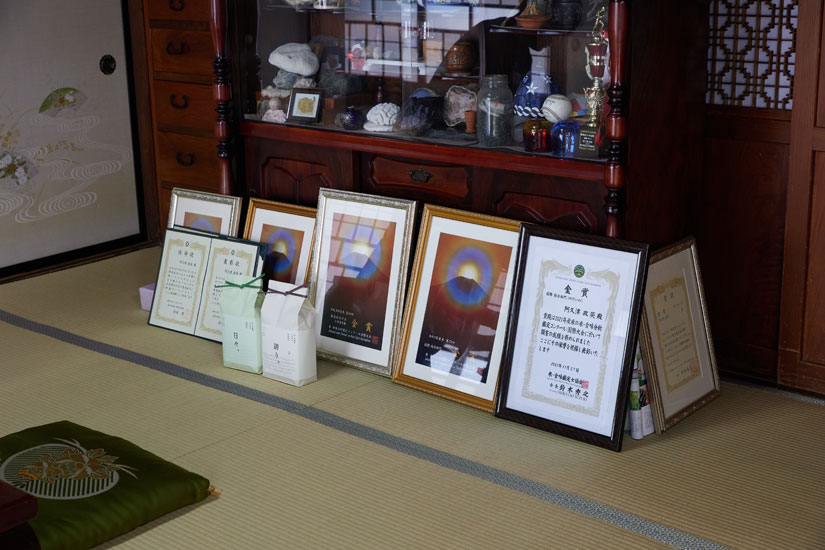
Yudai 21, produced by Akutsu Farm, won the Gold Award in the Prefectural Division of the “Rice Taste Analysis and Appraisal Competition” in its very first year of production.
The following year, it received the Special Excellence Award in the International Comprehensive Division—the competition’s highest category—and in its fourth year, at the “23rd Rice Taste Analysis and Appraisal Competition,” it won the Gold Award in the International Comprehensive Division. From among the brown rice varieties that won Gold Awards at the “Rice Taste Analysis and Appraisal Competition,” this rice was certified as part of the “Toyo Rice World’s Best Rice 2022” program—organized by Toyo Rice, a comprehensive rice manufacturer famous for its “Kinme Rice”—which carefully selects the highest-grade brown rice based on its own criteria emphasizing “deliciousness and vitality.” As a result, the farm became one of only four producers nationwide to be selected as a supplier of raw rice for the world’s best rice.
The Evangelist of Yudai 21
It is reported that Utsunomiya University—the creator of “Yudai 21”—plans to partner with municipalities and other entities to use “Yudai 21” for town revitalization efforts.
Mr. Akutsu has been appointed as the “Yudai 21 Evangelist” by Utsunomiya University and will be responsible for sharing cultivation methods and other knowledge with local farmers.
It would be wonderful if “Yudai 21” served as a catalyst for raising the profile of Tochigi-grown rice nationwide, leading to increased attention for all rice produced in Tochigi Prefecture—regardless of variety.
To that end, Mr. Akutsu—embracing both the title and responsibility of “ambassador”—continues his outreach efforts today, hoping that people will “try ‘Yudai 21,’ a rice variety with a unique flavor unlike any other.”