

A refined, sophisticated flavor with a clean sweetness and subtle bitterness
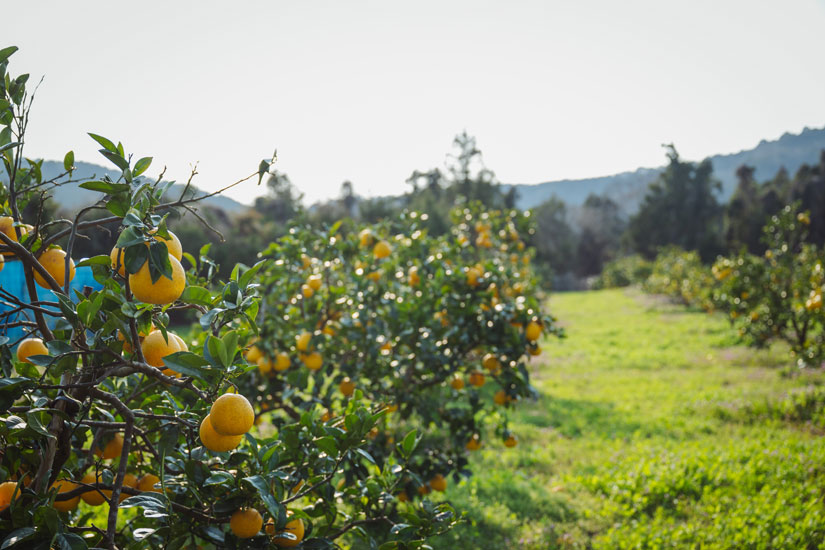
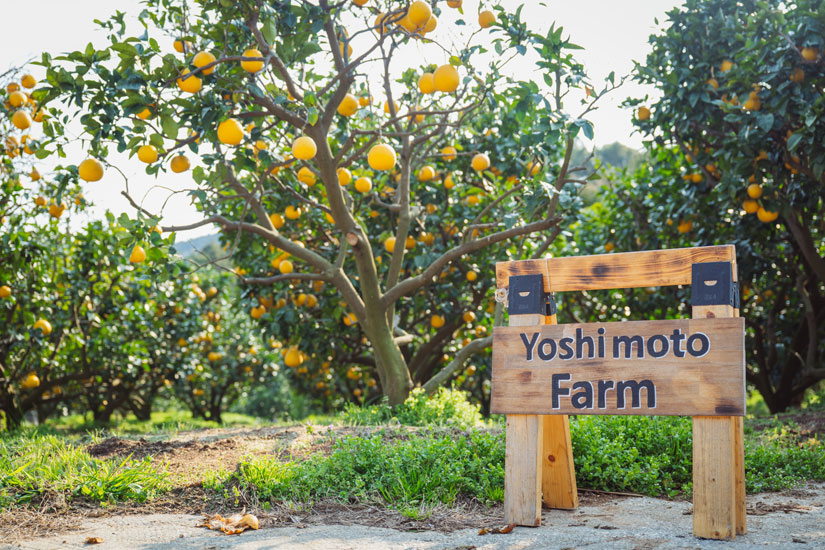
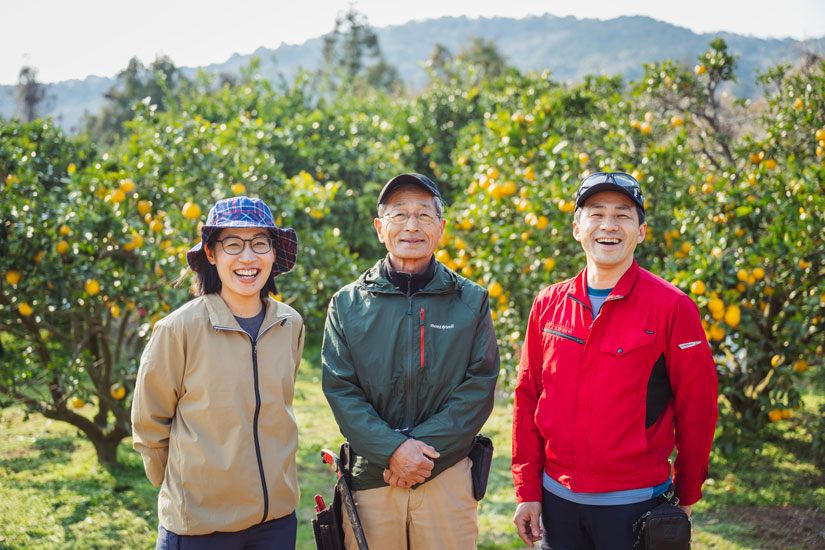
Located in the southern part of Ehime Prefecture, Ainan Town is a major production center for Kawachi Bangan, which boasts the highest production volume in Japan. Known by several names, including Ainan Gold, Uwa Gold, and Miseikan, the Kawachi Bangan is sometimes called the “Japanese grapefruit” because its appearance and flavor resemble those of a grapefruit. It is a popular citrus fruit that is sweet without being cloying, featuring a pleasant tartness and a subtle bitterness, as well as a refreshing juiciness. Toshiyuki Yoshimoto, the owner of Yoshimoto Farm, works alongside his family to cultivate nine varieties of citrus, centered around the Kawachi Bangkan, including Amapei, Benimadonna, Setoka, Iyokan, Dekopon, and Satsuma mandarin.
The first-generation founder, who defied opposition from those around him to take on the unprecedented challenge of growing citrus fruits on flat land
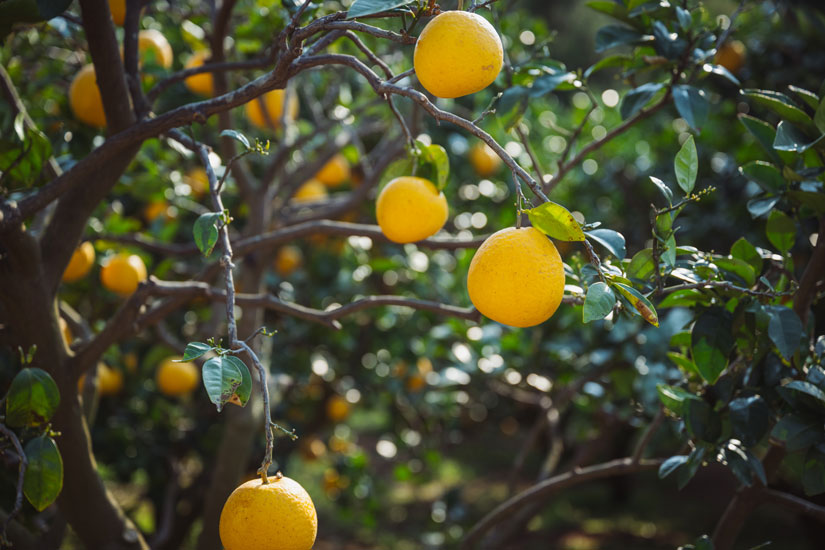
In the Nanyo region of Ehime Prefecture—the heartland of citrus cultivation—most orchards consist of terraced fields built on steep slopes, but Mr. Yoshimoto’s orchard is located on flat, level ground. During World War II, people even joked that this land was so vast and flat it could be turned into an airfield. Seeing this, a man who grew mandarins in Yoshida Town—a leading citrus-growing area in Ehime Prefecture—suggested, “Why don’t you try planting mandarins here?” That suggestion became the origin of Yoshimoto Farm. “When my grandfather first set out to grow citrus, this was actually a sweet potato field. Apparently, people around him opposed the idea, asking, ‘Why plant citrus in a potato field?’ but he pushed through with it, and it worked out. That’s why we’re here today. It rains a lot here, and it’s warm. Since strong northwest winds blow, we first planted a windbreak. While it’s said that Satsuma mandarins dislike rain, we’ve come to realize that any type of citrus can be grown here if the soil is properly prepared. “To create soil that retains moisture well and drains efficiently—so that delicious citrus can grow—organic matter and microorganisms are essential,” says Mr. Yoshimoto.
Healthy, fertile soil created with the help of soil microorganisms and other living organisms
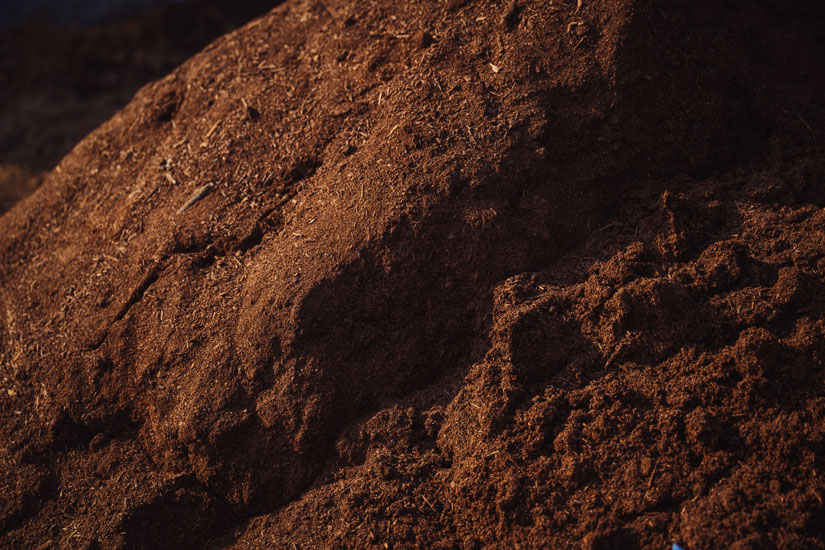
It’s said that what makes a citrus fruit delicious isn’t simply a matter of high or low sugar content; rather, the balance between sugar and acidity, along with the depth of flavor derived from minerals in the soil, is crucial. To achieve this, we need to encourage the growth of microorganisms that produce minerals in the soil. “We’ve been steadily improving the soil by adding organic fertilizers like compost and straw mulch. “Nowadays, there are compost centers where you can buy compost, but back in the day, we used to get livestock manure from livestock farmers, mix it with thatch and rice straw, and let it ferment—so it smelled absolutely terrible. As the soil becomes richer, earthworms start to multiply. Then moles come, followed by wild boars. If you see holes in the ground or traces of digging, that’s a sign the soil is in good condition. But if you spray herbicides, the microorganisms are drastically reduced.” Mr. Yoshimoto, who inherited the orchard his grandfather cleared from his father, has been adding compost for over 20 years, carefully preserving and nurturing the orchard’s soil.
The rich, delicious flavors nature provides
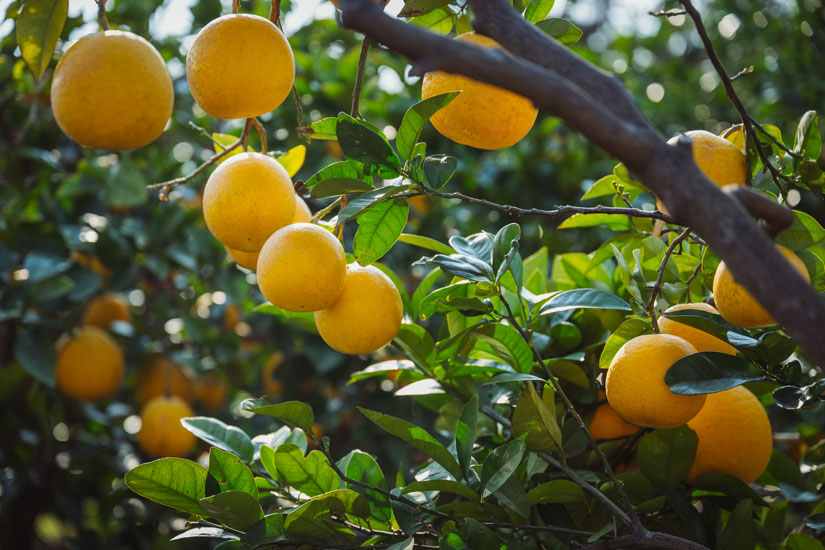
The Kawachi Bankan is a fascinating citrus fruit whose taste varies completely depending on when it is harvested. The Kawachi Bankan available in March, at the start of the harvest season, is juicy, fresh, and contains seeds. Strangely enough, around June—as the harvest season reaches its midpoint—the seeds disappear, and you can enjoy its ripe flavor and firm, plump texture until the end of the season around August. “The taste and texture change depending on the season, but each period has its own unique characteristics, and I take pride in producing fruit that people genuinely find delicious. At first, the taste was no different from mandarins grown elsewhere, but once I could tell the difference myself, my confidence grew. About ten years ago, customers started telling me, ‘These are delicious,’ and the number of repeat customers has been increasing.” Mr. Yoshimoto’s eyes shine as he speaks.
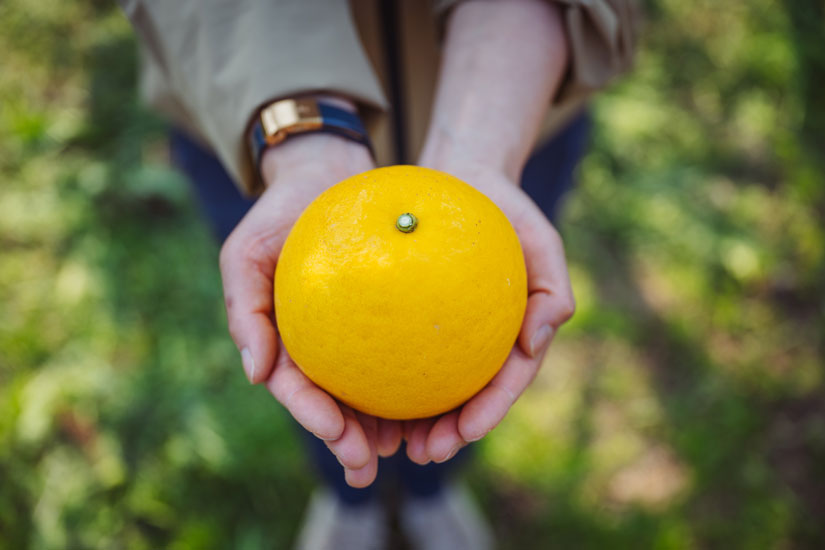
“It feels as though nature skillfully provides us with exactly what we crave in each season. In the cold winter, the warm-looking orange Satsuma mandarins are at their best, while in the hot summer, the refreshingly cool-looking yellow Kawachi Bangan oranges become delicious. Even when I’m worn out by the heat, eating a Kawachi Bangan with its juicy, crisp flavor gives me a boost of energy. It’s one of the citrus fruits you simply can’t do without in summer. Nowadays, we can get all kinds of fruits and vegetables year-round, but I wonder if the lack of a sense of the seasons is a good thing or a bad thing. I think seasonal produce has a lower environmental impact during production, and above all, it tastes better.”
At Yoshimoto Farm, they cultivate a well-balanced selection of citrus varieties, allowing them to harvest seasonal citrus throughout the year through a “variety relay.”
There is no end to the pursuit of growing delicious mandarins. It is a daily cycle of continuous effort.
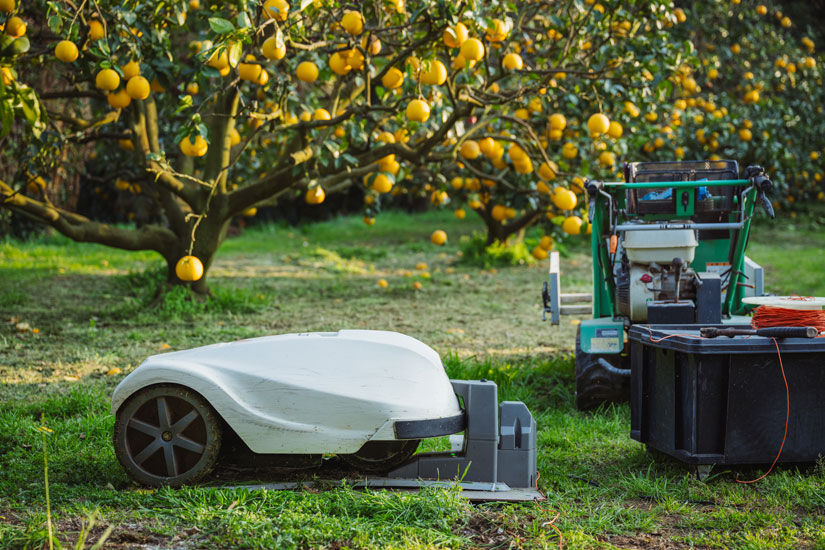
Of course, there are challenges involved in creating fertile soil while minimizing the use of herbicides and chemical fertilizers. Just because we don’t want to use herbicides doesn’t mean we can let the orchard become overrun with weeds. Citrus cultivation that prioritizes soil quality is also a battle against weeds. However, weeding—which used to be done by hand—is evolving with the times, such as through the use of self-propelled mowers that automatically mow the orchard 24 hours a day, thereby saving labor. Incidentally, the introduction of these self-propelled mowers was only possible because the orchard is flat. It is a cultivation method that takes advantage of the terrain.
Summer watering is also a critical task that affects the growth and quality of the citrus fruit. While they irrigate using water pumped up from a source 3 km below or water drawn from the mountains, these supplies are limited. To make up for any shortfall, they draw water from the river or, starting around August when rice paddies no longer require water, utilize irrigation water, ensuring they water the orchards with the appropriate amount at the right time.
We use absolutely no herbicides; instead, we cut the grass by hand and return the clippings directly to the soil. Through years of this painstaking work, the fields have developed into a fluffy soil that retains moisture well while still draining effectively. As the roots spread healthily, the fruit trees absorb the necessary nutrients thoroughly, naturally increasing the sugar content of the fruit. Furthermore, creating an environment that utilizes grass helps prevent the proliferation of pests such as stink bugs. By tailoring the soil to the specific characteristics of each citrus variety, a balanced acidity enhances the sweetness, resulting in flavorful mandarins that leave you wanting more after just one bite. In recognition of these years of trial and error and the farm’s unwavering commitment to soil cultivation, Yoshimoto Farm received the Minister of Agriculture, Forestry and Fisheries Award in 2003.
“I’ve grown these mandarins with the conviction that I must protect this mandarin-growing region and revitalize it. I’m truly delighted that this has been recognized and that I’ve been able to receive such a wonderful award,” says Yoshimoto. “Since we’ve worked so hard to produce delicious mandarins up to this point, I want to pass on that expertise and know-how. I believe doing so will revitalize Ainan Town and give farmers a sense of purpose,” says Mr. Yoshimoto. The citrus fruits from Yoshimoto Farm, which are highly praised as “once you try them, you’ll want more,” continue to gain new fans with each passing year.