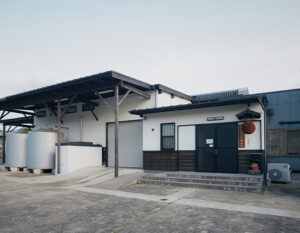

The Kumano Kodo is a pilgrimage route to the Kumano Sanzan that many people have walked. Among these routes, the “Kii-ji,” which runs south through Wakayama Prefecture, passes through the Fujishiro district in Kainan City. Nearby stands Fujishiro Shrine, the historic site of Fujishiro Oji—one of the “Kumano Kujūku Oji” (99 Kumano Princes) where travelers paid their respects along the way and which was considered particularly prestigious. Within the shrine grounds stands the Suzuki Residence, believed to be the ancestral home of all people named “Suzuki” across Japan. It is said that the Suzuki clan, who migrated from Kumano, used this area as a base to spread the Kumano faith throughout the country, and Fujishiro has long been a place where people and culture have intermingled. Settled in this very Fujishiro is “Nakano BC,” a sake brewery that grew to become one of the top producers in Wakayama Prefecture in just three generations.
A History of Challenges That Began with a Dream of Opening a Sake Brewery
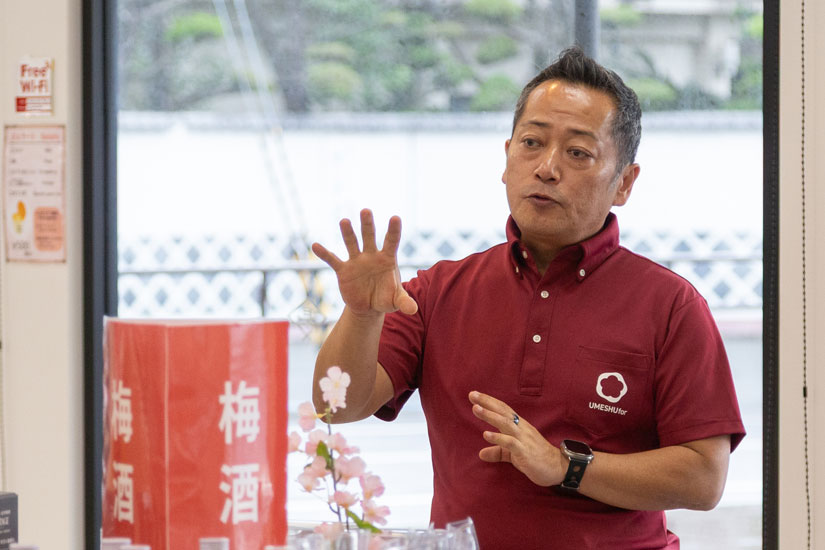
Nakano BC traces its origins back to 1932. The grandfather of Koji Nakano, the company’s president and CEO, had a dream of brewing sake, but at the time, starting a sake brewery required not only obtaining a brewing license but also a substantial amount of capital. So, he first began producing soy sauce under the name “Nakano Soy Sauce Shop,” laying the foundation for the business while waiting for the right moment to venture into sake brewing.
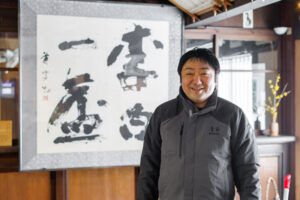
“I’ve heard that my grandfather, while harboring a deep longing to brew sake, first solidified his footing through the soy sauce business,” says Mr. Nakano, quietly reflecting on his grandfather’s dream—one that was not easily realized—and the many years spent working toward it.
Sake Brewing That Keeps Pace with the Times
In 1949, 17 years after the company’s founding, the groundwork laid through the soy sauce business had been established, allowing the company to take the long-awaited step into the sake brewing industry. The first product they produced was shochu. Combining the name of Mount Fuji—a symbol of Japan—with that of Fujishiro in Kainan City, where the brewery was located, they named it “Fujishiro.” While building the foundation of the business through soy sauce production, the founder’s long-cherished dream had finally come to fruition.
Nine years later, in 1958, the company changed its name to “Nakano Shuzo” upon entering the sake brewing business. This marked the birth of the “Chokyū” brand, which remains popular to this day. As the 62nd sake brewery established in the prefecture—a relative latecomer to the industry—the brewery reportedly struggled with sales in the early days. Nevertheless, with the goal of creating sake that would be enjoyed at the daily dinner table, the brewery has steadily refined its craftsmanship while honing the quality of its products.
The sake-brewing traditions passed down through the generations have also evolved with the times. Today’s sake aims to offer a robust umami flavor combined with a lightness that melts smoothly on the palate. The brewery continues to refine its sake to complement contemporary tastes—creating a beverage that enhances the flavors of food without feeling heavy, even as you drink more.
Eventually, the company expanded its operations into plum wine production and began developing health foods that leverage its expertise in fermentation and extraction. The knowledge accumulated as a sake brewery was not confined to sake alone but was applied to new fields as well.
This philosophy was reflected in the company’s name change in 2002 from “Nakano Shuzo” to “Nakano BC.” “BC” derives from “Biochemical Creation,” signifying “the creation of biochemistry.” By advancing research and development in both the alcoholic beverages and health food sectors, the company draws out the potential of Wakayama’s local ingredients and transforms them into new value. This effort embodies the spirit of inquiry that has been passed down since the company’s founding.
Dealing with Over 1,000 Metric Tons of Plums a Year
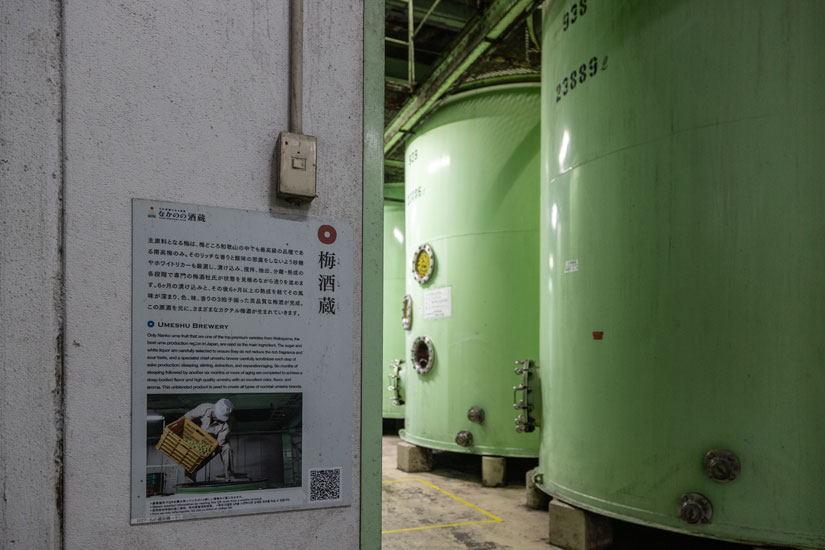
Nakano BC, which expanded from soy sauce brewing to sake brewing, began producing plum wine made from Kishu plums in 1979. Today, plum-related products—such as plum wine, plum extract, and plum juice—have become a major pillar supporting the company’s revenue. The company reportedly purchases more than 1,000 metric tons of plums annually and processes them according to their intended use, variety, and harvest season.
Through continuous efforts to refine quality, the company’s plum wine won a gold award at the “Monde Selection,” a world-renowned quality competition, in 1990.
The aroma and flavor of plums vary depending on the harvest season
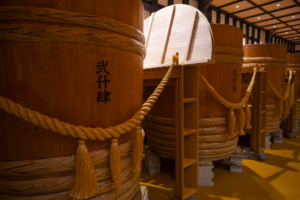
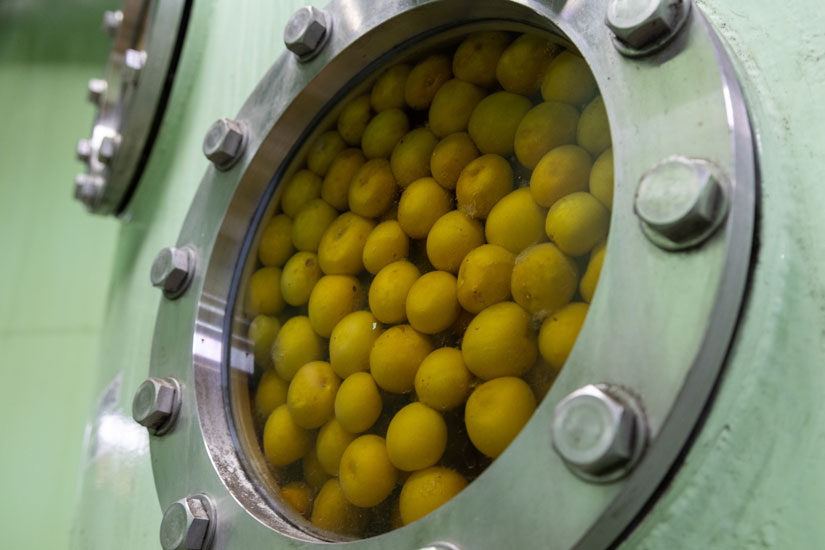
Upon stepping into the plum wine cellar, you’re greeted by more than 40 massive tanks. Inside, the aroma and tartness of the plums slowly infuse into the liquor, maturing over time into a single, harmonious flavor.
Even among plums of the same variety, the aroma, tartness, and condition of the fruit vary depending on when they’re harvested.
Plums harvested early, while still slightly green, produce a refreshing, youthful aroma. On the other hand, plums that have been bathed in the sun and turned reddish possess a more vibrant and rich aroma. Mr. Nakano explains, “It’s important to envision the flavor of the plum wine you want to create and select fruit harvested at the right time to match that vision.”
Furthermore, to achieve not only the ideal flavor but also the desired color, he carefully selects different plum varieties. He doesn’t rely solely on the “Nanko-ume,” a particularly well-known variety from Wakayama Prefecture—which boasts the highest plum production in Japan. He explores the unique characteristics of each variety, such as “Tsuyuakane”—a hybrid of plum and apricot with red flesh—and “Purple Queen,” a small plum with a vivid reddish-purple skin. He is also working on the development of “Assemblage Umeshu,” which combines base spirits of different varieties and ages, much like blending wine.
Time and Skill: Bringing Out the Unique Character of Plums
The base umeshu is made by placing plums, sugar, and white liquor into a tank.
About six months after the initial brewing, the plums are removed, and the liquid is left to age further. This allows the astringency inherent in the plums to mellow, resulting in an umeshu where the aroma, acidity, and sweetness are in perfect harmony. It is said that some unblended umeshu, aged for over 10 years, is also stored here.
Umeshu is often perceived as a sweet liquor. However, if it were simply made sweet, one would quickly grow tired of it. How does one design the acidity that supports the sweetness and the elements that provide a crisp finish? The brewer’s experience and skill are reflected in achieving that balance.
Umeshu: From Home-Style Flavors to the World
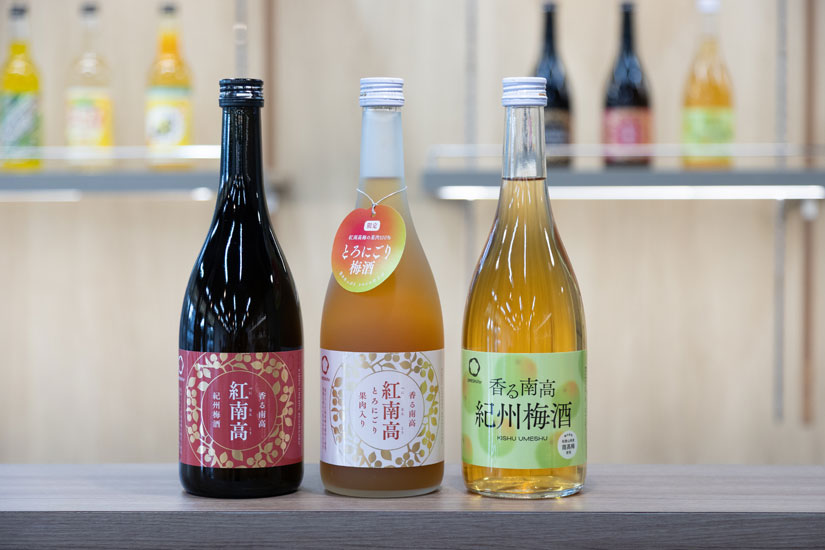
In Wakayama—a major plum-producing region—the custom of pickling harvested plums at home is deeply rooted, and umeshu has long been cherished as something “made at home.” As a result, simply blending plums, sugar, and white liquor made it difficult to distinguish these products from homemade versions, and establishing them as commercial products was reportedly no easy task.
Consequently, Nakano BC sought to create flavors that would be difficult to replicate at home by combining ingredients such as red shiso, green tea, and fruit. Around the year 2000, against the backdrop of a growing health consciousness, umeshu began to attract attention, particularly among women, and the ways to enjoy it expanded significantly—including varieties based on sake or whiskey, as well as those with added fruit juice.
Currently, Nakano BC produces approximately 30 varieties of umeshu. The company offers a diverse range of flavors, from authentic umeshu that capitalizes on differences in plum varieties and aging periods to more approachable products blended with lemon or green tea.
This umeshu has now become a cornerstone of the company’s overseas business. It is exported to approximately 30 countries, including China, Taiwan, Hong Kong, and South Korea, as well as Thailand, Singapore, the United States, France, Italy, and Germany. It is embraced not only in Asia, where plums are familiar, but also in Europe and the United States, where a culture of liqueurs is well-established.
Umeshu, which has been cherished in households across Japan, has developed its own unique character as a commercial product through the ingenuity of its makers. Known overseas simply as “UMESHU,” it has become a beloved beverage. This drink, deeply rooted in the daily life of Wakayama, is crossing the seas and reaching new audiences.
Craftsmanship and Tourism, Linked by a Japanese Garden and a Sake Brewery
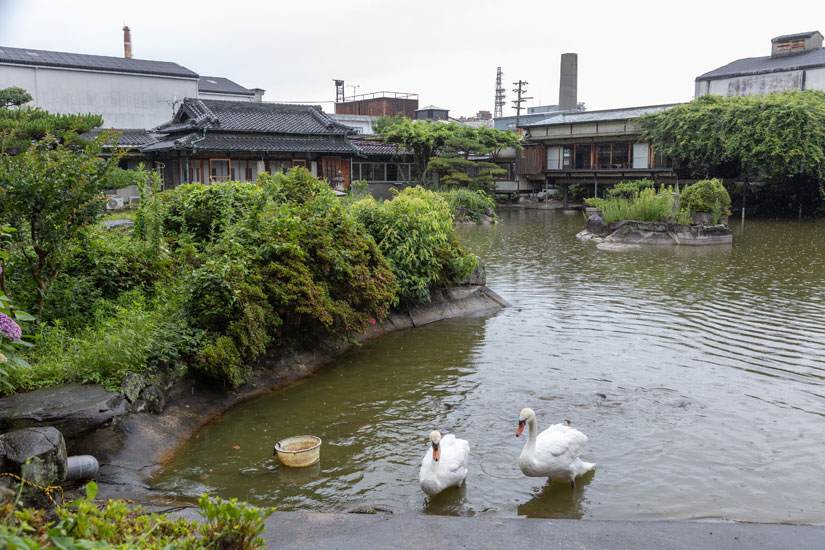
A vast Japanese garden occupies about half of the approximately 10,000 tsubo site. The pond within the garden was originally constructed to provide cooling water for the distillation of shochu. It was later landscaped to serve as a welcoming space for visitors to the brewery, and today it offers a lush, green landscape where colorful koi and swans swim.
The pond covers an area of approximately 3,000 tsubo. It is said that the founder himself tended to the garden, shaping it over many years. The pond, which once provided the water essential for sake brewing, has now become a place that conveys both the brewery’s history and the rich natural beauty of Wakayama.
Nakano BC has long been committed to tourism initiatives, such as brewery tours. Opening up the production facilities and sharing the history and techniques of sake brewing not only provides enjoyment for visitors but also helps raise the awareness and pride of the staff.
Turning the Sake Brewery into an Open Space Where the Community and People Gather
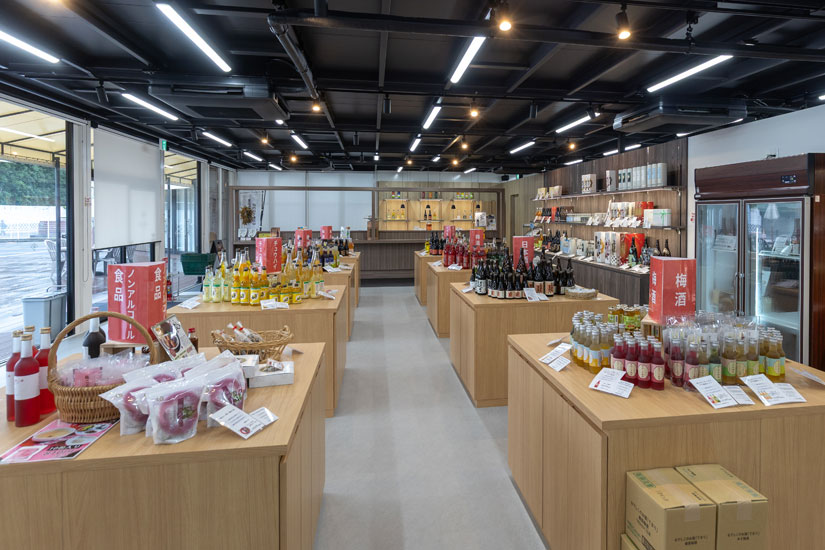
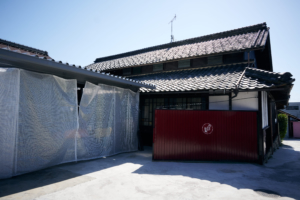
In April 2026, Nakano BC relocated its company-owned store, “Chokyuan,” across from its headquarters and reopened it after renovations. The previous store was located within the sake brewery grounds, and it was reportedly a bit difficult for first-time visitors to find their way there.
The new “Chokyuan” features a selection of products unique to a company-operated store, including sake, plum wine, and health foods. In addition to a tasting corner, the shop now offers gelato made by Kurosawa Farm, also located in Kainan City. Alongside the “Milk” flavor—which highlights the farm’s fresh milk—the menu features flavors incorporating Wakayama ingredients such as plum, Marihime, Sanbokan, and hojicha, ensuring that even non-drinkers and families with children can enjoy the experience.
It has evolved from a shop solely for purchasing sake into a place where locals and tourists alike can casually drop by to experience Nakano BC’s craftsmanship and the flavors of Wakayama. A new gateway is emerging that brings the sake brewery closer to the people.
Prepare it yourself and enjoy watching the plum change over time
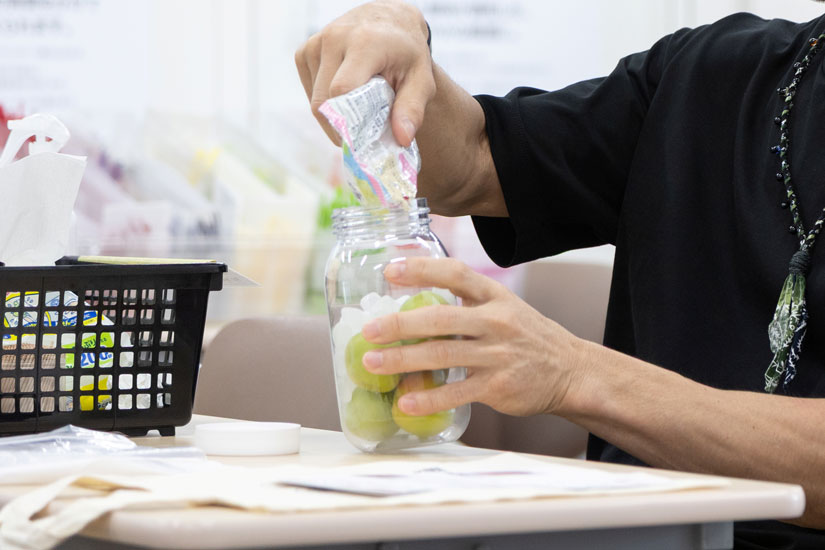
At the umeshu-making experience facility adjacent to “Chokuan,” visitors can also make their very own bottle of umeshu.
First, sterilize the bottle, carefully wipe each plum one by one, and remove the stems with a bamboo skewer. Layer the prepared plums and rock sugar in the bottle, then pour in white liquor to finish the process.
While each step is simple, invisible changes begin inside the bottle immediately after the mixture is prepared. It is said that the sugar not only adds sweetness but also draws out the plum’s hidden aroma and acidity through osmosis.
The character of the finished plum wine varies depending on the amount and type of sugar used. Rock sugar yields a crisp sweetness, beet sugar a mellow flavor, and honey adds a rich, full-bodied depth. The time spent preparing the mixture while imagining how it will taste six months later is another joy of making plum wine.
While picturing the taste
Take the prepared umeshu home, and for the first three months or so, turn the bottle upside down from time to time to allow the sugar and plums to blend slowly. After letting it rest for another three months or so, it will finally be ready to drink—the moment you’ve been eagerly awaiting.
Inside the bottle, the rock sugar gradually dissolves, and the once-clear liquid slowly transforms into an amber hue. Watching this transformation unfold is one of the joys you can only experience because you made it yourself.
Whether it’s a single bottle aged at a sake brewery or a jar brewed at home, time flows the same for both. It slowly draws out the plum’s aroma and tartness, nurturing them into a single, harmonious flavor. In this process, the wisdom of umeshu brewing—passed down through the ages—continues to live on.
Transforming Sake Brewing Techniques and Research into New Value
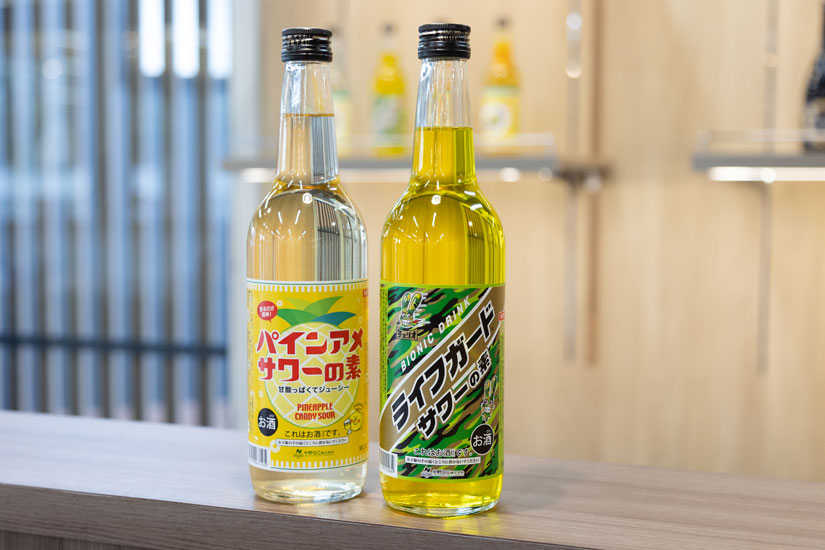
The skills honed through sake brewing are not limited to the production of sake alone. At Nakano BC, the company is applying its knowledge of fermentation, extraction, and cultivation to expand its business into health foods and products that highlight aromatic qualities.
At first glance, these may seem like entirely different fields. However, at their core lies a shared approach: carefully examining raw materials and conducting extensive research to unlock the latent potential within them.
The company’s motto is “Always create through collective wisdom.” By pooling the wisdom and experience of each employee, the company generates new products, technologies, and value. Embodying this motto, the techniques cultivated in the sake brewery are leading to new ways of manufacturing that make the most of Wakayama’s local ingredients.
The Bounty of Wakayama, Captured in Sake and Fragrance
It’s not just plums. Wakayama boasts a diverse array of ingredients that reflect the region’s unique climate and terroir, including mandarin oranges, sansho pepper, jabara, cedar, and cypress.
At Nakano BC, we have been incorporating the unique aromas and flavors of these ingredients into our spirits. One such example is the craft gin from Fuji Shiro Distillery. “Maki—KOZUE—” features Japanese cypress (Koyamaki) as its main ingredient, along with Satsuma mandarin and lemon peels, and sansho pepper seeds. “Kodachi” combines Kishu cedar, Kishu cypress, citrus peels, and sansho pepper seeds. Both Satsuma mandarins and Japanese pepper are specialty products for which Wakayama Prefecture boasts the highest production volume in the nation. Kishu cedar and Kishu cypress are also ingredients that reflect the natural environment of Wakayama, blessed with abundant forests. By layering the refreshing notes of citrus and the crisp aftertaste of Japanese pepper over a forest-like aroma, these gins capture the scenery of Wakayama in a single glass.
Beyond sake, the company leverages its technology for extracting aromatic compounds from ingredients to develop aromatic oils using sansho and other ingredients. Sake focuses on flavor and aroma, while aromatic oils fill a space with scent. Although their uses differ, they share a common approach: carefully drawing out the unique character of each plant. This meticulous attention to even the rising aroma is a principle applied equally to sake brewing and health foods.
They do not use ingredients simply because they are “from Wakayama.” Instead, they analyze bitterness, astringency, acidity, and even the intensity of the aroma to determine how best to combine these elements to bring out the ingredients’ appeal. This reflects Nakano BC’s unique perspective: researching the region’s bounty and transforming it into new value.
Sake That Complements Your Meals and Reflects the Spirit of Wakayama
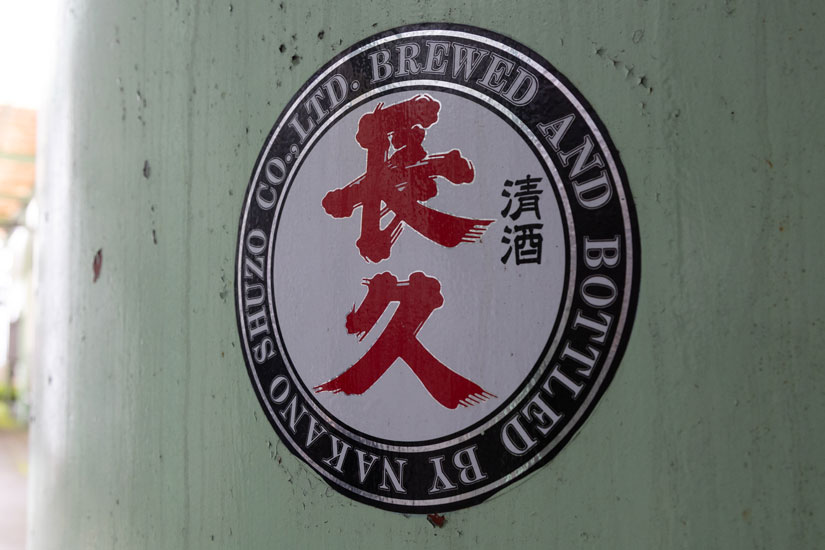
The flagship sake brands of Nakano BC are “Chokyū,” “Chōkyū,” and “Kinokuniya Bunzaemon.”
“Chokyū” is a brand name that embodies the wish for “a sake that will be loved for a long, long time.” It has long been cherished as a sake that accompanies daily meals. “Chōkyū,” which carries on this legacy, is a series of “Tokutei Meishō” sakes born from the desire to create even higher-quality sake using techniques that surpass those of the previous generation. Although the pronunciation is the same, the character “長” (chō) has been replaced with “超” (chō), symbolizing a renewed commitment to sake brewing.
“Kinokuniya Bunzaemon” is a brand named after a prominent merchant with ties to Wakayama. Drawing parallels with the story of a figure said to have transported mandarin oranges to Edo, it expresses the essence of Wakayama through sake.
While the lineup once centered on sake with a sweet and full-bodied character, the quality of the sake has evolved over time. The brewery pursues a lightness that melts away on the palate while retaining the umami and richness of the rice. The goal has been to create a sake that complements the flavors of food and naturally leads to the next sip.
Going Beyond the Boundaries of a Sake Brewery: Carrying Wakayama’s Ingredients into the Future
In Japan, the markets for sake and plum wine are struggling to grow, and poor plum harvests due to abnormal weather conditions continue. Nakano BC faces no small number of challenges: securing a stable supply of raw materials, maintaining quality, and creating products that will be chosen by the next generation.
Nevertheless, the company never stops taking on new challenges. It explores new flavors in plum wine through aging and blending, and delivers these products from Wakayama to the world. Furthermore, the company is applying the knowledge and techniques cultivated through sake brewing to the health sector and new ingredients, adding unprecedented value to the region’s natural bounty.
Taking ingredients received from the land, refining them with the wisdom and skills of the craftspeople, and passing them on to the next generation—this is the philosophy of Nakano BC, which began with soy sauce production and has expanded its horizons into sake, health foods, and fragrances. At the core of this approach lies a commitment to closely examining local ingredients and drawing out their untapped potential.
By understanding the characteristics of the ingredients, analyzing the production process, and conducting repeated trials, we craft the desired flavors and aromas. Although the fields we engage in are diverse, we never approach any of them halfheartedly. What unites them all is a curiosity to “learn more” and the technical skill to bring our visions to life.
What flavors and aromas still lie dormant within Wakayama’s ingredients? Seeking out those answers and bringing them to life is the very essence of Nakano BC’s craftsmanship.