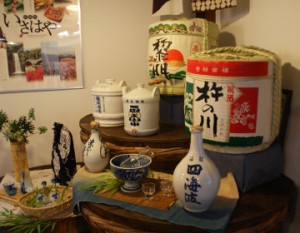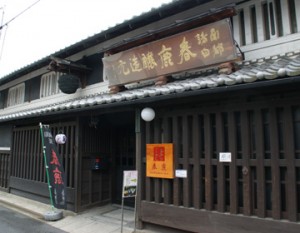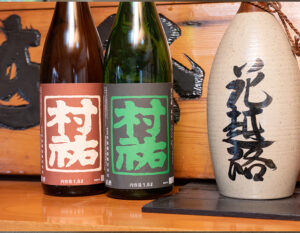

A single glass of sake can sometimes make the time spent with loved ones even more meaningful. Rihaku Brewery has been sharing these special moments with the world from Shimane. Although it is a long-established brewery with a history spanning over 140 years, its journey has always been marked by a spirit of challenge. The company expanded its sales channels back when overseas expansion was still rare, and in recent years, it has been pushing the boundaries of sake by brewing with flower yeast and developing products tailored to the times, thereby broadening the possibilities of sake. At the core of it all lies a consistent philosophy: “Creating joyful moments through sake.”
Dedicated solely to sake brewing in the land where the “Myth of Sake Brewing in Izumo” has been passed down through the ages
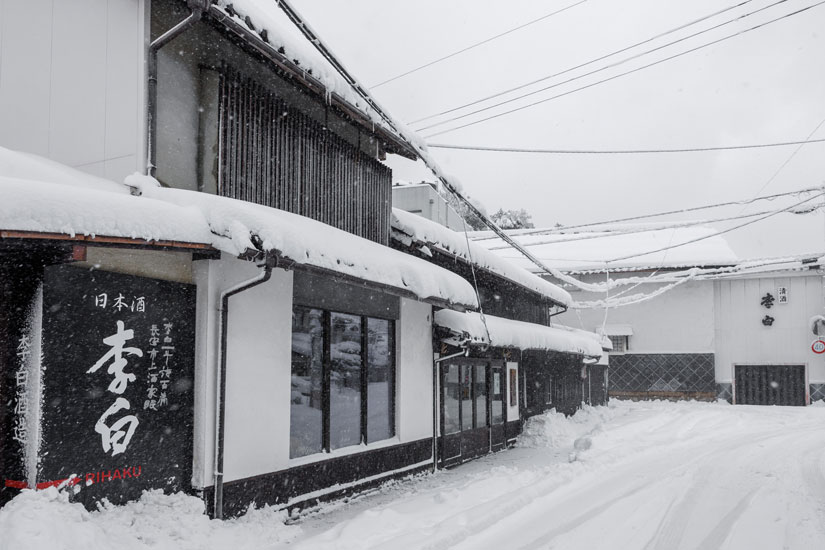
Matsue City, Shimane Prefecture. In this region, where a long-standing culture of sake brewing thrives, the “Izumo Sake Brewing Myth”—which tells of the gods brewing sake—has been passed down through the generations. In this land, we have continued to brew rich, full-bodied sake deeply rooted in the local terroir, using high-quality water and rice primarily grown in Shimane Prefecture. Today, the brewery uses sake-brewing rice for all of its in-house brands, focusing on the quality of the rice used in the brewing process.
Moving forward with the changing times
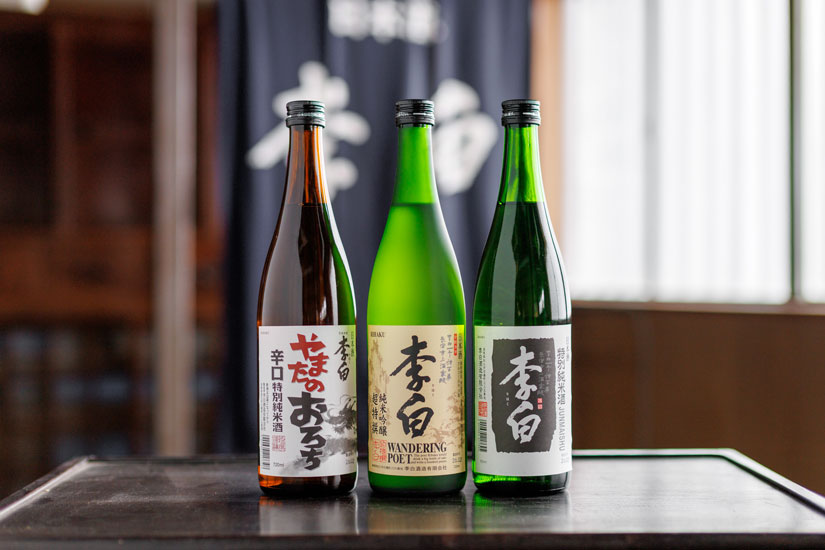
The company was founded in 1882. During the Meiji era—when feudal society came to an end and Japan began adopting Western culture—Takujiro Tanaka began brewing sake under the trade name “Tanaka Honten.” At that time, unlike today’s brand-based approach, it was a small-scale business where local residents would bring their own drinking vessels to purchase sake. As the Taisho era gave way to the Showa era, the distribution of sake began to be standardized nationwide, and breweries started promoting their own unique brands. It was at this time that Tanaka Honten adopted the brand name “Rihaku.” The name was chosen by Reijirō Wakatsuki, a native of Matsue City who later served as Prime Minister of Japan. An avid fan of Tanaka Honten’s sake, Wakatsuki named it “Rihaku”—after the Tang Dynasty poet from China—with the hope that it would “be a sake cherished across the ages.”
After the war, against the backdrop of rising demand for sake, the company grew primarily by supplying unblended sake to major manufacturers in bulk (“oke-uri”), and in 1950, it was incorporated as “Tanaka Shuzo.” In the 1970s, at a time when mass production was still the norm, Tanaka Shuzo shifted its focus from “quantity to quality.” The company began full-scale development of its own brand, “Rihaku,” using only rice suitable for sake brewing and pursuing the ultimate in flavor. Through repeated trial and error, they improved quality, eventually earning recognition—including numerous awards—and laid the foundation that continues to this day.
The company then began exporting in the 1980s. Although exporting sake was still rare at the time, the previous head of the family aimed to spread sake culture overseas. Today, 40% of its production is exported to 14 countries, primarily the United States. As the popularity of its flagship product, “Rihaku,” grew, the company changed its name in 1993 from “Tanaka Shuzo”—which bore the representative’s surname—to “Rihaku Shuzo.”
With a pioneering spirit, “passing on sake to the next generation”
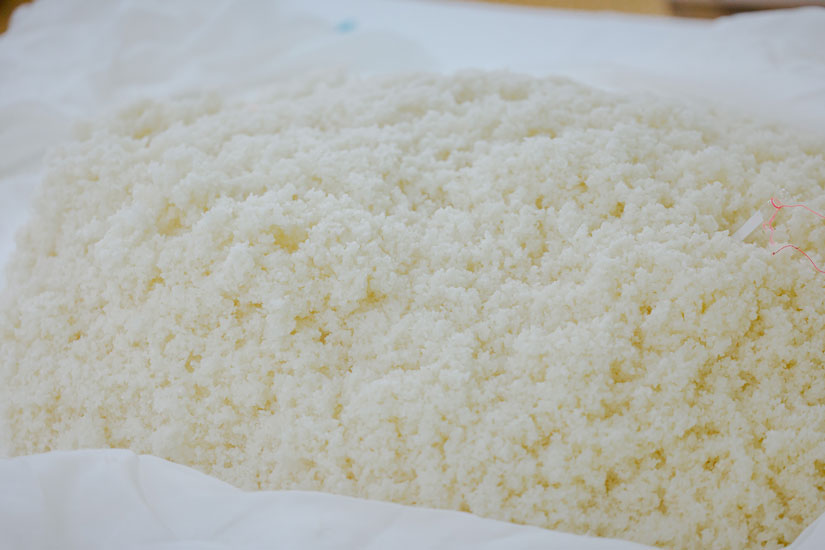
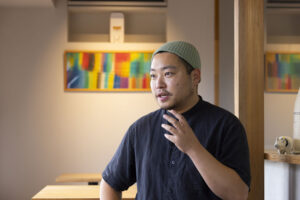
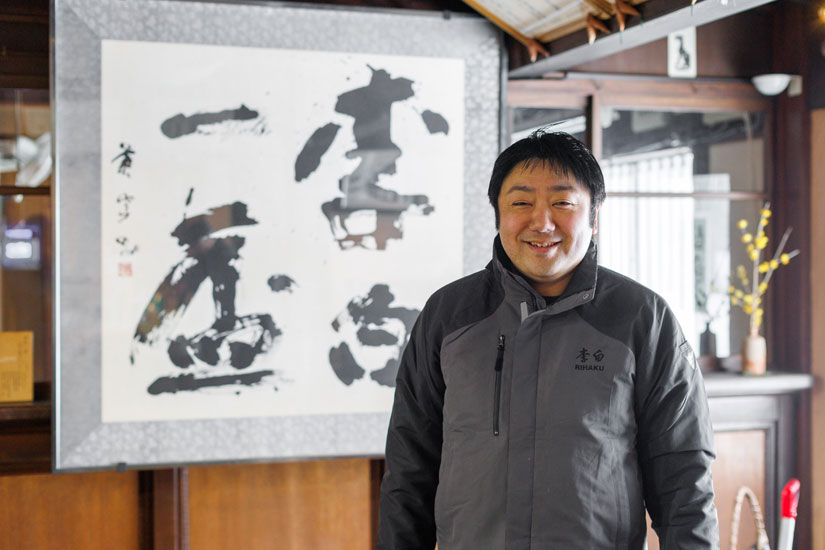
The current fifth-generation head of Rihaku Brewery is Yuichiro Tanaka, who studied brewing science at Tokyo University of Agriculture and took over the family business after apprenticing at a specialty shop for local sake in Tokyo.
Mr. Tanaka joined the family business in 2003. At that time, the sake industry was undergoing a major turning point. In addition to market shifts caused by the shochu boom, the artisans who had long supported sake brewing were rapidly aging. Rihaku Sake Brewery was no exception. Sensing that “if things continued this way, we would no longer be able to brew sake,” Mr. Tanaka decided to overhaul the company’s production system, which had been centered around the head brewer. He took the bold step of creating a system that would ensure stable sake production.
Introducing modern equipment to pass on the skills of the “Izumo Toji” to future generations
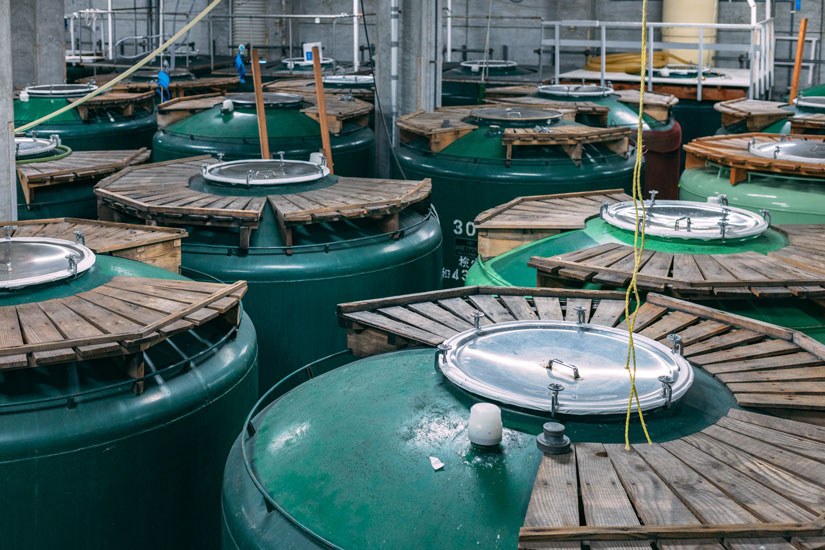
The quality of Rihaku Sake Brewery is underpinned by the expertise of the Izumo master brewers. Through meticulous koji production and a method of slow fermentation at low temperatures, they have consistently produced sake with high acidity and a robust flavor. However, this technique relied heavily on experience and intuition. To address this, Mr. Tanaka pushed forward with digitizing the production process and investing in equipment, enabling the management of fermentation conditions—such as status, temperature, and duration—through numerical data. He refined the process into a reproducible system and established it as the “Rihaku Brewery Method.”
At the same time, not everything is left to machines. For critical processes such as koji production, the brewery places great importance on manual labor, shifting from a approach where “humans control the koji” to one where “humans prepare an environment conducive to the koji’s activity.” By closely monitoring temperature and humidity and making adjustments based on the koji’s condition, they bring out its full potential. Advances in technology and equipment have made the kind of meticulous management that was once difficult possible, leading to stable quality and further improvement.
In recent years, climate change has made the quality of rice more variable. As a result, they strive to make improvements every year while monitoring its condition. “There’s no end to the adjustments,” he says. “To deliver good sake, we will continue to conduct repeated analyses,” showing that he is not content with the status quo.
Creating a New Identity Using Flower Yeast
Until Mr. Tanaka returned to the brewery, they had been producing classic-style sake by combining sake rice varieties such as “Gohyakumangoku” and “Yamada Nishiki” with “No. 9 yeast,” which creates a crisp, clean flavor. This method has long been used to consistently produce high-quality sake thanks to the expertise of the Izumo master brewers.
At the same time, Mr. Tanaka took on the challenge of creating a new combination using the “Omachi” sake rice variety and “flower yeast.” “Flower yeast” refers to sake yeast that has been successfully isolated and cultured from flowers found in nature. While the character of the sake varies depending on the type of flower used, it is said to be particularly effective at producing a floral ginjo aroma and fruity flavors, making it a popular choice for crafting distinctive sakes. Drawing on his experience researching flower yeast during his university days, he set out to create sake in a style distinct from traditional methods.
“I wanted to create a new flavor unique to ‘Rihaku Sake Brewery’—one that differs from the techniques of the Izumo master brewers,” he explained. With this vision in mind, he selected his ingredients to achieve a balance of a robust body with a refreshing aroma and light acidity. The elegant flavor has been well-received by women and those new to sake.
Such initiatives are part of the challenge to preserve tradition. It is precisely this attitude—taking a step forward without fear of change—that serves as the driving force to carry sake culture into the next era.
Providing a pleasant experience through sake
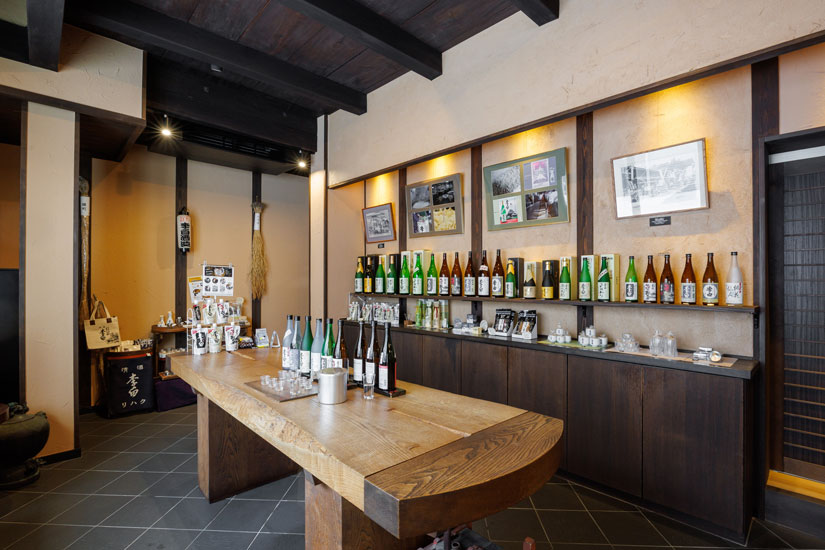
Japan’s drinking culture began as a sacred “ritual connecting the gods and people” rooted in Shinto rituals, and has evolved uniquely as a setting for enjoying the seasonal beauty of nature—flowers, birds, the wind, and the moon—as well as for social interaction. Within this culture, sake has always been a part of daily life, not merely as a luxury item, but as a force that connects people.
“What we’re making isn’t just sake—it’s an ‘oasis’ that enriches people’s time,” says Mr. Tanaka. His philosophy is that sake should not take center stage, but rather serve as an element that enhances conversation and meals.
Sake is, after all, merely a “catalyst.” Its presence sparks conversation and makes meals more enjoyable. He wants to support such moments. To that end, he prioritizes a flavor profile that balances well with food. He aims to create sake that never grows tiresome and naturally invites you to take another sip.
Our Commitment to Preserving Sake Culture Accurately
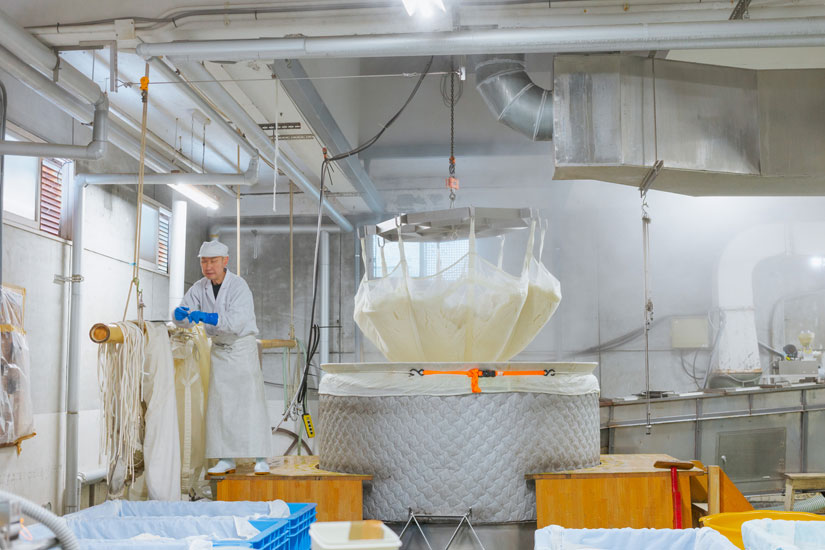
At Rihaku Sake Brewery, guided by the philosophy of “promoting sake culture and passing it on correctly to future generations,” we use sake-brewing rice in all of our sake. Sake-brewing rice refers to rice that has been selectively bred to be suitable for brewing Japanese sake. Although it is more expensive, it produces fewer off-flavors and makes it easier to achieve a clean taste that pairs well with meals.
Additionally, the brewery uses water from one local well and three wells on its premises; since all are part of the same water system, they are all utilized in the brewing process. The soft mouthfeel and clean finish make the sake easy to drink and support its appeal as a meal-accompanying sake.
Bringing richness to daily life with a tireless spirit of challenge
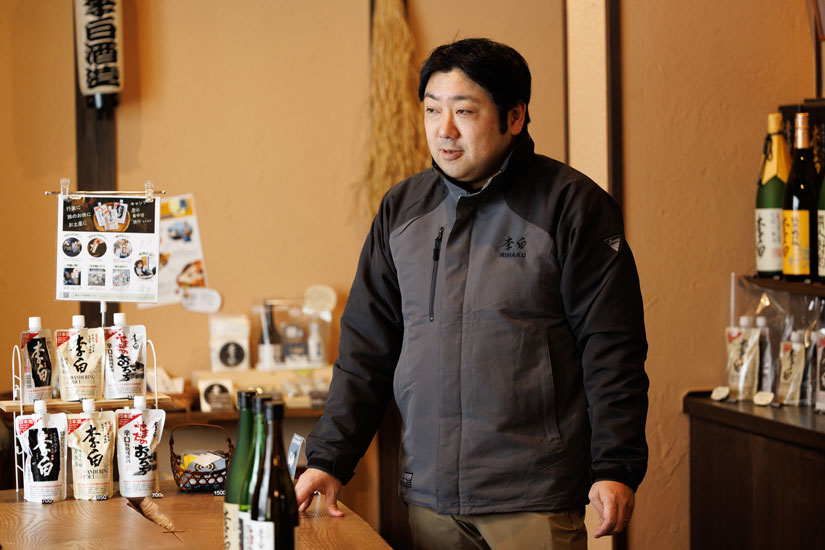
To preserve tradition,Rihaku Sake Brewery’s quest for innovation never stops.
In 2024, the company began selling its sake in pouches. It is highly unusual for a regional sake brewery to handle everything from development to manufacturing in-house, making this a groundbreaking approach for the industry. “Because they’re lightweight and easy to carry, our pouches are being chosen for new occasions such as outdoor activities and watching sports. They’re also increasingly popular as souvenirs among international visitors.” The company says it aims to begin selling unpasteurized sake in pouches in the future.
At the heart of these efforts is the desire for people to share pleasant moments together, transcending national and cultural boundaries. Rihaku Sake Brewery will continue to deliver the richness that each cup of sake brings to the world.