

Kochi Prefecture’s official fish is the skipjack tuna, and the prefecture ranks first nationwide in consumption. Skipjack tuna is deeply loved by the people of Kochi.
Even in this “skipjack tuna prefecture,” Myojin Suisan in Kuroshio Town is a well-known name. Myojin Suisan’s straw-grilled tataki isn’t just delicious. The company protects marine resources from overfishing by using single-hook fishing methods and eagerly adopts techniques to ensure the utmost freshness. To secure high-quality straw for making tataki, they established an agricultural corporation, revitalized fallow fields within the town, and return the straw ash to the rice paddies as fertilizer—thus creating a circular model that connects the sea and the mountains.
It is the prefecture’s official fish, and consumption of it ranks first in Japan. The prefecture’s love for bonito
Located about 90 kilometers west of Kochi City, Kuroshio Town in the southwestern part of Kochi Prefecture has long been known for its thriving single-line fishing industry, which tracks skipjack tuna riding the Kuroshio Current off the coast of Tosa, solidifying its reputation as the “Town of Skipjack Tuna.”
In recent years, the town has also attracted large numbers of visitors from both within and outside the prefecture through experiential tourism—such as “whale watching,” which makes use of the area’s natural resources—and sports tourism centered around the Tosa Southwest Large-Scale Park.
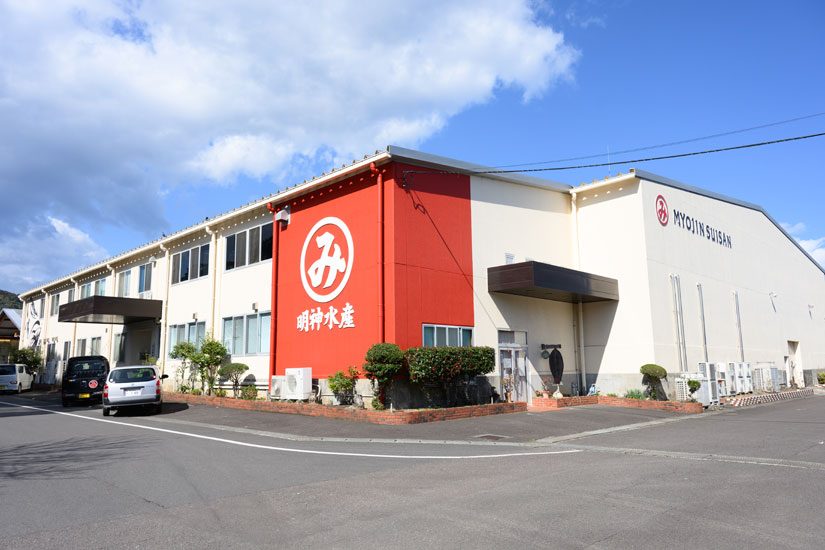
Located right next to Saga Fishing Port, where fishing boats set sail, is the headquarters of “Myojin Suisan,” famous for its “straw-grilled bonito tataki.”
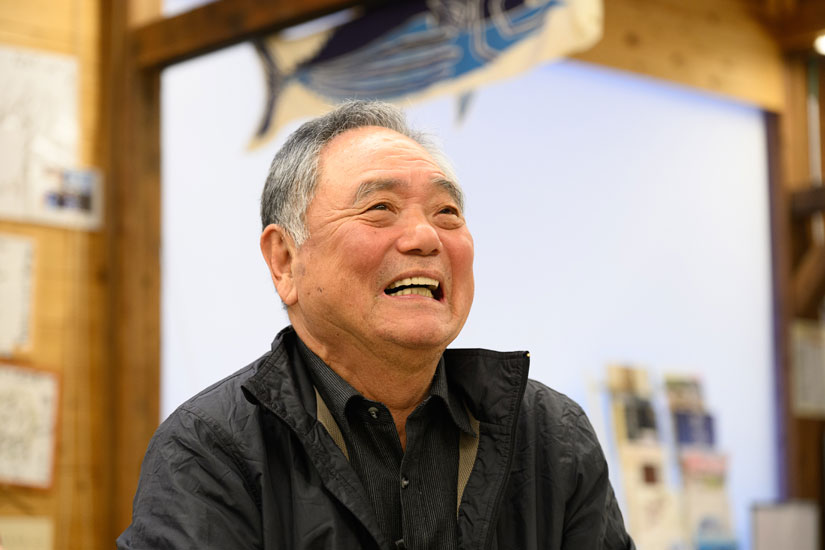
Shoichi Myojin, the company’s representative director—who, even now as the head of his own business—still takes out his boat to fish for bonito as a hobby—explains the origins of “tataki.”
“Originally, tataki was a method devised by fishermen in fishing villages to safely eat bonito that had lost some of its freshness in an era before refrigeration or freezing. They would place vinegar and soy sauce in the palm of their hand, slice the lightly seared bonito into sashimi, and then pound it to let the flavors soak in. They would then top it with garnishes such as green onions, onions, and garlic.”
We will continue to preserve line-and-hook fishing
Riding the Kuroshio Current, the “first bonito” migrate northward off the coast of Tosa Bay from around February to March. Afterward, they head south while feeding heavily on krill off the coast of Chiba and in the Tohoku region; by the time they return to the waters off Tosa in the fall, they are rich in fat and are called “returning bonito.”
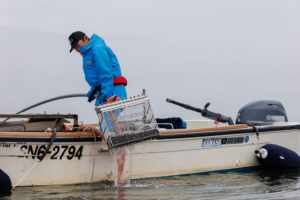
Myojin Suisan, founded in 1959, has been practicing Tosa’s traditional “single-rod fishing” method—catching bonito with a single fishing rod—off the coast of Tosa Bay.
“Nationally, there may be an image that ‘skipjack tuna equals Kochi,’ but in reality, our catch volume isn’t particularly high. In other prefectures, such as Shizuoka and Kagoshima, the primary method is purse seine fishing, which allows for massive catches—sometimes exceeding 100 metric tons at a time—essentially sweeping up the entire school of skipjack tuna in a single net. Our daily limit is 40 to 50 metric tons. Even today, Kochi and Miyazaki still use the traditional single-line fishing method. If a school isn’t feeding, we stop there and look for another spot. It’s a sustainable fishing method that avoids overfishing and is gentle on the environment,” Mr. Myojin says with great pride.
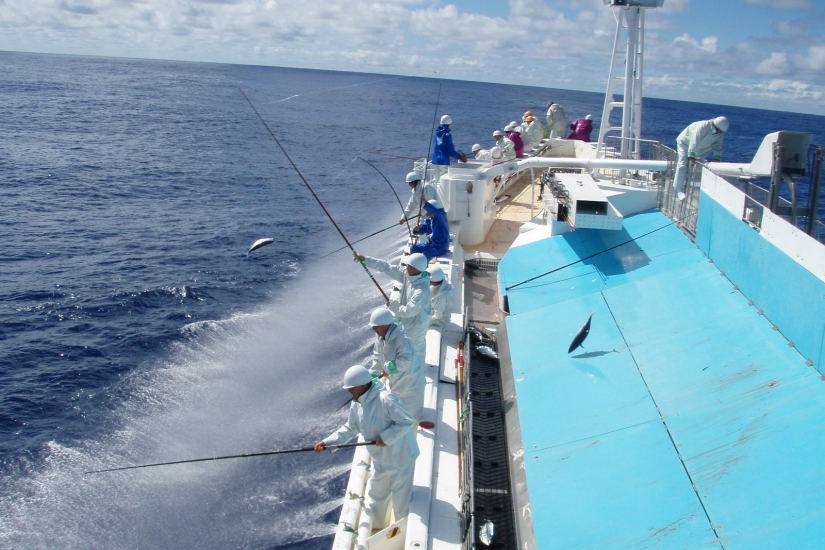
By using a lure hook without a barb, the skipjack tuna—which is jerked high into the air—slips off the hook at the apex of its trajectory, allowing anglers to catch them one after another. It takes about three years of practice to master the rhythm of this technique. The larger the skipjack tuna, the more difficult it is to handle, and this is where differences in skill become apparent.
Because line fishing minimizes damage to the fish and ensures high quality, the catch is traded at a unit price 3 to 4 times higher per kilogram than that of net fishing. Consequently, the fishery has remained viable even with relatively small landings.
Currently, the company owns four inshore vessels and, through a group company, three large freezer vessels, one of which is the “Katsuei Maru,” capable of operating in the open ocean. This vessel is known as a “B-1 ship.” The caught skipjack tuna are immediately placed, one by one, into a fish hold containing a “salt brine solution”—a highly concentrated saltwater solution maintained at around minus 20 degrees Celsius—where they are rapidly frozen while still alive, preventing any loss of freshness.
Furthermore, veteran fishermen reel in fish at a rate of one every two seconds. To prevent overfishing from filling the fish hold and slowing down the freezing process, the fishing master monitors the catch volume and calls a halt when necessary.
“When they’re really biting, we can go nonstop for an hour and a half to two hours. In terms of weight, that’s 55 or 60 metric tons—or 60,000 kilograms—and they just keep coming, one after another,” says Mr. Myojin, who has served as fishing captain for many years, speaking with passion.
The skipjack tuna from Myojin Fisheries, which has mastered the art of single-hook fishing, is highly regarded nationwide as “B-1 (Brine-Frozen First-Class Product).”
On the other hand, with purse seine fishing, if, for example, 100 metric tons are caught, that entire 100-metric-ton haul is loaded into the ship’s fish hold all at once and frozen. This results in “slow freezing,” where the core temperature of the fish drops gradually, which tends to degrade the quality of the flesh.
At Myojin Fisheries, all top-grade bonito caught by their B-1 vessels are processed into straw-grilled tataki; even so, this accounts for only about half of the annual volume of bonito used for their in-house tataki production.
Kenta Tomioka, the department manager in charge of public relations, explains, “For example, if one of our boats catches a very high-quality, fatty bonito, we can assume that the catch from other companies’ boats in that same fishing ground is of the same quality. By purchasing from them, we can select and gather only the best raw materials.”
Mr. Myojin adds, “Due to soaring fuel costs and the issue of finding successors, the number of fishing vessels is decreasing year by year. To the untrained eye, one might think that fewer rivals would be an advantage, but from a fisherman’s perspective, fewer boats mean it becomes even harder to catch fish. Precisely because we’re scattered across the vast Pacific Ocean fishing, we rely on data shared among fellow fishermen to locate fishing grounds.”
Skipjack tuna vessels are required to share information three times a day regarding their current location and catch volume, and all of this information is publicly available. When Mr. Tomioka showed me his smartphone, I was able to immediately pinpoint the “Katsuei Maru’s” location using AIS (Automatic Identification System). While vessel safety is certainly a factor, the fishing world—where competitors coexist and thrive together—is fascinating.
The intensity of straw-grilling is directly proportional to its deliciousness.
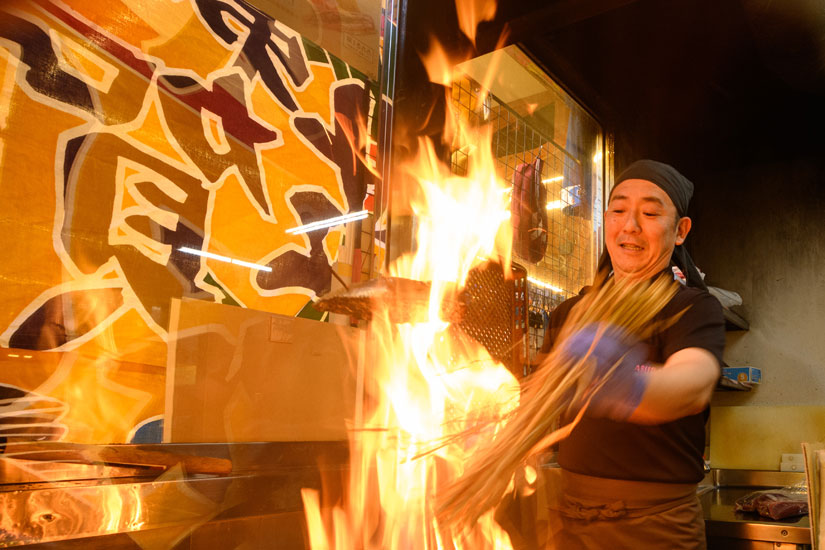
In 1986, Myojin Suisan began processing and selling seafood, as well as manufacturing and selling straw-grilled bonito tataki. The company was founded with the desire to introduce people across Japan to the delicious taste of authentic Kochi-style tataki.
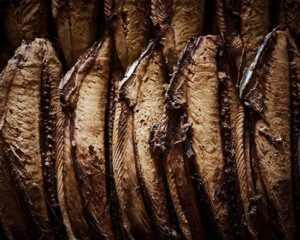
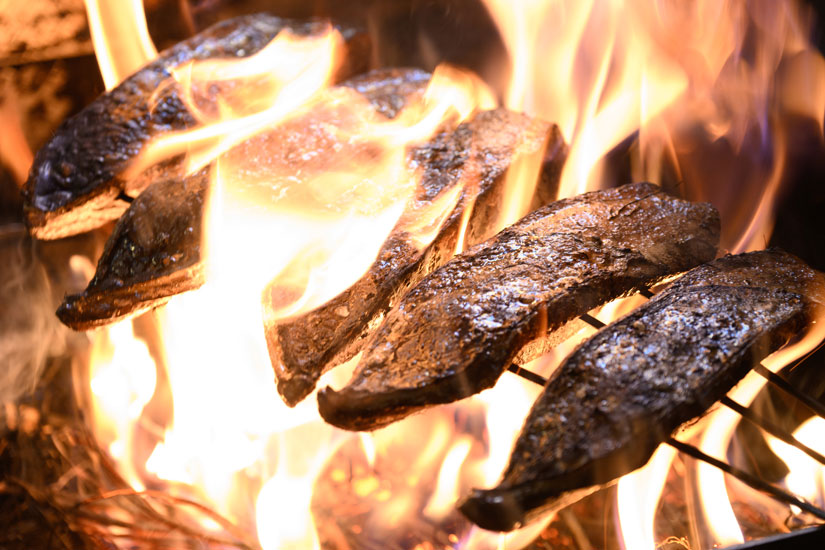
Since the straw burns rapidly and turns to ash almost instantly, only the surface is seared, leaving the inside raw. This creates a unique aroma and texture that cannot be replicated by gas grilling. The combination of frozen bonito with exceptional freshness and the aroma of the straw-grilling process is what makes Myojin Suisan’s tataki so appealing.
What instantly made this appeal famous was the “Myojin Maru” store located at Hirome Market, a popular tourist spot in Kochi City. There, they demonstrate the straw-grilling process and serve the freshly prepared dish on the spot. The aromatic, delicious flavor of their bonito tataki has earned them a stellar reputation, and they now operate restaurants both within and outside the prefecture. They also manage “Roadside Station Nabura Tosa-Saga” in Kuroshio Town, where customers can enjoy the same straw-grilled bonito tataki.
Currently, Myojin Suisan operates six restaurants in Kochi Prefecture, five in Tokyo, two each in Osaka and Okayama, and two in Shikoku. At these restaurants, they use straw grown at “Myojin Farm”—a farm the company established to secure high-quality straw—to grill the tataki, and they also use rice harvested from the farm.
The staff’s hard work is evident in the massive straw warehouse.
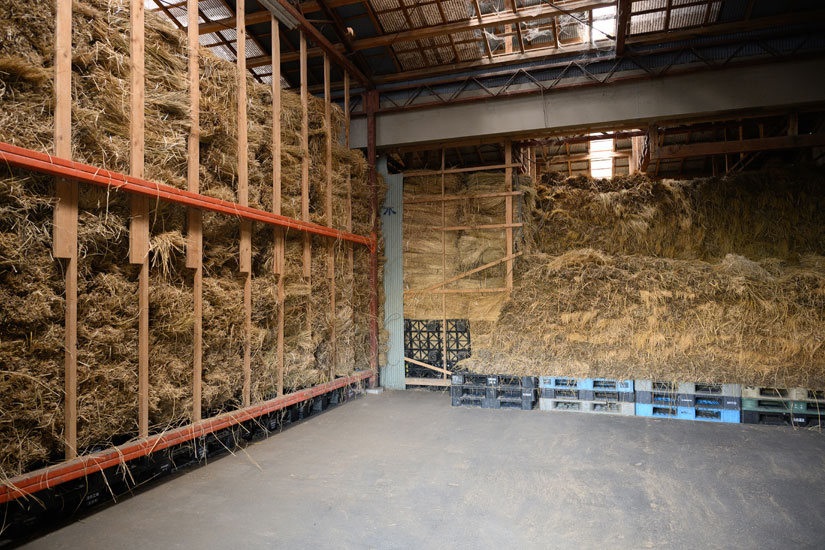
Myojin Suisan has focused its efforts on securing both skipjack tuna and straw.
Initially, staff members collected straw from farmers in neighboring municipalities, as well as throughout the prefecture and across Shikoku. However, as many farmers stopped growing rice due to an aging population, the straw shortage became a serious issue. Consequently, Mr. Myojin decided, “If that’s the case, let’s grow our own rice,” and launched “Myojin Farm” in 2014. The company leases abandoned farmland and has been expanding its operations year by year. In collaboration with local farmers, they are also preserving traditional techniques such as drying rice on racks.
They have also set up a dedicated warehouse to further dehumidify the dried straw and store it in a condition that ensures it burns well. I was shown around the massive straw warehouse, but I learned there are actually about six such warehouses where the straw is stored. Even so, this is still not enough to meet their annual demand of 40,000 bundles, so the staff are constantly on the move throughout Kochi Prefecture to secure more straw.
Experience the intensity of minus 50 degrees
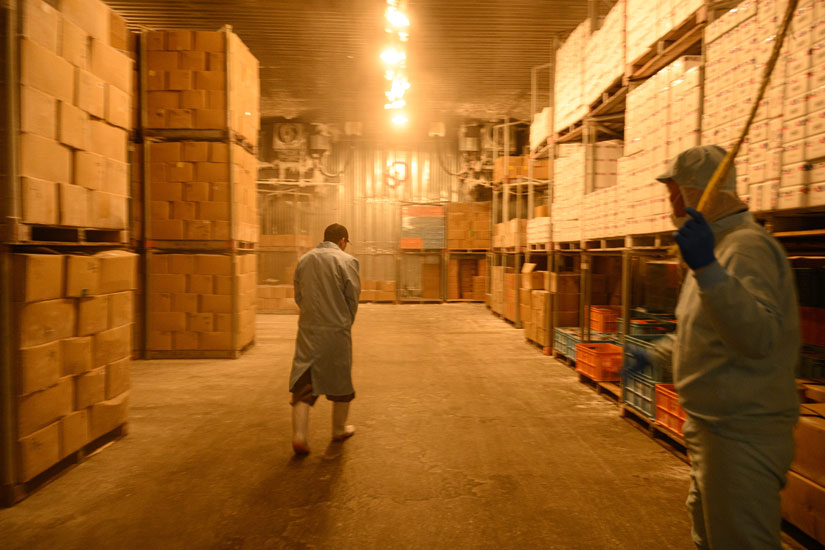
I was given a tour of the processing facility. The ultra-low-temperature warehouse where the skipjack tuna is stored to maintain its freshness is kept at minus 50 degrees. Because it is stored at such low temperatures, the tuna has a long shelf life, allowing the facility to supply skipjack tuna year-round without ever running out.
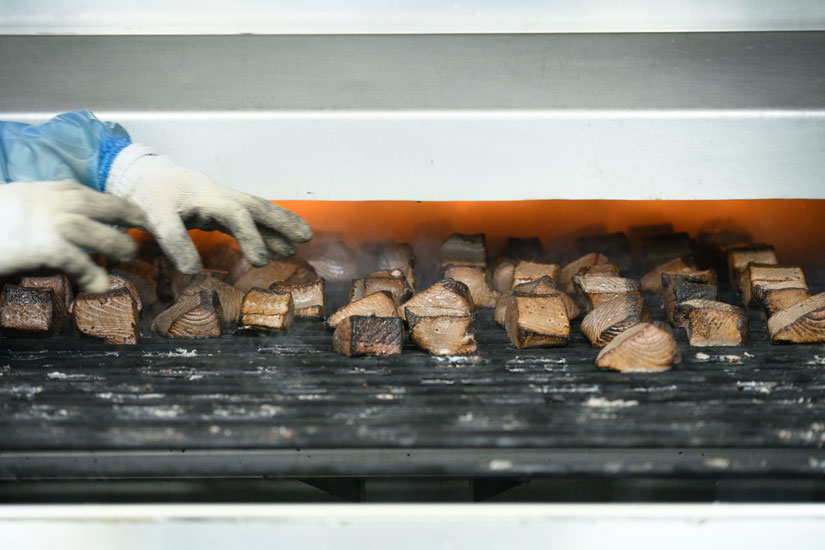
While still frozen, the product is cut into portions—such as single or double servings—to meet customer needs. Then, using a proprietary straw-grilling machine, the surface is grilled for about 5 to 6 minutes while carefully monitoring the day’s temperature, humidity, and the fat content of the bonito to adjust the amount of straw used. The product is then packaged for gifts or sets, sorted on the production line, and subjected to “liquid flash freezing” at minus 35 degrees before being stored in cold storage.
Reportedly, 80 to 90 percent of production consists of tataki, with the remainder being rice bowls made with tuna.
Paving the Way for the Future with the Traditional “Single-Line Fishing” Method
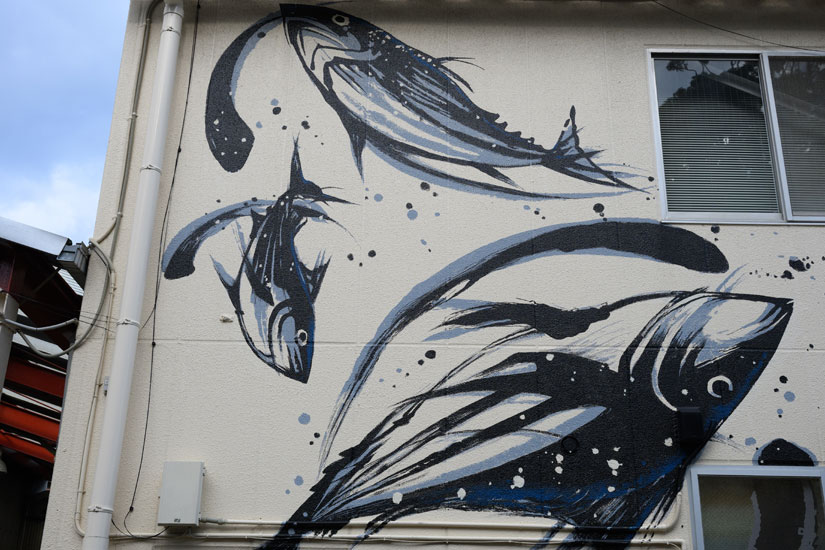
Mr. Myojin says, “Our strength lies in the strong bonds we share—our executives, fishing captains, and food service managers are all family members, including siblings and relatives.” He adds, “As long as we have our boats, we can keep going, and our own vessels are indispensable for securing a stable supply of skipjack tuna.”
Currently, there are plans to build a new skipjack tuna vessel. From a company that knows the sea inside and out, one can sense a determination to constantly evolve. Mr. Myojin describes the current challenge as follows:
“You see, having served as a fishing captain from the age of 28 until I was 71, I can’t help but notice that every time I look out at the sea, the fish are dwindling. Compared to the size of the schools I saw in my 30s and 40s, the fishing grounds these days are worlds apart. I don’t think the fish themselves will ever completely disappear, but it’s certain that their numbers are declining. If we don’t secure our own supply of bonito, no matter how much people say ‘Myojin’s tataki is delicious,’ there’s nothing we can do once the raw materials run out. “We need to expand our deep-sea fishing operations.”
Myojin Suisan’s commitment to preserving marine resources through single-line fishing is unwavering. While facing the changing sea, they are striving to pass the baton to the next generation. I can’t help but hope that this time-honored fishing method will not only continue uninterrupted but actually expand, so that we can continue to enjoy delicious bonito.