

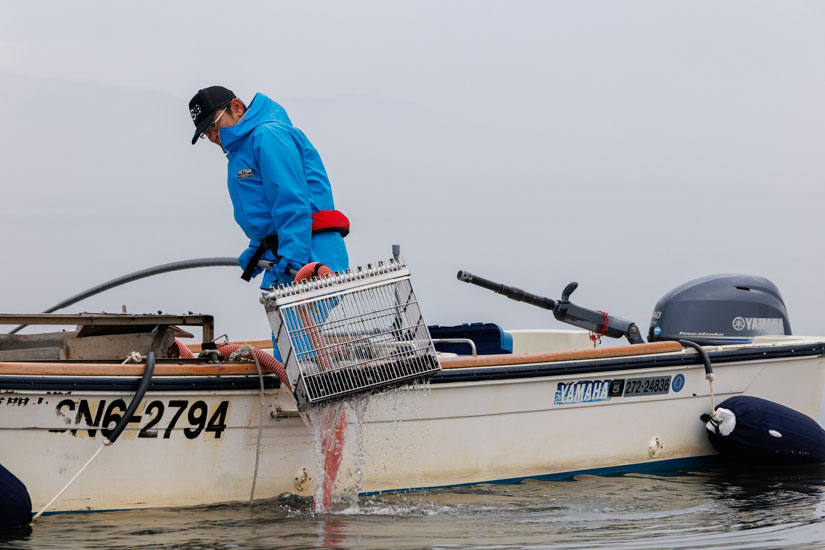
Lake Shinji, located in Matsue City, Shimane Prefecture, is known as one of Japan’s leading production areas for shijimi clams. In the morning, small boats line the lake’s surface, and fishing begins amid the sound of outboard motors. To protect this bountiful lake, the fishermen once made a major decision. What is the story behind the shijimi clam fishery on Lake Shinji—one that the fishermen were determined to preserve, even to the point of returning the compensation they had already received? We explore the fishermen’s way of life and the history behind it.
Lake Shinji, One of Japan’s Leading Production Areas for Freshwater Clams
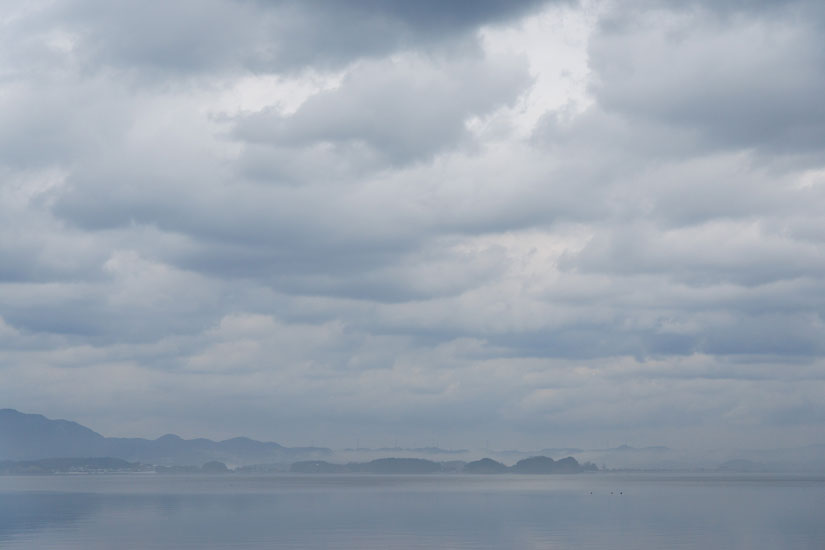
Lake Shinji is located in eastern Shimane Prefecture. Known as a “brackish lake”—a rarity in Japan—it is a body of water where freshwater flowing in from rivers such as the Hii River mixes with seawater entering from the Sea of Japan. This environment, where river fish and saltwater fish coexist, is unique to brackish waters. In fact, more than 100 different species of wildlife inhabit the lake.
One of Lake Shinji’s most iconic treasures is the “Yamato shijimi” clam. Known for its large size and rich umami flavor, the region boasts one of the highest catch volumes in the country. In 2024, the catch reached 4,590 metric tons, marking the 11th consecutive year the region has ranked first nationwide, solidifying its reputation as Japan’s leading producer of shijimi clams.
In the Izumo region, shijimi clams have long been cherished as an indispensable part of the daily diet, appearing in dishes such as miso soup and tsukudani. The Matsue and Izumo regions have cultivated a culture of living in harmony with the nature of Lake Shinji, and shijimi fishing is a practice that symbolizes this way of life.
An ideal environment for the growth of shijimi clams
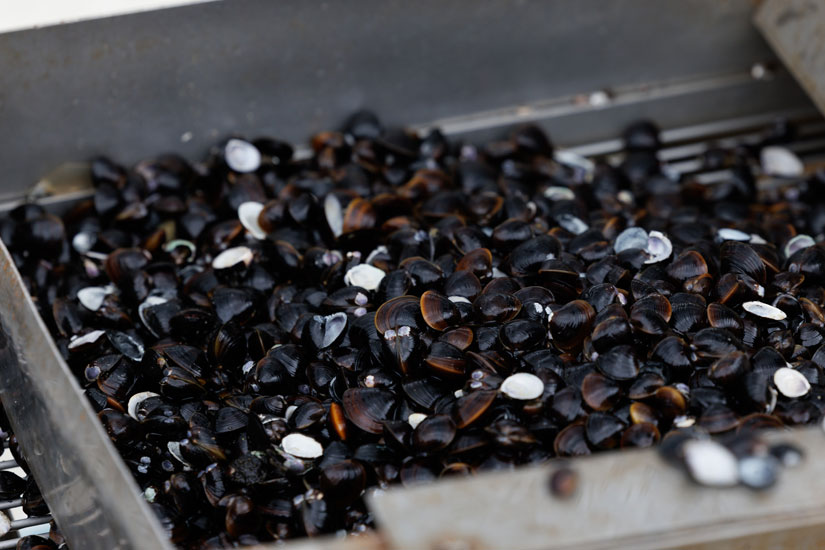
The three main species of shijimi clams found in Japan are the “Yamato shijimi,” which inhabits brackish waters; the “Mashi shijimi,” a freshwater species; and the “Seta shijimi,” a species endemic to Lake Biwa. The Yamato shijimi harvested from Lake Shinji prefer an environment with a salinity level between that of seawater and freshwater. Lake Shinji, where freshwater and seawater mix and salinity fluctuates gently with the tides, provides an ideal habitat for these clams.
Grown in the nutrient-rich sand at the bottom of the lake, these clams are characterized by their large size and rich umami flavor. They are truly a gift nurtured by the natural environment.
Protecting the Lake and Passing It On to Future Generations
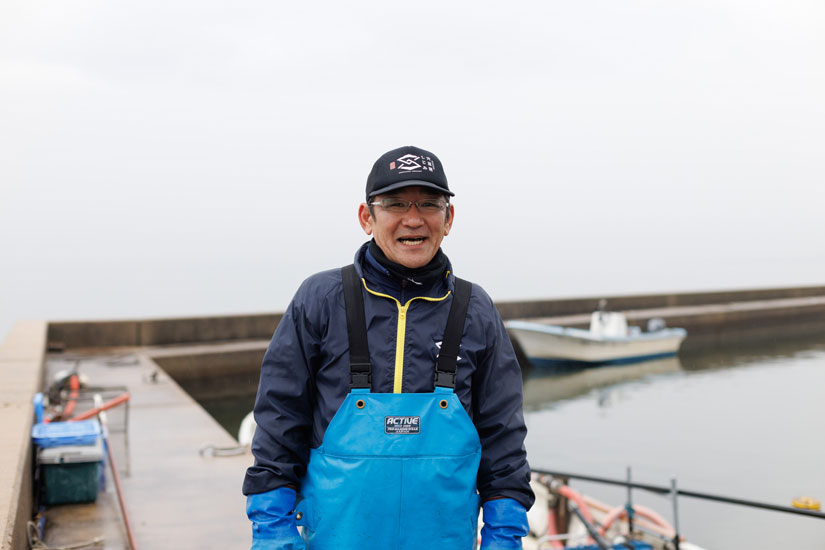
Hiroyuki Fukuma of the “Lake Shinji Fisheries Cooperative,” an organization that manages and markets fisheries on Lake Shinji. He is one of approximately 260 people who make their living from fishing for shijimi clams.
“Resource management is key,” he says, emphasizing that the cooperative focuses not only on harvesting shijimi clams but also on preserving the lake’s environment. He emphasizes the importance of continuing fishing while protecting the resource so that future generations can make shijimi fishing their livelihood and so that it will remain a specialty of Shimane Prefecture for generations to come.
To this end, the cooperative has established strict rules regarding daily catch limits, operating hours, and days off. The catch limit is set at two boxes per person per day (each box weighing 50–60 kilograms), and while the duration of each fishing trip varies depending on the method used, it is generally limited to about three to four hours. It is mandatory to return juvenile clams measuring 12 millimeters in diameter or less to the lake.
Including fishermen who catch species other than shijimi clams, approximately 700 people belong to the association. Members span a wide age range, from their early 20s to their 80s, but the fishery can only thrive when each individual prioritizes the lake’s environment and works cooperatively.
A scene of fishermen setting out to sea, symbolic of Matsue
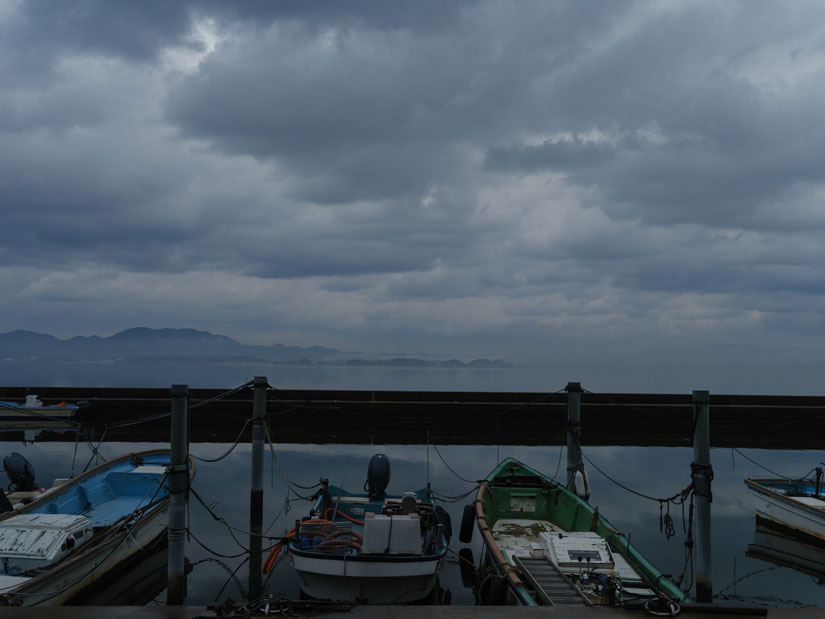
Around 7:00 a.m., the sound of outboard motors echoes across the calm surface of the lake as small boats set out one after another. The depth of Lake Shinji varies depending on the fishing grounds, but it is generally between 2 and 4 meters. Upon reaching their respective fishing grounds, the fishermen begin their work from their small boats.
Small boats floating quietly on Lake Shinji, shrouded in morning mist. This scene has long been cherished as a symbol of morning in Matsue City.
“Joren,” a Traditional Fishing Tool
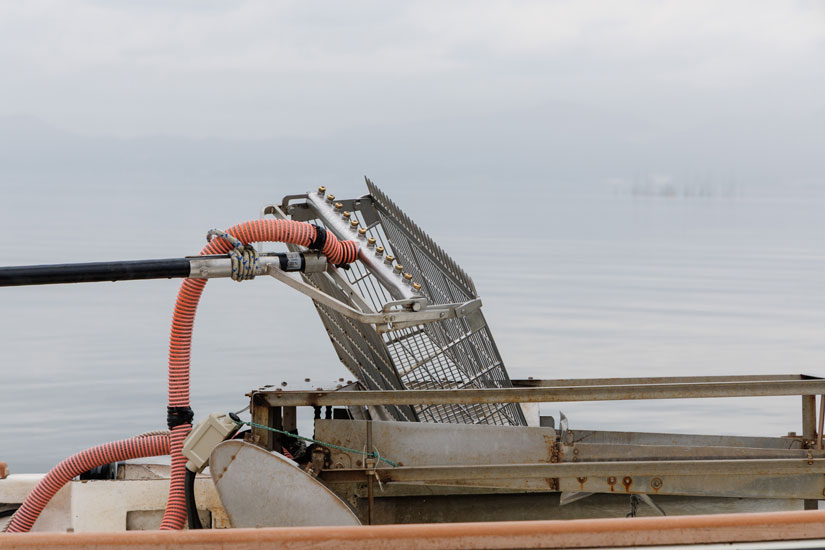
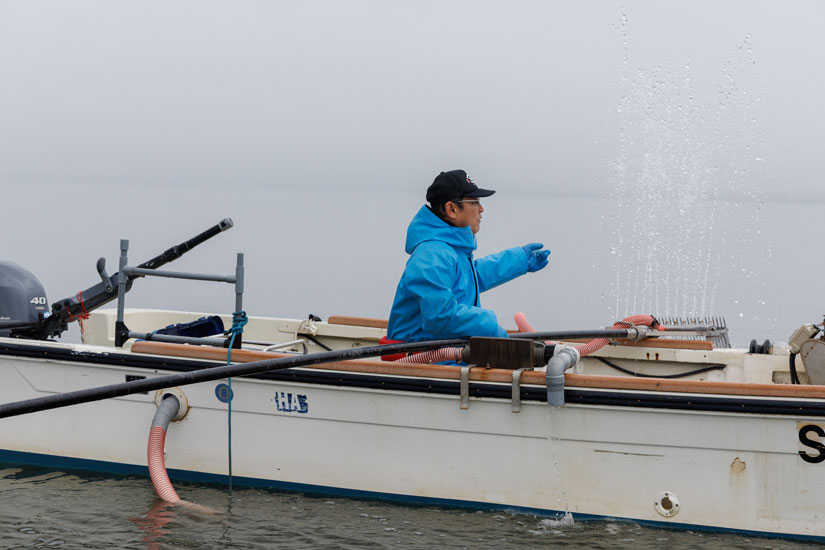
The methods used in shijimi fishing include not only mechanized operations using diesel-powered boats but also manual methods that are still practiced today, such as “iri-kaki,” in which fishermen enter the lake directly, and “te-kaki,” in which gear is operated from the boat. The fishing method Mr. Fukuma employs is “water-flow hand-raking,” which combines hand-raking with an engine-powered pump. The gear used is a uniquely shaped tool called a “joren.” This metal implement, resembling a rake, scoops up shijimi clams while raking the sand on the lake bottom.
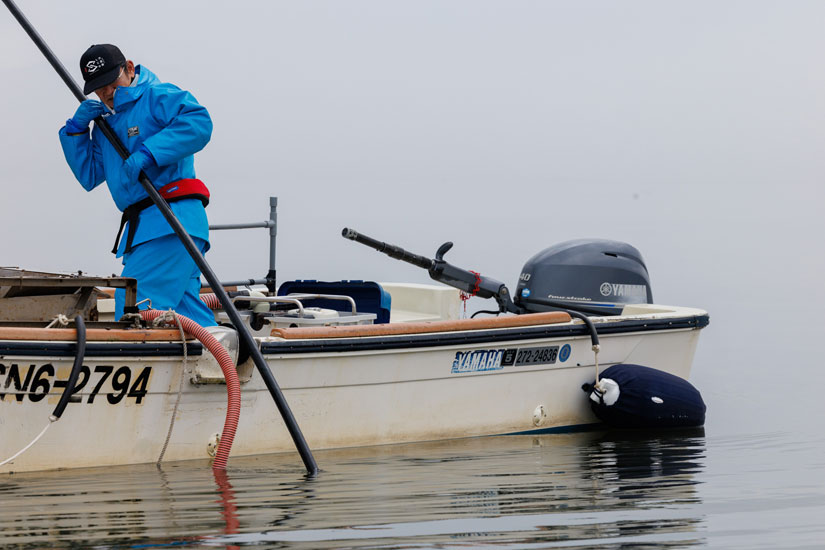
Water is pumped through a hose from an engine-powered pump and sprayed forcefully from the nozzle, allowing fishermen to harvest freshwater clams while turning over the sand on the lake bottom. The fisherman propels the boat by pushing a pole about 8 meters long, then moves the boat by pulling the pole toward him. He repeats this process as he searches the sandy lake bottom.
Experienced fishermen are thoroughly familiar with the water depth and lake bottom conditions at each fishing ground. This method of fishing, which requires interpreting the natural conditions, is a task that truly demands skilled craftsmanship.
Careful Sorting to Ensure Quality
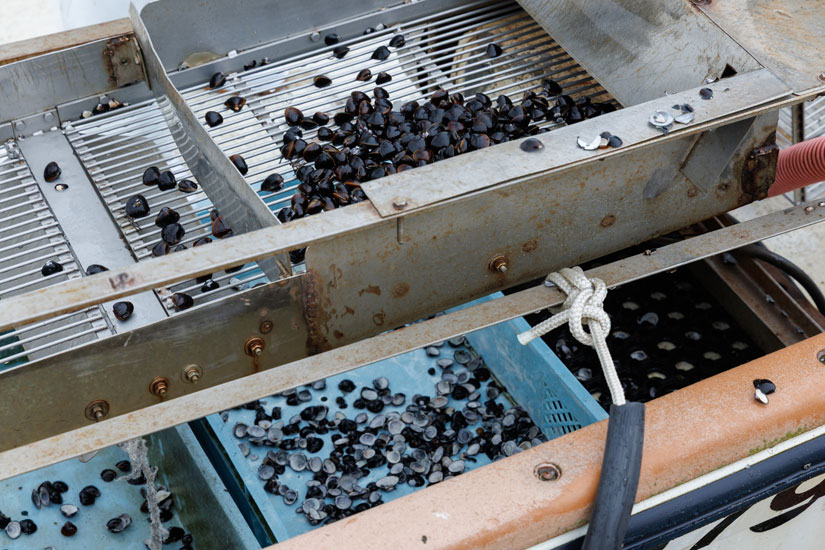
As soon as the shijimi clams are hauled in, the sorting process begins immediately on board. They are first sorted by size using machinery, and then carefully sorted again by hand. Since the catch limit is set at two boxes per person, the fishermen want to remove empty shells and keep only the larger, higher-quality shijimi clams.
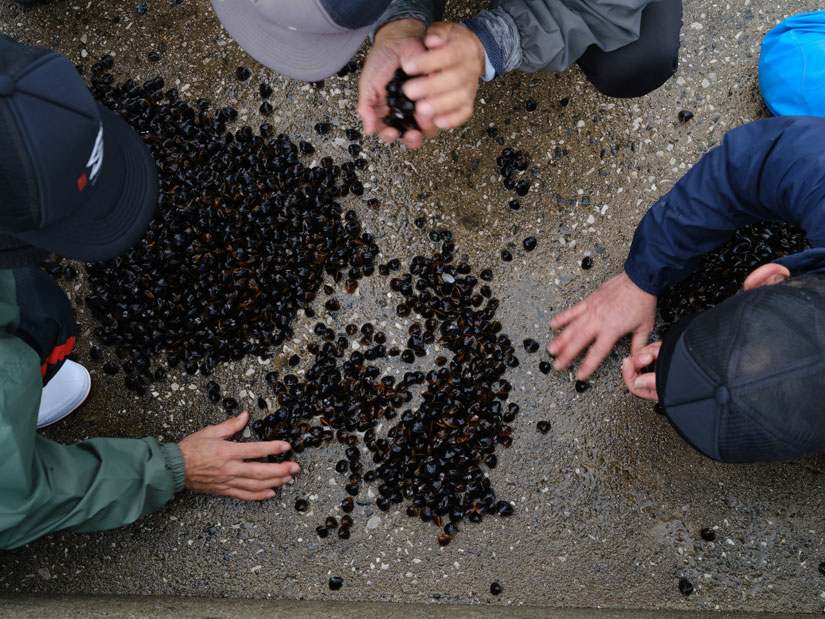
Sorting is also done on land after the fishing is over. Fishermen gently shake or roll the clams to listen to the sound they make. They say they can tell how plump the clams are by the way the sound resonates. The difference in sound is so subtle that a layperson cannot distinguish it, but fishermen who have spent many years working with clams can clearly hear the difference.
The Decision Made by the Fishermen Who Protected Lake Shinji
The shijimi clam fishery on Lake Shinji once faced a major crisis. In the 1950s, plans were underway to convert Lake Shinji into a freshwater lake for use as agricultural water.
If the lake were converted to freshwater, the shijimi clams, which thrive in a brackish environment, would be severely affected. Local residents launched a campaign against the plan. After a staggering 155 rounds of negotiations, the fishermen realized they could not resist the national government’s plan; they accepted compensation and agreed to the project.
The Lake Saved by Returning the Compensation Money
In 1968, the freshwater conversion project began. However, as the extent of the damage to the shijimi clams became clear, opposition grew once again among residents of the Lake Shinji watershed. Led by shijimi fishermen, the “Movement Against Freshwater Conversion” soon gained momentum. They energetically carried out activities such as large-scale rallies, fishing boat parades, and the free distribution of shijimi clams.
Although compensation had been accepted at one point, the Lake Shinji Fisheries Cooperative decided to return the funds to the national government in order to protect the freshwater clams of Lake Shinji. This action resonated with the public, and the momentum behind the opposition movement reportedly grew even stronger.
Eventually, in 1988, the national and prefectural governments announced a postponement of the freshwater conversion project. In 2002, its official cancellation was declared. The environment of Lake Shinji and the freshwater clam fishery were thus preserved thanks to the strong determination of the residents and fishermen.
Passing on the Lake’s Bounty to Future Generations
In addition to cleaning the lake bottom, the Shinji Lake Fisheries Cooperative also carries out conservation activities such as collecting and releasing freshwater clam larvae. They aim to maintain the clam population by collecting larvae floating in the center of the lake and releasing them into their natural habitat.
“The lake water has become much cleaner compared to a dozen or so years ago,” says Mr. Fukuma. He notes that the household trash that used to float along the shore has almost disappeared, and speculates that a shift in local residents’ awareness may be contributing to the improved water quality. The fact that shijimi fishing continues in this area today—and that it boasts the highest catch volume in Japan—is a testament to how local residents and fishermen have consistently protected the lake’s environment.
Even today, the sight of small boats lined up on Lake Shinji symbolizes the way of life of the people who live in harmony with the lake. This fishing tradition, passed down over many years, will surely continue into the future thanks to the fishermen and the local community.
