


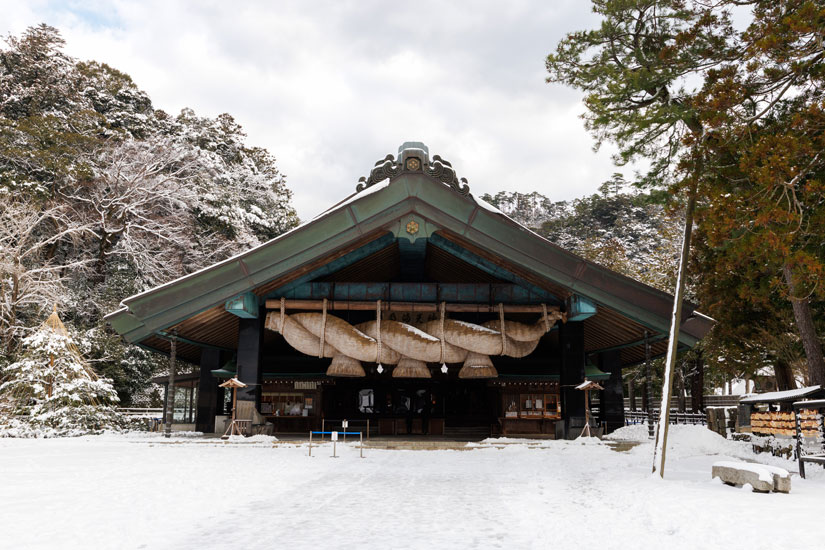
Izumo Taisha, one of Japan’s most iconic ancient shrines, appears in the Kojiki and Nihon Shoki. This shrine, which enshrines Ōkuninushi-no-Ōkami—the god of nation-building—is also known as the site of “Kamiarizuki” (the Month of the Gods), when deities from across the nation gather in the 10th month of the lunar calendar. It is said that the gods gather here to discuss people’s “fates and connections,” and even today, approximately 2 million visitors come to the shrine each year. Why do people make the pilgrimage here?
One of Japan’s most historic shrines, where myths of the nation’s founding have been passed down through the ages
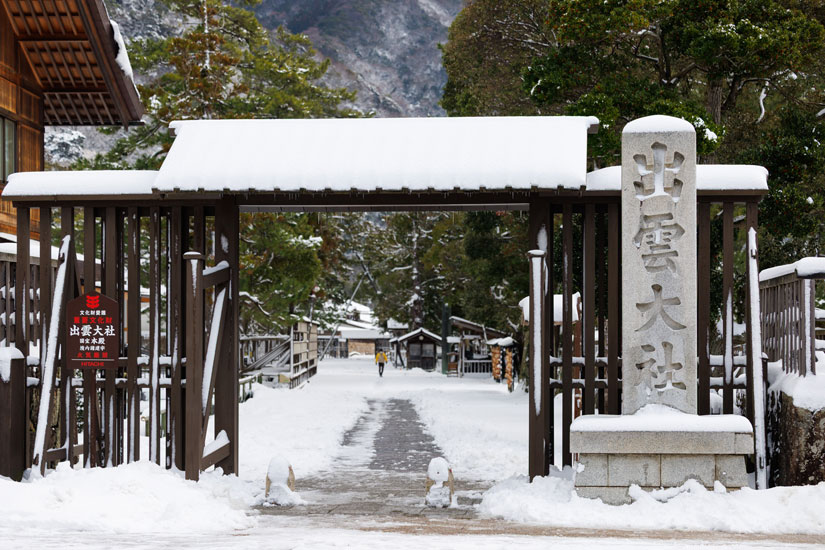
The origins of Izumo Taisha trace back to the “Myth of the Transfer of the Country.” Ōkuninushi-no-Ōkami, who founded the province of Izumo, was asked by an envoy of Amaterasu-ōmikami—who resided in “Takamagahara,” the realm believed to be the dwelling place of the gods—to cede the province, and ultimately accepted the offer. It is said that he stipulated, as a condition, that a magnificent shrine be built to enshrine him. This shrine marks the beginning of Izumo Taisha.
The Belief That Spread as the “God of Unions”
Izumo Taisha is known as a shrine for “matchmaking.” While many people associate it with romantic success, Okuninushi-no-Okami—the deity enshrined there—has traditionally been revered as a god who supports people’s daily lives.
“Okuninushi-no-Okami is a deity who supports people’s very way of life—through agriculture, medicine, and more,” says Atsuhiko Ono, former executive director of the Izumo Tourism Association.
He explains that while the deity was revered as a guardian of various aspects of daily life, as this faith spread, people began to strongly associate him with the role of the “god of connections”—one who brings people and things together.
Within the shrine grounds, a diverse crowd—from families and friends to solo travelers—comes and goes, joining their hands in prayer. Many visit not only for matters of romance but also to pray for life milestones, new encounters, and daily connections. The concept of “go-en” (fate or connection) at Izumo Taisha is, perhaps, a prayer that is deeply intertwined with daily life itself.
The majestic presence of “Taisha-zukuri,” Japan’s oldest style of shrine architecture
The Main Hall of Izumo Taisha is built in the “Taisha-zukuri” style, considered Japan’s oldest shrine architecture. It is a large, elevated structure approximately 24 meters high, characterized by its elegant “gable-and-hip” roof, with the triangular roof visible from the front.
The unpainted, natural-wood pillars and the roof covered with thick layers of cypress bark convey the power and grandeur of ancient architecture to this day.
One of Japan’s largest sacred straw ropes and the Kagura Hall, which exudes an overwhelming presence
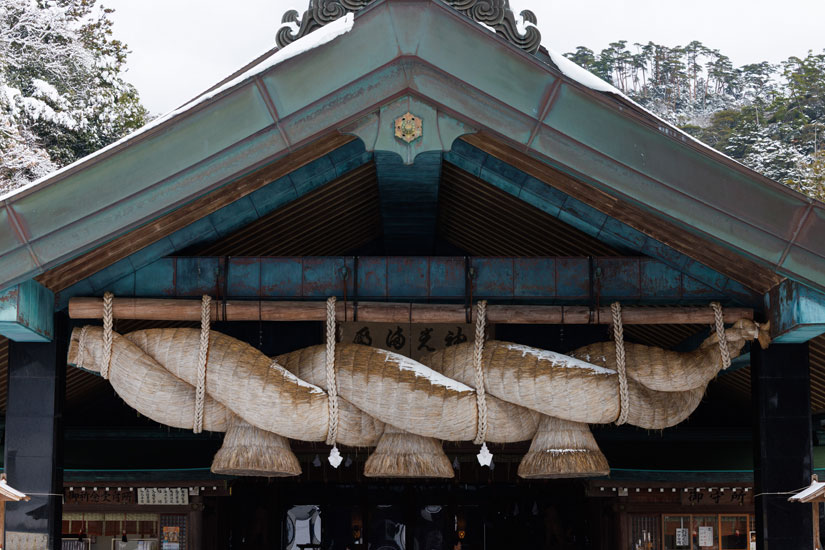
The Kagura Hall, where prayer services, weddings, and offerings are held, is also one of the buildings that symbolizes Izumo Taisha. When it was rebuilt in 1981, it was expanded into a grand hall spanning 270 tatami mats. To match its scale, one of Japan’s largest shimenawa (sacred straw ropes) was hung there.
It measures approximately 13.6 meters in length and weighs about 5.2 metric tons. Compared to the shimenawa at the Haiden (approximately 6.5 meters long and weighing about 1 metric ton), the difference in scale is immediately apparent. Generally speaking, one might find it odd that a shimenawa larger than that of the main Haiden is displayed here, but in fact, the Kaguraden originated during the Meiji period as a shrine of the Izumo Taisha-kyo religion, dedicated to enshrining Okuninushi-no-Okami separately from the Main Hall, and thus has a different history from the Main Hall. Precisely because it is an independent shrine hall dedicated to Kagura, a large shimenawa befitting its scale is displayed there. When you actually stand before it, its sheer size exceeds all expectations. Worshipers instinctively stop in their tracks, looking up and taking photos.
The shimenawa not only marks a sacred place where the gods dwell but also serves as a barrier (kekkai) that delineates the boundary between the sacred and the secular worlds.
Unique features not found at other shrines
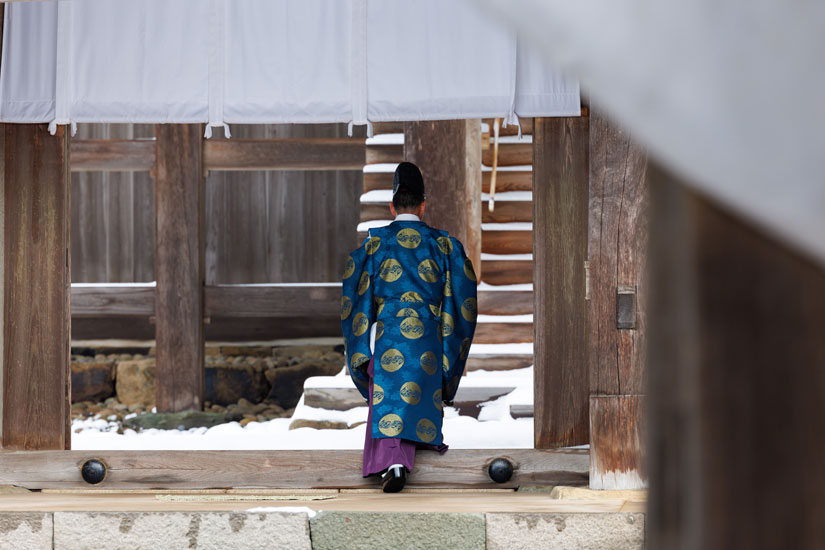
Izumo Taisha retains several unique customs that set it apart from other shrines.
First, the “Goshinsa” (divine seat) where the deity resides faces west. At most shrines, the main hall is typically built facing east—where the sun rises—or south, where sunlight shines. There are various theories regarding why it faces west, such as “to welcome deities arriving from the west” or “to align with the direction of the setting sun,” but there is no definitive answer. Furthermore, the shimenawa (sacred straw ropes) are distinctive. While at most shrines they are braided so that the left side is thicker, at Izumo Taisha, the thicker end of the braid is positioned on the right. The exact reason for this is also unknown. This abundance of mysteries is undoubtedly one of the charms of Izumo Taisha.
Furthermore, the ritual for enshrining the deities, known as “saisi,” has been carried out for generations by the Izumo Kuni no Miyatsuko families (the Senke and Kitajima families). Due to this tradition, which originates from the myth of the Transfer of the Country, the Main Hall is regarded as a particularly sacred sanctuary.
Was there a “giant temple about 48 meters tall” in ancient times?
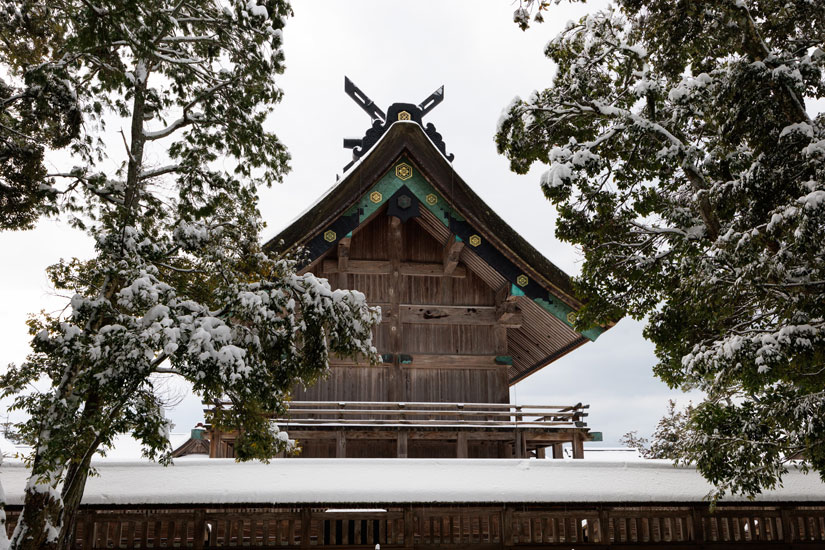
The current main hall was constructed in 1744 (mid-Edo period). However, it is said that in ancient times, a majestic shrine building approximately 48 meters tall—roughly twice the height of the existing structure—once stood here. As if to corroborate this, between 2000 and 2001, three pillars—each about 3 meters in diameter and formed by binding together three giant trees—were unearthed at three different locations within the shrine grounds. These are believed to have been pillars used to support the massive structure.
Furthermore, some legends suggest the structure may have reached a height of approximately 96 meters. This height is equivalent to that of Mount Yakumo, which looms behind the shrine; if true, the shrine that ancient people looked up to may have resembled a tower reaching toward the sky.
Passing on Our Faith to Future Generations in Preparation for the Next Shrine Relocation
At Izumo Taisha, a ritual known as “Sengū” (the relocation of the shrine) is performed approximately once every 60 years, during which the sacred object is moved to a temporary shrine or a new main hall in conjunction with the construction or renovation of the shrine buildings. During the “Heisei Grand Sengū,” which took place from 2008 to 2019, the Main Hall, as well as the subsidiary and branch shrines, were renovated; in 2013, the Senzasai ceremony was held to return the divine image to the Main Hall. Approximately 10,000 domestically sourced hinoki cypress trees were used, and the vast cypress-bark roof was also re-thatched.
Furthermore, with an eye toward the next Grand Relocation, new tree-planting initiatives were carried out in the Chūgoku Mountains. Since it takes over 100 years for the trees to reach maturity, those who plant them will almost certainly never use the wood themselves.
The 60-year milestone coincides with the span of a human lifetime. Through the Grand Relocation, while adapting techniques and methods to the times, the essence of prayer has been passed down to future generations. It is believed that the rebirth of the shrine buildings brings new vitality to the entire region.
Suddenly sensing the presence of God
“In myths and books, gods are often depicted in human form, aren’t they? But I think, at its core, it’s really about sensing what is invisible to the eye.” Mr. Ono reflects on an experience he had during the Heisei Grand Relocation Ceremony.
It was the day of the Relocation Ceremony in 2013. It is said that it was raining heavily. However, as soon as the ritual began, the rain stopped completely. And the moment the ritual ended, large raindrops began to fall once again.
“It might have been a coincidence. But when you have an experience like that, you can’t help but think, ‘Ah, maybe there really is something to it.’”
Izumo Taisha has a long history of people offering prayers and passing down their faith from generation to generation. The sacred atmosphere that permeates the shrine grounds is likely another reason why people feel such a deep connection to this place.
Be grateful for everyday life and wish for a fulfilling life
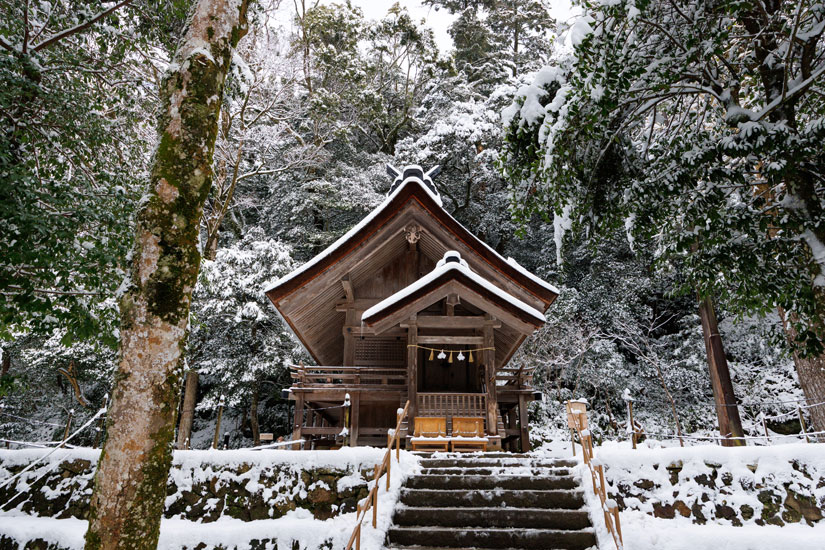
“Visitors to Izumo Taisha follow a variety of religions,” says Mr. Ono. “But at its core, the fundamental philosophy is the same for everyone.”
Shinto, which has been cherished at this shrine, has evolved over its long history through interactions with philosophies such as Buddhism and Confucianism. As a faith that is tolerant of other religions and values the connections between the land and its people, it continues to thrive in everyday life today.
A solemn atmosphere pervades the approach to the shrine, and from early morning until evening, there is a constant stream of people joining their hands in prayer.
The bonds between people, the blessings of nature, and the very fact of being alive here and now—Izumo Taisha may be a place that reminds us of the preciousness of such everyday moments.
Amid the solemn atmosphere, when you join your hands in prayer before the main hall, your heart mysteriously finds peace.
That is precisely why people visit this place, joining their hands in prayer while reflecting on the invisible “bonds” that connect us all.