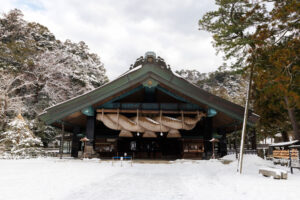


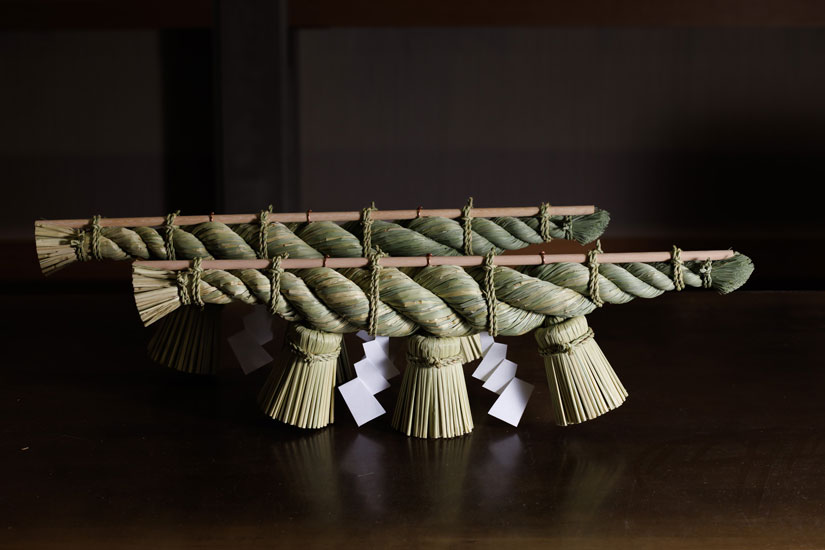
Izumo Taisha is known as the shrine of matchmaking. The massive shimenawa rope displayed in its Kagura Hall is an iconic sight that draws visitors’ eyes upward. The organization responsible for crafting this grand shimenawa is the Tonbara Branch of the Izumo Taisha Kan’no-kō Society, located in Iinan Town, Shimane Prefecture. The craft of shimenawa-making, which supports this land of myth, has been passed down as a source of pride for the town.
Giant Shimenawa Ropes Crafted in a Mountain Village Workshop
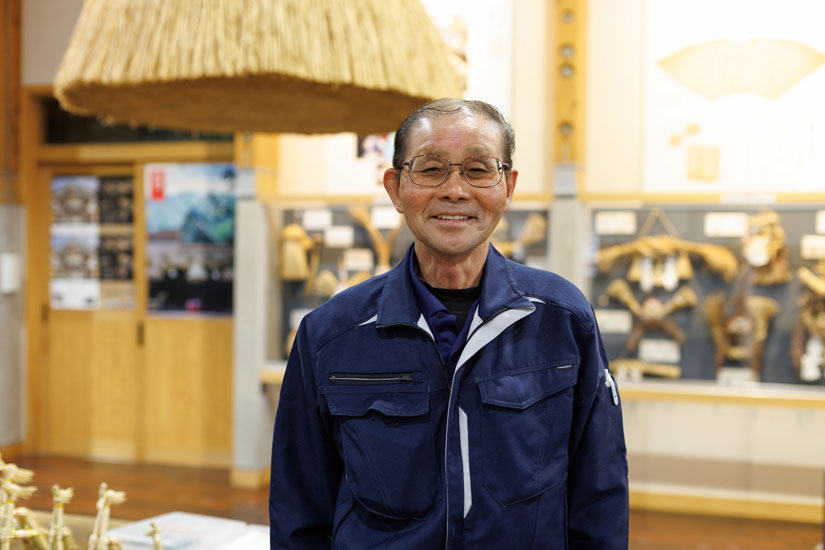
Iinan Town, located in Shimane Prefecture, is surrounded by the mountains of the Chugoku Range. It is a quiet place where snow falls in winter and is blessed with clear water and fertile fields. The “Izumo Taisha Kanno-kōsha Tonbara Branch” is responsible for crafting the large shimenawa (sacred straw ropes) at the “Oshimenawa Creation Hall” in the town. Mr. Wada serves as the branch’s representative, supporting the long-standing tradition of offering these ropes in this region.
The Tradition of Making Shimenawa Passed Down in the Mountains
The Tonbara Branch of the Izumo Taisha Agricultural Promotion Society is responsible for crafting one of the largest sacred straw ropes in Japan. Its destination is the Kagura-den Hall at Izumo Taisha, which attracts worshippers from all over the country. It measures approximately 13.6 meters in length and weighs about 5 tons. Its sheer scale is so impressive that first-time visitors instinctively stop in their tracks and look up in awe. However, the place where this magnificent shimenawa is created is a workshop located in a mountain village, far removed from the hustle and bustle of the tourist area.
The Connection Between the Giant Shimenawa and Iinan Town
The connection between Iinan Town and the giant shimenawa dates back to the 1950s. At that time, a branch of Izumo Taisha was located in the area. It is said that, as a result of this connection, local residents and worshippers began crafting shimenawa to dedicate to the shrine.
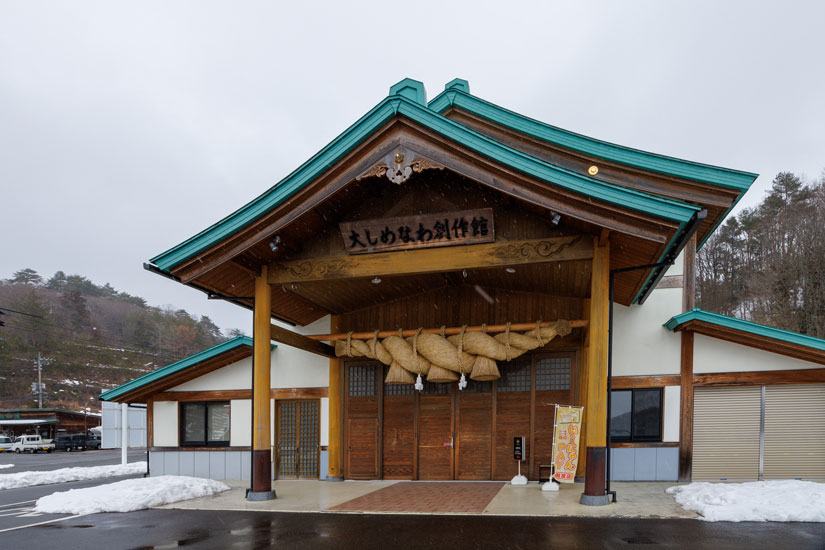
Later, in 1981, when the Izumo Taisha Kagura Hall was constructed, a request was made to create a new shimenawa. The result was a massive shimenawa measuring approximately 13.6 meters in length. To create a shimenawa of a size befitting the Kagura Hall, local residents joined forces to undertake the project. Work on the shimenawa continued, moving from the auditorium of Tonbara Elementary School to the gymnasium of the junior high school. Finally, in 2015, the “Great Shimenawa Creation Hall” was completed as a dedicated facility for shimenawa production.
The “Great Shimenawa Creation Hall,” which preserves the tradition of shimenawa to this day
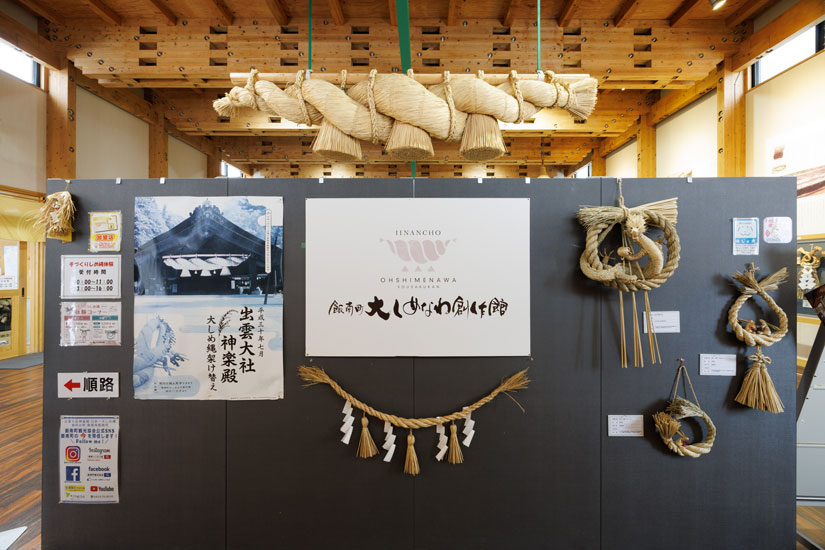
Essentially, shimenawa serve as a “barrier” separating the realm where deities dwell from the world in which we live. Since ancient times, they have been displayed at shrines, household altars, and home entrances, becoming deeply ingrained in Japanese daily life. At the “Oshimenawa Creation Museum,” visitors can view photographs and materials that trace the history of shimenawa and learn about the local tradition of shimenawa-making that has been passed down through the generations.
Shimenawa woven with skilled craftsmanship
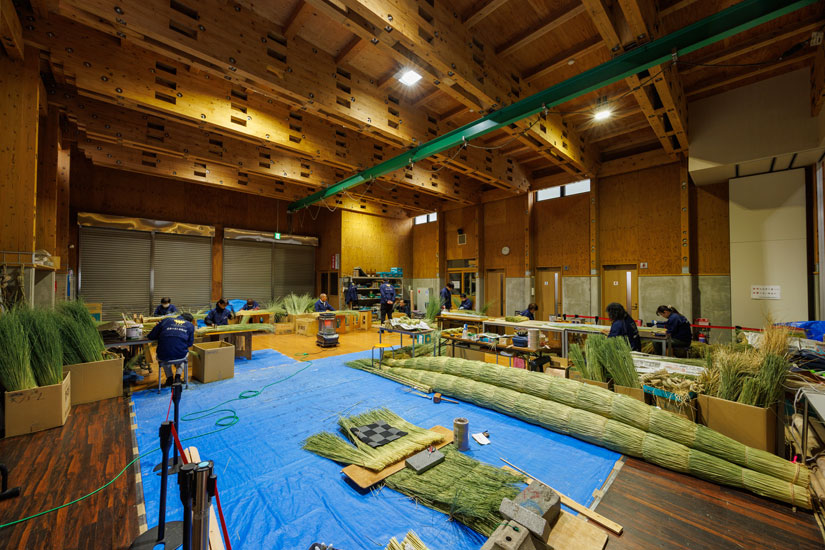
As you proceed further inside, a workshop opens up before you. There, artisans are busy weaving shimenawa ropes. Some weave, others prepare the core, and still others craft small components. The work progresses as each person fulfills their specific role. The scent of dried rice straw fills the air, and the soft sound of twisted straw bundles echoes quietly. The artisans take the straw in their hands and twist it with all their strength, shaping it into a single rope.
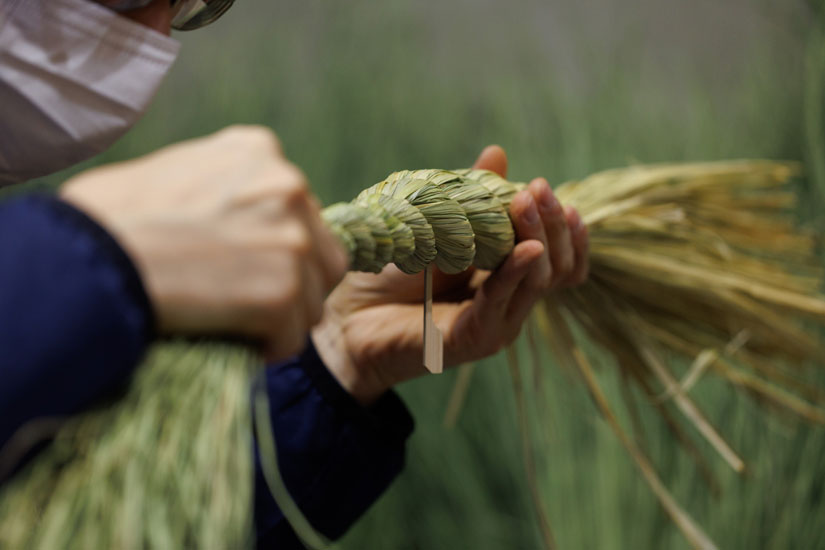
At first glance, making shimenawa may seem like a simple task, but creating ropes of uniform thickness requires skilled craftsmanship. How much force to apply when tightening the bundles of straw, and at what angle to twist them together—these nuances are acquired through years of experience.
Making a giant shimenawa to be hung at the Kagura Hall
While the creation of standard shimenawa ropes usually takes place in the back room of the Creative Center, the atmosphere inside changes dramatically when crafting the giant shimenawa to be hung at the Kagura Hall of Izumo Taisha. To create this massive rope, which measures approximately 13.6 meters, the entire building is utilized for the production process.
The giant shimenawa is not made from a single rope. It is completed by braiding multiple thick ropes and combining them. The process of bundling straw, twisting it together, and then assembling the structure requires a great deal of time and manpower.
Rice cultivation for rope-making also takes place in Iinan Town
The production of the giant shimenawa begins in the spring, with the rice planting. The basic principle is to use materials produced locally in Iinan Town, and there are rice paddies within the town specifically designated for shimenawa. The variety of glutinous rice grown here is called “Akaho Mochi.” It is stickier than ordinary glutinous rice and is characterized by its resistance to breaking when twisted into a rope. Such sturdy rice is essential for making massive ropes like the giant shimenawa.
Unlike rice grown for consumption, the rice used for shimenawa is harvested before the grains mature. This is because the stalks, while still green and with strong fibers, produce a stronger and more beautiful rope. The harvested rice is dried, bundled, and eventually twisted into rope. Freshly made shimenawa retains a faint hint of the rice’s green hue. Over time, the color fades, eventually transforming into the familiar, subdued brown seen at shrines.
The Kagura Hall will be renovated this summer
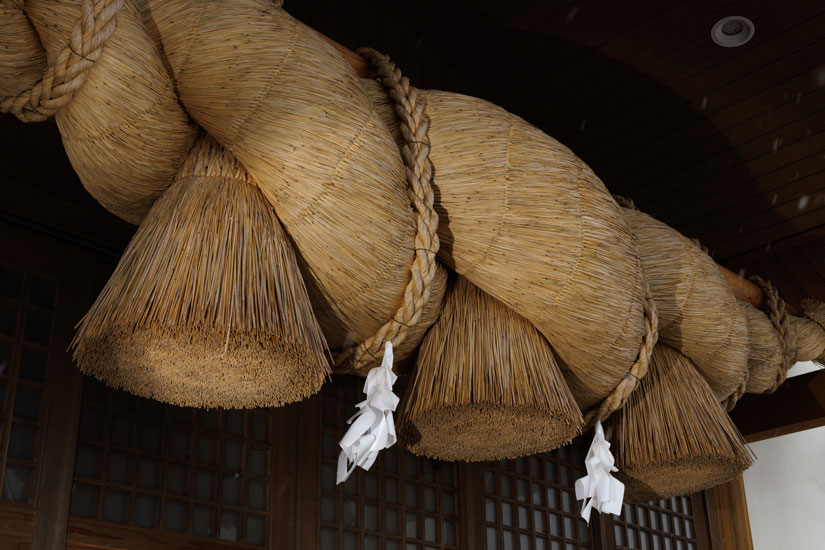
Toward the end of the production process, there is a stage known as “grand twisting.” This involves bundling together numerous thick ropes and twisting them into a single, massive rope. Since this is difficult to accomplish with machinery alone, it requires the combined strength of many people. In Iinan Town, volunteers are recruited to participate in this stage, and local residents and other willing helpers work together to complete the rope. It is said that a total of 800 people are involved in the creation of the giant shimenawa. The massive shimenawa is completed not only by the craftsmen but also through the efforts of the townspeople.
Shimenawa Making: From Iinan Town to the Whole Country
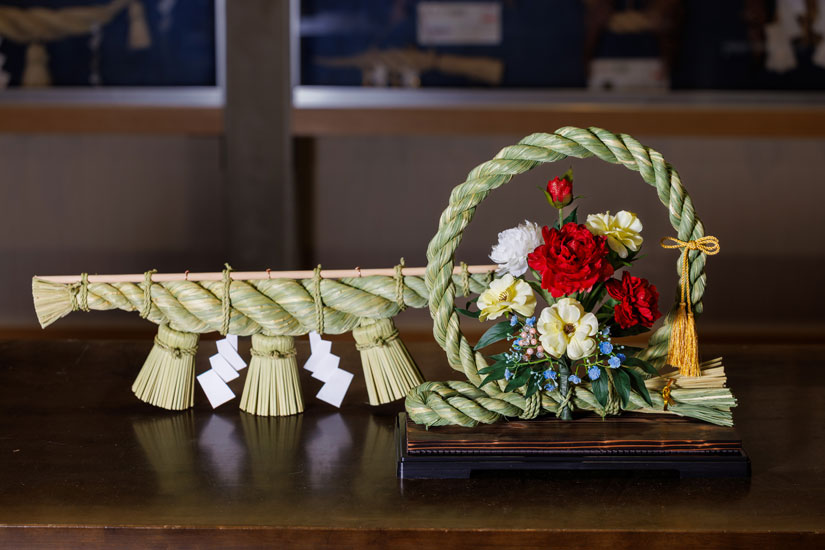
Once the craft center was established and the production process was opened to the public, the technique gained widespread recognition. Today, the center reportedly receives orders for shimenawa from shrines and facilities across Japan, as well as from overseas.
As a result, shimenawa production continues year-round at the center, even during periods when large shimenawa are not being made. The ropes come in a variety of sizes and serve various purposes; from those displayed at shrines to those used for decorating public facilities, the ropes woven in Izumo are shipped to locations all over the country.
Sharing our local pride with all of Japan and future generations
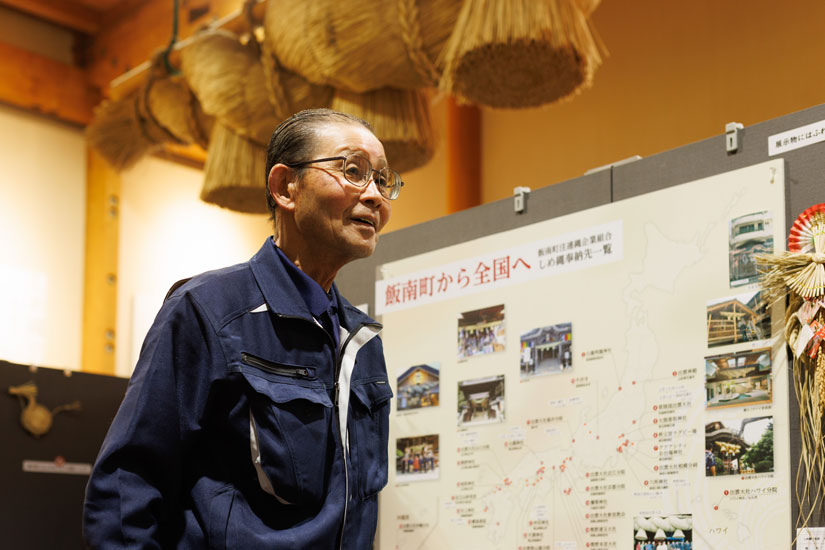
“Making shimenawa is a source of pride for this region,” says Mr. Wada. The shimenawa-making techniques developed here in Iinan Town have now spread throughout the country, becoming an integral part of places of worship across Japan.
At the same time, Iinan Town is facing an aging population. How to pass on the art of shimenawa-making to the next generation is a major challenge. Nevertheless, even today, straw is being bundled and ropes are being twisted in this town. This traditional craft, along with the pride of the community, is being passed down to all corners of Japan, overseas, and into the future.