

Kochi Prefecture boasts the highest production volume of binchōtan in Japan. Muroto City is at the heart of this industry. Tosa binchōtan is made from freshly cut Ubame oak and is fired over a process lasting about 20 days. The leading charcoal maker in this field is dedicated to activities that look toward the future of Muroto, including training the next generation, securing raw materials, and environmental conservation.
The Climate of Muroto: Nurturing a Treasure Trove of Charcoal
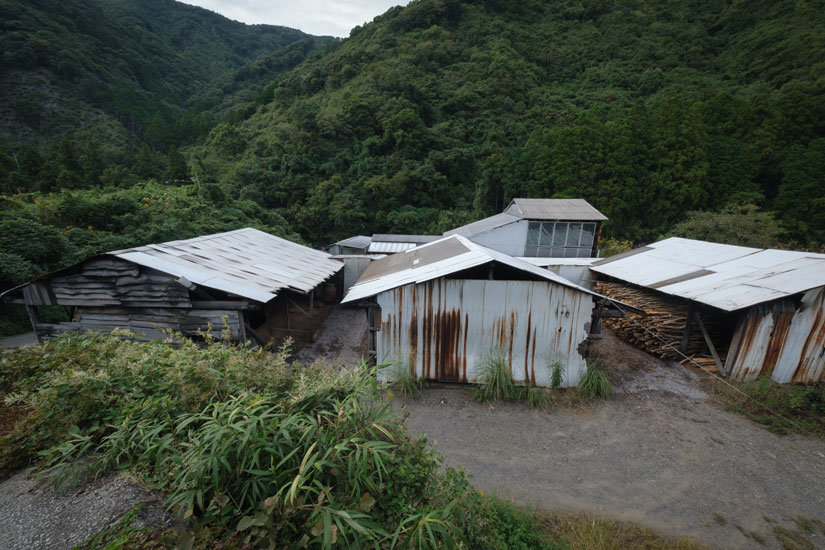
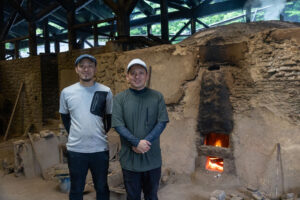
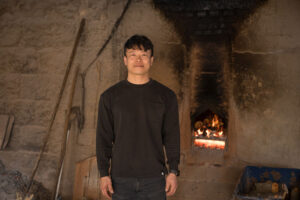
Muroto City, located in eastern Kochi Prefecture, was once famous for being repeatedly hit by major typhoons. While the coastal area thrives as a fishing town, deep in the mountains, kilns for Tosa Bincho-tan charcoal are still scattered about, quietly giving off smoke. One of these is the workplace of Seichō Morimoto, a charcoal maker who has been producing charcoal for over 47 years.
The kiln where Mr. Morimoto burns Tosa Binchotan is located upstream along the clear Hane River, which flows through Muroto City. The history of white charcoal production in Tosa dates back to the Edo period. Here in Muroto, heavy and hard woods—including Ubame oak, which grows in the harsh environments of the coastline and rocky areas, as well as Arakaashi and Urajiro oak—grow wild. During the Meiji era, charcoal burners from Kishu moved to the Hane area, passing down their advanced techniques. Local artisans worked diligently to further improve the kilns, and eventually, Muroto gained national attention as a production center for Binchotan.
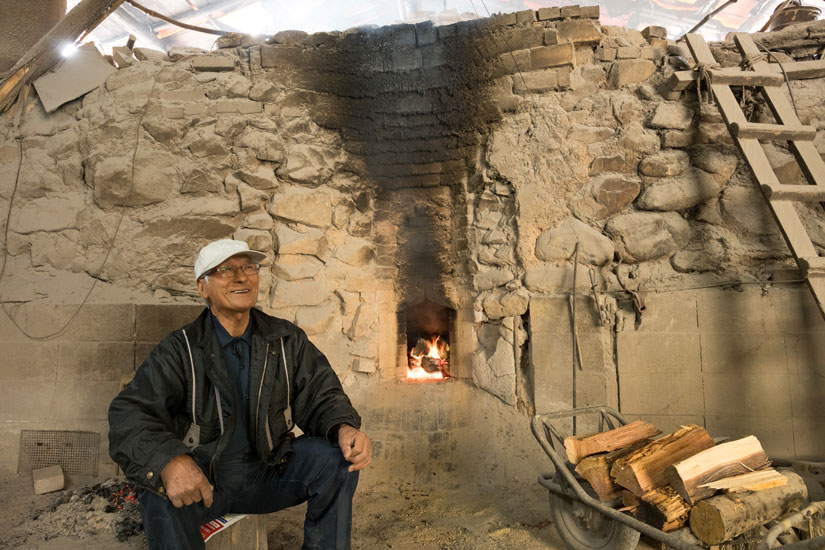
Research on earthen kilns is a lifelong endeavor.
Mr. Morimoto, who is now a prominent figure in the charcoal industry—having been selected as a “Master of the Forest” by the Public Interest Incorporated Association for the Promotion of National Land Greening in 2017—had actually aspired to become a pilot in his teens. After graduating from high school, he enrolled in a vocational school specializing in avionics, but gave up on that dream partway through. He worked as a salaryman in Tokyo until he was 30, then returned to his hometown with an eye toward the future.
At the time, while running a rice farm and raising livestock, he would cut down trees such as Ubame oak in the mountains and sell them to paper companies as raw material for pulp. The turning point came when a senior colleague—the only person in the area producing binchōtan—suggested, “It’s a waste to send this to be made into pulp. I’ll teach you—why don’t you try making charcoal?” That was his first encounter with binchōtan.
By the Showa 30s, the charcoal industry was rapidly declining due to the development of household appliances and other products. As a result, many charcoal makers left the mountains. Mr. Morimoto restored an earthen kiln that had been left behind in the mountains and, seeking advice from his senior, went through a process of trial and error. Although he was a novice, he managed to produce charcoal of reasonably good quality. “Even my father was surprised,” Mr. Morimoto laughs.
“Even though I was following the same process, the quality of the charcoal gradually began to decline. When I investigated, I found cracks in the kiln walls that were letting the heat escape. After repairing them and trying again, the charcoal turned out to be of such high quality it was unrecognizable. That sparked my interest in the kiln itself, and I began to study the craft in earnest.”
At the time, there were many veteran charcoal burners in the area, and he says he drew inspiration from their individual techniques—even down to the shape of the kiln ceiling, noting that some specialized in “tokkuri” (sake flask) shapes while others preferred circular ones. “The heat retention capacity of the kiln floor, the kiln’s airtightness, and its structural strength—these three points are the most crucial elements in kiln construction,” Morimoto explains.
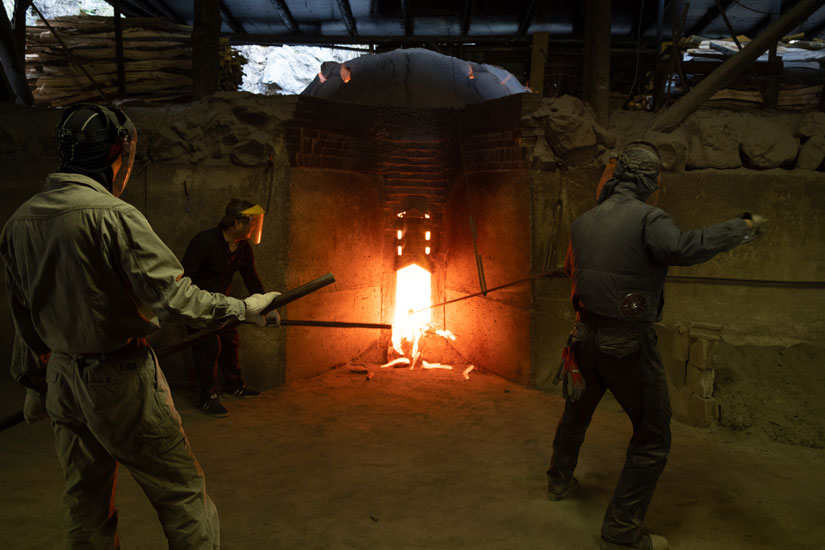
A blazing furnace. Standing there, feeling its heat with every fiber of my being.
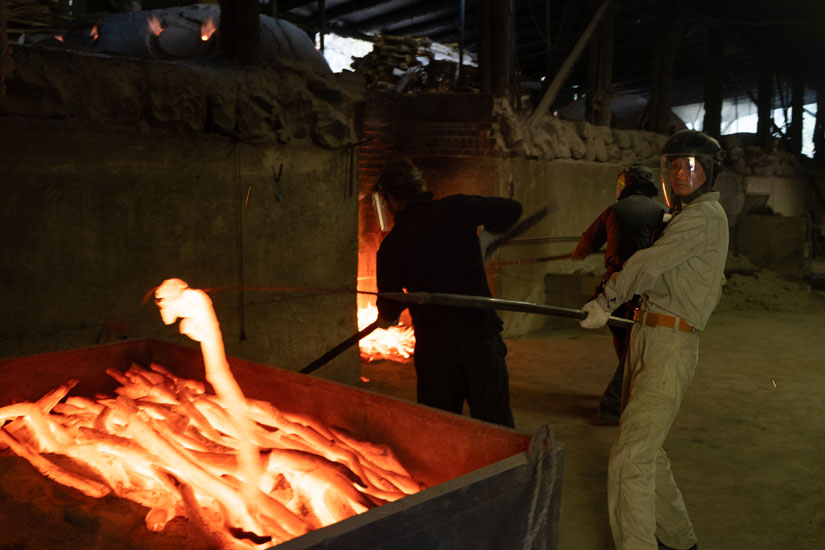
Black charcoal and white charcoal are distinguished not so much by the type of wood used as by differences in “firing and finishing methods.” White charcoal, which includes Tosa Bincho-tan, is carbonized rapidly at temperatures exceeding 1,000 degrees, then scooped out of the kiln while still red-hot and rapidly cooled by covering it with soil and ash. The white ash that forms on the surface due to this rapid cooling gives it its name. The charcoal is hard and dense; when struck, it produces a clear, metallic ring, and it burns with intense heat for a long time. In contrast, black charcoal is burned slowly at a relatively low temperature; after being carbonized in a sealed kiln, it is left to cool inside the kiln. The finished product is black and soft; because it ignites easily and is simple to handle, it tends to be preferred for leisure and household use, unlike white charcoal, which is favored by specialty restaurants and other professional establishments.
Muroto became Japan’s leading producer of binchōtan—arguably the quintessential white charcoal—due to a confluence of several factors. These included an abundance of naturally growing oak species, particularly Ubame oak, which is ideal for use as raw timber; and in Meiji 40 (1907), Kuraji Ueno, a charcoal craftsman from Kishu who visited Muroto on the Shikoku Pilgrimage, recognized the shortcomings of Tosa’s rudimentary kilns at the time and taught the region the charcoal-making techniques used for Kishu Binchotan; and the fact that kilns were modified to suit Tosa’s climate, leading to the establishment of techniques for mass-producing high-quality charcoal in large kilns.
Above all, the establishment of a sustainable production system—achieved through the efforts of Mr. Morimoto and others to train successors and plant new trees—has been of immense importance.
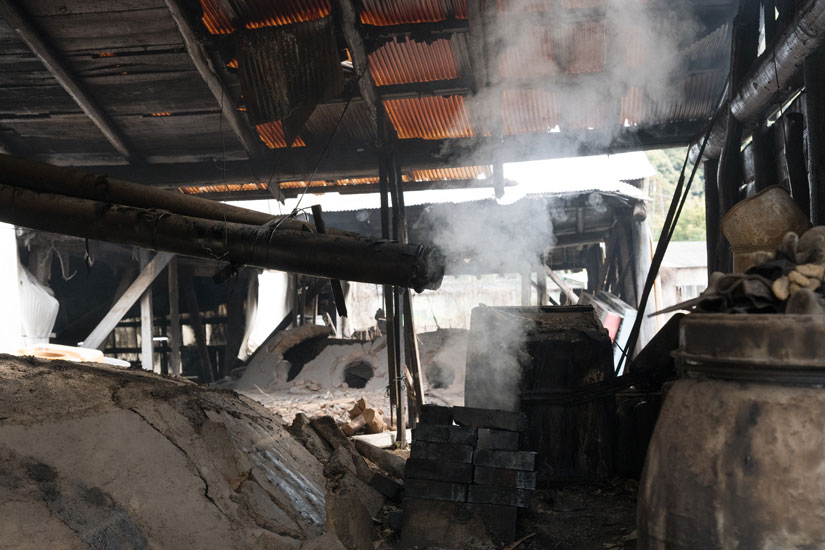
So, how is this Tosa Bincho-tan charcoal made? First, Mr. Morimoto harvests Ubame oak from the mountains and arranges the logs side by side in the kiln, as if tossing them in. In doing so, he deliberately leaves gaps between them to create air pathways. He then lights the fire and heats the wood, steaming it for about a week to drive out the moisture from the logs. Mr. Morimoto emphasizes that managing this stage is crucial. If the moisture content of the logs remains too high, cracks will form later on, resulting in charcoal of inferior quality. During the initial stage when moisture levels are high, white smoke emerges from the chimney, but as drying progresses, the smoke gradually becomes transparent. While enduring the heat, he holds his hand over the smoke; if it feels damp, it’s not ready yet, but when it feels dry to the touch, that’s a sign the drying has progressed.
Once drying is complete, the kiln is sealed, and a very small amount of air is introduced to steam-bake the logs, carbonizing them. This process is called “nerashi” (refining) and is a crucial step for burning off impurities contained in the charcoal. Once carbonization is complete, the kiln door is opened to let in air, generating temperatures exceeding 1,000 degrees inside. The wood, now glowing red like iron in a blast furnace, is scooped out, and “subai” (a mixture of soil and ash) is applied to rapidly extinguish the fire and cool the charcoal, causing its surface to turn whitish.
This hard charcoal, unparalleled anywhere in the world, produces a beautiful, clear, metallic ringing sound—like “keen”—when struck.
The process from loading the kiln to unloading it takes about 20 days. The finished charcoal is sorted according to shape and thickness, standardized by size, and then placed in a dehumidification chamber to prevent moisture from re-entering.
The World’s Finest Charcoal, Supporting Culinary Culture
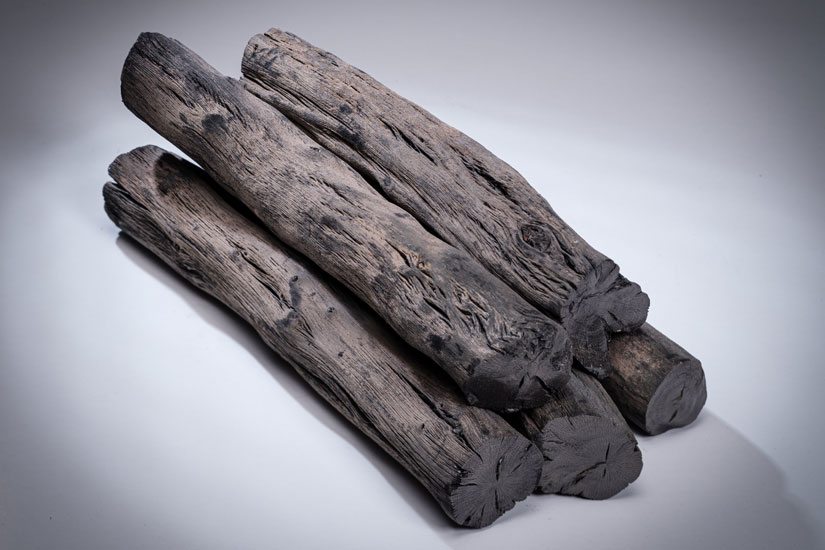
“Good binchōtan looks beautiful and burns for a long time,” Mr. Morimoto says, gazing straight ahead. High-quality charcoal can continue burning for three or even four hours. However, he candidly admits that it’s difficult to produce perfect binchōtan. If the “nerashi” (carbonization process) is overdone, the charcoal may look beautiful, but too many combustible components are lost, causing the heat output to drop. His words, “You have to strike that delicate balance,” reveal the depth of charcoal-making backed by years of experience. Then, his eyes sparkle like a young boy’s as he adds, “This binchōtan contributes to food culture—it’s the world’s finest charcoal.”
Binchōtan not only burns for a long time but also produces no smoke, so it doesn’t impart any unwanted odors to the food, allowing the natural flavors of the ingredients to shine through. Demand from high-end restaurants, eel restaurants, and yakitori shops—all seeking delicate flavors—is constant, and the charcoal is perpetually in short supply. While being pressed by wholesalers for more stock, he says he plans to fire up the kiln three times every two months this year as well.
We warmly welcome successors
Of course, things haven’t always gone smoothly. Starting in the late Showa era, inexpensive Chinese-made binchōtan began flooding the market, dealing a severe blow to domestic producers. Even Mr. Morimoto, who was still a young craftsman at the time, reportedly went through a prolonged period when his charcoal wouldn’t sell. Later, in the 2000s, China banned the export of charcoal; however, in the less than 20 years since then, the number of charcoal makers—which had been around 60—has dropped to about 20, with two-thirds of them having left the trade.
Currently, while production volume is limited, demand continues to come not only from within Japan but also from overseas, resulting in a persistent shortage of binchōtan. “If there are young people who want to make binchōtan their career, they’re more than welcome,” said Mr. Morimoto, expressing his desire to expand his ranks. To make it easier for newcomers to take that first step, he has promoted the adoption of labor-saving kilns that generate a steady income and the use of mechanization. He also lobbied the mayor of Muroto City, leading to the creation of a successor training program in 2011 that accepts about three trainees each year. Even after they become independent, he continues to provide ongoing support, including assistance with procuring ubame oak, the raw material for charcoal.
More than 30 people have already learned the craft from Mr. Morimoto, and about 10 of them have gone on to establish their own kilns both within and outside Kochi Prefecture. Currently, there are about 30 charcoal makers in Muroto City.
Experiencing the Harshness of the Mountains Firsthand
About a 10-minute drive from Mr. Morimoto’s kiln lies a mountain he owns. To reach the summit of this obviously rugged mountain, he personally operated heavy machinery to carve out a zigzagging path and graded it so that transport vehicles, such as four-wheel-drive light trucks, could climb it. Everyone uses chainsaws to cut down the Ubame oak trees located deep within the summit area. In places where transport vehicles cannot reach, they use wires to hoist the logs out.
Connecting the Future of Tosa Bincho Charcoal
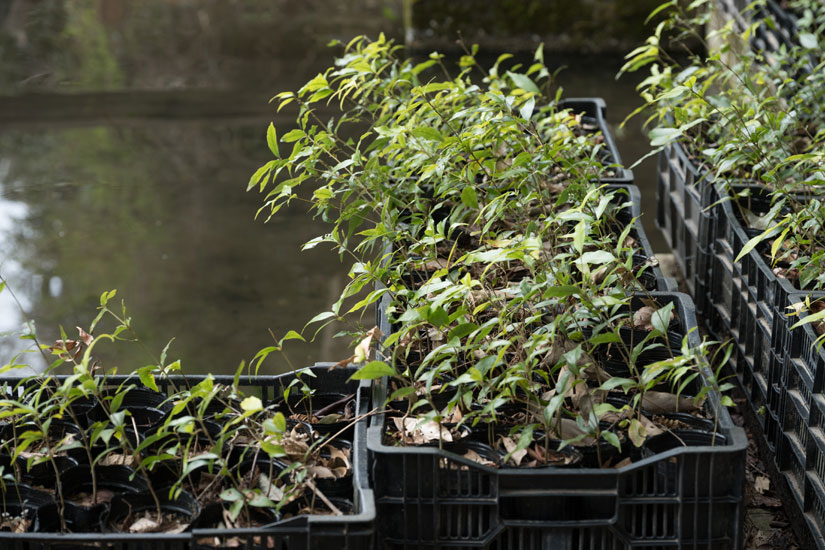
In addition to planting “layering cuttings”—which are created by making incisions in the branches or trunks of parent Uba-megashi trees to induce rooting—the cooperative also commissions forest cooperatives and other organizations to plant saplings. A single charcoal maker uses approximately 5,000 Uba-megashi trees per hectare annually, and a 40-hectare area is sufficient to ensure a stable cycle from growth to harvest.
The reason for this is that Uba-megashi, the wood used for Bincho-tan, regenerates over approximately 20 years through “sprout regeneration,” in which new shoots sprout from the stump after felling. If the 40 hectares are harvested sequentially by section in accordance with this cycle, by the time the cycle is complete, the first section will have grown sufficiently. This eliminates the need for replanting or land clearing, thereby maintaining an environment where a single charcoal maker can continue working.
“Last year, we planted 40,000 saplings over 8 hectares, but we still need to plant about another 100 hectares,” he said as he led me to an area lined with rows of seedling pots. “This is Ubame oak; over here are Urajiro oak and Kunu oak. We plan to focus on planting these three species. Urajirogashi can be used for medicine and makes good charcoal. Kunugi is used for kiku-sumi charcoal in the tea ceremony. The acorns serve as animal feed. If we’re going to protect the natural environment, broadleaf trees are definitely better. They put down deep roots to prevent landslides, and even if the trees are cut down, the area returns to its original state,” he explained.
Registration as an Intangible Cultural Heritage: Toward the Dreams That Lie Ahead
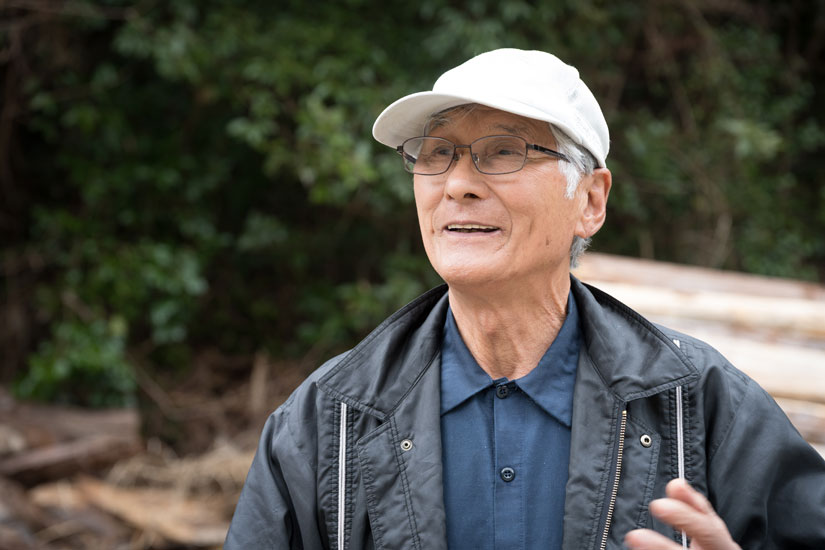
Although this marks their third attempt, the prefecture and the charcoal makers are aiming to have Tosa Bincho-tan registered as an “Intangible Cultural Asset.” Mr. Morimoto says, “Preserving the technique and ensuring consistent quality. As long as we bear the name ‘Tosa Bincho-tan,’ we want to maintain a certain standard of quality.” He adds with a smile, “If it’s designated as an Intangible Cultural Asset, I feel like we might even be able to aim for World Heritage status.” “We aim to ensure the semi-permanent sustainability of the raw material—Uba-megashi oak—across the entire region and make this industry viable. We’ll reduce carbon dioxide emissions and protect the environment. I feel there is no other circular model quite like this,” he said, expressing his vision.
Training the next generation, securing raw materials, and preserving the environment. While tackling these three challenges, the veteran charcoal makers continue to forge a path toward the future of Tosa Binchotan and the region, showing no signs of stopping.