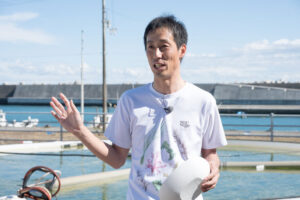


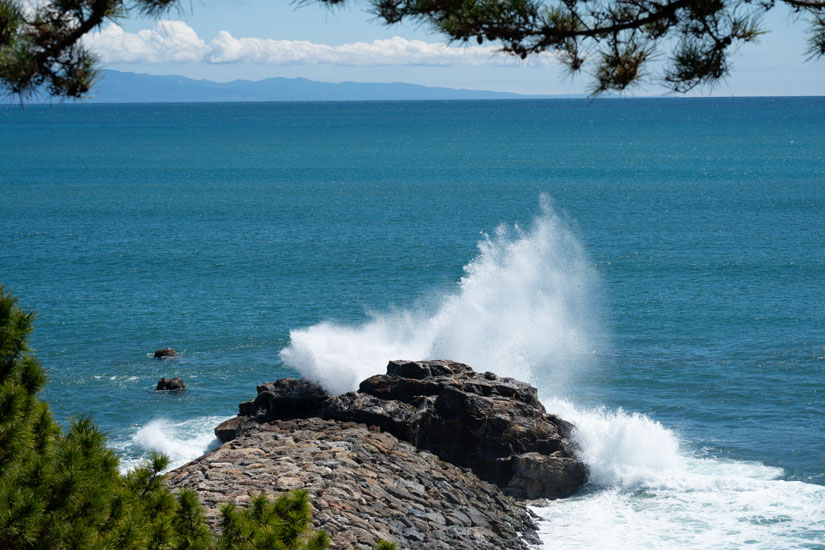
The sea off Kochi, with its beautiful horizon stretching far into the distance, sparkles as it reflects the sunlight. About a 30-minute drive from downtown Kochi City, at the base of the Yokonami Peninsula jutting out into the Pacific Ocean, lies the Kochi University Comprehensive Research Center’s Marine Biology Education and Research Facility—a spot surrounded by palm trees and exuding a tropical atmosphere.
Upon entering the building, your eyes are immediately drawn to a giant fish specimen. This fish is the “Akame,” a carnivorous species native to Japan and representative of Kochi Prefecture. Although it is a rare species at risk of extinction, many Akame still inhabit the Shimanto River estuary and Urado Bay in Kochi Prefecture. The presence of this giant fish, which can grow to nearly 2 meters in length, has long been seen as proof of the richness of the ocean and brackish waters. However, that abundance is now being seriously threatened.
Comments from fishermen—such as “We can’t catch as many as we used to” and “The fishing season has shifted”—indicate that changes in the ocean are definitely underway.
A Quiet Crisis That Began in the Seas Where Seaweed Is Disappearing
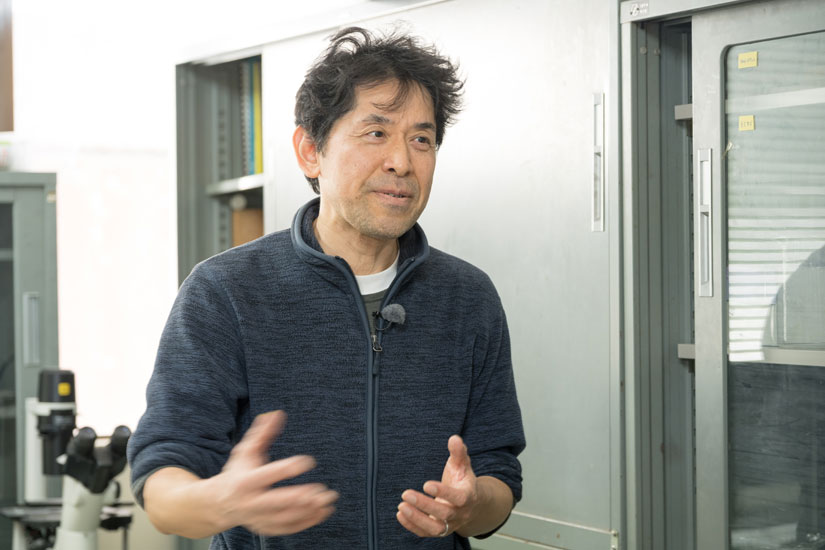
“While the global average temperature has risen by 0.6 degrees over the past 100 years, the temperature along the coast of Kochi is rising at roughly twice that rate,” says Professor Masanori Hiraoka of Kochi University, a leading expert in seaweed research.
Kochi Prefecture lies near the southern limit of temperate seaweed distribution, and in the 1970s and 1980s, the coast of Kochi was home to extensive “seaweed beds” teeming with temperate seaweed. These seaweed beds, also known as “ocean forests,” serve as hiding places for juvenile fish and as spawning grounds for squid. Abalone, turban shells, and sea urchins grow by feeding on the seaweed in these beds. Furthermore, larger fish that prey on these small fish and crustaceans are attracted to the area. The abundance of seaweed—which forms the foundation supporting marine life—was a direct reflection of the richness of the marine ecosystem itself.
A 1-degree rise in sea temperature dramatically changes the ocean
However, due to global warming, sea temperatures are rising, and these seaweed beds are now rapidly disappearing. For example, seaweeds such as aonori and kelp grow in the cold waters of winter. However, once the temperature exceeds their upper growth limit, photosynthesis and metabolism become difficult, and they can no longer maintain their cellular structure. When water temperatures rise and the seaweed senses a threat to its survival, it releases spores to ensure the survival of the next generation rather than extending its fronds and growing further, and its body eventually disintegrates and disappears.
In addition, tropical seaweeds have proliferated rapidly in recent years. Tropical species, which were rarely seen in the 1970s, expanded their range year by year throughout the 1980s, 1990s, and 2000s, and it is said that tropical species have now replaced the seaweeds most commonly found in Kochi.
A prime example of this is the tropical seaweed known as Hondawara. Whereas the native temperate Hondawara thrived almost year-round, the tropical variety grows only during warm periods, causing fish that used to inhabit the seaweed beds during colder months to lose their habitat.
Furthermore, changes in the coastal environment also affect fish further offshore. Hondawara growing along the coast can break off and drift out to sea. In Kochi, juvenile yellowtail gather around this “drifting seaweed.” Fishermen catch these juveniles—which they call “mojako”—and use them for aquaculture. Although the mojako fishing season is limited to early spring, tropical kelp does not drift ashore until summer. There are concerns that this will eventually affect the mojako fishery as well.
Furthermore, while tropical kelp can grow up to 2 meters in length, it is not suitable for human consumption, and its industrial use has not progressed.
The professor states, “Before being a food source, seaweed is the ‘foundation’ that supports the marine ecosystem. If seaweed disappears, fish migration routes will change, and the habitats of shellfish will be lost. Furthermore, it will affect the fishing industry itself.”
The Day the Aonori Disappeared from the Shimanto River
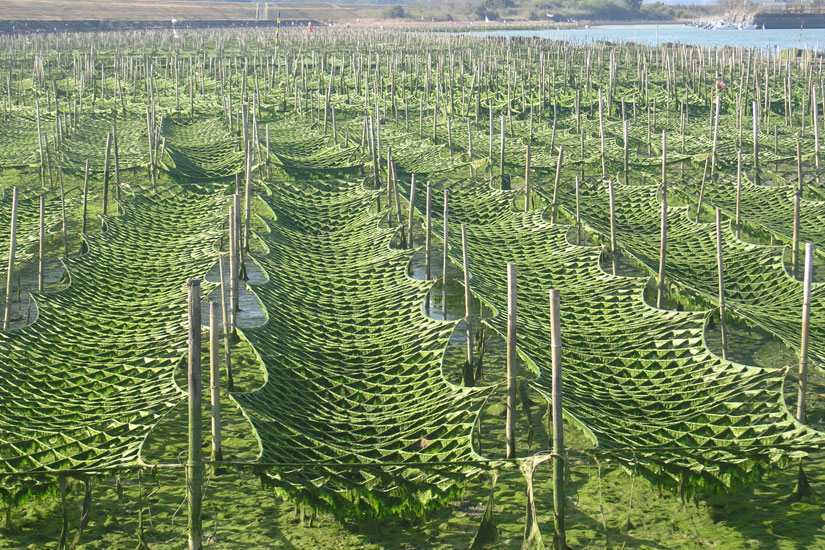
Particularly striking are the changes that have occurred at the mouth of the Shimanto River, known as the prefecture’s only seaweed production area. The seaweeds that have long supported Kochi’s food culture—Sujiaonori and Hitoegusa (Aosa-nori)—grew in the estuary where river water and seawater mix. The Shimanto River estuary, in particular, was renowned as Japan’s premier natural fishing ground for Suziaonori, and the sight of Suziaonori growing to over one meter in length was a hallmark of winter in Kochi.
Suziaonori has a strong aroma and is known as a high-quality ingredient essential for okonomiyaki and takoyaki. Hitoegusa has long been enjoyed in tsukudani and tempura. However, changes in the natural environment caused by global warming have dealt a blow to both of these species. The annual harvest of striped aosa, which once ranged from 10 to 20 metric tons, has dropped to zero in the wild since 2020. Cultivated hitoegusa has also been unavailable since 2021, and Kochi’s sole seaweed industry once completely vanished.
Kochi University Aims to Revitalize the Seaweed Industry Through Its World-Renowned “Land-Based Aquaculture”
Around the time the seaweed in the Shimanto River began to disappear, researchers at Kochi University were the first to confront this change.
“If this continues, the seaweed culture itself will disappear”—it was this sense of crisis that quietly spurred the university into action.
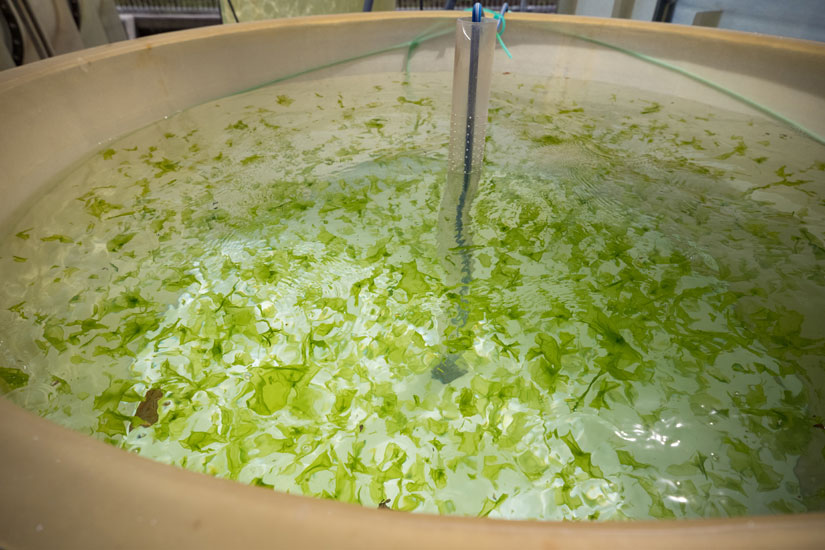
What turned the tide was land-based aquaculture technology. In 2004, to rebuild a sustainable seaweed industry in Kochi, Kochi University developed a land-based aquaculture system using deep-sea water off the coast of Muroto City, Kochi Prefecture, and succeeded in producing striped aonori. Muroto is one of the few places in Japan where deep-sea water can be drawn from near the shore. The deep-sea water, drawn from depths of 320 to 374 meters, maintains a stable, low temperature of approximately 10 degrees Celsius year-round, creating an environment where aonori—a type of seaweed traditionally harvested only in winter—could be cultivated year-round.
Furthermore, as research progressed, the team developed a patented technology called the “spore agglomeration method,” which involves simultaneously releasing spores, agglomerating them, and then culturing and suspending them to ensure uniform growth. The ability to stably produce high-quality, tangle-free seedlings through this method was groundbreaking even on a global scale. It dramatically improved spore survival rates, enabled mass production on land, and paved the way for industrialization.
The volume of land-based cultivation of Suziaonori initially stood at 1 metric ton but increased to 3 metric tons within a few years. It now exceeds 10 metric tons, meaning that more than half of the amount once harvested from the wild is now being regenerated on land. Land-based cultivation of Hitoegusa (Aosa nori) is also beginning in large tanks, and a stable supply is expected in the near future.
A Leading Region in Seaweed Research and Land-Based Aquaculture
Although land-based aquaculture requires significant capital investment and efficient cultivation techniques are essential, more than 20 companies nationwide have adopted Kochi University’s technology and are working to restore seaweed beds. Furthermore, there are high hopes that this technology can be applied to the restoration of natural seaweed beds and contribute to the revival of seaweed communities that have disappeared due to high water temperatures.
From Food to Energy: The Future Shaped by Seaweed—A Challenge Beginning in Kochi
The cumulative results of research—beginning with the successful land-based cultivation of seaweed in 2004—are opening up new possibilities beyond the realm of food. In Kochi, a major initiative known as the “Shimanto Seaweed Eco-Innovation Co-creation Hub Project” is currently underway. It is an effort in which government, businesses, researchers, and local residents are collaborating to cultivate seaweed and create new industries. Professor Hiraoka serves as the project leader.
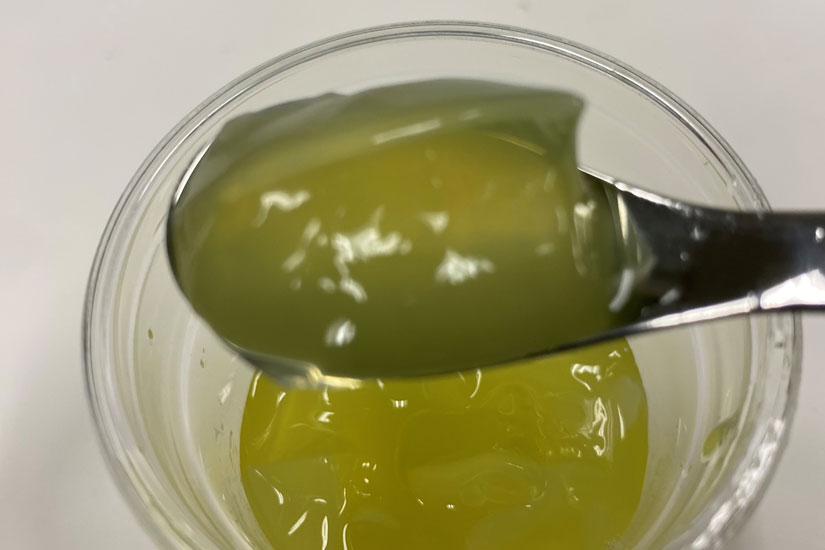
Seaweed is viewed as a promising material for the future, with ongoing developments such as paper, fibers, and edible jellies made from seaweed—which can multiply three to four times in a single day—as well as biodegradable plastics derived from seaweed and research on the seaweed species Kagikeno, which, when added in small amounts to the feed of ruminants such as cattle, reduces methane emissions from their belches by 90 percent. Furthermore, given that one metric ton of seaweed absorbs one metric ton of CO₂, cultivating seaweed itself contributes to protecting the global environment. As a result, seaweed is currently attracting worldwide attention as a food source, a resource, and a material for shaping the future.