

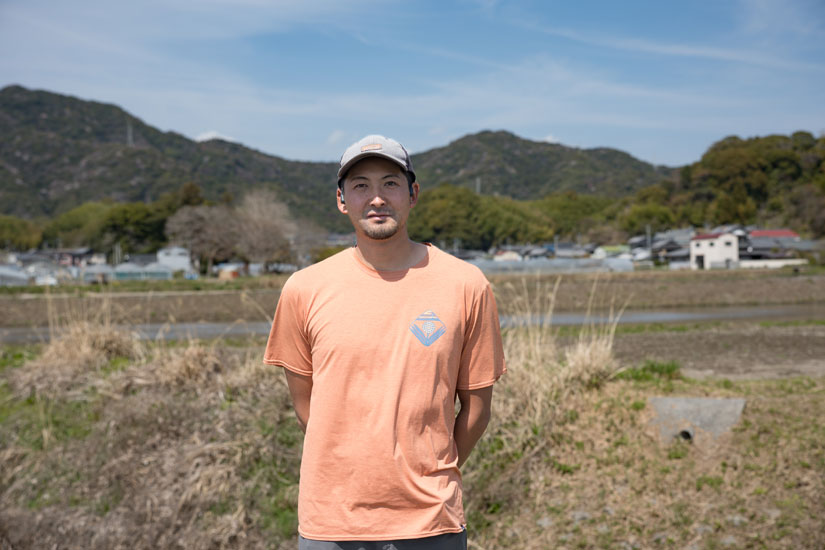
Kochi Prefecture is a tropical region rich in natural beauty, nurtured by the bounty of the Pacific Ocean and its mountains and rivers. Among its areas, Haruno-cho in Kochi City is a warm region facing the Pacific Ocean. It features breezes blowing in from the sea, abundant sunshine, and a landscape where plains and hills intertwine. Drawing on these natural blessings, Farm Vegeco is paving the way for the future of agriculture.
Growing Vegetables in Greenhouses in Winter: A Reversal in Agriculture
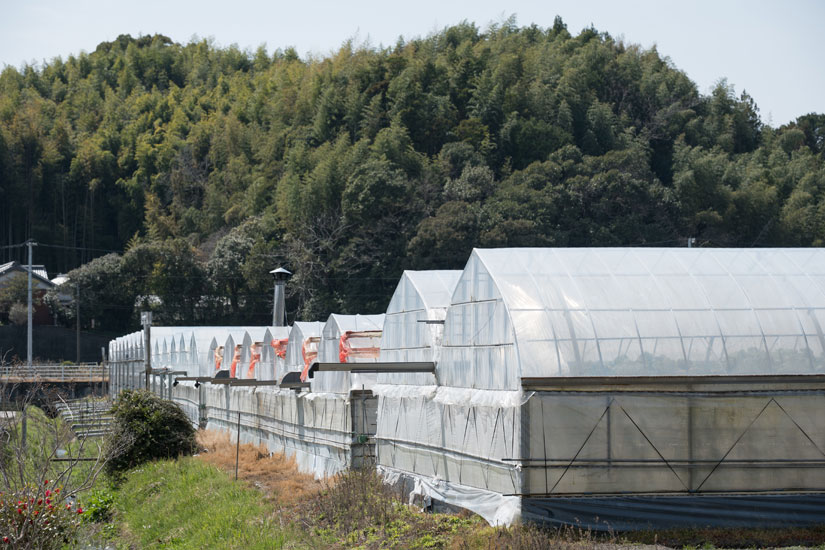
About 90 percent of Kochi Prefecture’s land area is mountainous, and rivers flowing from the Shikoku Mountains rush down as rapids before emptying into the sea. As a result, sediment does not accumulate over wide areas, and the terrain is characterized by a lack of large-scale plains. So, how can this limited flat land be put to good use? Greenhouse horticulture—which yields high crop yields even on small plots—has developed as a solution to this challenge. Open-field cultivation takes place in the mountainous areas during the summer, while greenhouse cultivation occurs in the plains during the winter. By skillfully adapting to the seasons and the terrain, a unique agricultural system specific to this region has taken shape.
The cucumbers grown by Nagasaki Asahi at Farm Vegeco are transplanted in early October, and harvesting continues daily from mid-November through June. This is a reverse approach: growing in winter crops that typically bear fruit in summer when grown in open fields. The cucumbers, having endured the cold, lose their grassy bitterness and become sweeter. Cucumbers grown in winter greenhouses possess a quiet yet robust flavor distinct from their summer counterparts.
However, in cold regions, the high cost of heating makes it difficult to expand winter cucumber cultivation on a large scale. In this regard, the Pacific coast—with its warm climate and abundant sunshine—is an ideal region for growing winter crops. Among these areas, Kochi Prefecture ranks among the top in the nation for cucumber production, hovering around 6th or 7th place in recent years. It maintains a stable position as a major production center.
Prepare the soil, observe the leaves, and grow the fruit straight
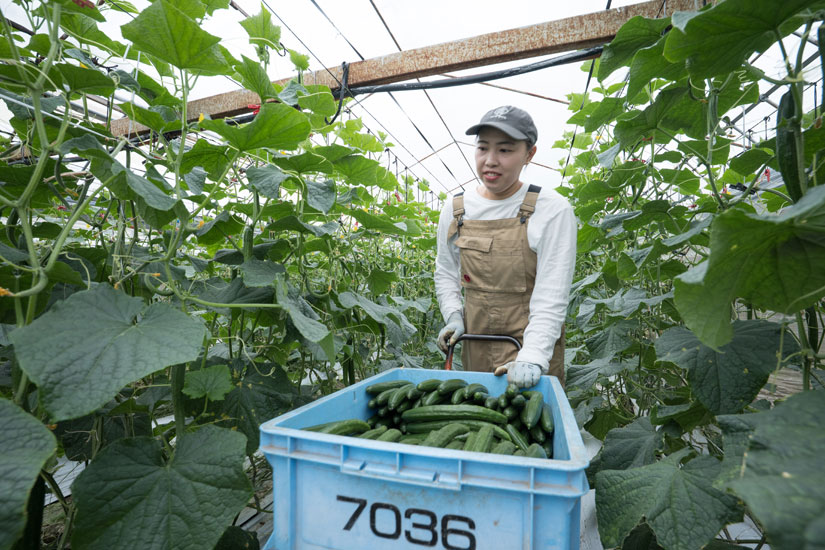
Everything hinges on the three-month summer off-season for Farm Vegeco’s cucumbers. The Nagasaki family, who are also rice farmers, incorporate large amounts of rice husks and rice bran—byproducts of rice cultivation—into the soil and allow them to ferment. This soil preparation is the reason why their winter cucumbers are surprisingly sweet. Just as nuka-zuke pickles become sweet, soil enriched with rice bran brings out the cucumbers’ natural sweetness.
The Vitality of Greenery Thriving in the Greenhouse
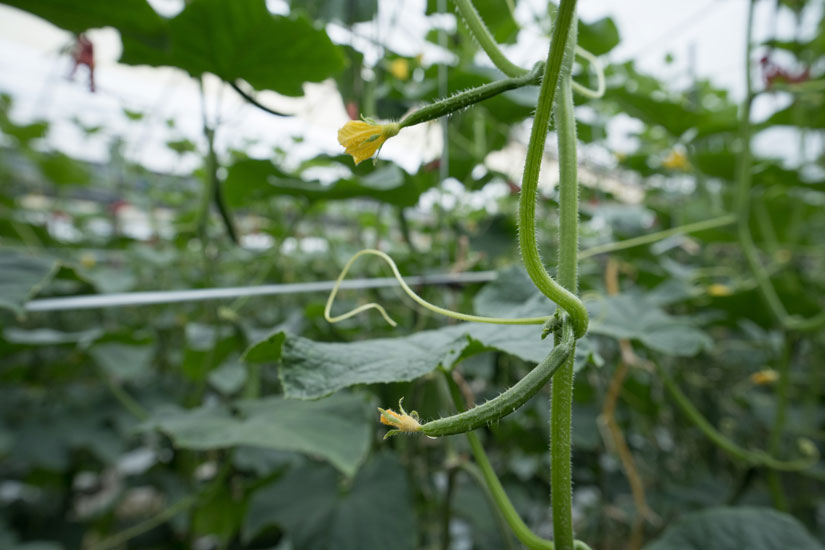
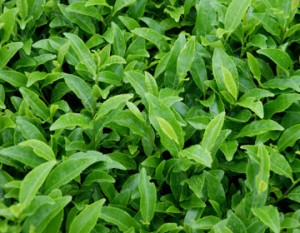
Inside the greenhouse, farmers carefully identify the vines—which resemble a “body” and “limbs” extending from a single cucumber plant—and adjust the number of leaves to control the amount of photosynthesis. Each leaf plays a role in nurturing the nearby fruit, so farmers must be careful not to remove too many or leave too many.
In Japanese markets, “straight cucumbers” are in demand. If a cucumber touches a leaf, it bends; if it touches the ground, it turns yellow. Farmers watch over the growth of each individual cucumber, sometimes thinning the fruit and sometimes shaping it by hand to produce “Grade A” produce. “Grade A” refers to standard products that meet specifications for shape, color, and size, with few blemishes or bends. Of course, the taste remains the same even if they’re bent. Nevertheless, the reality is that market standards dictate farmers’ incomes.
Inside the greenhouse, the cucumber vines stretch out thinly as if searching for air, their tips—which have yet to touch anything—gently swaying in midair. It is a quiet movement, almost like hesitation, before they reach out for support.
Within that subtle hint of movement lies the plant’s unwavering will, striving to choose the path its life will take from here on.
A Farm That Has Been in Operation for 50 Years and the Legacy Left by My Family
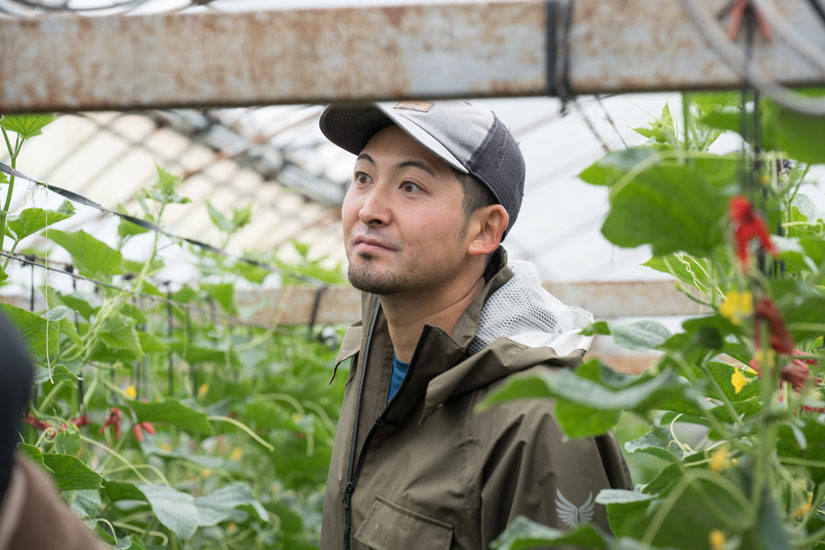
The history of Farm Vegeco dates back more than 50 years. My father, who had been working at a travel agency, was adopted into a farming family that had been growing melons and tomatoes since my grandmother’s generation, and he took over the farm. He had no prior experience in farming. Nevertheless, with his artisan’s spirit, he engaged with the soil, immersed himself in every task, and honed his skills.
By his side was my mother, who had also worked at the same travel agency. My mother, who possessed the ability to forge connections between people and nature, established the Farm Vegeco brand under the philosophy of “Vegetable Communication & Collaboration.” Valuing dialogue with chefs, she grew not only cucumbers but also herbs and a diverse range of vegetables, continually responding to the needs of culinary professionals. Furthermore, by personally visiting supermarkets in Tokyo and actively participating in product competitions, she quietly yet steadily spread the name of Farm Vegeco among the general public.
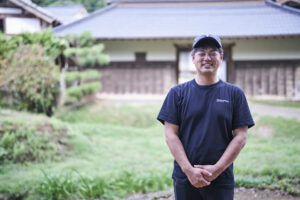
To protect the farm his parents had built and pass it on to the next generation, Mr. Nagasaki chose to work the fields himself after a stint as a salaryman in Tokyo. However, in May 2025, his mother passed away due to illness. It was his fourth year back at the farm. Though the time he spent learning directly from her was brief, the spirit she instilled in him—farming to bring joy to people’s faces—remains unchanged and continues to breathe life into the very heart of this farm.
The Reality Facing Farmers Caught Between the Market and Direct Sales
Currently, 70% of Farm Vegeco’s produce is shipped to markets, while 30% is sold directly to consumers. The farm has stopped shipping through the JA. JA shipments involve high commission fees, which can sometimes cut farmers’ take-home pay in half. Pricing is also determined by the JA, making it difficult for farmers to proactively choose their customers. On the other hand, there are significant advantages to entrusting collection, sorting, and sales to the JA, as this ensures stable sales channels.
The appeal of shipping to the market lies in the low commission—around 10 percent—which increases the farmers’ take-home pay. However, this requires farmers to handle all sorting, packing, and shipping themselves, and they are responsible for maintaining consistent quality and building trust. Even so, their love and pride in the cucumbers they grow led them to choose the path of building their own brand.
The unit price of cucumbers is determined by market rates, and farmers have no say in setting the price. Even Grade A cucumbers fetch only about 30 yen per cucumber. It’s a harsh world where non-standard cucumbers sell for just 50 yen per kilogram. Rebuilding a greenhouse costs between 30 million and 40 million yen. Even repairs alone cost millions of yen every year. This is why the number of young farmers isn’t increasing.
Even so, Mr. Nagasaki says, “Farming is fun.”
“I was fortunate to have a foundation because I took over my parents’ farm. But starting from scratch presents a high barrier to entry. If the government had a system to lease unused greenhouses to young people, the farming population would surely grow,” he says.
Increasing direct sales and building connections with chefs and supermarkets that buy at fair prices—that is the path to survival for small-scale farmers. In fact, since winning the Grand Prize at the Vegetable Sommelier Summit in 2013, Farm Vegeco’s profile has risen, and chefs from Tokyo restaurants and international hotels have begun visiting Kochi in search of the farm’s cucumbers. Some overseas chefs even seek out tiny cucumbers still bearing their blossoms. The creativity of these chefs is bringing new perspectives to the farmers.
A “Flavor” We Want to Preserve for the Future: The Aspirations of a Young Farmer
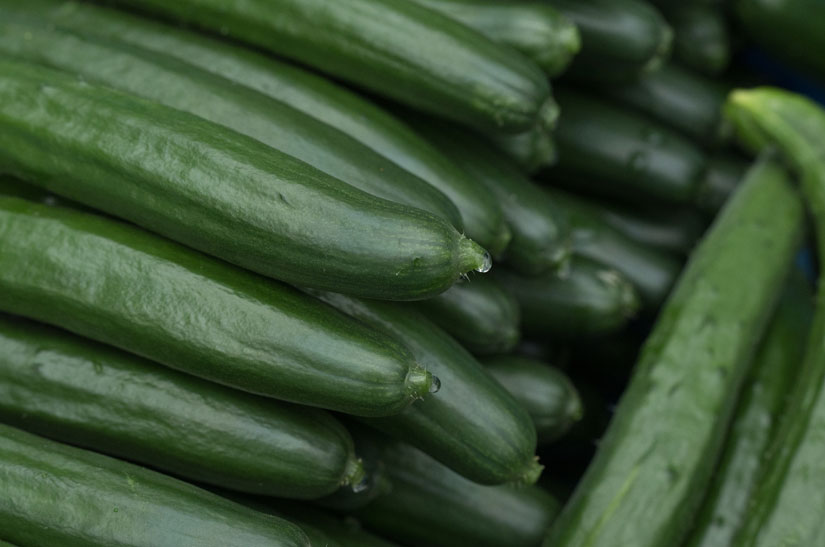
When you take a bite of a cucumber from Farm Vegeco, juice bursts out immediately after harvest, filling your mouth with freshness. What’s more, that freshness is slow to fade, even after several days. Growing slowly in winter tightens the cells, strengthening the fruit’s ability to retain moisture.
Furthermore, the fruits that have endured the winter cold have little of that grassy taste and are surprisingly sweet.
Mr. Nagasaki says, “Even after my father is gone, the last thing I want to hear is that the taste has changed.” . He has no intention of expanding the number of greenhouses. Rather than chasing scale, he prioritizes preserving flavor. And he aims to connect with people who truly appreciate their produce and are willing to pay a fair price for it. That is the future vision for Farm Vegeco.
A single cucumber grown during the winter in Kochi. Behind it lies a family’s history, the local climate, the memory of the soil, and the bonds between people. Inside the quiet greenhouse, even today, a small vine striving to grow straight is reaching out, searching for support.