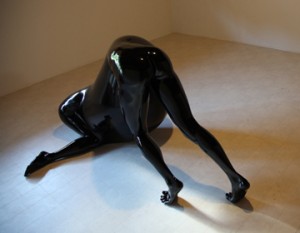

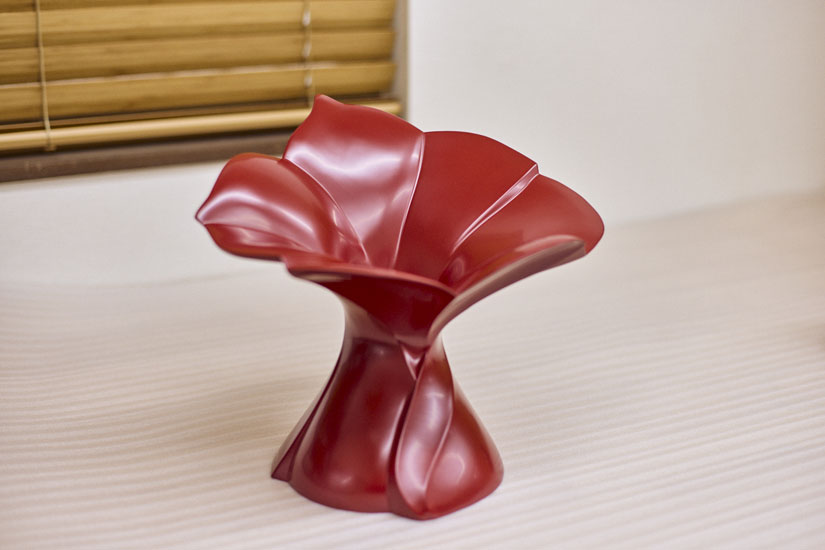
Curves softly illuminated by light. Their texture evokes the moment a flower blooms or fabric layered with supple grace, making you want to reach out and touch them. Lacquer artist Fumie Sasai explores “shapes you can’t help but want to touch,” creating unseen forms while conversing daily with lacquer.
Shapes Made of Lacquer That Invite Touch
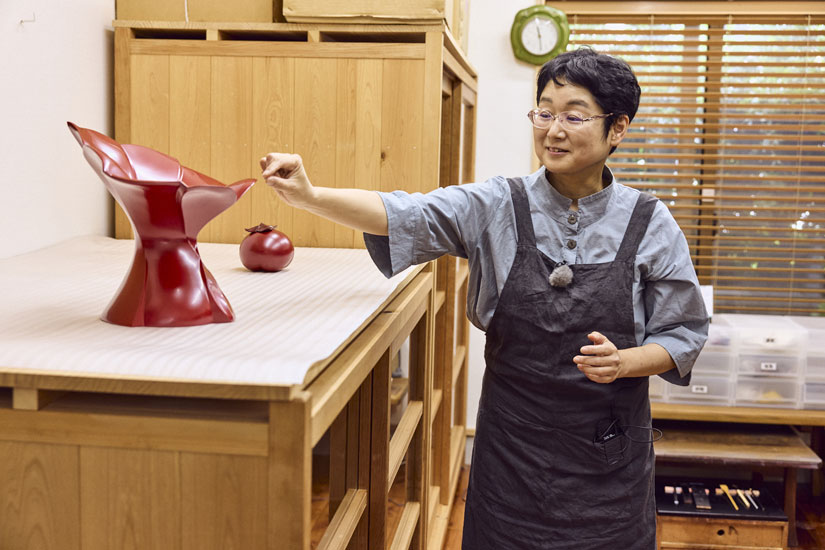
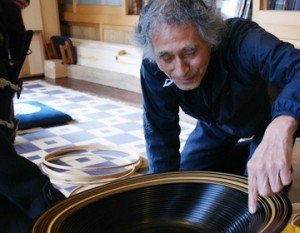
In her home and studio in Mukō City, Kyoto Prefecture, the lacquer drying cabinet, the “lacquer room,” holds pieces with a mysterious presence. Soft, airy swells, or forms as plump and juicy as ripe fruit. Their surfaces catch the light with a moist luster, tempting you to bring your fingertips closer.
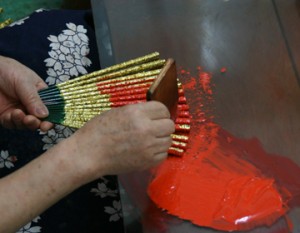
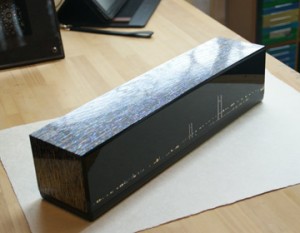
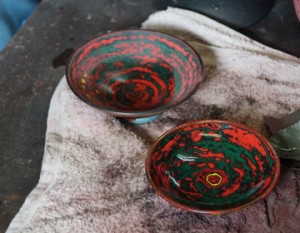
Sasai’s three-dimensional lacquer works are not completed with a single coat. By layering lacquer and polishing after each application, she refines subtle irregularities to create an even, uniform surface. Furthermore, lacquer only hardens in spaces with controlled temperature and humidity, requiring time for drying. Only through this repeated process, layered many times over, do these smooth textures and soft forms emerge.
“I decide the coating and form while imagining the sensation when touched,” explains Sasai’s creative approach. As he coats, polishes, and coats again, the lacquer’s thickness builds into volume, and the precision of the polishing creates smoothness. The forms nurtured bit by bit carry the layered time Sasai spent engaging with the lacquer, confirming its state with his fingertips.
He chose “works that won’t lose their form”
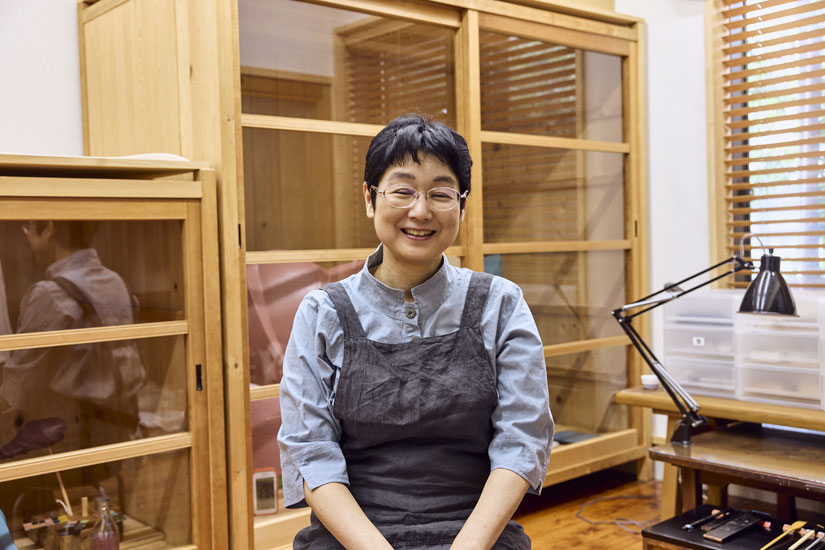
Sasai was born and raised in Yao City, Osaka Prefecture. Growing up in a working-class neighborhood with a father who was a company employee and a mother who was a homemaker, his family had no particular connection to the arts. He became drawn to the path of art in high school and went on to study at an art university in Kyoto.
“I painted in high school, but as I continued, I started thinking maybe I was better suited to creating forms within my hands rather than working on a flat surface. What about becoming a ceramicist? I jumped into an art university with the mindset of ‘Let’s just try it first.'”
Upon entering university, he first experienced dyeing, ceramics, and lacquerware. Among these, lacquer captured Sasai’s heart. “With ceramics, the pieces shrink when fired, which I found a bit sad,” he explains. Conversely, lacquer gains fullness and substance with each layer applied. He was drawn to how its expression changes with each application, allowing him to slowly decide the form while observing these transformations.
Forging a path no one has walked before, with my own hands
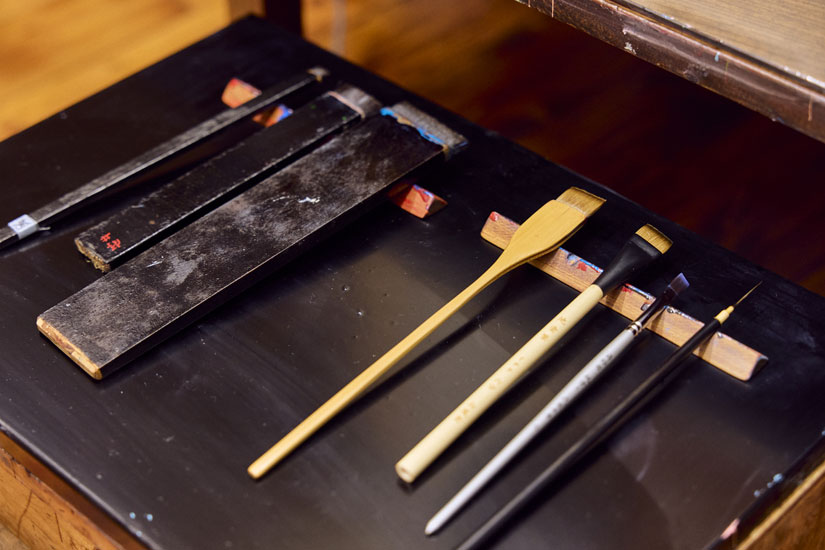
Having chosen lacquerware, Sasai initially envisioned a future crafting vessels in a workshop. Yet as she worked, she transcended the boundaries of vessel-making, pursuing forms that were true to her own sensibilities. Following her heart led her to lacquer objects—a medium where she could freely explore the shapes she loved.
At that time, the world of lacquer art was still dominated by practitioners working as “craftsmen” making vessels and Buddhist altarware. Precisely because of this, he reasoned that by deliberately pivoting into the realm of art, he could forge a new path where no one had ventured before. This realization became the major catalyst for steering his course toward becoming an artist and beginning to explore his own unique form of expression.
Dialogue with nature and people close at hand became the source of creation
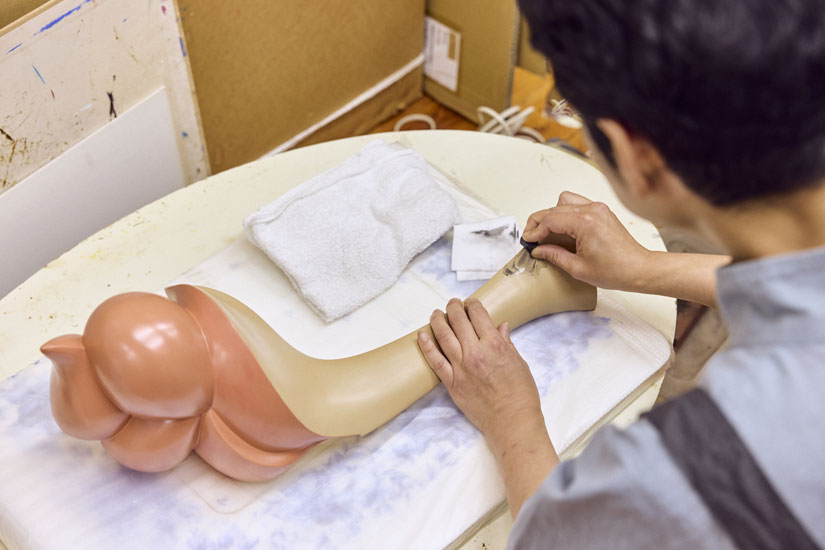
Since encountering lacquer, Sasai has consistently engaged with “form.” This journey has also been one of continually seeking how to entrust the sensations arising in his heart to lacquer. His work reveals a core strength that enjoys time-consuming processes and steadfastly upholds his aesthetic sensibility.
Plump forms of life born from everyday observations
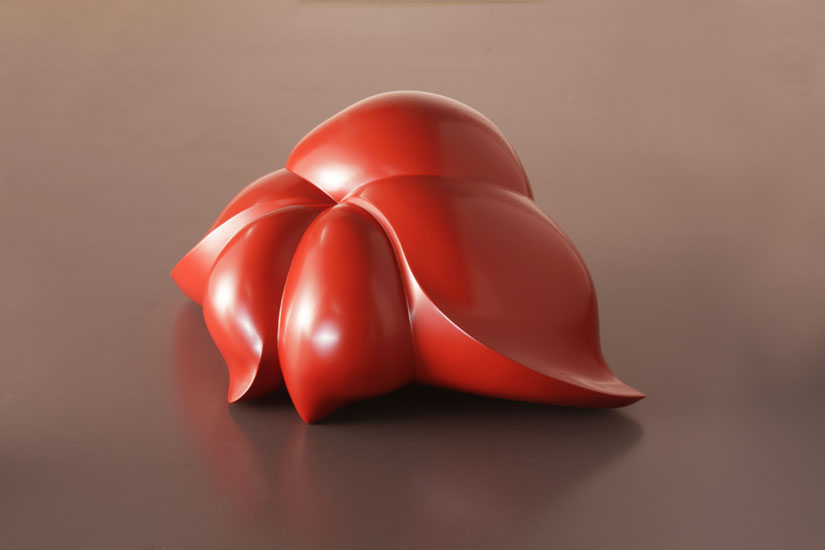
One of Sasai’s representative series is “Bilabdo.” Its rounded, soft forms evoke the appearance of infants and children—the period when humans receive the most affection—and inevitably bring a smile to the viewer’s face. These plump contours succinctly express Sasai’s theme of “forms you want to touch.”
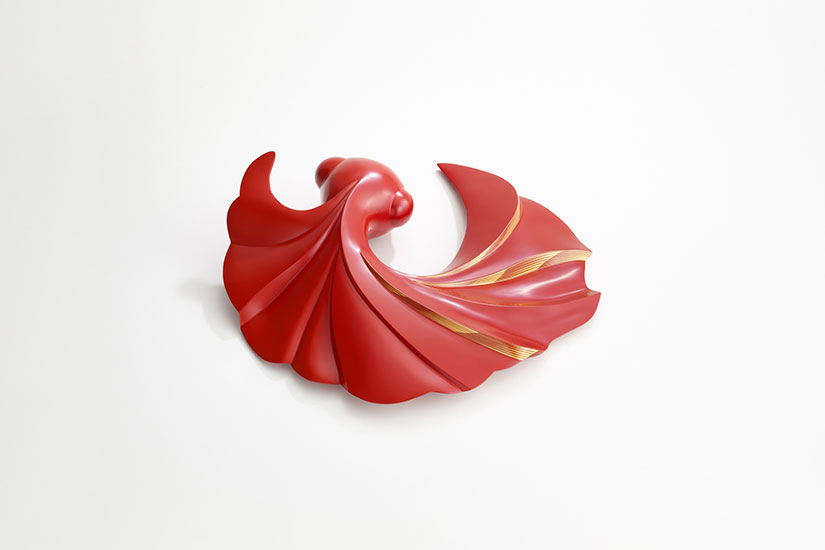
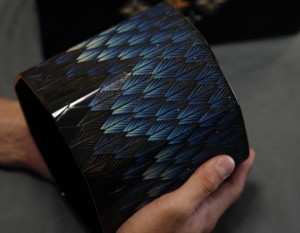
Another representative series, “Sky Fish,” beautifully harmonizes the characteristic plump curves and overlapping ridges found in Sasai’s work.
These works share a common thread: they convey Sasai’s curiosity, focused on small, everyday observations and the nature close at hand. The freshness of a child’s skin, the suppleness of a fish swimming on the water’s surface. The charm of Sasai’s work lies in how these forms of life are expressed through the unique, deep texture of lacquer.
Time spent with students fuels creative energy
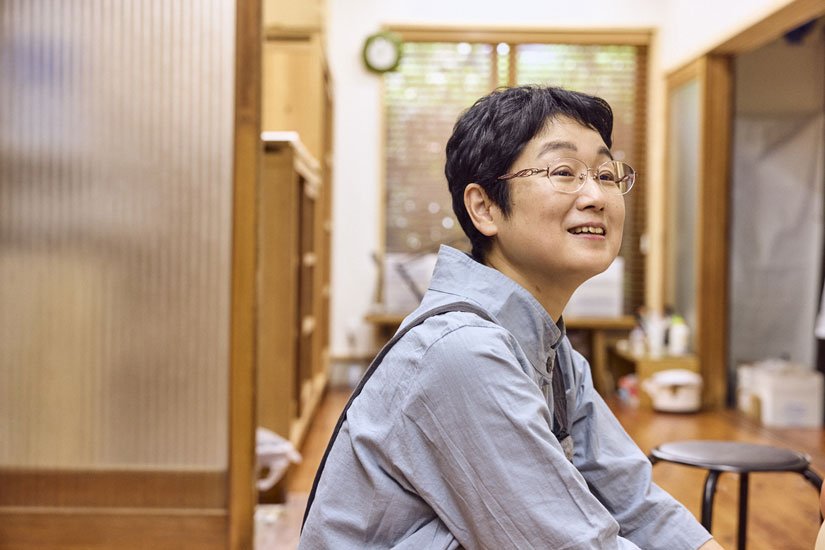
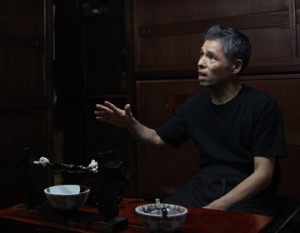
Alongside his own artistic practice, Sasai has served as a professor at Kyoto City University of Arts, teaching students the creation of three-dimensional lacquer works. He finds the time spent interacting with the younger generation at the university to be a significant stimulus for himself. “If I had devoted myself solely to creating, I might have hit a wall. Interacting with the students provides balance and gives me energy.”
Dialogue with the younger generation broadens his perspective, enriching Sasai’s creative process.
A new world opened through collaboration
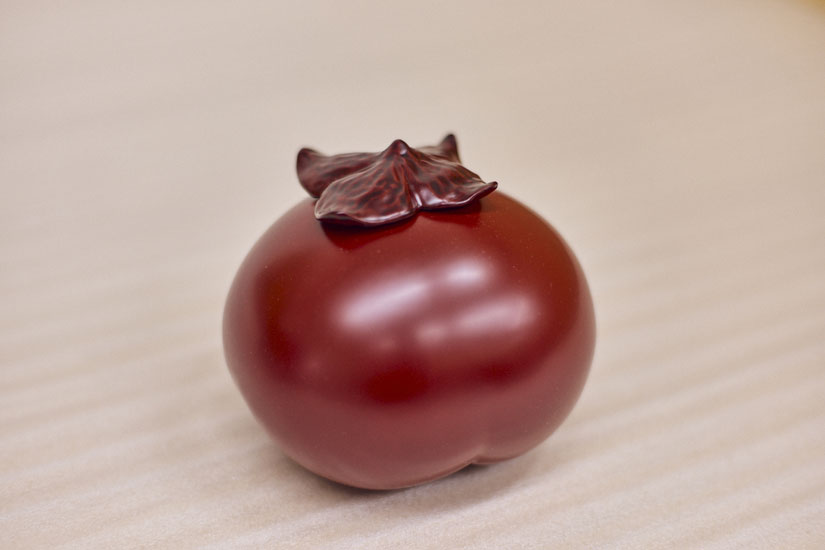
“Collaborations” with artists from different fields have also been a major catalyst for expanding Sasai’s expressive range. Encountering materials and approaches entirely different from lacquer has given birth to new possibilities.
A prime example is the collaborative work “Boat of the Sun” with bamboo craftsman Tanabe Chikunsa IV.While Sasai used blue lacquer to express the sun floating on the sea surface with a sharp, circular form, Tanabe wove bundles of bamboo into the blue ring, capturing the moment sunlight spreads across the ocean. The fusion of lacquer’s sharp lines and bamboo’s softness creates a new charm in craftsmanship.
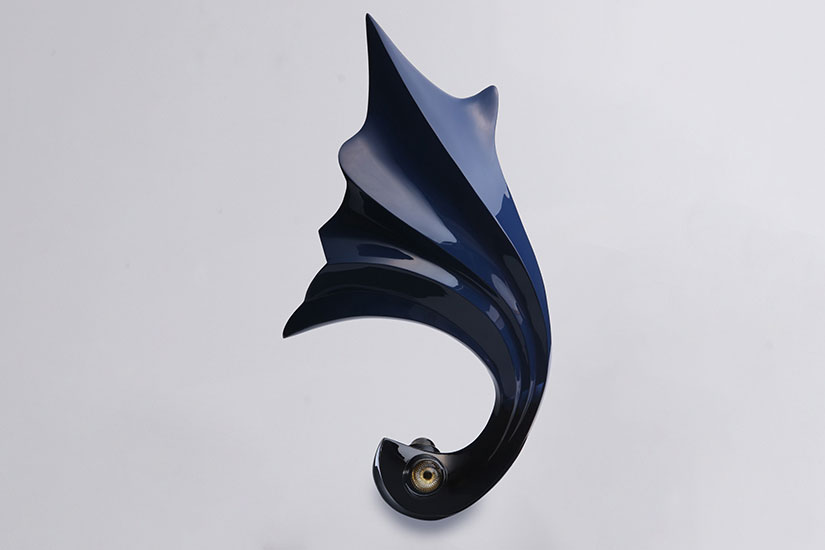
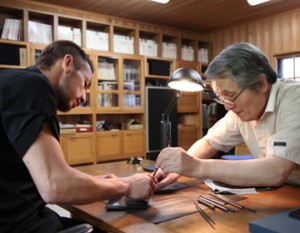
The collaborative work “Glass Fish” with kirikane glass artist Akane Yamamoto is another piece where the two artists’ individualities merge.”Kirikane glass” is a technique original to Yamamoto Akane, where patterns are drawn using thin, thread-like strips of gold leaf, which are then sealed within molten glass. Inspired by the glass eyes Yamamoto creates, Sasai gave birth to a vivid blue fish that seems to leap across the water’s surface.
“Through collaborations with various craftspeople, I’ve seen worlds I never could have reached working alone. Of course, it benefits me personally, and I can pass it on to my students, so I believe it’s creating double or triple the positive impact.” These collaborations with diverse artists also became an opportunity for Sasai to unravel the unconscious assumptions she had unknowingly formed about “how lacquer should be.”
Freer, farther. Believing in the potential of lacquer.
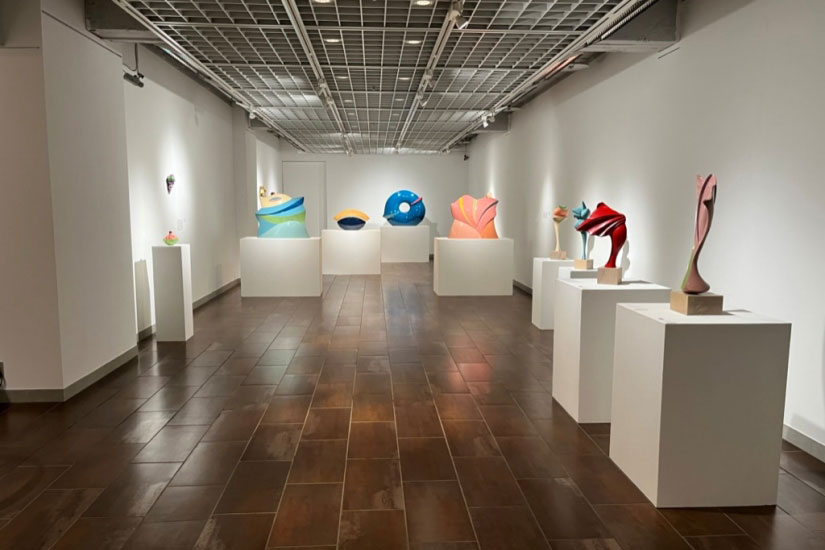
Sasai’s works have been exhibited in museums, solo shows, and various themed exhibitions. Additionally, her pieces are permanently displayed as part of the artwork collection at The Ritz-Carlton Kyoto. It’s a special space where visitors can encounter her creations during their stay or dining experience.
In recent years, his new challenges showcased in the 2024 solo exhibition “Gentle Breeze, Sudden Thunder” were recognized, earning him the Minister of Education, Culture, Sports, Science and Technology New Artist Award in the Fine Arts category at the 75th Arts Selection Awards. Furthermore, he will realize his first solo exhibition in the United States in the summer of 2025, significantly expanding his creative horizons.
“I truly believe Japanese crafts possess exceptional quality. That’s precisely why increasing opportunities for more people to see them should spark greater interest overseas. In fact, international visitors do come to see my work, and I believe the potential is immense.”
In 2026, an exhibition introducing Japanese lacquer art is scheduled at the Victoria and Albert Museum in London, UK, and Sasai’s work has been selected for display. As an individual artist, she stands at the gateway to introducing Japanese craft to the world. Her determination and hope for the future were palpable in her words.
What new encounters will come next, and what new expressions will emerge? The works born from these encounters will surely stir our hearts once again.