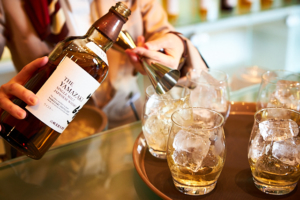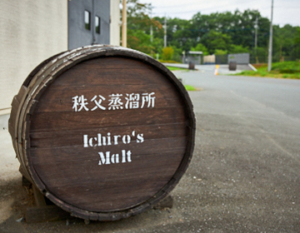


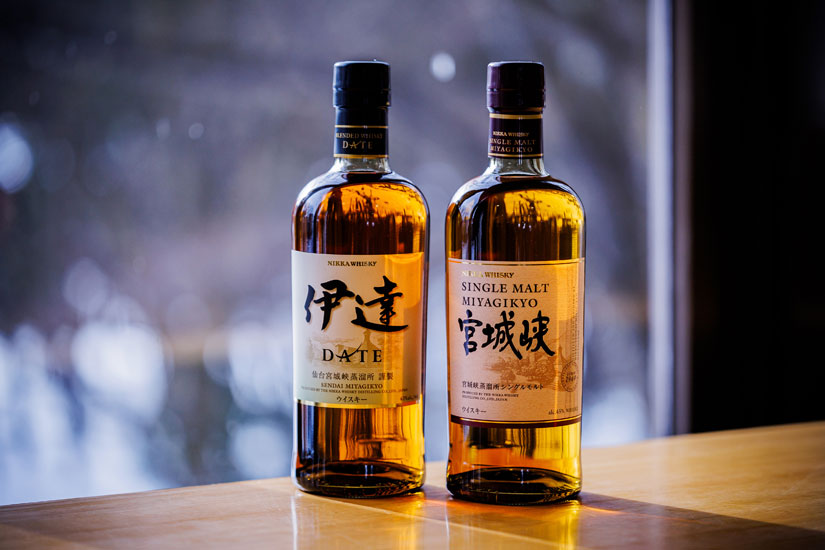
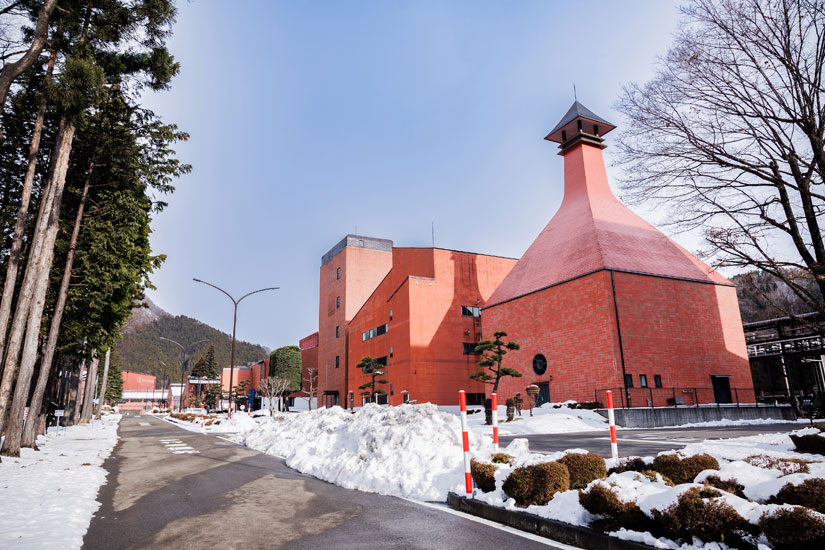
In Sakunami, a western district of Sendai City, Miyagi Prefecture, known as a hot spring resort, stands a distillery for Japanese whisky, which has sparked a global boom. This is the Miyagikyo Distillery, part of Nikka Whisky Distillers Inc.’s Sendai Plant.This location, surrounded by two clear streams, the Hirose River and the Nikkawa River, is also known for being discovered by Takeshi, the son of the founder, Masataka Taketsuru. What kind of place is this that sparked the boom?
In Pursuit of New Whisky Flavors
Masataka Taketsuru, founder of Nikka Whisky and often called the “Father of Japanese Whisky,” first built his distillery in Yoichi Town, Hokkaido. The Yoichi Distillery produces malt whisky made solely from barley malt. Characterized by its robust smoky flavor, it is crafted using the traditional “coal-fired direct fire distillation” method under the cool, humid climate.
After studying whisky making in Scotland, Masataka began to envision creating a base spirit in Japan with characteristics distinct from Yoichi.
Masataka therefore tasked his son, Takeshi, with the mission of “finding a place with good water.” Water was a crucial element that would determine the flavor and character of the whisky. Within the basic criteria of an annual average temperature around 10°C and the mountainous Tohoku region, he had Takeshi search various locations.
Miyagikyo, surrounded by lush forests, proved ideal for whisky production.
After identifying several candidate sites, the first place Takehiro brought Masataka was Miyagikyo. Masataka tasted a watered-down sample using water from the Shinkawa River and was deeply impressed by its deliciousness. He decided to build the distillery here without even visiting the other potential locations. Creating whiskey with a distinct flavor requires a distinct environment. Since Yoichi Town is near the sea, Masataka also wanted the other distillery to be built within a forest.
A New Taste Born from “Soft Water”
Masataka’s vision of “good water” was soft water with low mineral content. The underground water of the Shinkawa River is exceptionally soft, making it ideal for whisky production. Factory Manager Kinji Sasamura explained that while they test the water composition several times a year, it remains remarkably stable and consistent, another reason for choosing Shinkawa water.
Furthermore, Masataka’s conviction that “you cannot make delicious whisky without respecting nature” was reflected throughout the distillery’s construction. Tree felling was minimized, and power lines on the premises were buried underground wherever possible. Meticulous attention was paid to every detail, including creating pathways to showcase the brick-style buildings designed to harmonize with Miyagikyo’s rich natural landscape.
Thus, in 1969, the Miyagikyo Distillery was completed.Masataka, who wanted to create a whisky entirely different from Yoichi Distillery’s, reportedly uttered just one word—”Different…”—when he tasted the finished spirit (the most flavorful core part obtained during distillation). Amidst the growing tension around him, Mr. Sasamura cheerfully explained, “It seems he meant, ‘Thank you for making a whisky different from Yoichi Distillery’s.'”
Pursuing Distinctive Japanese Whisky
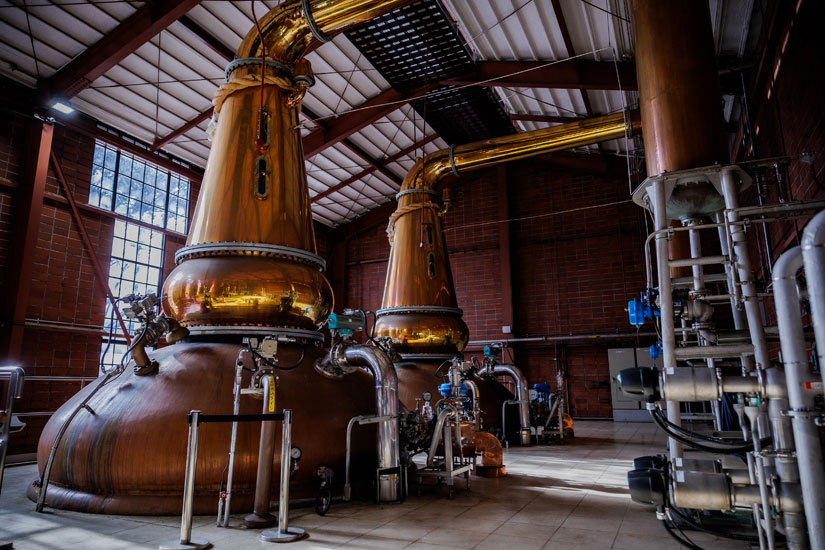
To produce distinct whiskies at Yoichi and Miyagikyo, the shape of the pot stills used in the distillation process was also changed. Altering the distillation method changes the weight and lightness of the flavor.
At Yoichi Distillery, they use a “straight-head type” pot still with a vertical profile to create a rich, full-bodied malt whisky.
Conversely, Miyagikyo Distillery employs a “bulge-type” still with a rounded profile, yielding a softer malt whisky. Furthermore, for producing grain whisky primarily from corn and other grains, they use a “Cafe-style continuous still,” creating rich base spirits that retain the raw material’s aroma, sweetness, and depth.
Blended whisky is created by combining these distinct malt whiskies with grain whisky. Through the precise blending and harmonization of multiple base spirits, a flavor profile with depth and unity is achieved. It is precisely because of the distinct personalities of the Yoichi and Miyagikyo distilleries that such a diverse range of whiskies is born.
The Serious “Base Whisky Shortage” Occurring Behind the Global Boom
Since the year 2000, Japanese whisky has consistently won awards at international competitions. Miyagikyo Distillery’s “Single Malt Miyagikyo” and “Single Malt Miyagikyo 12 Years Old” have also received numerous accolades at the International Spirits Challenge (ISC) and the World Whisky Awards (WWA).Whisky enthusiasts worldwide have taken notice of its unique style, which respects Scottish tradition while utilizing Japan’s distinctive, delicate production methods and ingredients. Demand is growing not only domestically but especially from overseas markets like China, the United States, and France.
Mr. Sasamura states, “Thankfully, the market is growing.”He explains that the “Taketsuru” whisky, a blend of spirits from the Yoichi and Miyagikyo distilleries, has seen its stock dwindle. This is partly due to the highball boom since the late 2000s and the impact of the NHK morning drama “Massan,” which aired from autumn 2014 and was modeled on Masataka Taketsuru. While there is stock distilled during the drama’s broadcast period, whisky requires long maturation, making it difficult to maintain ample supply for shipment.
Blending to Bring Out the Whisky’s Subtle Flavors
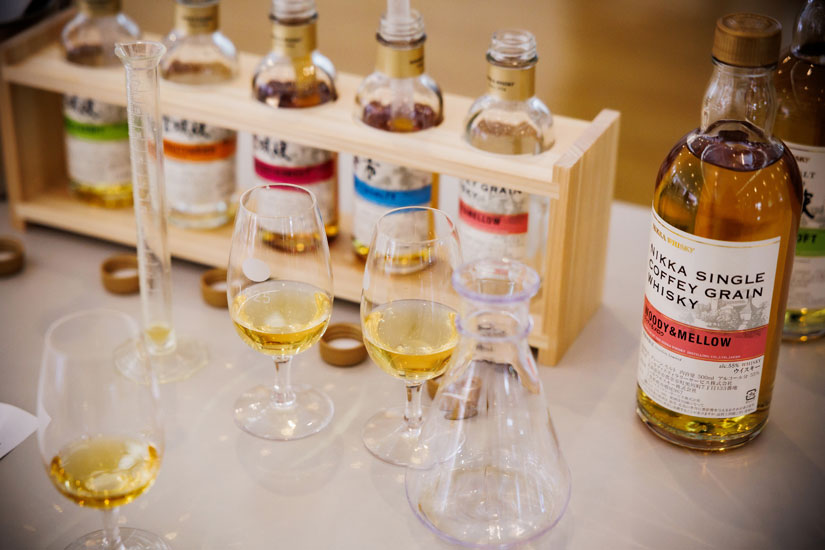
When asked about whisky flavor, Mr. Sasamura explained that the base spirit ages in casks for several years, building its quality before undergoing adjustments like blending and dilution. Since the taste of the base spirit varies depending on the origin of the casks, these adjustments are made during the final blending stage.
The Key to Deepening Flavor: “The Cask”
Whiskey’s flavor is shaped when the blender combines base spirits with different personalities to achieve the final finish. Since maturation changes annually, the blender samples the base spirits from aging barrels each year and repeatedly adjusts the recipe.
Globally popular for maturation are sherry casks. Since these are reused casks that previously held sherry, they impart sherry accents to the whisky, resulting in a sweet aroma and impactful flavor. When using these casks, the interior is often re-charred. The charring method itself also alters the flavor.
For a whisky that will speak of Japan’s terroir decades from now
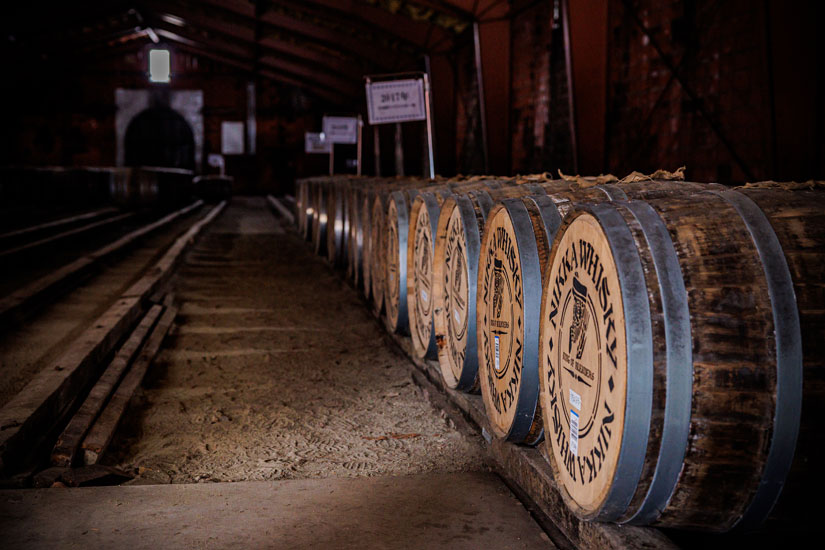
We asked about Nikka Whisky’s current challenges. Mr. Sasamura stated, “We continue to face a situation where we cannot fully meet customer demand due to a shortage of stored whisky stock.”
His regret at being unable to meet calls for increased production was palpable. However, guided by the principle that “the mash we prepare now will become our asset in several years,” they are advancing plans for increased production. Further investment is planned to expand production capacity.
Thus, the raw spirits currently resting quietly in barrels are not only the company’s assets but can also be considered important “cultural assets of Japan” when discussing the future of Japanese whisky.
Japanese whisky is experiencing a global boom. Market trends and how Nikka Whisky will be evaluated going forward are developments we cannot take our eyes off.