

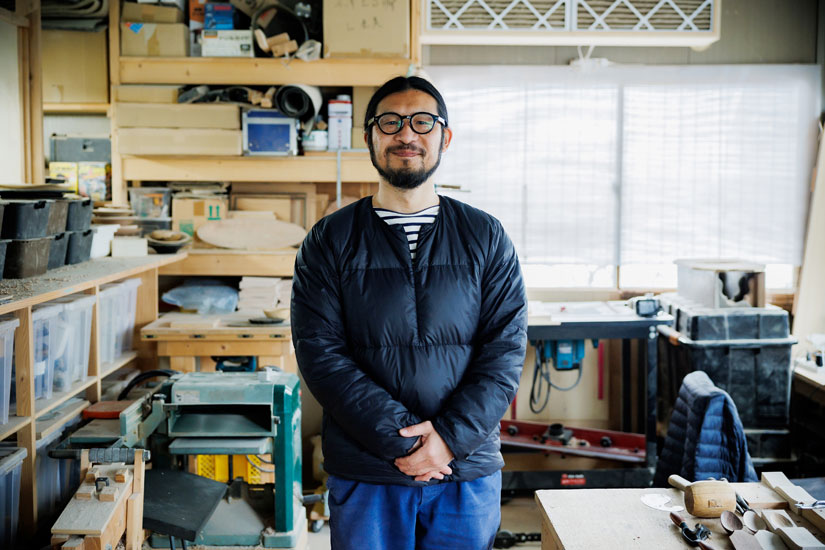
Quietly facing the wood and carefully working with his hands. Eita Kitayama, a woodworker in Ishinomaki City, Miyagi Prefecture, quietly continues his work. He spares no time or effort in each of his works and spends his days honestly tackling each one. Mr. Kitayama’s woodworking tools for daily life, dyed with plants and trees, are not only beautiful in form, but also warm and practical in some way. Behind this is a deep understanding of materials and a strong desire to create tools that will continue to be used in daily life.
A Career Traced Back to a Yearning for Craftsmanship
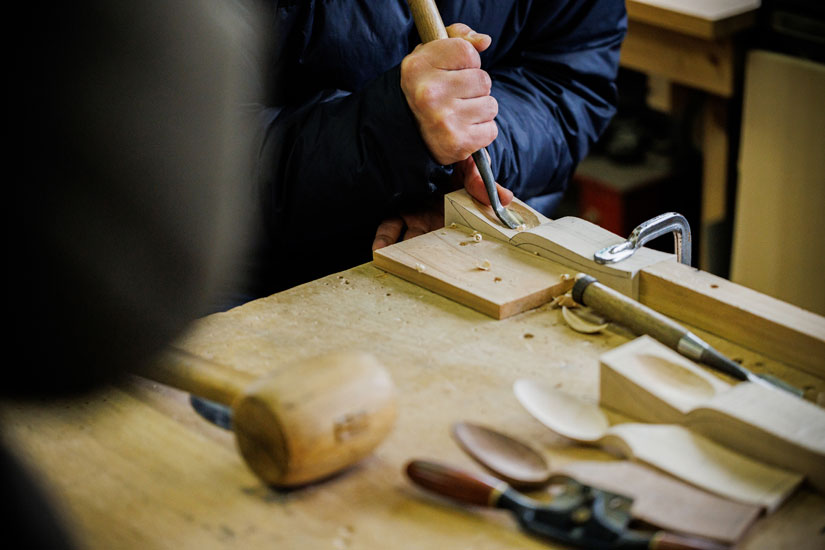
Mr. Kitayama grew up in a family that ran an ironworks. His grandfather, with whom he often played as a child, was a crafty man who could make anything, including bamboo-copter, stilts, and fishing rods. Kitayama says that he admired his grandfather’s skills and naturally fell in love with making things. The surrounding area was thick with plants and trees, an environment that stimulated his creativity.
Mr. Kitayama’s career began in the clothing industry, and he eventually became a furniture maker, remodeler, and store interior decorator, experiencing a variety of “making” workplaces. At the root of his seemingly disparate career paths lies a longing for craftsmanship that began at an early age.
Self-taught craftsmanship and the path to becoming an artist
While working as a furniture craftsman, Kitayama made frames and other small items from scrap wood and sold them at a marché. As he began to make connections with other artists, he began to receive orders to make stands for exhibitions. As he worked on various works, he taught himself to use machines such as lathes for cutting and processing.
At first, I couldn’t cut anything, no matter how hard I sharpened it, and the lathe kept rejecting my work,” he says. But as I continued to use them, I finally got the hang of it.
The skills he honed in this way eventually paved the way for him to become an artist. One day, an artist acquaintance asked him if he would like to participate as a guest in a private exhibition, and he exhibited a compote dish with legs that he was making at the time. The response he received was unexpectedly positive, and he decided to pursue his career as an artist.
Beautiful and Practical for Everyday Life
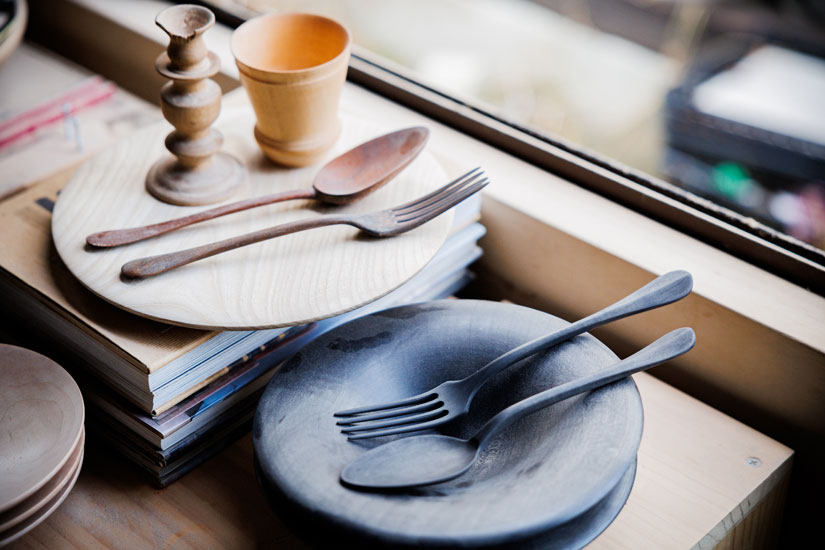
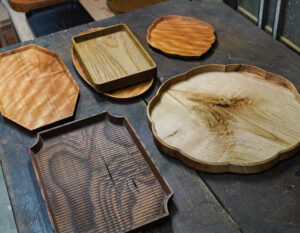
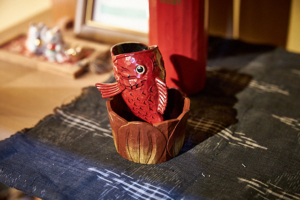
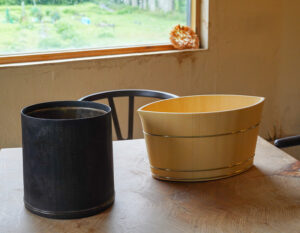
Kitayama’s works are characterized by graceful curves and rich colors. They are also highly practical as daily necessities. They are filled with his thoughts for daily life.
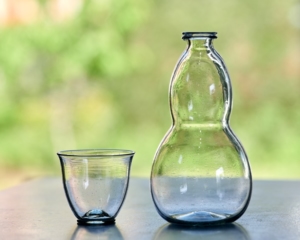
Wooden tableware has an image of being vulnerable to water, but Kitayama’s pieces are coated with glass and can be handled just like tableware made of water-resistant materials. Even if the water repellency wears off with continued use, it is no problem to recoat. The color also changes little by little, giving it an aged appearance. Some of them are used in restaurants, and the more they are used, the deeper the gradation becomes, which some customers say is cool.
Kitayama’s products can be used without inconvenience and also have interior design qualities. While blending into everyday life, they gently add color to the scenery of daily life.
New colors of wood dyed by plants and trees
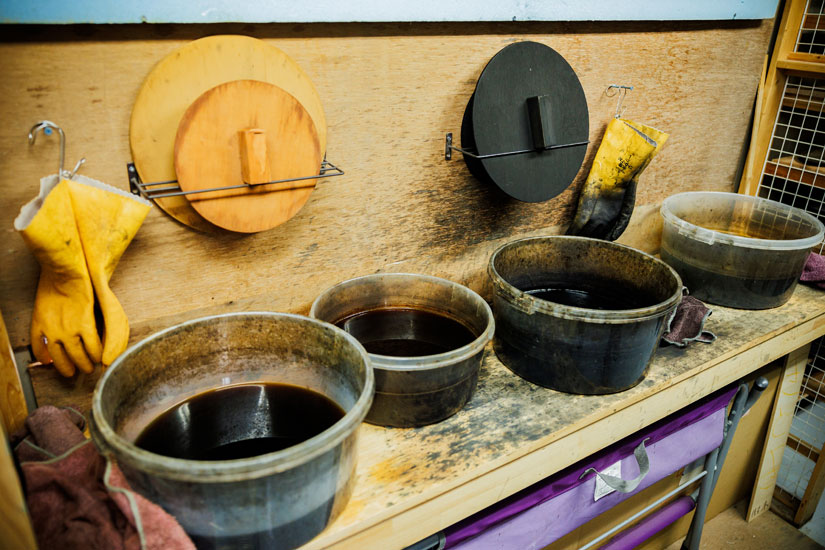
The rich hues of Kitayama’s works are created by dyeing with plants and trees. While it is common to dye cloth and thread with plants and trees, Kitayama dares to dye wood, which is vulnerable to water.
When I decided to become an artist, I wanted to do something that no one else was doing. I happened to see a camellia near my parents’ house, and it hit me. I knew camellias could be used for dyeing, so I tried it and the color came out beautifully, and I thought, ‘This is it! I thought, ‘This is it!
The dyeing process differs depending on the wood, type of plant, and water quality, and it took countless trials and errors until he was satisfied with the color. Since this was not something that someone else had practiced, there was no way to do it somewhere else. He continued to try everything by himself.
The main wood used in the production process is Japanese maple. The bark is white, and the dye comes out the best among the various woods I tried. For dyes, I often use the fruit and leaves of pomegranate and camellia petals. I feel at home with these familiar materials, so I continue to use them, even now, while having them sent to me from my parents’ house.
Because it is a natural material, no two are alike. The wood has a rich individuality in texture, color, and form.
The future pioneered by the connections between people
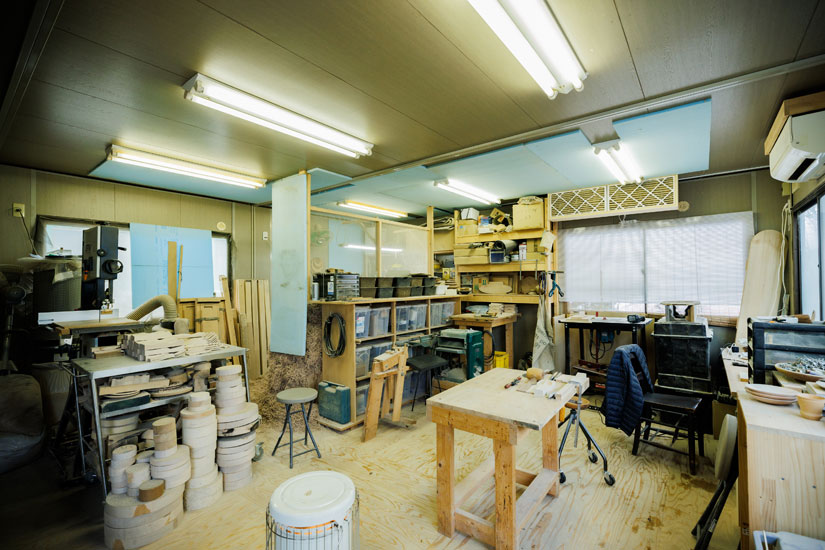
Kitayama was fascinated by craftsmanship under the influence of his grandfather, and chose to become an artist after an acquaintance approached him. At the root of his quest for monozukuri was “connections with people. And even now, new challenges are born from his connections with people.
Breathing life back into thinned wood from the Oshika Peninsula
On the Oshika Peninsula southeast of Ishinomaki City, abandoned virgin cedar forests have become a problem. However, a recent immigrant is thinning the forest and using the cedars to make vessels. I would like to create new value by dyeing with the cedar.
While confronting local issues, Mr. Kitayama never stops moving forward with his “just give it a try” spirit. The day is not far off when he will breathe new life into thinned wood.
Creating a gallery that connects makers and users with his own hands
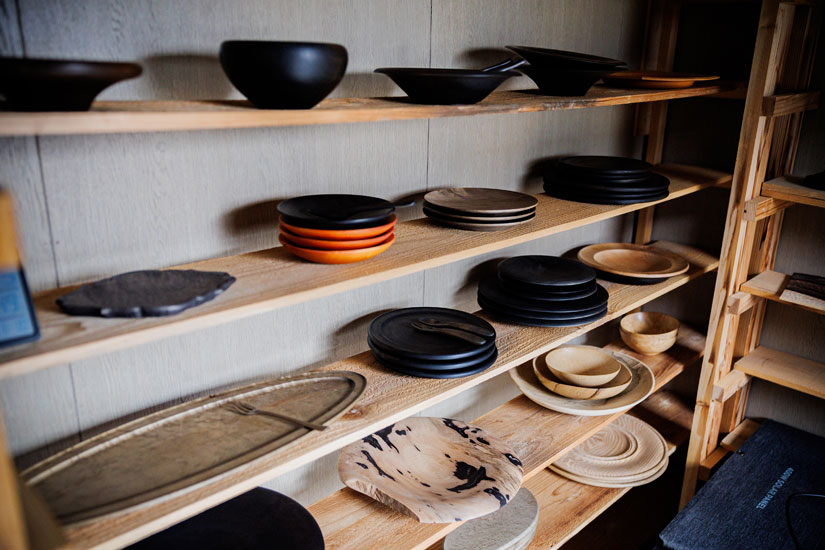
In addition to his work, Mr. Kitayama has another dream in mind.
There are not many people involved in crafts in Tohoku, and there are almost no galleries in Miyagi where you can exhibit your work. So I would like to set up my own gallery and create a place that connects makers and users.
Kitayama says he loves his work and sometimes finds himself working until 9:00 or 10:00 at night. I never thought I would become a writer. I’ve had many jobs, but this is the most fun I’ve ever had,” he says with a twinkle in his eye.
As Kitayama says, he is sincerely devoted to wood, plants, and lathes.