

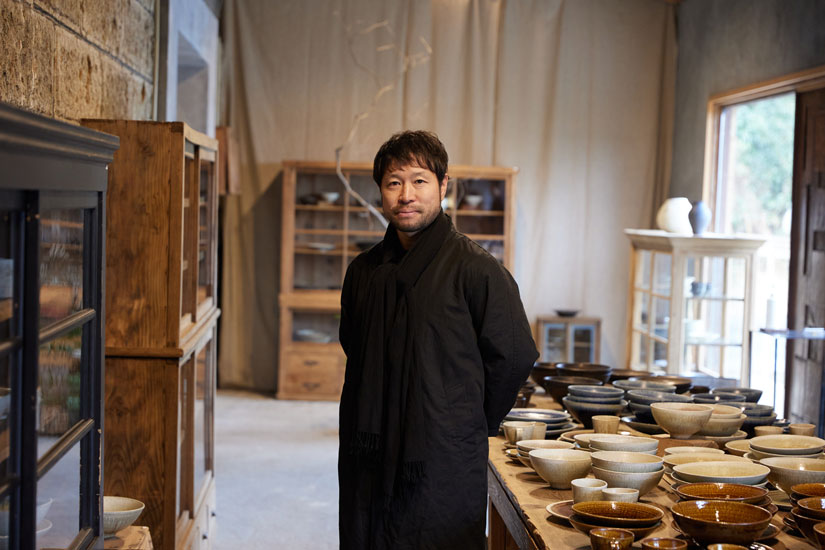
Owner Toru Nihei operates select stores of antique furniture and household goods based in Mashiko Town, Haga County, Tochigi Prefecture. The “Nihira Old Furniture Store” and “pejite” stores in Mashiko Town and neighboring Moka City offer old furniture carefully handcrafted in the olden days, as well as ceramics and sundry goods made by local artists.
It is not only Mashiko pottery. Mashiko is a town where you can feel people’s handiwork and sensibility.

Mashiko Town is located in southeastern Tochigi Prefecture. The Mashiko Pottery Market, held in spring and fall, is a big event that attracts up to 400,000 visitors.
Although the image of “Mashiko-machi = Mashiko-yaki” remains strong, the Mashiko area outside of the pottery market is a tranquil region with abundant nature and Japanese satoyama scenery. There are many fashionable and unique cafes and bakeries run by individuals, as well as galleries dotted around the area that sell not only pottery, but also sundry goods and apparel made by artists whose handiwork shines through. It is an area where one can experience not only ceramics, but also nature, gourmet food, and the handiwork of many people.
In such a town, “Nihira Old Furniture Store” and “pejite” have stores.
The stores, owned and operated by Toru NIHIRA, offer a selection of antique furniture, pottery, and sundries.
Three locations in Tochigi Prefecture and another store in Aoyama, Tokyo
In Mashiko Town, there are “Nihira Old Furniture Store Mashiko” and “pejite Mashiko. In the neighboring city of Moka, there is “NIHIRA Antique Furniture Store Moka,” and “pejite” also has a store in Aoyama, Tokyo.
NIHIRA Old Furniture Store” purchases rare old furniture and miscellaneous goods made from the Meiji to early Showa periods from all over Japan, and sells them at affordable prices after washing and repairing each item and restoring it to its original condition.
On the other hand, “pejite” sells not only old furniture, but also ceramics and glassware made by Mashiko-based artists, simple yet high-quality clothing and sundries, and other items that show the “handiwork” of the craftsmen who made them, with their skills and thoughts in mind.
Although the stores are not located in an easy-to-see location, with no large signboards and a slightly secluded street, many customers come all the way from outside of the prefecture to visit the stores.
The goods lined up in the stores are not those of famous brands. The items lined up in the stores are not famous brands, nor do they have stunningly elegant designs, but the customers never stop coming in. Why do these stores continue to capture people’s hearts? We asked them how they got there.
I want to live doing what I love.

Owner Toru Nihira moved to Tokyo immediately after graduating from high school. He worked at a record store and chose a career that allowed him to experience the music he loved. However, at the age of 23, he was forced to return to his hometown due to his family’s circumstances. The reality is that there are not many job opportunities in the so-called “countryside. Mr. Nihei, too, worked at a local factory without choosing a job he “liked. However, it was difficult for him to find a job he liked, and he spent many months working and quitting repeatedly.
What grew during those depressing days was his desire to “make a living doing what I love.
At the same time, Nihei bought old furniture and tools at low prices, washed them, and repaired them as a hobby. He had been interested in interior design since he was young and was attracted to the charm of old things. Realizing that he could not continue working in a job that did not suit him, Mr. Nihei decided to start his own business.
First, he obtained an antique dealer’s license and began buying, repairing, and refurbishing furniture and tools on his own, which he then sold at Internet auctions. He then began selling them at antique markets in Tokyo. In 2009, he opened his first store, Nihei Antique Tool Store, in Moka City next to Mashiko Town.
Although Niihira has gone ahead with what he loves, he recalls, “I was full of anxiety when I opened my first store. Still, he thought, “If I could manage to eat, that would make me happy,” and continued to sell online and visit antique markets in Tokyo in parallel with the store.
As I continued to do this, I gradually became more and more interesting, and magazines began to feature my work,” he said. At that time, magazines were still very influential. Whenever a magazine featured travel or culture, more and more people would visit the store with the magazine.
In 2010, he opened a second “Nihira Antique Tool Store” in Mashiko Town. There was demand not only from individual customers, but also from store owners and others looking for unconventional interior design.
To convey what is “good,” but which no one knows about yet
Mr. Niihira has been striving to convey the good qualities of antique furniture, but there are only a limited number of people who like “antique” furniture. At “NIHIRA Furniture Store,” he also places importance on selling one-of-a-kind items that were handcrafted by people in the past and can be used for a lifetime, at an affordable price. I want to convey the feeling that just because something is old, it doesn’t mean it is old, and that one-of-a-kind items are fun,” says Nimpei.
In 2014, he opened “pejite” as a separate concept from “NIHIRA Furniture Store. In addition to selling larger and more expensive antique furniture, the store will also sell ceramics made by local Mashiko artists, handmade sundries, and clothing. At first I thought I would sell first-class products from all over Japan, but then I realized that there are still people who are not well known but are doing good work, rather than people whose work has already sold well…” He continues, “I wanted to introduce good products but no one knows about them. I wanted to introduce things that are good, but that no one knows about,” he said.
And in 2018, he opened the second “pejite” store in Aoyama, Tokyo. Until then, many people from Tokyo had been coming to Tochigi, but having a store in Tokyo made it easier for people to experience the charm of Mashiko.
Loving the old and reviving its charm
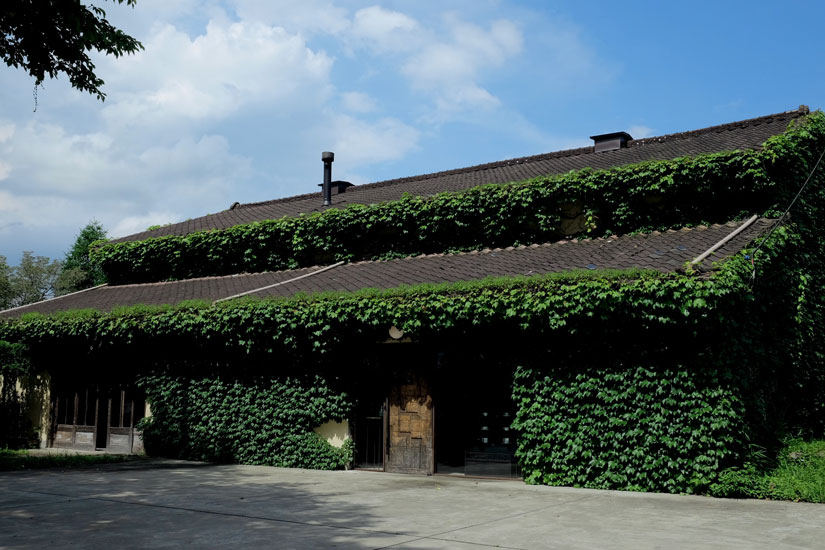
I started the business in a state of uncertainty, wondering if I would be able to make a living on my own. The old tools that he buys are managed in his workshop, which has a floor space of about 330 square meters, and each one is carefully cleaned and repaired by seven or eight craftsmen to give it a new life.
Dirt and other debris are removed cleanly, but not too cleanly.
The reproduction of the work, which cannot be reproduced in a new piece, brings to life the flavor that has deepened over the years, and shows not only the high level of skill but also the “handiwork” of modern craftsmen, which is a reflection of their respect for the craftsmen who worked on these items long ago.
This is not a passing fad. Mr. Nihei’s life has given birth to a beloved store.
I was the kind of kid who was happy to pick up things like oversize trash and fallen rocks,” says Nimpei with a laugh. When I was a child, we were poor, and I thought it would be better if I didn’t ask people to buy me toys. I was poor when I was a child, and I thought it would be better if I didn’t say, ‘Buy me a toy,’ so that may have been my roots.
The old furniture sold at Nimpei’s store is full of unspeakable charm, from its simple, warm feel and form to its detailed design that reveals the culture and fashions of the time.
Mr. Nihei’s aesthetic sense is the result of a fusion of his childhood circumstances and his innate sensibility. He also has a love and respect for old things.
It is not a passing fad that has made the store a favorite of so many people, but rather the very essence of Mr. Nimpei’s life. It is because of Mr. Nihei’s life itself.
To continue to enliven the local community

In 2023, he will open his own original tableware brand “Kyuko” store in the Shin-Marunouchi Building, right in front of Tokyo Station. The shop will focus on ceramics fired in Mashiko’s studio, making it a place where the appeal of Mashiko and its handicrafts can be further communicated.
The shop is a place where the charm of Mashiko and its handicrafts can be communicated. I hope there will be more people who want to do interesting things in this area,” said Nihei. In 2024, he plans to renovate an old private house and turn it into a store that will be available for rent.
Having grown his business to the point where he has multiple stores in and out of the prefecture, Nihei may appear to be a successful businessman. However, at the root of his success is a deep respect and love for the land where he grew up, the historical Japanese old things, and the handiwork of people who put in a lot of time and effort.
He is standing in a future that would not have been possible without his action and desire to leave stability behind and “make a living doing what I love.
The power of “like” is strong.
I am sure that he will continue to run as fast as he can toward what he loves.