

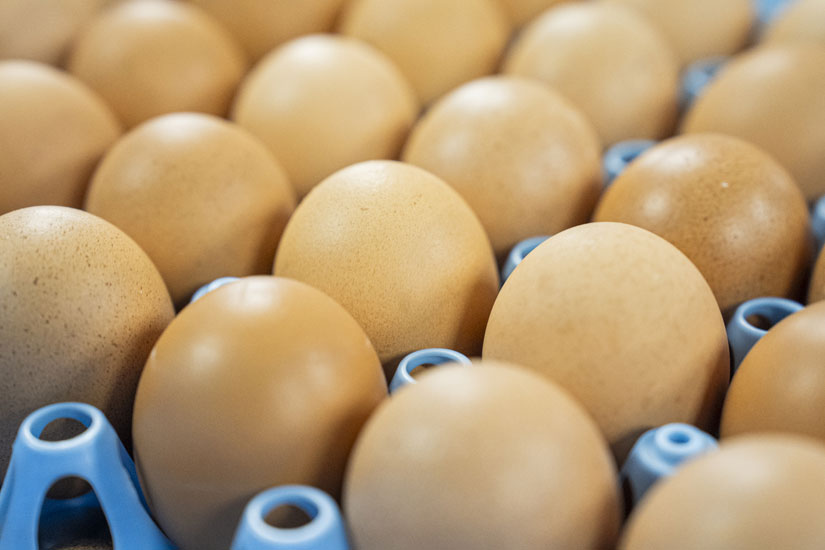
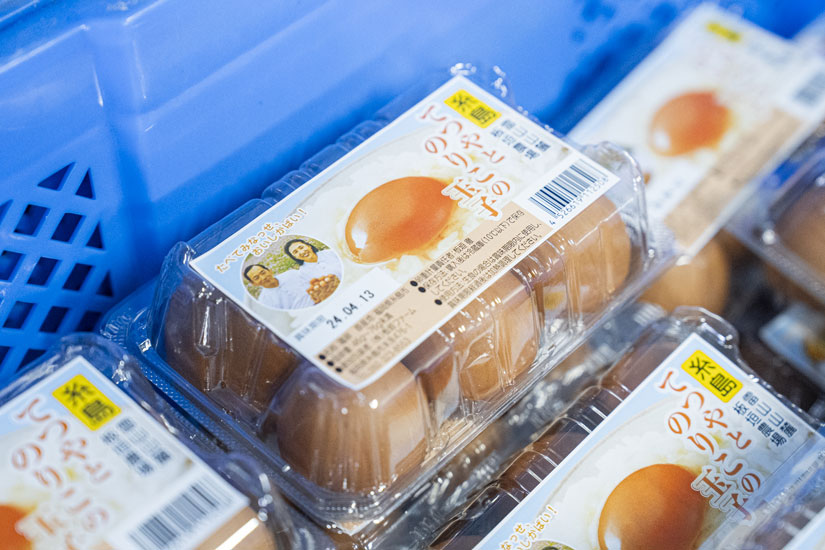
Itoshima City in Fukuoka Prefecture is a popular tourist destination boasting the appeal of both sea and mountains. At the foot of Mount Raizan, blessed with beautiful water and air, Itagaki Farm raises chickens and produces the brand-name eggs “Tetsuya and Noriko’s Eggs,” sold in department stores and high-end supermarkets.
Developing Brand Eggs with the Goal: To Create Japan’s Best Eggs!
About 30-40 minutes by car or train from central Fukuoka City. Itoshima City in Fukuoka Prefecture attracts many visitors daily seeking its rich nature and delicious local produce. Famous for fresh vegetables and fruits, seafood like sea bream (Japan’s top catch) and oysters (a thriving aquaculture), and locally raised beef, pork, and chicken, “Itoshima-produced” goods are beloved by many chefs at popular restaurants in Fukuoka City.Itagaki Farm is located at the foot of Mount Raizan, slightly inland from the city center within Itoshima. It’s a place blessed with beautiful water and air.
Over 60 years ago, the grandmother of poultry farmer Tetsu Itagaki began raising chickens here. Later, his father, Tetsuya, expanded the business and laid the foundation for what it is today. “My father aimed to increase the flock size, produce excellent eggs, and grow the company. But no matter how meticulously he focused on making delicious eggs, distributors would buy them at low prices.That’s when he decided to create Japan’s finest eggs—ones that, even if priced a bit higher, would make people say, ‘These eggs are great!’ He achieved this by feeding the chickens a unique blend of regular feed plus oak and beech tree sap (wood vinegar), binchotan charcoal, seaweed, and lactic acid bacteria. The result is
He ran around doing cold calls. Gradually, word of mouth spread their popularity.
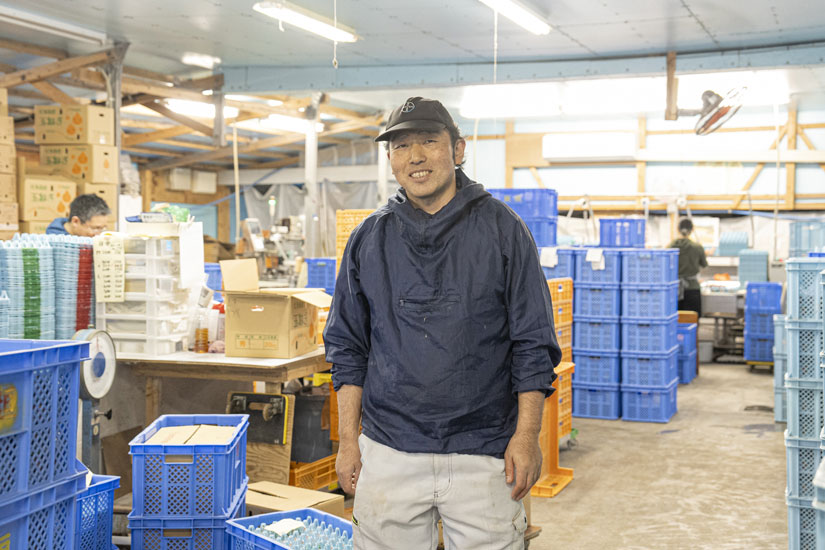
“I wanted to spread the word about the eggs my father perfected!” Itagaki-san visited every produce store, patisserie, and restaurant he could find, devoting himself entirely to cold calling. The exceptional freshness and rich flavor of these eggs, delivered directly from the farm, caught the attention of professionals, and gradually, his client base grew. “I spent about five years focused solely on sales.Thankfully, some chefs said, ‘I want to keep using the eggs I used at my training place even after you go independent,’ and others introduced me to new clients. Connections spread from person to person. Little by little, I reached a point where I didn’t have to push so hard with sales myself, and I became involved in the actual chicken farming.” The result of making a great product and working hard to spread the word: Itagaki Farm’s eggs became popular. Now, it’s not uncommon for people to come from far away specifically to buy eggs directly at the farm.
Reducing flock size to create a poultry farm kinder to both people and chickens
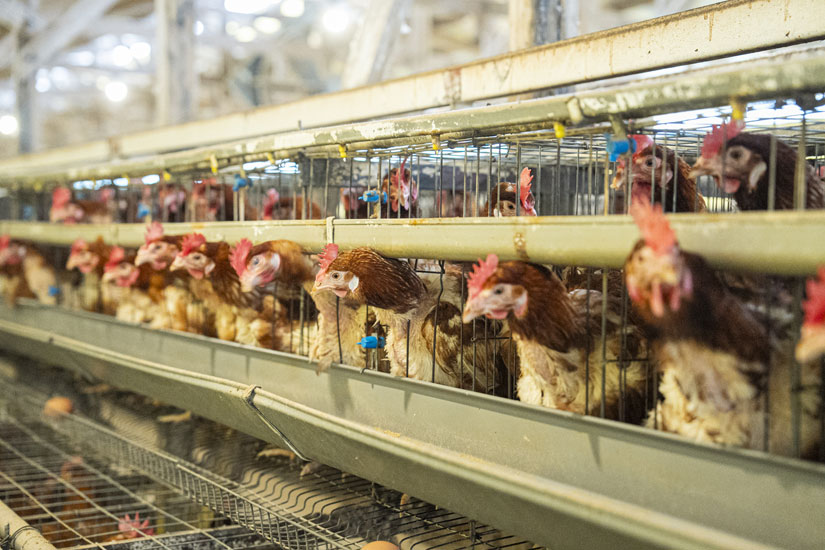
It’s been ten years since Mr. Itagaki became involved in poultry farming. One gradual change he’s implemented is reducing the flock size. The approximately 60,000 chickens kept during his father, Kinya’s, time have now been reduced to about 45,000. While external factors like rising feed costs play a role, Mr. Itagaki’s philosophy is central: he doesn’t endorse the mindset of “mass-producing because it sells.” “In a business model where you mass-produce and have distributors take the surplus, you end up with persistent losses.Above all, it means we can’t give the chickens the care they need, and the quality of the eggs suffers. That’s the worst outcome. I’m a ‘chicken farmer,’ so raising chickens in a good environment is my top priority.” Mr. Itagaki’s greatest concern is that increasing the number of clients would mean more work handling orders, deliveries, and management, leaving less time for the actual rearing.
For Mr. Itagaki, who puts the chickens first, creating the right coop environment is paramount. He diligently removes chicken manure, turning it into compost at a processing facility for delivery to farmers. He doesn’t leave feed sitting in bins; instead, he feeds each bird the appropriate amount three times a day, carefully monitoring their condition. He also ventilates the coop frequently according to the weather, because high humidity causes odors to linger inside – all expressions of his love for his chickens.”It’s said that eggs’ shell color, yolk color, and taste depend on what feed the chickens eat, but I believe the environment is equally important. If the environment is stress-free for the chickens, their laying rate increases, and they produce rich-tasting eggs with strong shells and smooth, beautiful surfaces for a long time. Conversely, a poor environment makes chickens more prone to illness, resulting in eggs with bland taste, thin shells, and rough surfaces.”The comb is often called the barometer of a chicken’s health. An unhealthy comb may be small and droop sideways, but the chickens at Itagaki Farm have large combs standing tall and perky. This is proof that Mr. Itagaki raises his chickens with care and affection, sparing no effort.
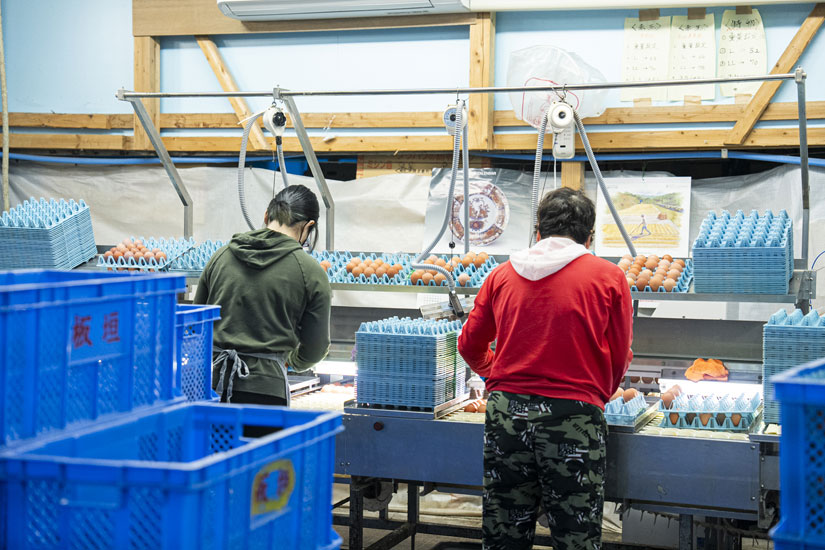
Furthermore, Itagaki Farm insists on harvesting by hand.While some farms use rollers for harvesting and machines for packing, Mr. Itagaki believes, “Eggs are living things, just like chickens. I don’t want to stress them by moving them unnecessarily.” Naturally, working with living creatures means the farm never rests; chicken care and shipping happen daily. They collect about 40,000 eggs per day, and currently, every single one is shipped without surplus, earning consistent trust from their customers.
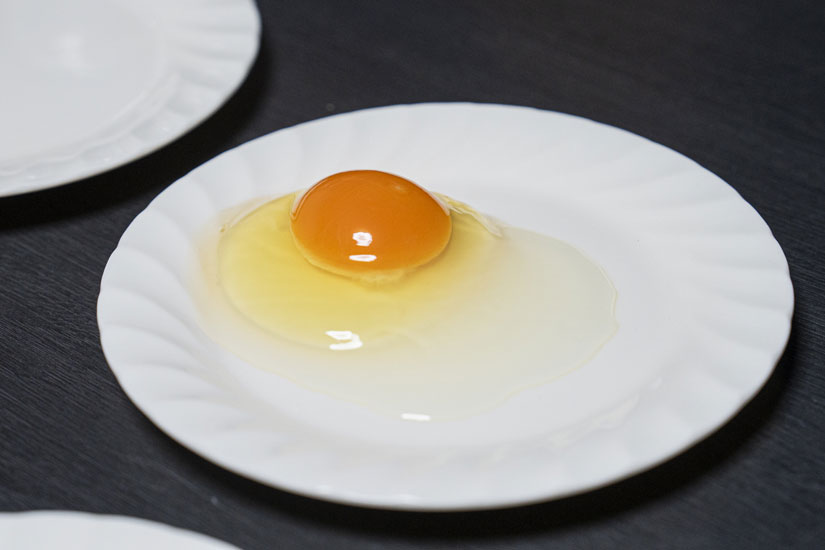
The eggs laid by chickens fed a feed perfected through trial and error are rich in minerals and vitamins. Cracking open the firm, hard shell reveals a plump, rounded white topped by a deep-colored, tall yolk – instantly conveying their freshness.”We purchase chickens around four months old, when they can lay eggs, and raise them. But we only start having them lay eggs around six months of age. Eggs from chickens at that stage are the highest quality. In other words, only the eggs laid during the peak period of a hen’s life become ‘Tetsuya and Noriko’s Eggs’.” When you actually taste them, you notice a subtle saltiness and a rich, deep flavor, clearly different from ordinary eggs.”I recommend eating them over rice. Personally, I like to drizzle them with Kyushu’s sweet sashimi soy sauce. Dashi soy sauce can make even bland eggs taste delicious.” To truly savor the egg’s inherent flavor, try it with a soy sauce free of added umami components.
Chickens reward the effort put into them
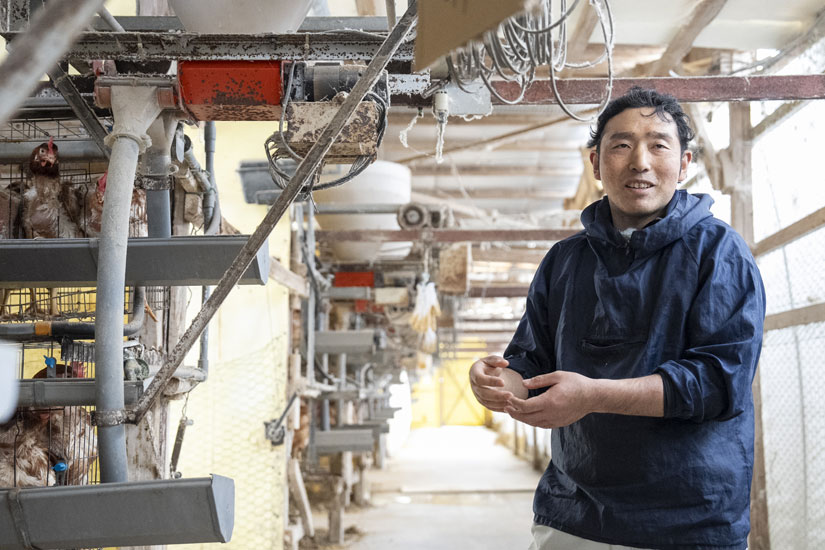
After 15 years in poultry farming, Mr. Itagaki has never taken a full day off. “Eggs can be produced steadily, unlike vegetables with their good and bad harvests, but they are living creatures, so daily care is essential.” That said, after reducing his flock size over 10 years, he’s recently managed to get about half a day off once a week. When he has free time, he goes out on his motorcycle or bicycle, finding solace in nature.”It’s mentally and physically demanding work, so I think around 60 is probably the limit for continuing in poultry farming. But until then, I want to fully engage with the chickens and keep producing good eggs.I want to take responsibility for what I do, and if you care for them properly, the chickens reward your efforts. If I ever feel my actions are causing them trouble, I’ll retire cleanly. If there’s a younger generation willing to step up then, I’d like them to take over. And I hope to have time for my hobbies – traveling by motorcycle and bicycle.”
Mr. Itagaki, who stays close to his chickens every day, producing delicious eggs, carries the excitement he felt when he first tasted the eggs his father developed – that “Delicious!” moment. Eating an egg while feeling the producer’s dedication poured into each one makes it taste even better and fills you with gratitude.