
“Pure sun-dried salt” is produced using only the heat of the sun and the craftsmanship of the artisans, without any use of fire or electricity. This “living salt” is attracting keen interest from top chefs and confectionery manufacturers both in Japan and abroad. What is the story behind the life of the man who has come to be hailed as Japan’s foremost salt artisan, and what drives his passion for salt-making?
The Courage to Give Up Your Career
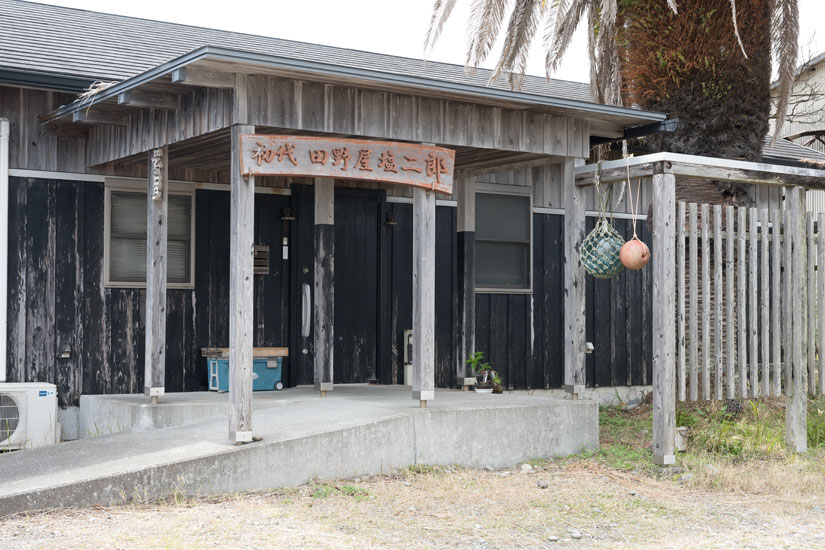
Located about 55 km east of Kochi City, facing Tosa Bay, lies Tano Town—Shikoku’s smallest town, measuring 2.2 km east to west and 4 km north to south, yet packed with charm. One of its defining features is its reputation as the “Town of Salt.” The town is home to the “Tano Town Pure Sun-Dried Salt Production Experience Facility,” where many tourists come to observe and participate in salt-making.
The cornerstone of this culture was “Tanoya Enjiro,” who founded his business in the town. Chefs and media from across the country flocked to the town in search of the salt he produced, and pure sun-dried salt became a brand that symbolizes the town.
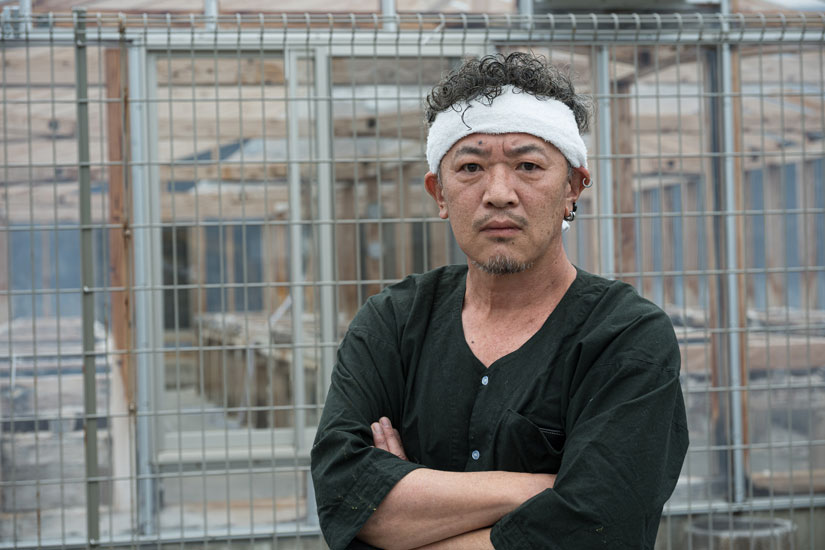
He is originally from Hiroo, Minato Ward, Tokyo. During his student days, he devoted himself to rugby, and his previous job was at a company in Tokyo that manufactured and sold surfboards and snowboards. At the age of 35, driven by the desire to “work by the sea and become the best in Japan,” he conducted research and narrowed his options down to becoming a tuna fisherman in Oma, Aomori Prefecture, or a “pure sun-dried salt” artisan in Kochi Prefecture. However, becoming a tuna fisherman in Oma required fishing rights and permits managed by the local fishing cooperative, making the barrier to entry too high; thus, by process of elimination, he chose the path of a salt artisan. He abandoned his previous career and applied to become an apprentice under Takeshi Yoshida, who at the time had pioneered the category of “pure sun-dried salt”—the only one in Japan that uses absolutely no fire or electricity—but he says he was completely ignored at first.
“I went to Kuroshio Town in western Kochi Prefecture without an appointment, bowed my head, and asked to become his apprentice, but he wouldn’t even give me the time of day. Out of sheer stubbornness, I couldn’t give up, so I kept visiting him several times, prostrating myself on the ground and begging, ‘Please just teach me the basics. I don’t need a salary—I’ll do anything, even cleaning.’ From there, I spent two years being thoroughly drilled in the fundamentals,” he recalls. After completing his apprenticeship under Mr. Yoshida, he searched for a place to set up his own business. He looked at coastal towns throughout Kochi Prefecture, but nowhere would take him in—until was the mayor of Tano Town, who responded, “Please come here. Make the best salt in Japan.” At the time, there were no expressways, and it was about a four-hour drive from Mr. Yoshida’s saltworks, so he also reasoned that this wouldn’t cause any trouble for his master. “When my master bestowed the business name ‘Tanoya’ upon me, it was meant to tell me to repay the debt of gratitude to the town that had accepted me,” he explains.
Ever since I’ve been able to talk to Shio,
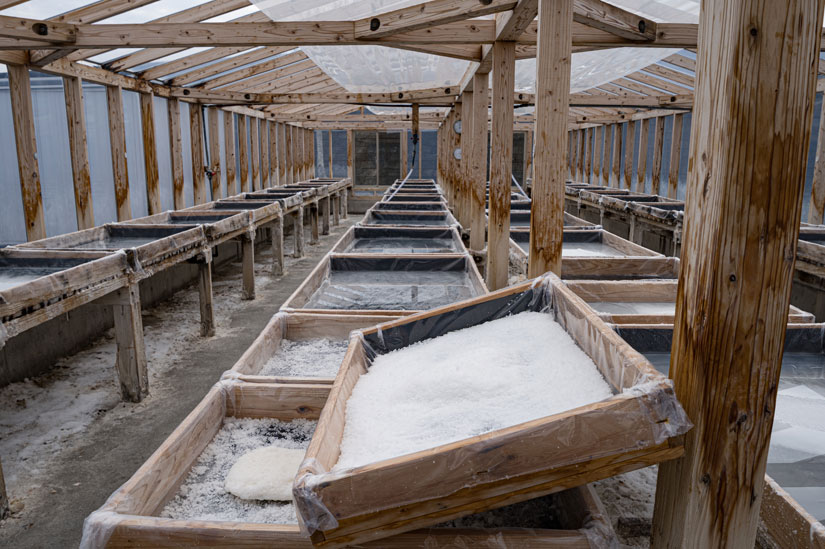
The sea lies right in front of Crystal House. Seawater drawn on days of the full moon or spring tides is poured into wooden crates. Unlike the methods used by many salt producers—such as boiling down the salt or using electricity to concentrate the seawater—”completely sun-dried salt” involves using no fire or electricity whatsoever; instead, we patiently wait inside the house for natural evaporation driven by the heat of the sun. By avoiding any heating process, we manually stir the mixture to lock in the approximately 80 types of minerals found in the seawater.
“I wanted to do something no one else was doing, so I brought a sleeping bag into the greenhouse and lived there alongside the salt. After about a month of that lifestyle, I began to notice what kind of scent the salt gave off and what sounds it made at night. As I continued this dialogue with the salt, I learned to recognize its changes, which gave me confidence—and suddenly, I was able to produce salt that truly satisfied me.”
To maximize both efficiency and precision in his work, the wooden boxes are custom-made to fit Enjiro’s exact body measurements. It is truly a space where the artisan and his tools become one.
Rather than “delicious salt,” it’s “the salt that humans need.”
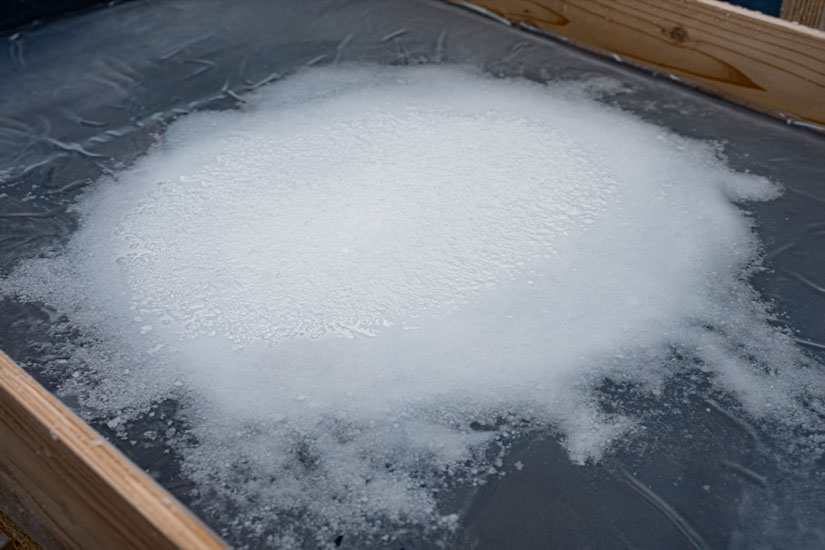
Kochi Prefecture boasts the highest forest coverage rate in the nation at 84 percent. The Nahari and Yasuda Rivers, which carry abundant nutrients, flow through the eastern and western parts of Tano Town, supplying organic matter from the mountains to the sea. Because the population is small and there are no public beaches, the seawater is exceptionally clean. Furthermore, the Kuroshio Current, which flows off the coast of Tosa Bay, brings high-quality minerals.
Mr. Enjiro checks the seawater in the approximately 130 wooden boxes once an hour and stirs it repeatedly as he monitors the conditions. Because he is fully focused on the salt-making process, he rarely leaves this spot unless there is an urgent matter.
“Crystallization occurs at the very end of the entire process. By observing it every day, I’ve learned to control the process—for example, thinking, ‘Right now, this much potassium is being released. In that case, I’ll keep it in the seawater and extract the sodium first.’ My goal isn’t simply to make ‘delicious salt’; I want to create salt that people instinctively need—salt that restores the body’s balance when consumed.”
He explains that cutting the surrounding weeds would alter the quality of the salt. “We aren’t the main actors here; we’re merely allowed to play a small role within nature’s cycle,” he says with humble awareness—and it is this mindset that underpins the salt’s flavor.
Control both the grain size and the flavor exactly as you like
Salt is extremely sensitive to temperature changes. “A single summer thunderstorm can ruin the flavor,” says Enjiro, who pays meticulous attention to the weather, humidity, and wind patterns. He allows the salt to crystallize slowly over a period of three to four months—or as long as four years in some cases.
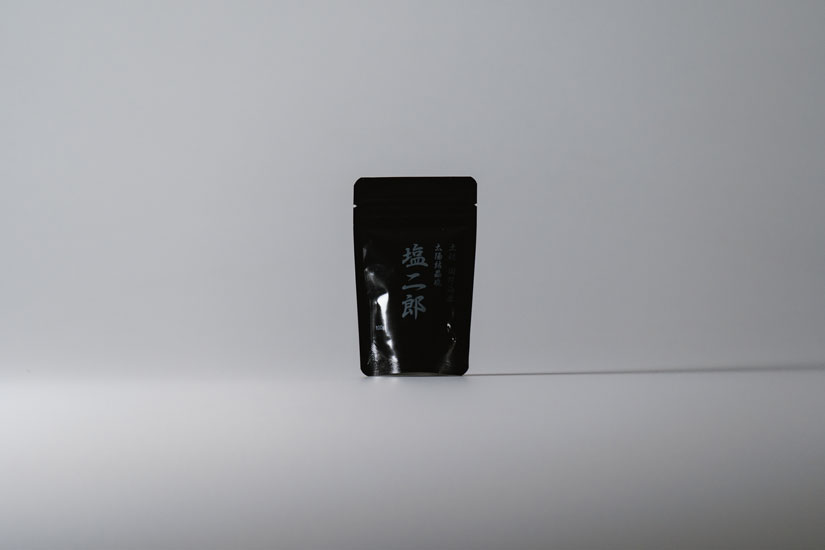
He masterfully controls everything from the balance of the five basic tastes (sweet, salty, spicy, sour, and bitter) to the size of the crystals. Word of his craft has spread by word of mouth, and he now receives a constant stream of custom orders from chefs around the world. It is rarely found on the open market, and there is a waiting list of several years for reservations. This is why it is called the “phantom salt,” a favorite even among Michelin-starred chefs. The highest price reaches 1 million yen per kilogram. Even “Shiojiro (Black),” the brand’s most standard product, costs around 4,000 yen per 100 grams—a far cry from the salt sold at mass-market retailers.
Salt embodies the very essence of a region’s charm.
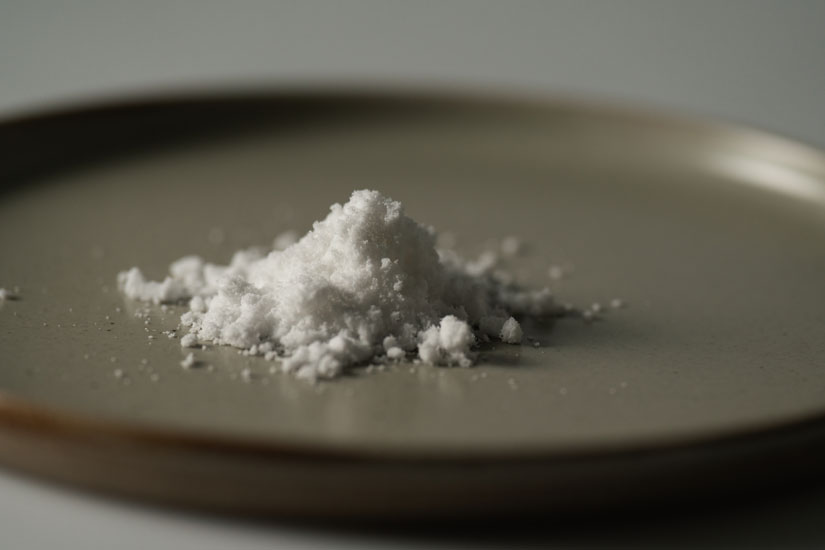
The first product created when the business first opened was “Taiyo Crystal Salt: Enjiro.” Two years later, he developed a version with different grain sizes and a more pronounced sodium flavor; today, using this as a base, he fulfills over 2,000 different custom orders. “Salt is, after all, just a supporting role,” the artisan explains matter-of-factly. “We even calculate the rate at which it dissolves so that, the moment it melts into the main dish and becomes one with it, customers can experience the most delicious flavor.”
Furthermore, he continues to take on challenges that go beyond conventional boundaries, such as “flavored salts,” where ingredients like pufferfish, strawberries, and truffles are added to seawater to infuse umami during the crystallization process. The idea of creating high-value, rare products—such as those utilizing Tosa Buntan blossoms—also came up in conversation.
Although Enjiro continues to pursue the “ultimate salt,” now at age 55, he voiced an unexpected vision for the future. “I feel like I’ve done everything I can with salt. When I turn 60, I want to spend another 10 years aiming to be number one in Japan in a completely different industry. I get bored easily,” he says with a mischievous smile.
The sea, sun, wind, and vegetation of Tano Town. Enjiro’s completely sun-dried salt, born through a dialogue with all of these elements, is the very vitality of the land crystallized in its purest form. Before we know it, we find ourselves drawn into his profound and pure worldview.