

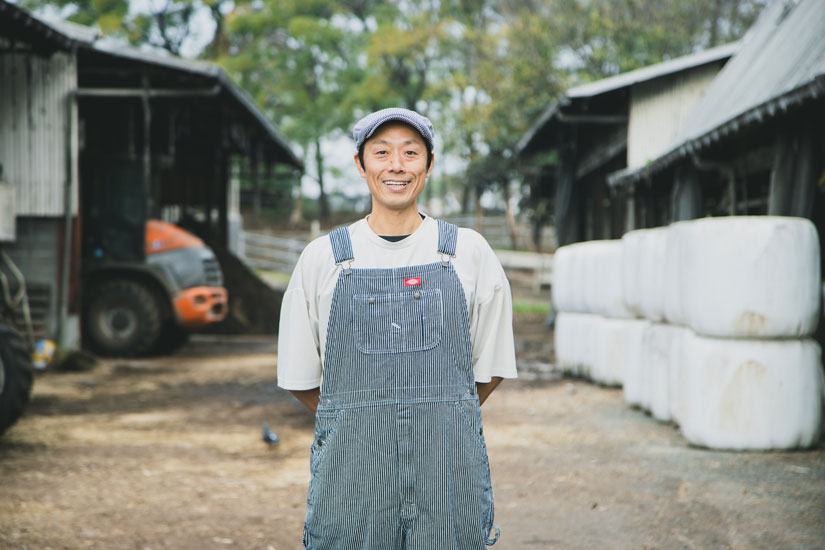
The first bite is rich and creamy; the second is smooth and refreshing. “Milkoro Aging Yogurt,” a two-layer bottled yogurt, is a popular product that has won numerous awards, including the Minister of Agriculture, Forestry and Fisheries Award. Yusuke Oyabu, the mastermind behind the product and a dairy farmer himself, is creating a place where cows’ lives shine through “product development that wins consumers’ hearts.”
Hearing my father express his vulnerabilities for the first time, I decided to take on the family business.
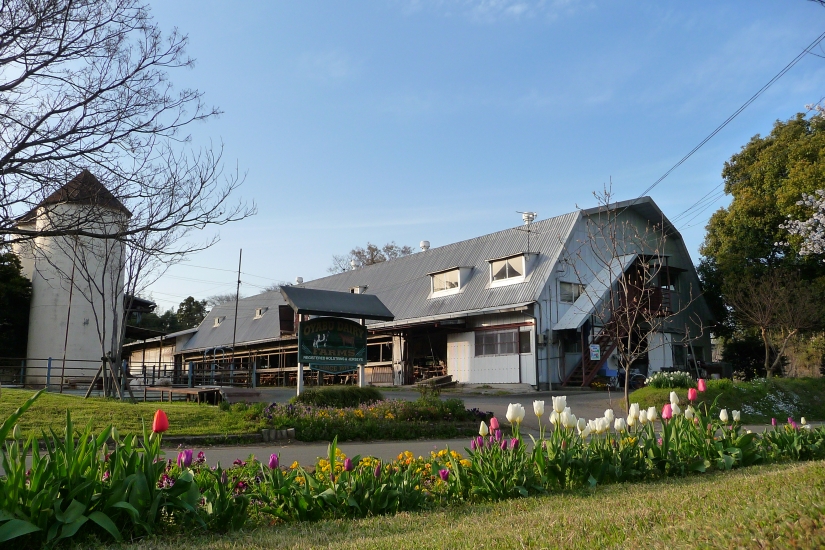
Koshishi, a bedroom community of Kumamoto City, continues to see population growth. “Ooyabu Dairy Farm” is located in one corner of the city.
Founded in 1975, the farm began by raising Holsteins—a breed that accounts for more than 90 percent of Japan’s dairy cattle—and milking and shipping the milk. Yusuke Ooyabu, the current president, took over the family business and began farming in 2001. However, it wasn’t simply a matter of being forced into the family business; rather, he was inspired to become a farmer after meeting a dairy farming couple who traveled abroad every year for training in the United States. He was deeply moved by their way of life—one in which they used “dairy farming” to enrich and shape their own lives—and this encounter became the catalyst for his decision to enter the industry. He had long harbored doubts about the traditional dairy industry structure, but upon witnessing firsthand a standardized industrial system that no individual could possibly change—even if he were to rise to a high position within the industry—he gradually lost motivation and spent his days in a state of frustration.
What dealt the final blow to Mr. Oyabu’s morale was the nationwide production adjustment of raw milk. Production adjustment is a government policy implemented—for example, when dairy product inventories become excessive—that requires producers to curb raw milk production. It takes two years from the time a calf is born until it can be milked. Once the number of dairy farms or the herd size is reduced, it becomes difficult to restore production levels in the short term. For this reason, rather than limiting herd size, inventory levels are adjusted by requiring producers to discard raw milk.
The emotional state of producers who work tirelessly to raise their cows, only to be ordered to discard large quantities of the raw milk they have finally managed to produce, is not something others can easily put into words. Moreover, production adjustments are repeated multiple times depending on inventory levels, and each time, producers bear not only a psychological burden but also the heavy financial burden of declining profits.
In fact, in 2006, a massive surplus of raw milk occurred, and in Hokkaido alone, the equivalent of 900,000 cartons—approximately 900 metric tons—of raw milk was discarded.
That said, cows must be milked every single day; otherwise, they develop mastitis and, in the worst cases, die. It is precisely because of their sense of responsibility and love for these animals that farmers continue to care for them and milk them daily, even when they know the milk will be discarded.
Furthermore, it takes about three years from a calf’s birth until it can be milked for the first time. If we were to limit herd sizes now—for example, by culling cows—simply because there is a surplus of milk, there is a risk that supply would fall short in a few years if a nationwide heatwave were to cause milk production to drop across the country.
Furthermore, dairy farming is a “capital-intensive industry” requiring initial investments ranging from tens of millions to hundreds of millions of yen—covering barn construction, milking robots, tractors, and the dozens of cows themselves. Much of this is financed through long-term loans, so simply saying, “It’s too hard—I’m quitting tomorrow,” is rarely an option.
Overwhelmed by despair, Ms. Oyabu heard Masakatsu voice his frustrations for the very first time. It was a moment when her father’s figure seemed small to her. And she realized that, without even noticing, she had been averting her eyes from the harsh realities of dairy farming.
Ms. Oyabu decided to confront the family business head-on. There was no future in continuing with the same methods. In a dairy farming system where milk is simply shipped to the agricultural cooperative, they have no control over either the price or the volume of their shipments. If they remained trapped in a system where their efforts went unrewarded, it would be difficult to support their family or pass the farm on to the next generation. Feeling a strong sense of crisis about the farm’s current situation, Mr. Oyabu decided to make a major shift—moving away from a dairy farming model focused solely on shipping milk to one where they would create value on their own.
Original Yogurt That Only Dairy Farmers Can Make
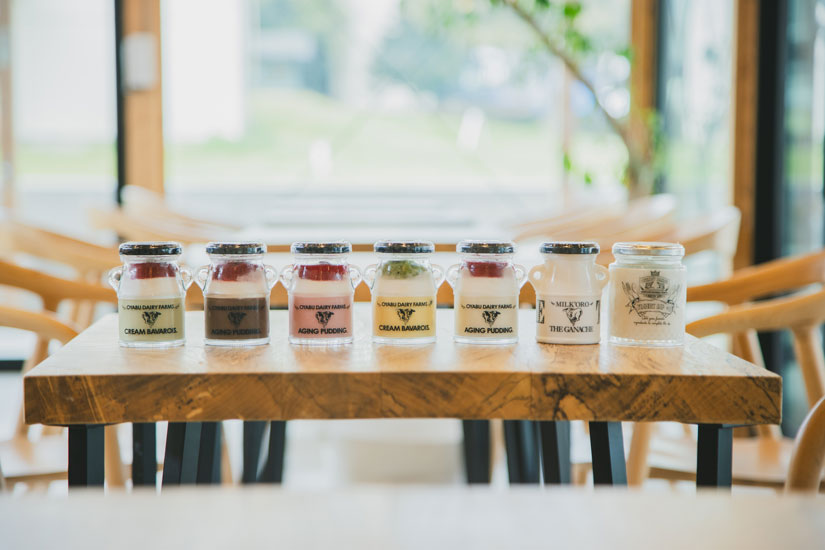
What, exactly, could they do? How could they ensure that the lives of the cows born at “Ooyabu Daily Farm” were not wasted, but instead allowed to shine? As he searched for an answer, Mr. Ooyabu arrived at the idea of creating highly original dairy products under the farm’s own brand. Around that time, the farm had also begun raising Jersey cows, which have higher nutritional value than Holsteins and whose raw milk is relatively rare. Mr. Ooyabu learned yogurt production techniques from experienced dairy farmers and bacterial testing methods from a technical support agency in Kumamoto Prefecture. In 2012, he built a small, 2.5-meter-square processing facility on the farm grounds and began producing yogurt using raw milk from his own herd. This is how “Milkoro Aging Yogurt” was born.
“Milkoro Aging Yogurt” has only two ingredients: raw milk from our own Jersey cows and beet sugar. Generally, raw milk undergoes a process called homogenization to uniform the milk fat and stabilize quality, but at “Ooyabu Dairy Farm,” we do not homogenize the milk; instead, we use it as is. As a result, the fat separates and rises to the surface as a layer of cream. Because Jersey cow’s milk is high in fat, the cream layer becomes thick, resulting in a two-layered yogurt—one layer of cream and one layer of yogurt. Believing that this uniqueness adds to the product’s value, they chose raw milk from Jersey cows rather than Holsteins. The two layers have distinct flavors: the cream layer is rich and velvety, like a rare cheesecake, while the yogurt layer offers a smooth, refreshing taste. It possesses such complex aromas and umami that it’s hard to believe it’s made with just two ingredients. Furthermore, the cream layer acts as a lid, allowing fermentation to continue daily within the yogurt layer, where lactic acid bacteria multiply and the flavor evolves over time. That is why we call it “Aging.”
But these aren’t the only features of “Milkoro Aging Yogurt.” Jersey cows are raised on a diet primarily consisting of flaxseed—which is rich in omega-3 fatty acids, an essential component for various bodily functions—and their raw milk naturally contains high levels of omega-3 fatty acids. Furthermore, through repeated selective breeding on the farm, the Jersey cows at “Ooyabu Dairy Farm” have been bred to produce beta-casein A2 milk. Beta-casein A2 milk is said to have a structure similar to that of human breast milk; it is easily absorbed and less likely to cause inflammation in the digestive tract, so it is said to be less likely to cause stomach rumbling when consumed.
“Ooyabu Dairy Farm’s” product development capabilities, which leverage the unique characteristics of its milk, have been recognized nationwide, earning the farm numerous awards, including the Minister of Agriculture, Forestry and Fisheries Award at the 2019 Sixth Industry Awards. The farm has significantly expanded its sales channels, with its yogurt now served at breakfast on JR Kyushu’s luxury train “Seven Stars in Kyushu” and at some of Japan’s leading luxury hotels.
I don’t want to turn a blind eye to the fact that there are lives whose births are not celebrated.
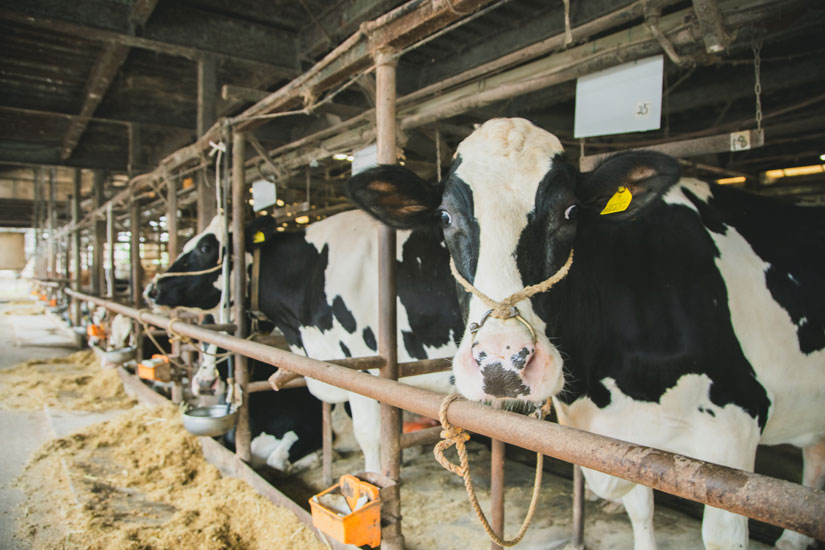
It goes without saying that cows have genders. Female dairy cows produce milk, while males do not. Therefore, males are raised for beef. However, male Jersey calves are often culled shortly after birth because they are smaller in stature and grow more slowly than Holsteins, resulting in lower profitability.
The probability of a male calf being born is about 50%. Mr. Oyabu had long been troubled by the fact that he couldn’t bring himself to feel truly happy from the bottom of his heart when he learned that a calf born on his farm was a male. He didn’t want to turn a blind eye to the reality that there are lives whose births are not celebrated simply because of human convenience. Since they had been born anyway, he wanted to create a place where the lives of male calves could shine. Driven by this desire, he began an initiative to raise male calves until they were one year old—just barely within the break-even point—and then process them into meat. By incorporating this meat into the menu at “MILK’ORO LAB.”—a new café opened on the ranch grounds—he has created a system that carries the baton of life forward.
It was discovered that by raising male calves on a diet primarily consisting of flaxseed—which is rich in omega-3 fatty acids, just like the female calves—the meat contains “ALA (alpha-linolenic acid),” a type of unsaturated fatty acid that aids in anti-aging. Furthermore, the meat is tender and has excellent flavor. If it is not only functional but also delicious, that becomes a reason for consumers to choose it. These efforts have attracted attention even outside the industry, and in June 2025, the farm won second place at the “Japan’s Treasure Legend Grand Prix,” an event held at the Osaka Expo venue to honor outstanding regional foods.
“Developing Products That Stand Out” Will Be the Key to the Future of Dairy Farming
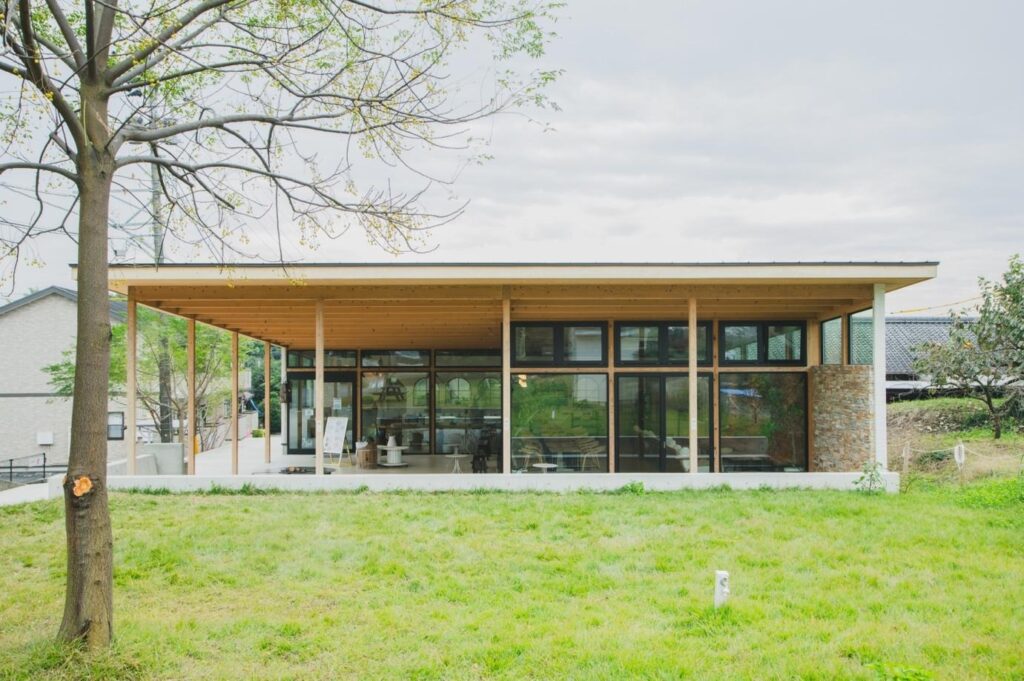
At “Ooyabu Daily Farm,” we actively conduct food education activities centered around “MILK’ORO LAB.” We offer hands-on experiences—such as milking and dairy processing—that allow participants to feel the warmth of life and understand the cycle of food, welcoming approximately 2,000 visitors annually, primarily local children.
Through dairy farming experiences, we hope visitors will feel the warmth of life, and through manufacturing experiences, we hope they will realize that we all depend on others for our survival. However, even if such complex concepts don’t immediately sink in, Mr. Ooyabu believes that simply stepping onto the farm and seeing the cows with their own eyes will allow visitors to feel something meaningful. He also believes that, so that children who develop an interest in cows and the farm will see dairy farming as a promising career, it is crucial for “Ooyabu Dairy Farm” to first establish a sustainable business model. To that end, “developing products that consumers choose” will be the key to the future of dairy farming. As he spoke passionately about his future vision, his eyes were filled with the determination and strength needed to carry the reality of life on the farm into the future.