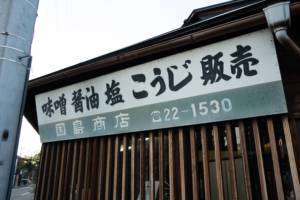


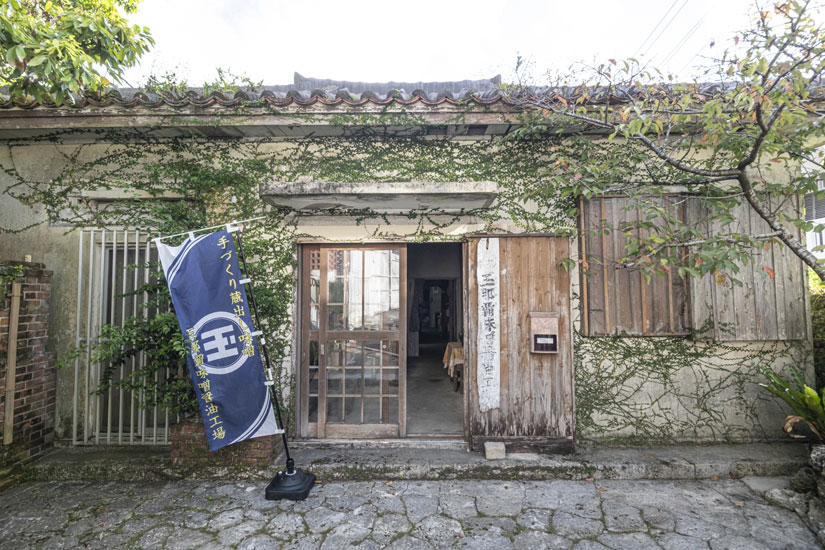
Located on the main island of Okinawa, in Naha City, Shuri is a district known for its particularly historic, old-fashioned streetscape. Right in the heart of Shuri Castle, Tamanaha Miso Shoyu has been crafting miso for 170 years. Using the same methods as when the company was founded, they continue to produce their miso through natural fermentation in well-seasoned wooden barrels.
A miso brewery in Okinawa that makes its own miso from scratch using koji—a rarity even in Okinawa
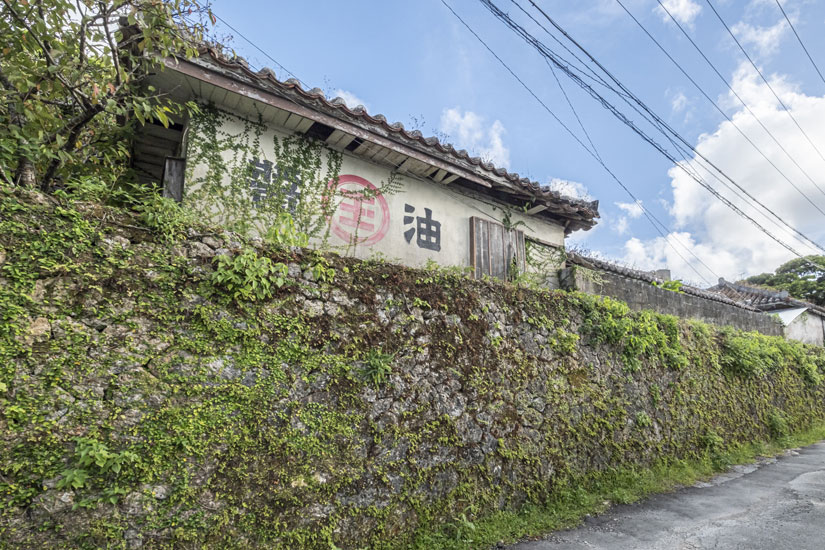
Until about 120 years ago, Okinawa was a single kingdom known as Ryukyu. Shuri, home to Shuri Castle, served as the capital of the Ryukyu Kingdom. This area was once lined with samurai residences. In fact, it was here—on the site of a former samurai residence—that Tamanaha Miso & Soy Sauce began producing miso and soy sauce between 1855 and 1860, during the final years of the Ryukyu Kingdom.
The koji mold that survived the ravages of war
As you walk up the hill, you’ll come across an old stone wall that exudes a sense of history. This imposing, stately wall dates back to before the war. Although the building itself was destroyed during the Battle of Okinawa, the pillars that survived the fire were preserved in an air-raid shelter, and it is said that the koji mold that grew on them helped preserve the distinctive flavor of Tamana.
Even within Okinawa Prefecture, miso breweries that make miso from scratch using koji are rare. Although they used to brew soy sauce as well, production was suspended about 10 years ago due to aging equipment.
Even after the transition to U.S. military rule, there were reportedly quite a few breweries producing miso and soy sauce in Shuri alone. However, following the reversion to Japanese sovereignty in 1972, products from outside the prefecture flooded the market, causing most of these breweries to go out of business.
The “entirely handmade” miso-making tradition upheld by the fifth-generation master
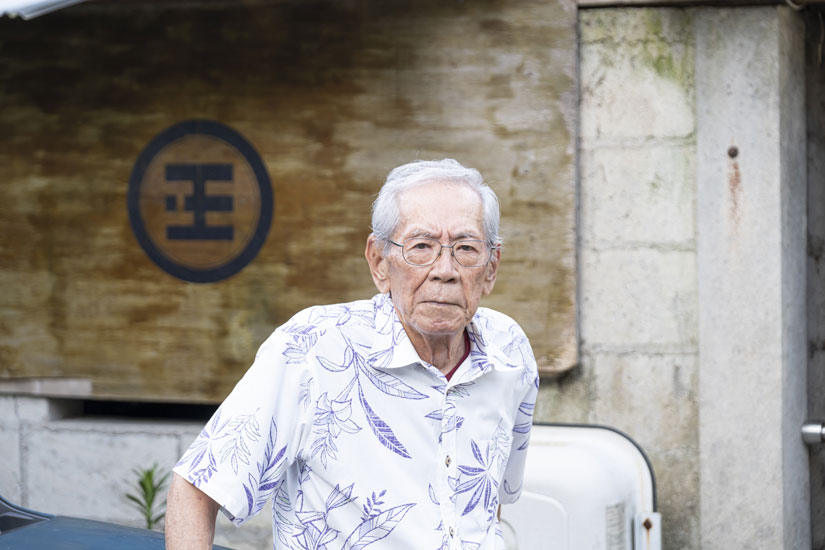
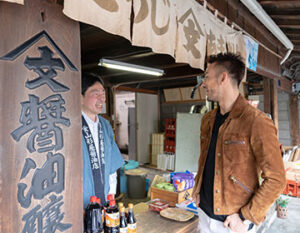
The current head of Tamana Miso Shoyu is Yumi Oshiro, the sixth-generation head of the family. She is the eldest daughter of Arinori Tamana, the fifth-generation head, who passed away in April 2025.
Brewed in well-seasoned wooden barrels, with careful maintenance
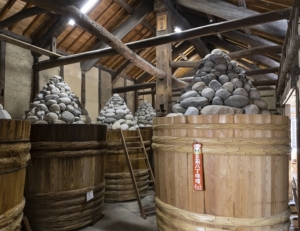
We use traditional wooden barrels to make our miso. We mix steamed whole soybeans with rice koji and Okinawan sea salt, then allow the mixture to ferment and mature.
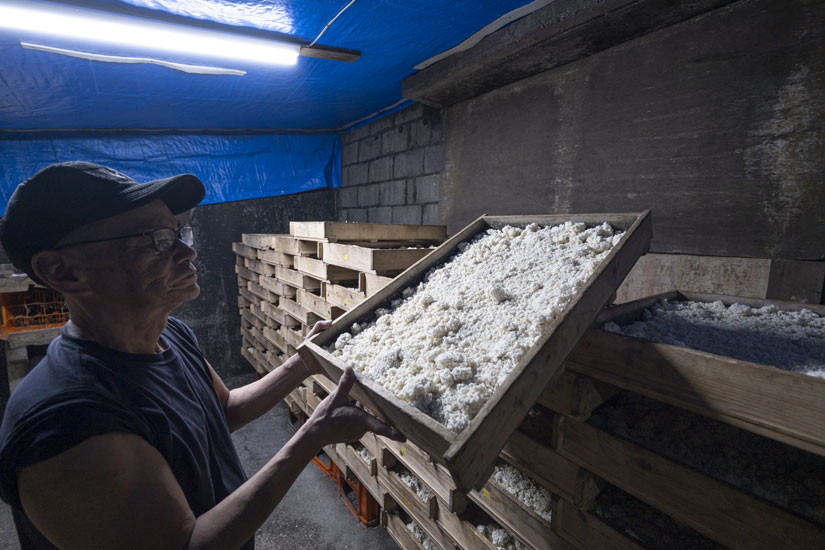
As he opened the door to the koji room, a wave of muggy air poured out. Inside the room, where the temperature hovered around 36°C due to the fermentation of the koji, the plant manager was intently studying the rows of koji boxes lined up before him.
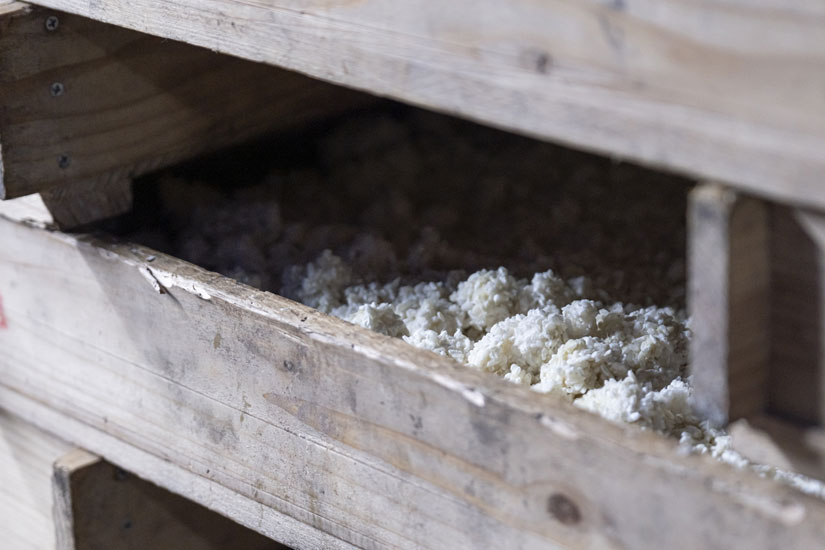
The photo shows the starter culture prepared two days ago. The rice koji, made from domestic rice used in the company’s miso, turns yellowish about four days after the starter culture is added. As fermentation progresses further, the temperature inside the fermentation room reportedly reaches around 40°C.
In Okinawa’s hot and humid climate, microorganisms are highly active, making fermentation progress more easily than on the mainland. After fermenting and aging for about 3 to 4 months in the summer and 6 to 7 months in the winter, the miso is ready.
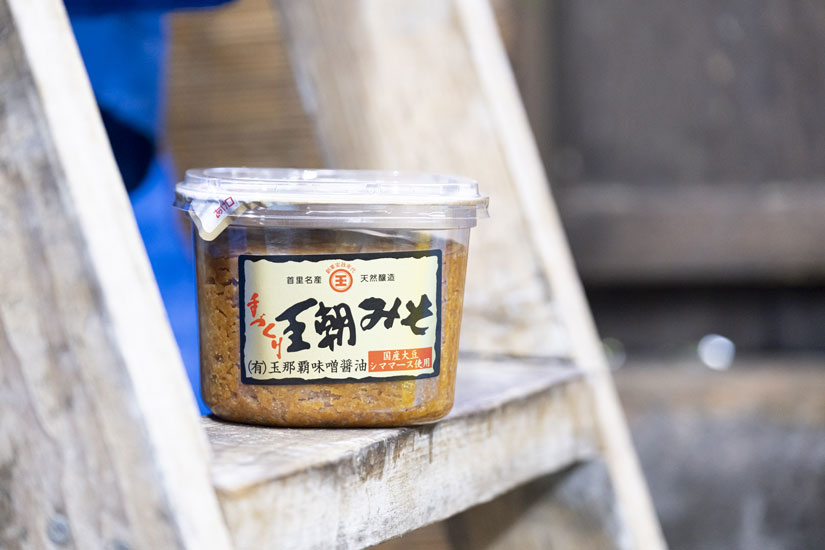
Our signature product, “Dyōcho Miso,” is made with soybeans from Kyushu. It has a mellow flavor with a subtle sweetness from the rice and soybeans. We also produce “Shuri Miso,” made with soybeans from overseas; “Uchin Miso,” which contains turmeric; and “Special Selection Miso,” a blend of rice and barley miso.
In addition to selling directly from their store, they have sold their products at local supermarkets and online. At one point, production couldn’t keep up with demand, and they had to stop accepting new online orders, but they have now resumed sales at a pace of once or twice a month.
“Our miso costs 1,000 yen, but there are people who are willing to pay 1,200 yen in shipping just to buy it from the mainland. We’re truly grateful,” says Yumi.
The ideal environment for bacteria
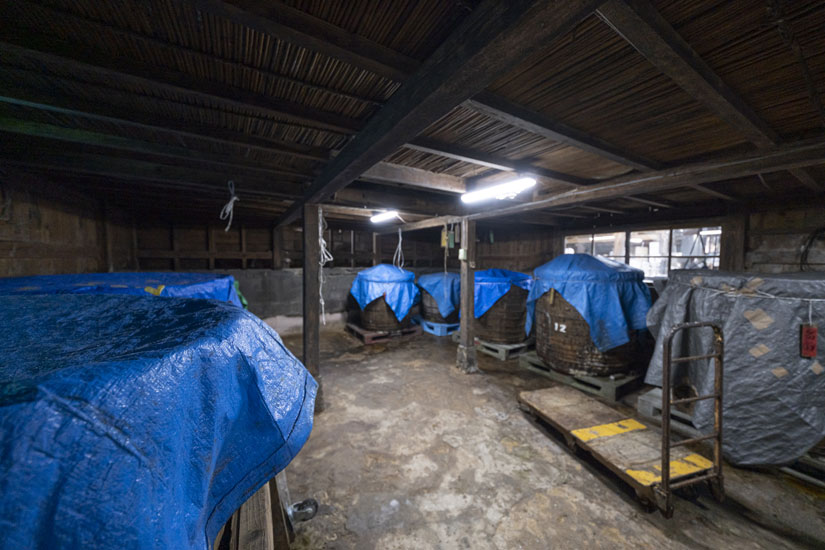
Okinawa, where temperature fluctuations are relatively mild throughout the year, provides an ideal environment for bacterial activity. Inside large barrels, lactic acid bacteria and yeast are actively at work as the miso matures. The rows of well-worn barrels may be misshapen or have leaks, but they are carefully repaired time and again to ensure they can be used for as long as possible. By minimizing the need to replace them, the shop has preserved the same flavor it has offered since its founding.
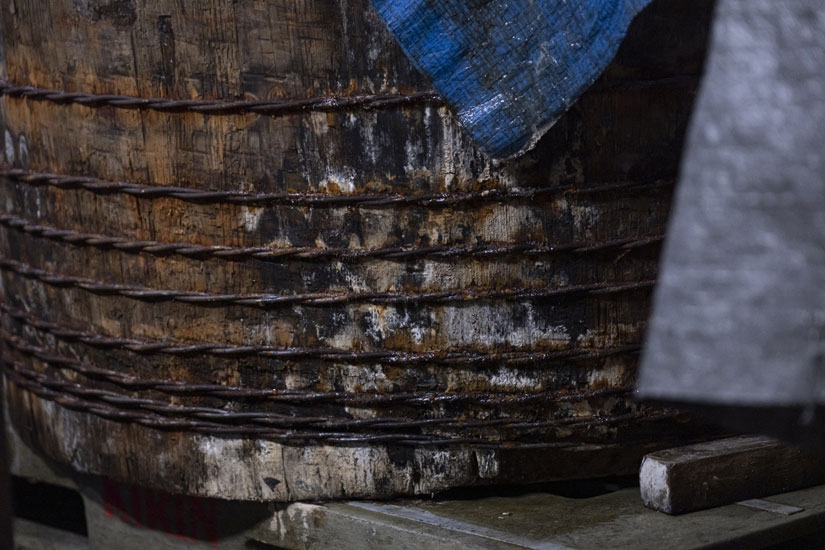
Although they could have opted for easier-to-maintain enamel or reinforced plastic tanks, they chose to keep the wooden one because wood provides excellent insulation and heat retention, allowing it to maintain a consistent temperature regardless of the weather. As a result, they have been carefully maintaining and using it for decades.
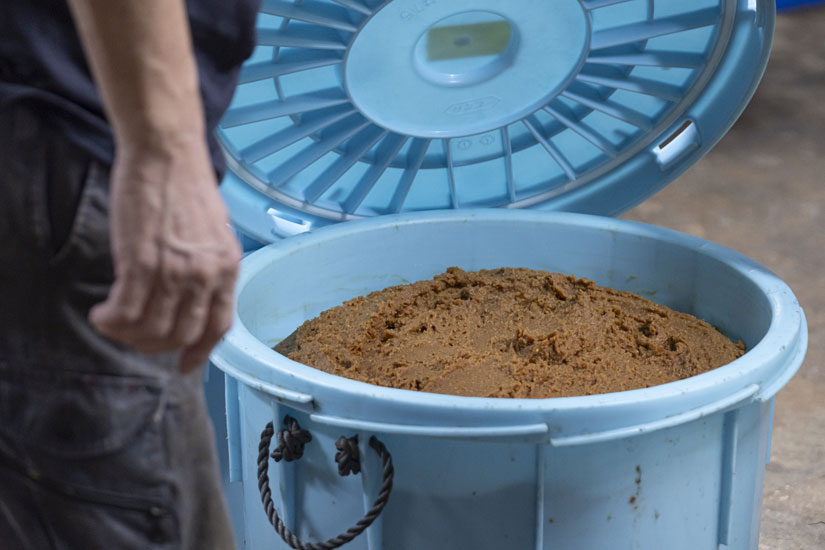
Even though production can’t keep up with demand, we never compromise on efficiency; we continue to follow the traditional methods that have been carefully preserved over the years.
Although Tamanaha Miso and Soy Sauce remains in short supply, we ensure a steady supply of our miso for the school lunches at a nearby daycare center. We support the daycare’s food education program and want the children to grow up eating local foods made right here in our community.
New wooden barrels for the first time in 80 years
In fact, in February 2026, we just acquired a brand-new wooden barrel for the first time in 80 years. Crafted by one of the few remaining traditional wooden barrel makers on the mainland—a profession that is becoming increasingly rare in Japan—it was assembled using no metal whatsoever, relying solely on cedar planks, bamboo nails, and a bamboo hoop. We are now beginning to brew miso in this brand-new wooden barrel, which is said to last for 100 years.
Miso is a fermented seasoning that represents Japan’s proud culture of fermentation. Nationwide, the number of miso breweries that make miso from scratch using koji has dwindled, and those that ferment it in wooden barrels can be counted on one hand.
The unique flavor of this miso is the result of a combination of traditional, unchanging handcrafted methods and the environment unique to this location. To preserve the flavor that has been carefully passed down through generations, the challenges of this small miso brewery continue.