

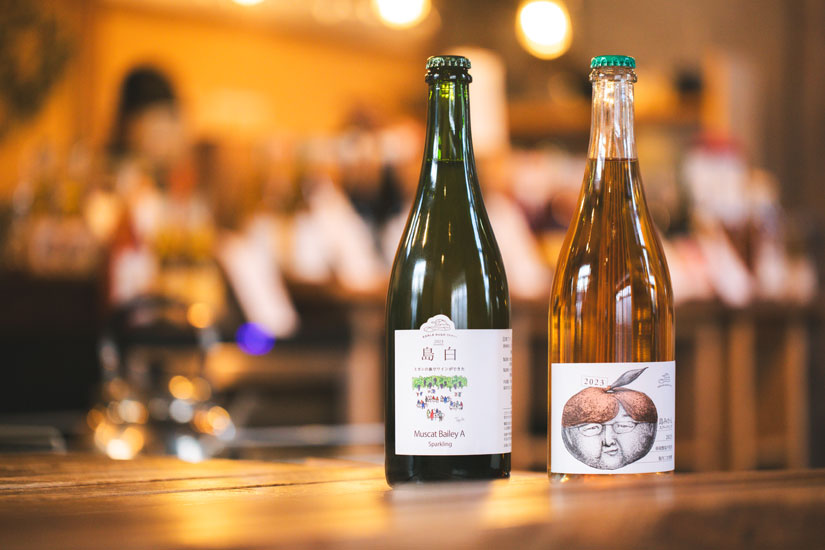
Yusuke Kawata of “Omishima Minna no Winery” moved to Omishima in Ehime Prefecture on his own to grow grapes and make wine. Having traveled across the country from north to south to study winemaking at various wineries, Kawata’s goal on Omishima is to create wines whose flavors capture the island’s unique charm.
I moved to Omishima after sensing its potential as a wine-producing region
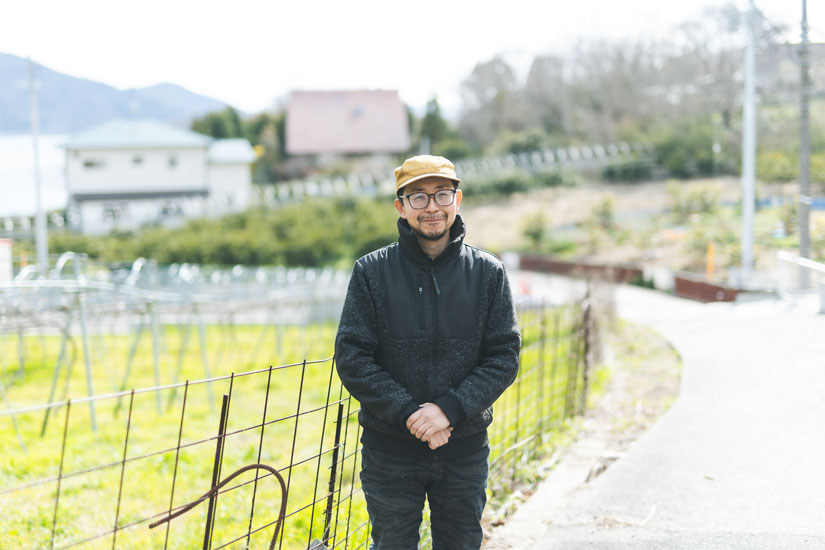
Mr. Kawata, who was interested in winemaking, attended a university in Yamanashi Prefecture—a major hub for Japanese wine—and spent his college years visiting renowned wineries across the country to gain practical experience. Shortly before graduating, he had the opportunity to participate in the “Project to Revitalize Omishima,” launched by architect Toyo Ito, which sparked his interest in winemaking on Omishima.
Ito, who has won numerous architectural awards both in Japan and abroad and enjoys worldwide acclaim, is also a figure who has actively engaged in regional revitalization beyond the realm of architecture. His vision—to utilize the island’s landscape and resources to foster new industries and attract people—resonated deeply with Kawata.
High-quality grapes are an essential prerequisite for winemaking. Kawata realized that Oshima’s climate closely resembles that of Katsunuma in Yamanashi Prefecture—Japan’s premier wine-producing region—and, convinced that this land would surely yield excellent grapes, he decided to embark on winemaking with Mr. Ito and his team.
“The scenery of the Seto Inland Sea is truly magnificent. It’s very similar to Shizuoka, where I was born and raised—the sea is close by, it feels wonderful, and the people who live here are kind. I wanted to try growing grapes and making wine here.” In 2015, Kawata moved to Omishima on his own. He leased abandoned farmland—which had become a challenge for the island—planted grapevines, and began cultivating grapes.
The constant trial and error is challenging, but it’s also fun
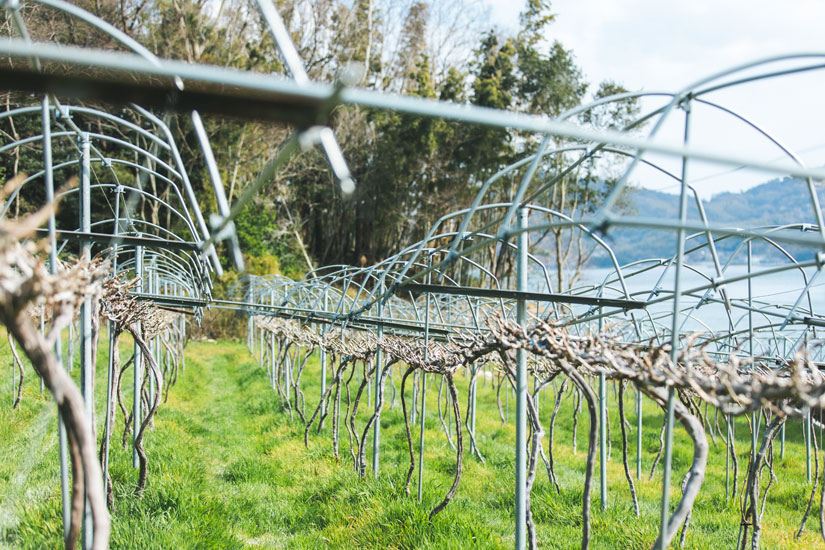
Although he has a deep knowledge of wine, grape growing was a first-time challenge for Mr. Kawata. He began by consulting local farmers who knew the land intimately to select high-quality vineyards suitable for grape cultivation. “The soil on Omishima is sandy loam formed from weathered granite, which drains well and is ideal for growing grapes. However, it also has poor water retention, so we have to take that into account. “I’m working on this while learning various techniques from local farmers, such as adding compost to activate the soil’s microorganisms,” says Kawata. His commitment to using locally sourced fertilizers stems from his desire to preserve the unique character of the land. He also values grape cultivation that is deeply rooted in this region, going so far as to handcraft the materials for his trellises with the help of a local shipyard.
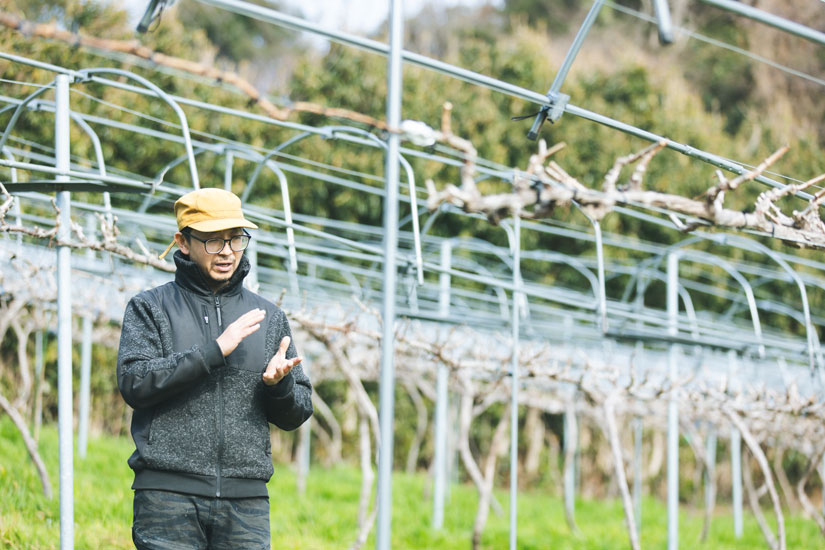
We grow a variety of grape varieties, including the popular Chardonnay, Muscat Bailey A—the first variety developed in Japan—and Albariño, which originates from coastal regions of Spain and Portugal where the climate is similar to that of the Seto Inland Sea. “I chose Chardonnay because it’s grown all over Japan, so I thought it would be easier to discern the terroir. Koshu is also a famous variety, but I felt I might be too constrained by its name, so I’m not growing it at the moment. I’m experimenting with various varieties—looking for ones that are disease-resistant, high-yielding, and well-suited to the island—but it’s going to take quite some time to find the right answer,” he says. Both cultivation methods and variety selection are a constant process of trial and error.
Wines raised on the island, crafted at a small winery by the sea
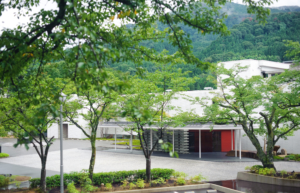
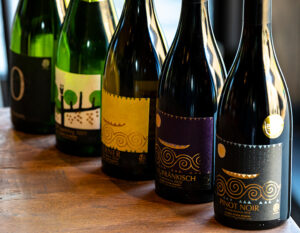
The grapevines planted in 2015 bore fruit for the first time in 2016, but unfortunately, the entire crop was devoured by wild boars, so the following year, 2017, marked the long-awaited first harvest. The harvested grapes were vinified at a winery outside the prefecture, resulting in the birth of Omishima’s first-ever wine—a truly historic milestone. Furthermore, in 2019, a winery was established on the grounds of “Omishima Ikoi no Ie,” an accommodation facility renovated from a former elementary school. This made it possible to produce wine that is 100% Omishima-grown in both name and reality.
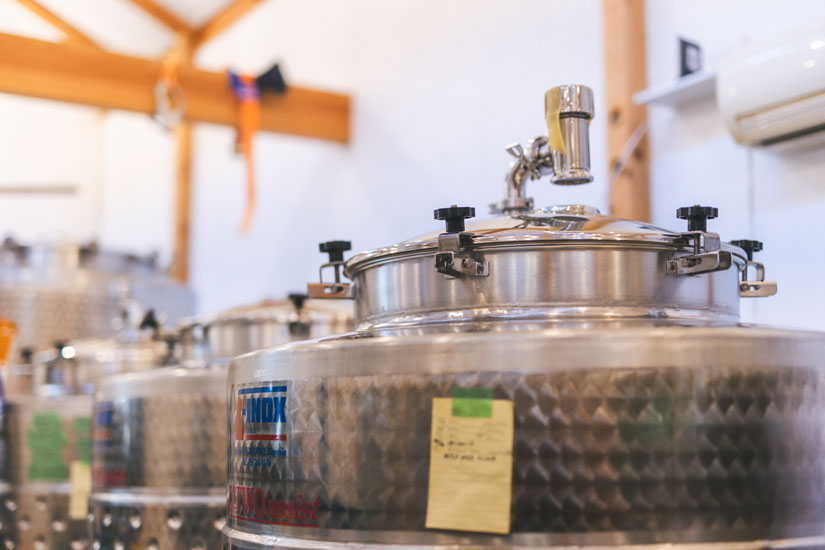
Despite various design constraints, Mr. Kawata poured everything he had learned into the winery, striving to incorporate as many of his personal preferences as possible. One such feature is the gravity flow system, which utilizes the elevation difference to move raw materials to tanks and aging vessels. He explains that this method places less strain on the grapes than using pumps, allowing their natural flavors to shine through. For the tanks, after carefully weighing the pros and cons of options such as enamel, resin, and concrete, they ultimately opted for custom-made stainless steel tanks from Slovenia. They also introduced French oak barrels, both five-year-old and three-year-old. While new barrels impart a strong woody aroma, the flavor becomes milder with use, deepening the harmony with the wine. Selecting the right barrels based on their age-specific characteristics is another of Mr. Kawata’s key commitments.
First, a wine that more people will enjoy
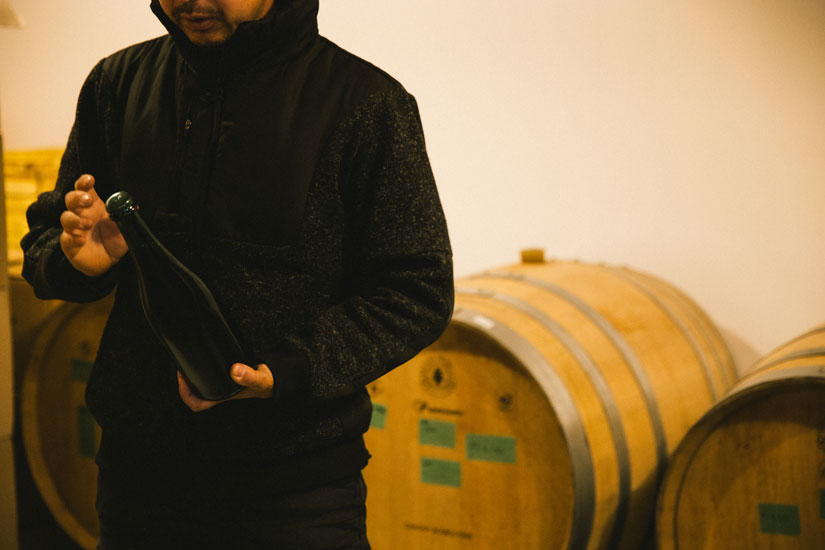
Mr. Kawata aims to create “truly Japanese” wine. “Rather than striving to meet Western standards, I want to cherish the flavors that emerge from Japan’s climate and soil, using grapes grown right here in Japan. I believe there is genuine value in the ‘truly Japanese’ wine that results from this approach. The lightness that was once described as ‘like water’ is, when you look at it another way, a gentleness that complements any dish. It’s unpretentious and comes alive at the dinner table. That, I feel, is what a ‘Japanese-style’ wine is all about,” he says.
A pleasant life on Omishima, surrounded by grapes and wine
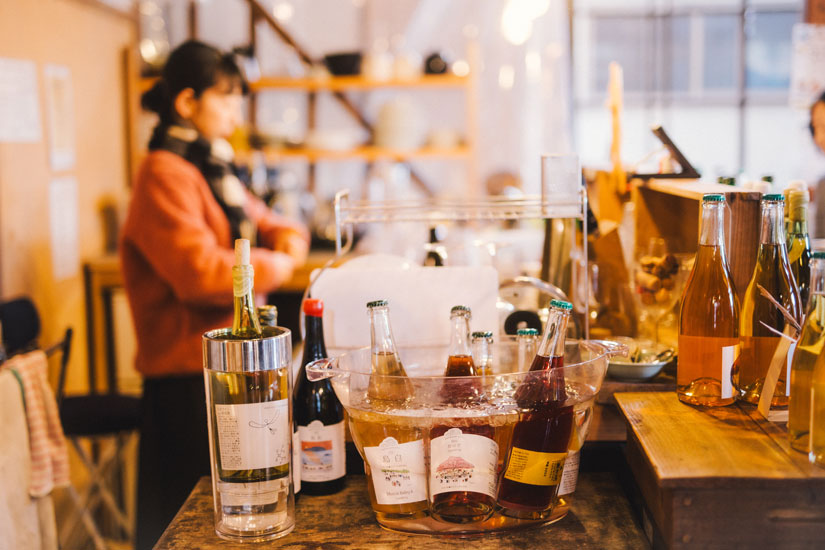
It has been 10 years since Mr. Kawata moved to Omishima. While there have been significant changes in grape cultivation and winemaking, he says these past 10 years have also been a whirlwind of changes for him personally.
“I came to Omishima alone, but then I met my wife, we got married, and we had a child. It’s been a decade in which the meaning of my life shifted from ‘coming here to grow grapes and make wine’ to ‘living here.’ Even though I sometimes feel a bit of inconvenience regarding infrastructure and such, every day is fulfilling, and I am truly satisfied with my life on Omishima,” he says.
The island’s current population is approximately 5,000. While the original resident population is on the decline, the number of people moving to the island from elsewhere is reportedly increasing. The reasons for moving vary from person to person, but many cite a desire to live in the Seto Inland Sea, a wish to contribute to the island’s revitalization—such as through the Regional Revitalization Corps—or a decision to settle here after falling in love with the place during a visit. Even without moving permanently, some people maintain a dual-residence lifestyle, keeping their primary address and job elsewhere. “I wonder if the number of people leaving the island will eventually be overtaken by the number of people moving in?” Kawata says with a laugh.
Wines from a small island in the Seto Inland Sea
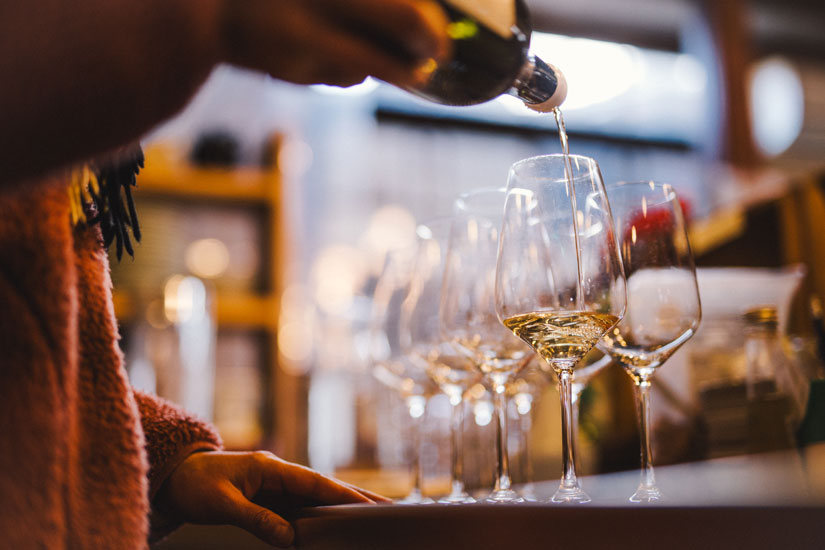
While Omishima has many charms, it also faces its share of challenges. Adapting to the climate changes caused by global warming in recent years is a serious issue. In particular, the summer of 2024 brought life-threatening heat, forcing both people and the grapes to struggle just to survive.
Furthermore, according to Mr. Kawata, neither the grapes nor the wine have yet reached a satisfactory level in terms of quality or technique. “I haven’t yet established what ‘the taste of Omishima’ means to me,” he says. “So, my first priority is to clarify that. My goal is to create a wine that expresses the atmosphere of Omishima—a wine that is approachable and full of depth, one that allows you to feel the sea and the wind of Omishima.”
His immediate goals are to produce wines with a flavor he finds satisfying and to get the islanders—who aren’t accustomed to drinking wine—to try their wines. Beyond that, winning an award at the Japan Wine Competition is his primary objective, and eventually, he hopes to compete in international competitions. Mr. Kawata’s dreams continue to expand.