
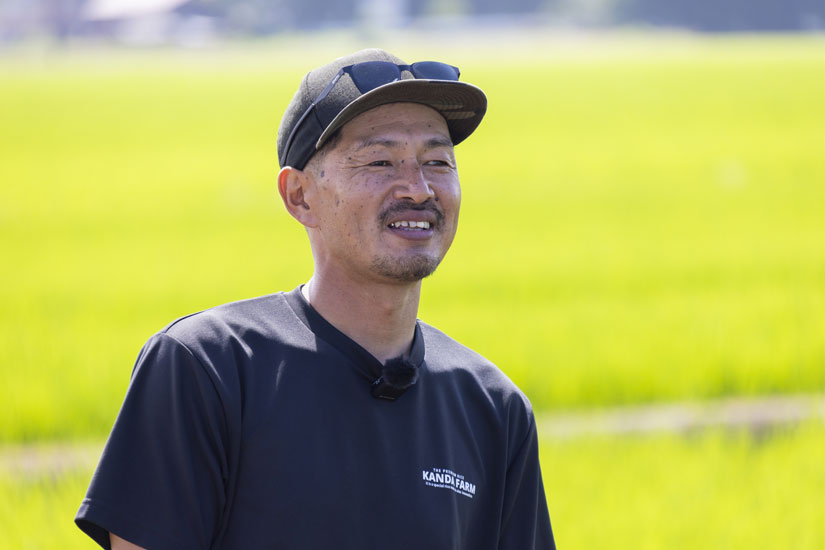
Shinobu Kanda of “Aizu Inawashiro Kanda Farm” is striving to grow the best rice in Japan in Inawashiro Town, Fukushima Prefecture, where beautiful rice paddies spread out. After repeated trial and error, in 2024, he was awarded the highest prize, the “Gold Prize in the International Comprehensive Category,” at the 26th International Rice and Food Taste Analysis Contest. What is Mr. Kanda’s rice cultivation that made his dream of becoming the best in Japan come true?
The Last Paradise for Rice
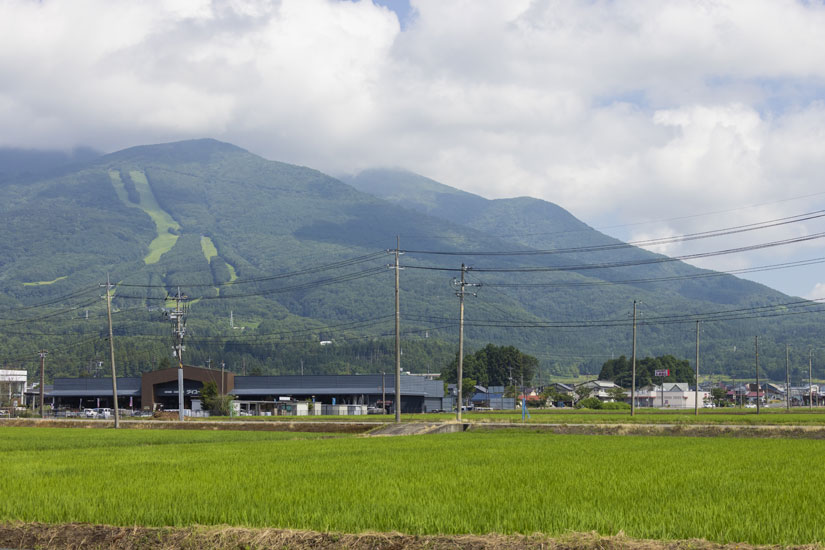
Inawashiro Town, where Aizu Inawashiro Kanda Farm (hereafter, Kanda Farm) is located, is one of the most scenic areas in Japan, surrounded by Mt. Despite its elevation of more than 500 m, vast rice paddies are spread all over the area, blessed with abundant melted snow from the Bandai Mountains and dotted with rice fields with organic soil. It is also known as a heavy snowfall area with ski resorts, and since the statistics began, they have not observed a single extremely hot day. Kanda says with a smile, “This area, with its extreme temperature differences, may be the “last paradise” for rice now that global warming is advancing.
From Salesman to Farmer and from Wholesale to Direct Sales
After graduating from university, Mr. Kanda built a career as a salaried worker, but the turning point for him was the sudden death of his brother, who had taken over the family business. Following in his brother’s footsteps, he started farming in 2011 at the age of 30 to support his parents, who ran a farm and a guest house, but one month later the Great East Japan Earthquake struck. The earthquake caused extensive damage to agriculture, and the price of rice plummeted due to harmful rumors. In his search for a way to overcome the current situation, Mr. Kanda decided to switch to direct sales, taking advantage of his experience as a salesman. He began by thinking that the time would come when he would have to sell rice himself, since prices to JA and other wholesalers had dropped so dramatically that sales had plummeted. However, sales were low at first, and we realized that we needed to build up our quality and brand to be chosen by consumers,” he recalls. So he set a goal: to win an award at a rice competition by the age of 40, 10 years from now. This is where his challenge to become the best in Japan began.
Incidentally, the “International Rice Taste Analysis Competition,” for which Mr. Kanda won the gold medal, is a “rice competition” sponsored by the Association of Rice and Taste Analysts. In 2000, when the only mainstream method of testing rice was the “grading test,” the competition was launched to focus on the taste of the rice and to encourage the “revival of rural areas, agriculture, and rice farming,” which was in decline. The first competition started with less than 400 entries, but it has now grown into the world’s largest rice competition with a total of 5,000 entries and co-sponsorship with numerous local governments. Since the 10th edition, the competition has become an international event, and the rice of the winners of the competition has been highly acclaimed both in Japan and abroad.
Accumulating data through test cultivation of more than 10 patterns each year
In order to promote self-taught research, the first step is to conduct 10 patterns of test cultivation each year. He worked to improve the quality of the rice by changing the variety, cultivation method, amount of fertilizer, timing of harvesting, and other factors. The reaction from those around him was mixed, with some saying, “The ears haven’t appeared yet in Mr. Kanda’s rice fields. The test rice was then tested for eating quality, and the results were compared to the rice that had been harvested. The best lots of test rice were selected by measuring the taste with a taste meter and eating the rice, and in the following year, more than 10 more test cultivation patterns were tried. They continued to accumulate data through this unique test cultivation and established a cultivation method that they were satisfied with.
He is grateful for the encounters he has had. Making dreams come true by carving out your own path.
The people he has met through rice cultivation have also had a great influence on him and given him good fortune. In Minami Uonuma, the largest rice-producing region in Japan, I have a rice-growing mentor. After meeting him at the competition, I visited him every year and he taught me every detail about fertilizer, rice planting, and harvesting time. I have also continued my training visits to farmers who have won the top prize in Japan and exchanges with rice farmers from all over the country throughout the years,” he said happily. One of Mr. Kanda’s great strengths is his ability to use the communication skills he developed as a salesman and actively go out to learn and absorb good rice farming practices.
Premium rice “Yudai 21” gracing dining tables
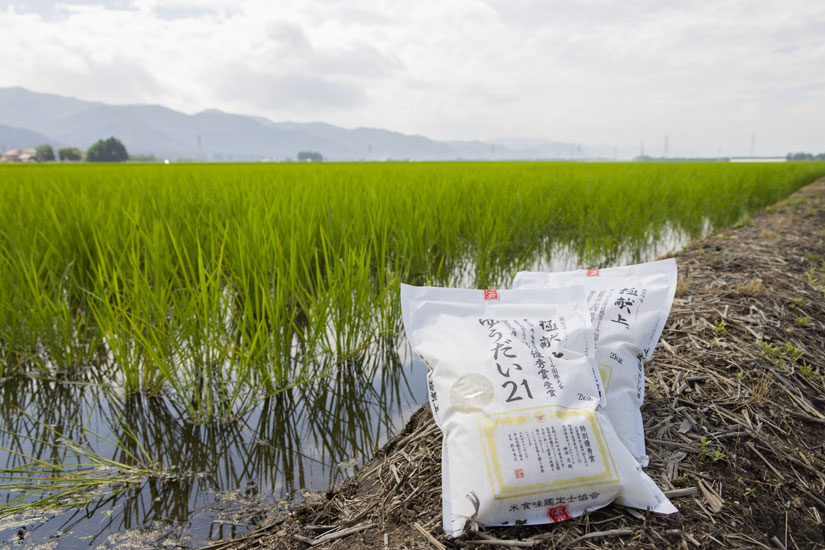
The premium rice “Yudai 21” has been carefully cultivated through more than 10 patterns of trial cultivation. This “miracle rice” variety, which was developed as part of a development project at Utsunomiya University, is characterized by its stickiness, strong umami, and sweetness. Mr. Kanda has been working on this variety, which is recognized by rice farmers who have won the top prize in Japan in a competition, and has been aiming to become the best in Japan. In Inawashiro, where the altitude is high and the temperatures are low, we mainly grew Hitomebore, which is resistant to cold damage, but through trial and error, we succeeded in designing a fertilizer and cultivation method that suited the land. Yudai 21″ has the texture, graininess, feel, and presence as rice that I value.
Kanda Farm’s rice harvest began with glutinous rice, followed by Hitomebore and Yudai 21. Direct sales were low when they first started, and sales continued to be difficult, but the rice was well received by those who purchased it, and repeat business increased. Furthermore, the company became widely recognized for its award-winning products and began to achieve its sales goals. The product’s delicious taste, which remains unchanged not only after cooking but also over time, has gained a reputation for popularity, and the product is sold out every year.
Farming is a creative job. His goal is to be number one in Japan for five consecutive years!
(7998)
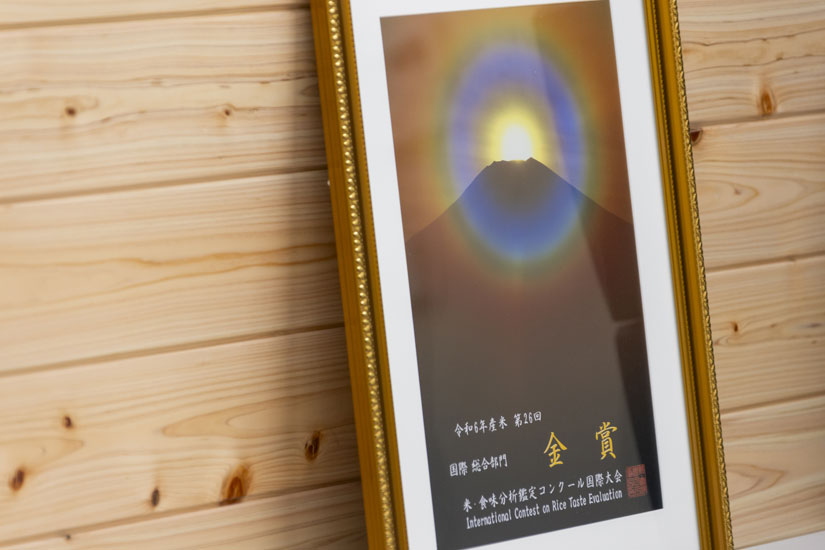
Kanda Farm’s “Yudai 21” won the highest award, the “Gold Prize in the International General Category,” at the 26th International Rice and Food Taste Analysis Competition held in 2024, which boasts the largest number of entries in Japan. Mr. Kanda was 44 years old. Having finally achieved the top prize in Japan, Mr. Kanda’s next goal is to win the top prize in Japan for five consecutive years. I believe that if you stop after winning an award, there is no progress,” he said. It is important that I am satisfied with my work, so I will continue to challenge myself every year and aim to win the award for five consecutive years. The reason why five consecutive years is so important is that this competition will be held in Fukushima Prefecture for three consecutive years starting in 2026. For that reason, I want to always be a challenger. Agriculture may seem like a simple job, but when you have a clear goal, it is very creative, and there is no other job so interesting,” he says, finding great satisfaction in the work.
The strict settings of rice milling machines are also the secret of good taste.
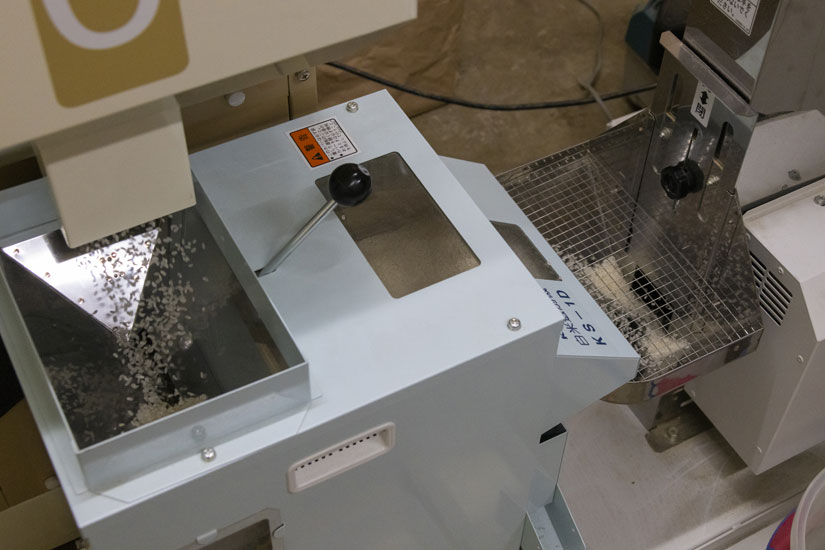
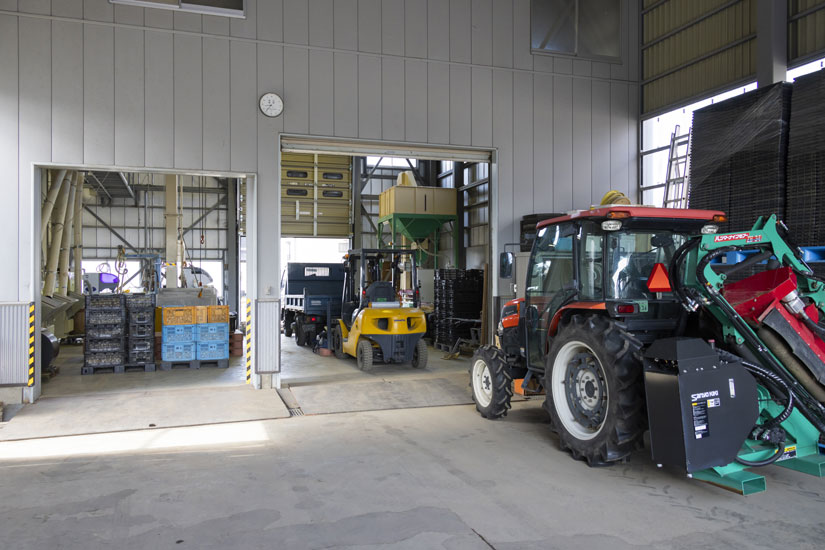
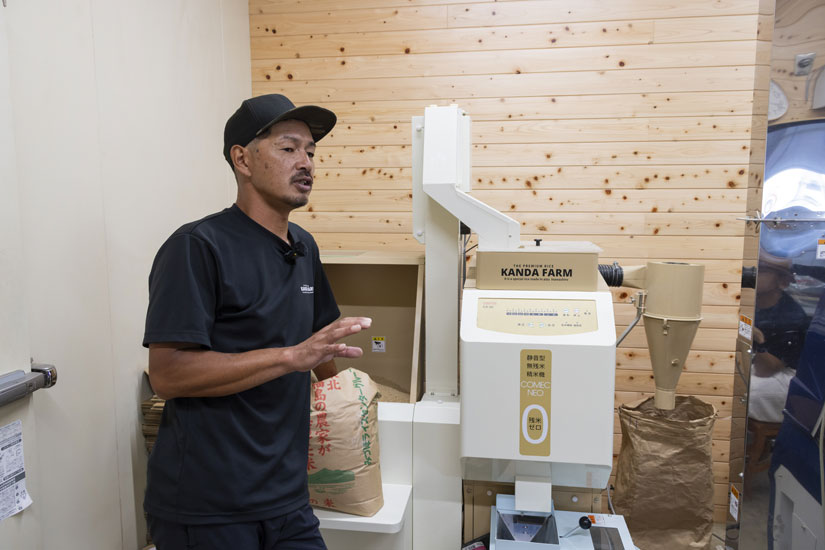
Mr. Kanda is currently conducting as many as 30 test cultivation patterns and is very particular about rice milling. He says that normally, rice would be cleaned by passing it through a color sorter multiple times, but because he does not want to damage the rice, he only passes it through the machine once to judge it strictly. By setting the machine’s line strictly, he is able to remove “cloudy white,” which is a milky white color among normally clear rice grains, and “belly white,” which is a cloudy white color on the belly of the grains, resulting in delicious rice with no cloying taste. Cloudy white and white belly grains do not cause taste problems when eaten, but they are caused by weather conditions (high temperatures, lack of sunlight, etc.) during growth, which are considered insufficient starch in the rice and cause the rice to become soft.
He states clearly, “What we had set strictly for entering in competitions has been adapted for regular sales, resulting in ideal, tasty rice.”
Rice that aims to be the best in Japan” and “the ultimate everyday food” are the two pillars of the company’s business.
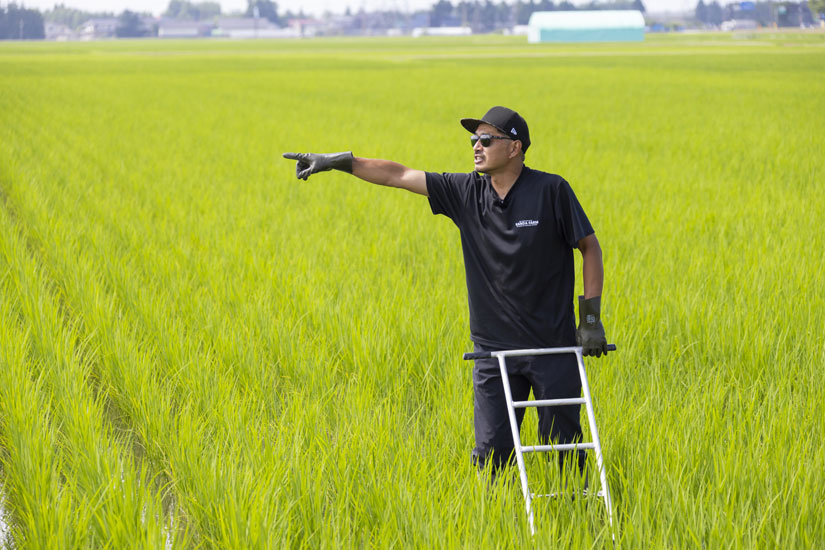
He says that weed control is important in challenging the potential of “Yudai 21” through organic cultivation. In order to promote photosynthesis, he has to plant fewer seedlings than in “conventional” farming, where chemical fertilizers and pesticides are used to increase yield and prevent pests and weeds, and he has to take extra measures against weeds. Farming is my calling, so I don’t consider it a hardship,” he says. I think I shine brighter than when I was a salesman, and it is a job I can be proud of for my children,” says Kanda, who gazes out at the rice paddies with his beloved family.
Since taking over as the fifth generation, he has been cultivating rice with two pillars, one of which is “aiming to be the best in Japan. The other is “the ultimate everyday food” that is reasonably priced and fills the stomachs of even children in their prime. While aiming to be the best in Japan, the company is sure to continue to bring happiness to everyday dining tables.