

“Mingei” is the philosophy of finding beauty in everyday objects. The Shussai Pottery in Shimane Prefecture directly carries on this tradition and continues to produce pottery to this day. The pieces created here bear neither the kiln’s name nor the artisan’s name. Why, then, have they continued to be chosen by people and produced for over 70 years? The reason lies not only in the vessels themselves but also in the fact that the kiln has offered suggestions for ways of living that adapt to the changing times.
Shussai Pottery: A Pottery Studio Inspired by Lifestyle
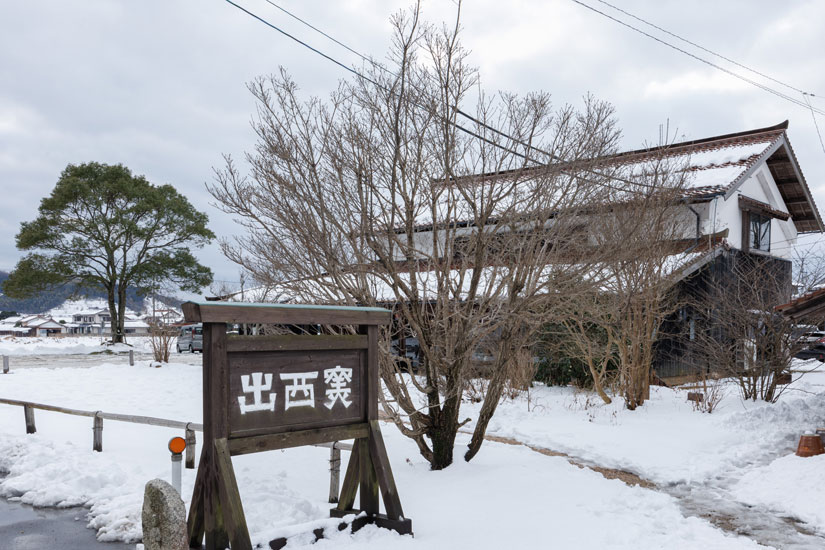
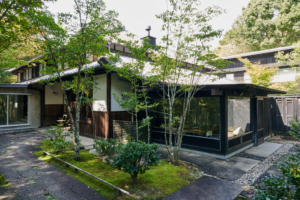
In Hikawa-cho, Izumo City—located in eastern Shimane Prefecture, where the rural landscape of the Izumo Plain stretches out—stands “Shussai Kurashi no Village,” a multi-purpose facility dedicated to showcasing all aspects of daily life. The grounds feature a pottery shop, a curated boutique, and a bakery café; as soon as you step inside, you’re naturally drawn into the shops, where products are neatly lined up.
The facility is operated by Shussai Pottery, a pottery studio that carries on the spirit of the Mingei Movement.
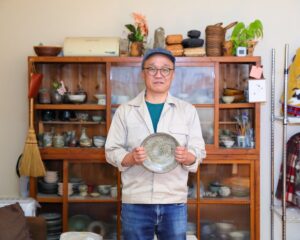
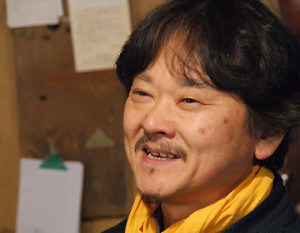
“We wanted to create a place where local residents could enjoy themselves—whether by using tableware, handling clothing, or selecting bread. We wanted to make it a place where people could experience daily life itself,” recalls Shin Tatanō, representative of Shussai Pottery. For example, the appeal of a winter gratin dish often becomes apparent only after actually using it. It’s not uncommon for customers to say, “I like this,” which then leads to a purchase.
Here, product recommendations are made with a focus on how items will actually be used in daily life. This philosophy stems from ideas the studio encountered in the postwar era.
It all began after the war. A communal kiln built while searching for a way to make a living in the local community
The Shussai Pottery was founded in 1948. During the war, supplies were scarce, and with the belief that “luxury is the enemy,” the “beauty” of daily life was often put on the back burner. After that era, five young men, driven by a desire to create beautiful things, decided to take up pottery. They were childhood friends, all second or third sons of farming families. As they were not in a position to inherit their family businesses and were searching for their own paths in life, they chose to establish the kiln as a “community” where they could support one another’s livelihoods.
Initially, their goal was to create pottery of high artistic value. However, in 1949, they received harsh criticism from Shigeru Kanatsu, a craftsman living in Matsue City, who told them, “It seems you have no aspirations at all.” It was at this time that Mr. Kanatsu handed them a copy of My Long-Cherished Wish, a book by Muneyoshi Yanagi, known as the “father of the Mingei Movement.” As they reexamined their approach to pottery-making, they pored over this book and were deeply moved by its philosophy.
My Encounter with Kanjiro Kawai, a Leading Figure of the Mingei Movement
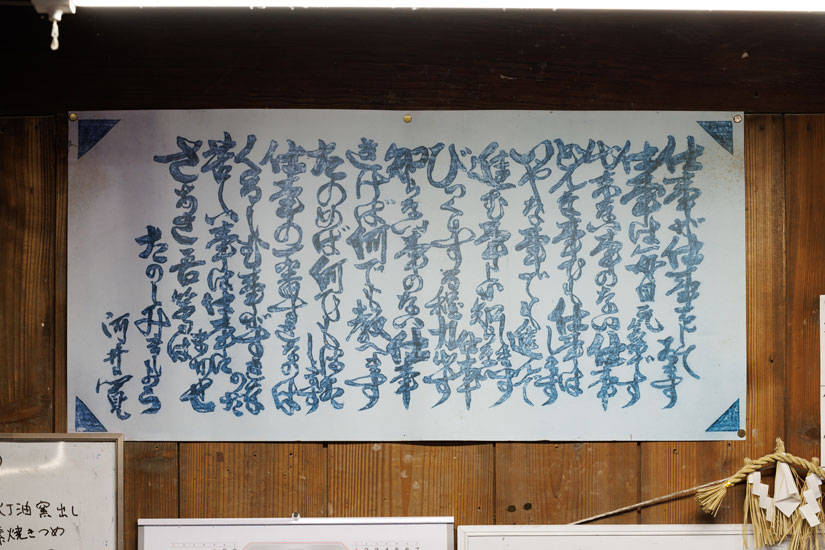
At that time, the Mingei Movement was beginning to gain traction in Japan. Amid increasing mechanization and Westernization, this movement sought to reevaluate the value of handcrafted work and the beauty inherent in everyday objects.
Resonating with these Mingei ideals, the founding members traveled to Kyoto in 1950 to visit Kanjiro Kawai, one of the central figures of the Mingei Movement. Subsequently, Mr. Kawai visited the Shussai Pottery, where he shared his philosophy: “Create everyday household items with the utmost care. Create things that bring joy to people,” thereby conveying the importance of crafting items for daily use.
In addition, Bernard Leach and others provided guidance. Leach taught the “wet handle” technique for attaching handles, as well as the craft of making Western-style tableware. In this way, the Shussai Potteryn began its journey, centered on the “Mingei” philosophy of finding beauty in practicality. Eventually, its products gained a reputation for their excellent usability and gradually found their way into people’s daily lives.
The Value Found in Unmarked Vessels
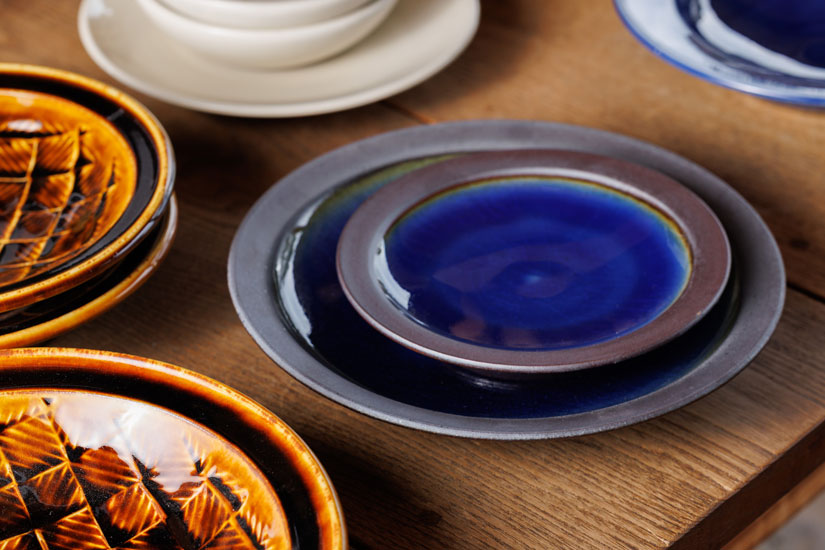
At the Shussai Pottery, the kiln name or the artist’s name is never inscribed on the pieces. This is because, in accordance with the philosophy of Mingei, the kiln believes that value lies not in individual fame, but in the accumulation of anonymous craftsmanship.
In 1989, the Shussai Pottery received the Excellence Award at the 10th Japan Ceramic Art Exhibition. As Japan’s largest open-call ceramic art exhibition, this recognition marked the moment when the “beauty of utility”—which the Shussai Pottery had long pursued—was officially acknowledged.
The award-winning piece—the “Fuchi Tessa Gosuyu Plate”—gained popularity, and its deep blue hue eventually came to be known as “Shussai Blue.”
However, even after receiving the award, the kiln refrained from highlighting any specific artist and continued to create as a collective. They present their vessels not as the work of a single individual, but as creations produced by the kiln as a whole. This approach embodies the philosophy of Shussai Kiln, which has remained unchanged since its founding.
Handcrafted Items to Enhance Everyday Life
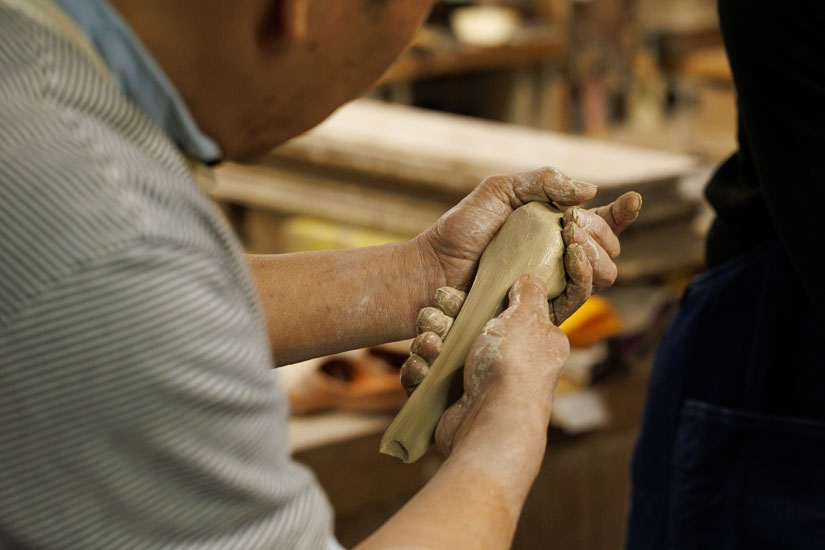
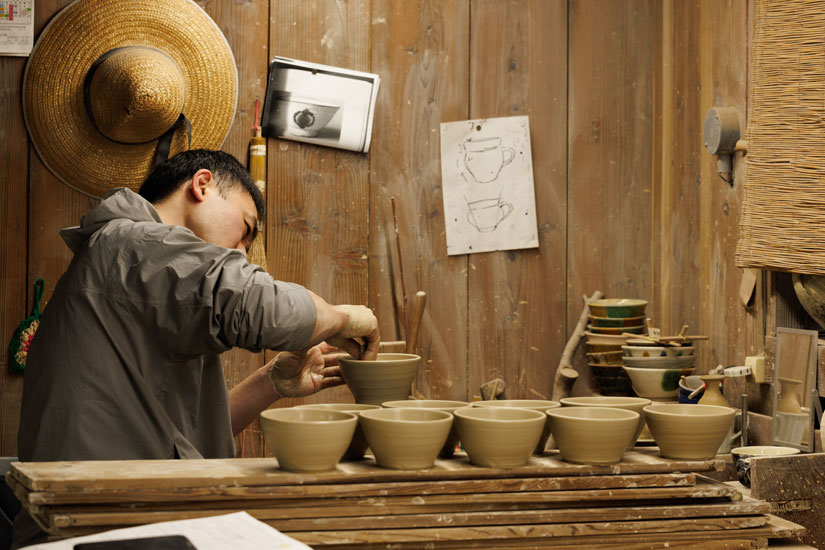
The philosophy of folk art, passed down through the generations in this way, is still very much alive today. With the company’s 80th anniversary just around the corner, the number of artisans has grown to 16. The pottery from the Shussai Pottery vividly captures the texture of the clay and its rich hues; when you hold a piece in your hands, its shape and weight feel just right. While practical, these pieces naturally evoke a sense that your attachment to them will deepen the more you use them.
A One-of-a-Kind Texture Created by a Climbing Kiln
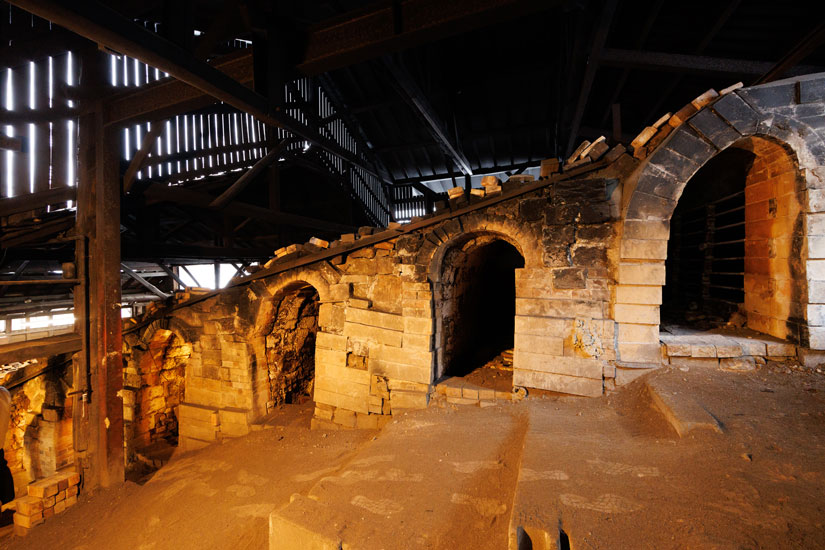
To fire the pottery, we use a combination of traditional climbing kilns and modern kerosene and electric kilns. Among these, the climbing kiln holds a special place, as it is used only three or four times a year. The climbing kiln is a series of wood-fired kilns built along a slope; depending on the flow of the flames and how the ash settles, each piece takes on a unique character. However, because this requires the artisan to stay by the fire around the clock for several days—a process that is both labor-intensive and physically demanding—fewer potteries are using this type of kiln today.
“I do this to carry on the tradition and to master the technique of controlling the flames to fire the kiln. In pottery-making, it’s important to understand the transformation from clay to finished piece,” says Mr. Tatanou. He explains that when the temperature inside the kiln reaches 1,200–1,300 degrees, it is enveloped in an orange glow, creating a fantastical scene that feels as if a deity were present.
Committed to our users, we offer lifestyle suggestions from a variety of perspectives
In 1998, the opening of the “Kurashi no Tō: Mujiseikan” exhibition and sales space on the premises led to a gradual increase in the number of visitors to the pottery studio. The philosophy of not only selling pottery but also providing practical tools for daily life has been carried forward into the creation of this space.
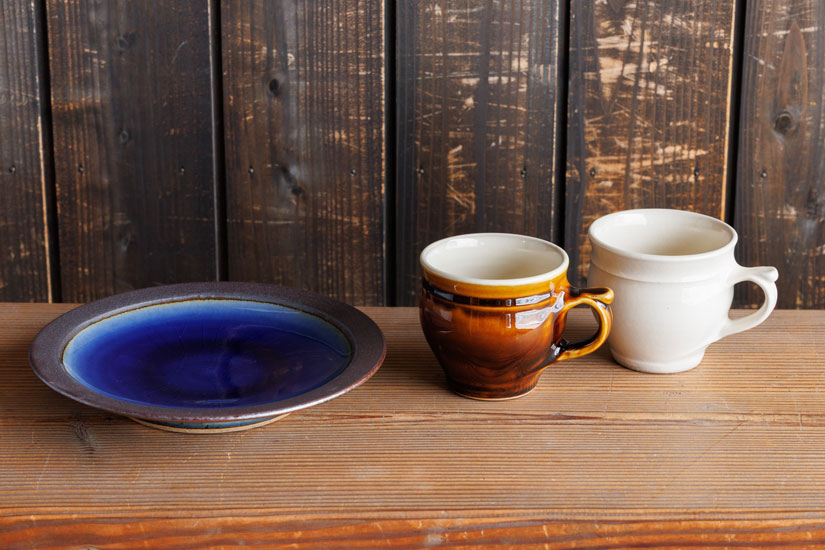
Shussai Pottery specializes in tableware, as well as a wide range of products including vases and sake sets. Among these, the most popular item is the “Morning Cup,” created under the guidance of Bernard Leach. Guided by his teaching to “create things that will remain unchanged even after 100 or 200 years,” this classic design has been in continuous production for over 70 years. The kiln produces 3,000 to 4,000 cups annually, which are quickly passed on to their users.
At the same time, the kiln is actively engaged in creating new pieces. Leveraging the strength of its team of artisans, each craftsman considers “what is best for the user” and brings those ideas to life.
In a relentless pursuit of practicality
During the COVID-19 pandemic, a new product called the “Cat Bowl” was introduced. Designed with ease of eating and drinking in mind, it features a height and shape that prevent a cat’s whiskers from brushing against the food during meals, thereby reducing the likelihood of regurgitation. It has gained popularity as a bowl that is gentle on both cats and their owners. “Our philosophy is to focus entirely on the user, and we were confident this product would be helpful,” the developer says with unwavering conviction. Moving forward, the company hopes to work on creating tableware that is easy to use for a diverse range of users, including people with disabilities and children.
We will continue to create tableware that brings joy to people
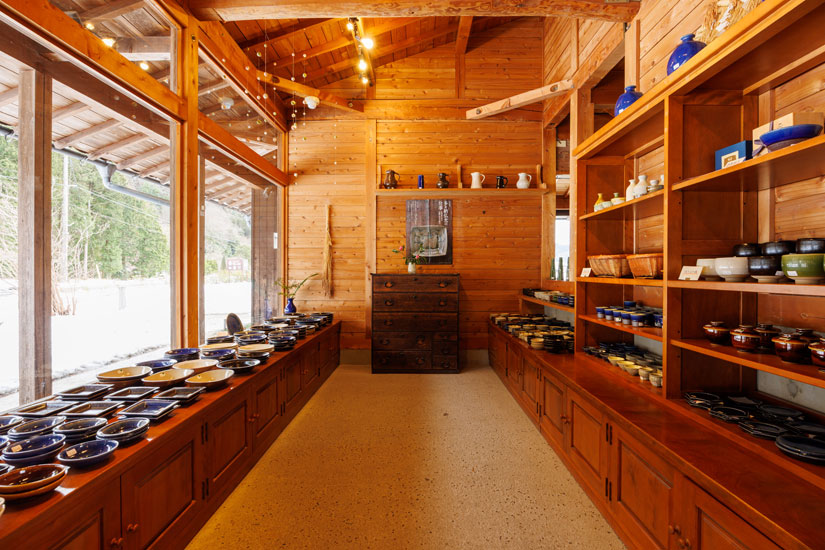
At Shussai Pottery, our focus is on whether our pieces bring comfort to those who use them. Rather than competing on decoration or individuality, we have continually refined our practicality—creating pieces that fit comfortably in the hand and can be used for a long time.
These pieces never try too hard to stand out. Yet, the more you use them, the more their qualities become apparent; before you know it, they’re on your dining table, blending naturally into your daily life. Perhaps that is why they have continued to be chosen, even without a well-known brand name.
What has been passed down since the kiln’s founding is the Mingei spirit of “creating everyday objects that bring joy to people.” Even as times change, we continue to deliver tableware that is wholesome, durable, and built to last. Carrying on this tradition, the Shussai Pottery will continue to craft tableware that enriches daily life.