


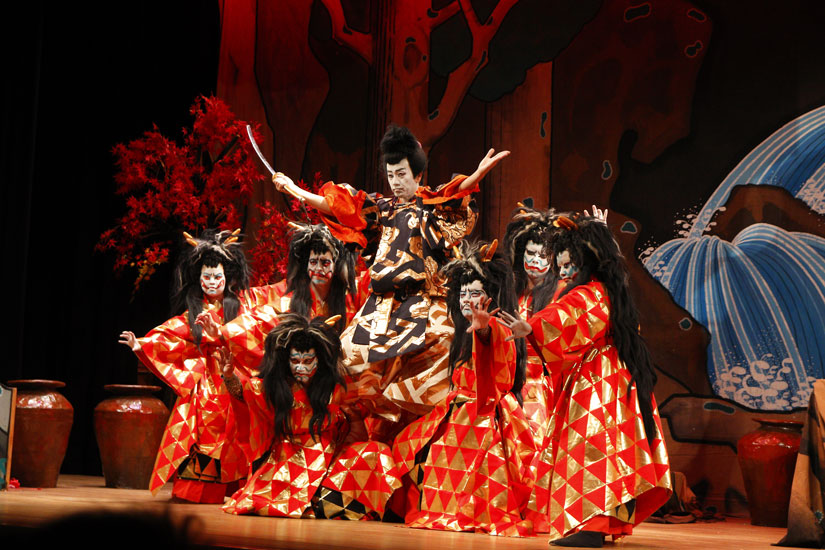
Izumo is known as the birthplace of Izumo Okuni, the founder of Kabuki. Here, there are people who continue to keep the flame of this traditional art form alive. Formed in 1975, the “Izumo Kabuki Murakumo-za” revived the local Izumo Kabuki tradition—which had once fallen by the wayside—and has been staging performances for over 50 years. The performers on stage are not professionals, but rather the people who live in this community.
The Legacy of Izumo Kabuki, Preserved in the Land of Myths
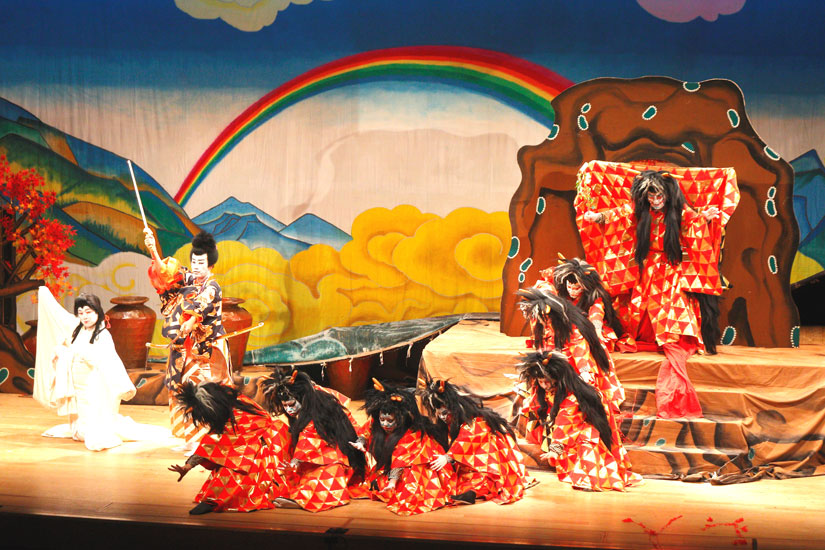
Sada-chō, located in Izumo City, Shimane Prefecture, is a place where the legend of Susanoo—the hero of Izumo mythology—still lives on. Since ancient times, performing arts such as kagura, taiko drumming, and kabuki have been deeply intertwined with the daily lives of the people. Although it is a small town nestled in the mountains, the people still set up stages for every festival and hone their skills in the gaps between their daily work.
Izumo Okuni, the founder of Kabuki, was born in Taisha-cho (now Izumo City) and took the world by storm with her “Kabuki dance” performances in Kyoto. It is said that she later returned to her hometown, where she spent the rest of her life. To this day, Okuni’s grave stands quietly on a small hill in Taisha-cho.
While the origins of Izumo Kabuki are said to date back to the Edo period, it truly flourished in the Taisho era. This is believed to have begun when local residents invited Arashi Misato, a Kabuki actor from Hiroshima, to teach them authentic Kabuki. During festivals, local people would take the stage, and it is said that laughter and applause echoed through the theater at night after they had finished their farm work.
No historical records directly link Izumo Kabuki to Okuni. However, tracing the scripts and acting traditions brought by Arashi Misato—who introduced Izumo Kabuki in modern times—reveals that its origins lie in the Kabuki culture that developed in Kyoto. When one considers that the Kabuki Okuni began in Kyoto was passed down from person to person across the ages, eventually finding its way back to her hometown of Izumo, the history evokes a sense of a mysterious twist of fate.
Beyond the 15-Year Gap
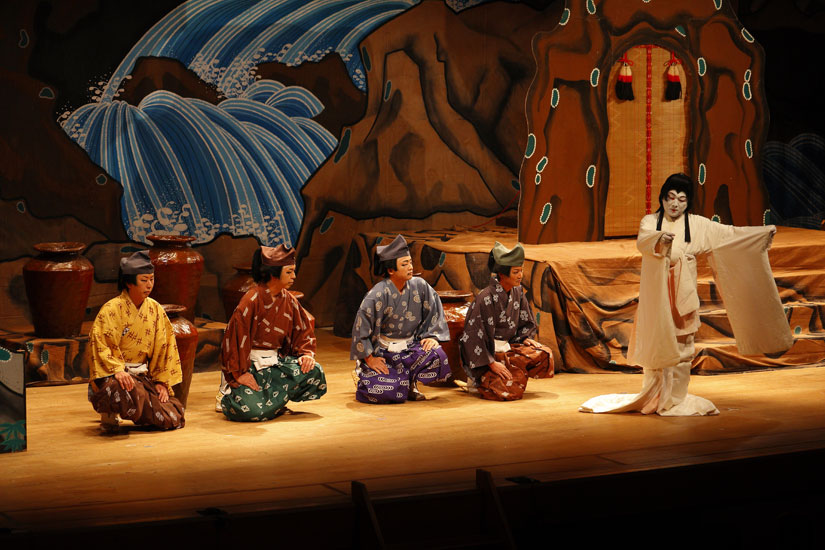
After the war, the times changed dramatically. Entertainment became more diverse, young people migrated to the cities, and rural areas became depopulated. Furthermore, due to the Allied occupation policies, props such as swords and scripts were confiscated, making it difficult to stage performances. Then, in 1960, the tradition of Izumo Kabuki came to an end.
Fifteen years after Izumo Kabuki ceased, the “Izumo Kabuki Murakumo-za” was formed, centered around the youth group in Sada Town. A generation that had grown up watching Kabuki performed by their parents and neighbors took action, determined not to let the culture of Izumo Kabuki die out. The images of the adults dancing so brilliantly in the past had quietly remained in the memories of the children who had watched them.
“Rural Kabuki,” Revived by Young People
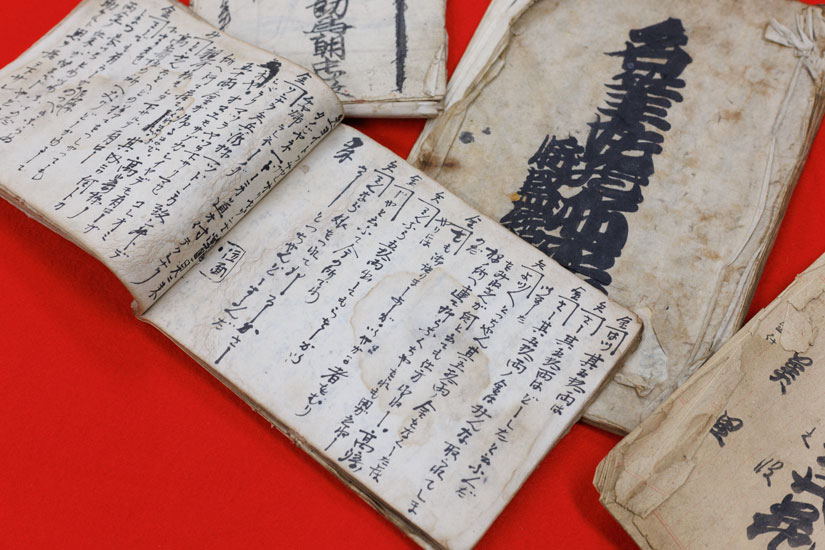
The young people gathered historical materials from that era, pored over old scripts, and learned the movements and delivery of lines from older performers who had once graced the stage. Their rehearsal space was a classroom in a defunct elementary school. They would gather after work in the evenings and rehearse until late at night. Most of the costumes and props were handmade.
How to interpret old scripts, footwork, the direction of one’s gaze, and the unique intonation—these are aspects of rural Kabuki that cannot be passed down through text alone. It is a world that can only be learned through the body and passed down on stage. While receiving direct instruction from their predecessors, they gradually revived plays that had been fading into obscurity and brought them back to life on stage. What was cherished throughout this process was not merely the recreation of form. Why is that particular movement performed? What emotions lie within those lines? Only by understanding the meaning can the art be passed on to the next generation.
From a small gym to the world stage
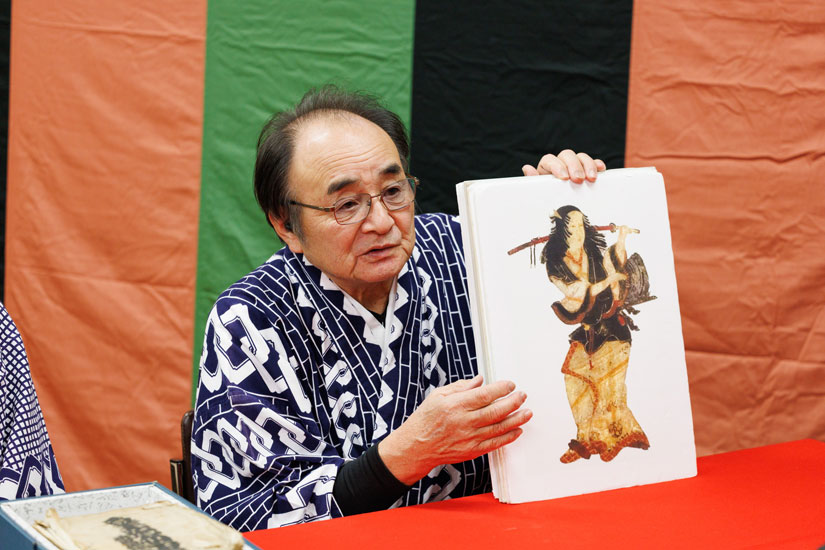
At the center of this group of young people was Yoshiharu Watanabe, who had long supported the Murakumo-za as its artistic director. While handling a wide range of responsibilities—from stage direction to public relations—he worked tirelessly to establish Kabuki as a part of the local culture. For Mr. Watanabe, who was born and raised in this area, Kabuki was, perhaps more than just a performing art, a cherished childhood memory and the very embodiment of the ideals his predecessors had aspired to.
Their first performance took place in the gymnasium of a local elementary school. As it marked the troupe’s revival after a 15-year hiatus, the venue was reportedly packed with local residents. As the number of troupe members grew, the venues gradually expanded in size, and eventually the troupe grew large enough to fill a local hall with approximately 600 seats. In 1998, the troupe was invited to the Lisbon World Expo in Portugal, where they performed “The Origin of the Japanese Furisode: The Scene of Subduing the Great Serpent of the Hi River,” a play with ties to their hometown.
Since then, the “Murakumo-za” has held annual fall performances. Fifty-one years after its founding, the troupe has revived a total of 50 plays.
Riding the Wave of the Times
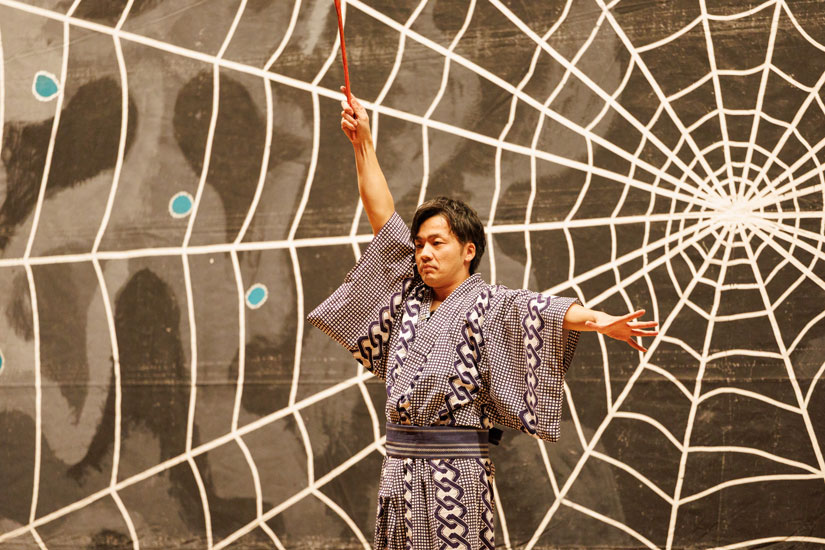
Mr. Watanabe’s eldest son, Shōtarō, has been performing on stage since he was a 9-year-old child actor. Carrying on the art he inherited and cherishing his deep attachment to this region, he currently teaches kabuki classes at elementary schools and mentors child actors. From parent to child, from the stage to the audience—the legacy of the Murakumo-za has been passed down through the intertwining of blood ties and community bonds.
The current troupe members span a wide range of ages, from their 20s to their 90s. The performances are supported not only by actors but also by many local residents and volunteer staff who handle costumes, props, stage setup, sound, and lighting. However, the decline in the kabuki audience is a nationwide issue, and the Murakumo-za, based in the increasingly depopulated town of Sada, is no exception. Recruiting members, attracting new audiences, and promoting the troupe outside the prefecture—even now, more than half a century into the history of the “Murakumo-za,” there are still obstacles to overcome.
Bringing the audience closer through laughter and energy
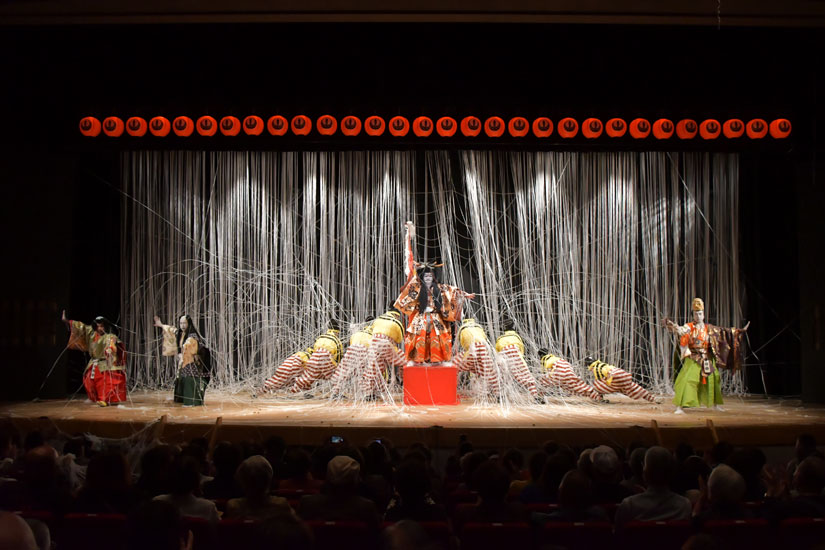
What the Murakumo-za has consistently valued is a commitment to productions that even first-time viewers can enjoy. This also reflects the troupe’s desire for local residents who don’t usually visit theaters—and those who have never had any connection to Kabuki—to experience Izumo Kabuki.
In the dance drama depicting Minamoto no Yorimitsu’s battle against the Tsuchigumo, countless spider threads are released across the entire stage at the climax. Against the backdrop of a vast, intricate spider web, the actor crouches low and spreads his arms wide—a moment so powerful that the children in the audience instinctively lean forward in excitement.
Meanwhile, in a heartwarming comedy based on the rakugo story “Tsume-komi,” a series of misunderstandings unfolds between a burglar and a married couple, filling the venue with laughter. By completely transforming its atmosphere depending on the performance, the Murakumo-za stage has gradually been bridging the gap between the stage and the audience.
Bringing Local Children to the Stage
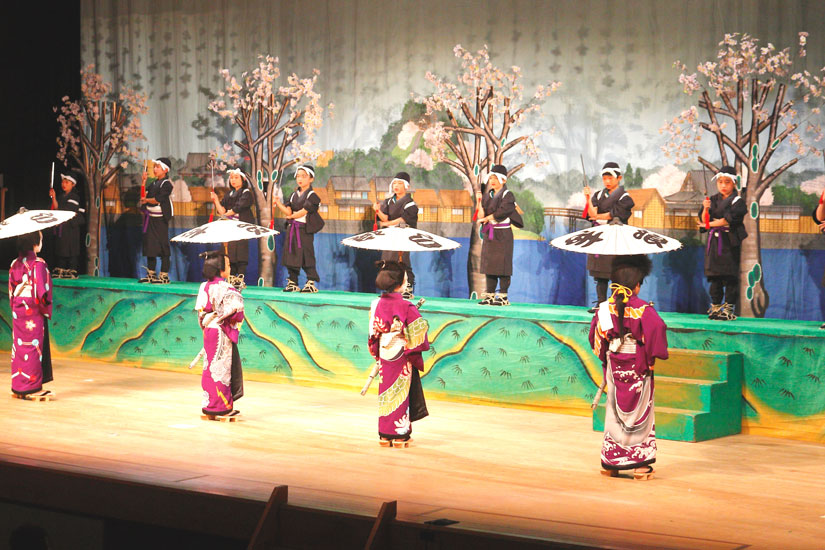
While striving to refine our staging techniques, we also consider it essential to nurture the next generation. In addition to continuing to hold Kabuki workshops for local elementary and junior high school students, our “Children’s Kabuki” performances—which are incorporated into our regular season—have now become a signature feature.
In last year’s production of Shiranami Gonin Otoko, each child performer was given their own lines. The experience of donning traditional costumes, taking the stage with white-painted faces, and standing in the spotlight is not only a chance to learn the art but also a special opportunity for the children to connect personally with the culture passed down in this region.
Lights Come On for the Fall Season
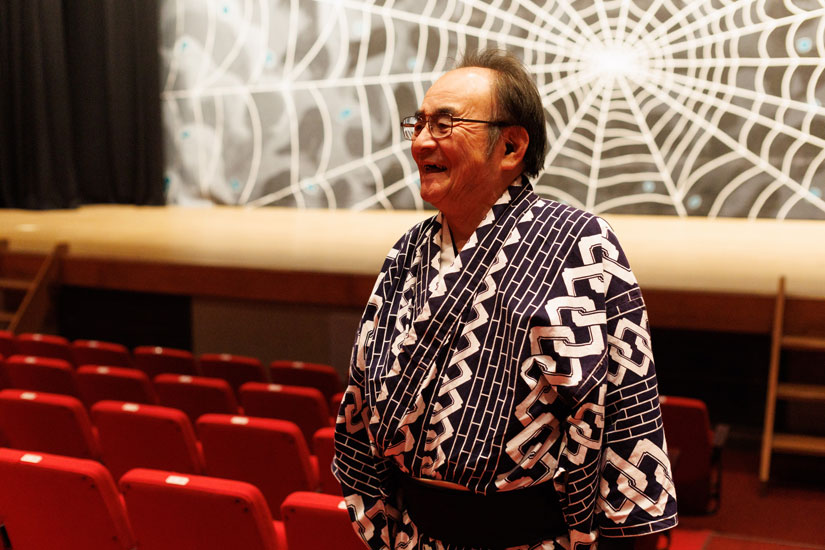
Every fall, the day of the annual performance at Susanoo Hall in Sada Town arrives. The venue is bathed in the glow of paper lanterns, transforming the atmosphere into that of a traditional theater of yesteryear. Standing on stage are not professional actors, but people who live and work in this community. That is precisely why the performances exude a sense of familiarity. The determination and pride in preserving the region’s culture quietly radiate from the stage and reach the audience.
The flame of Izumo Kabuki, which once nearly went out, has been carried on by young people, passed down to children, and sustained by the entire community, enduring for half a century. The tradition nurtured in the land associated with Izumo Okuni continues to burn quietly to this day.