

Iseki Agricultural Machinery Co., Ltd. is one of Japan’s leading agricultural machinery manufacturers. Its founder, Kunisaburō Iseki, was born in Mima Village, Kita-Uwa District (now Uwajima City), a rural area known for producing delicious rice (Mima rice).
I want to free farmers from grueling labor
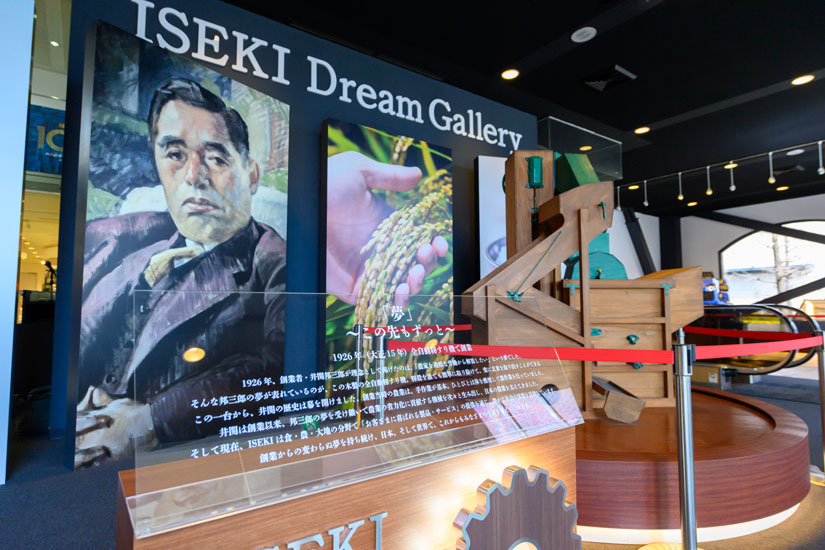
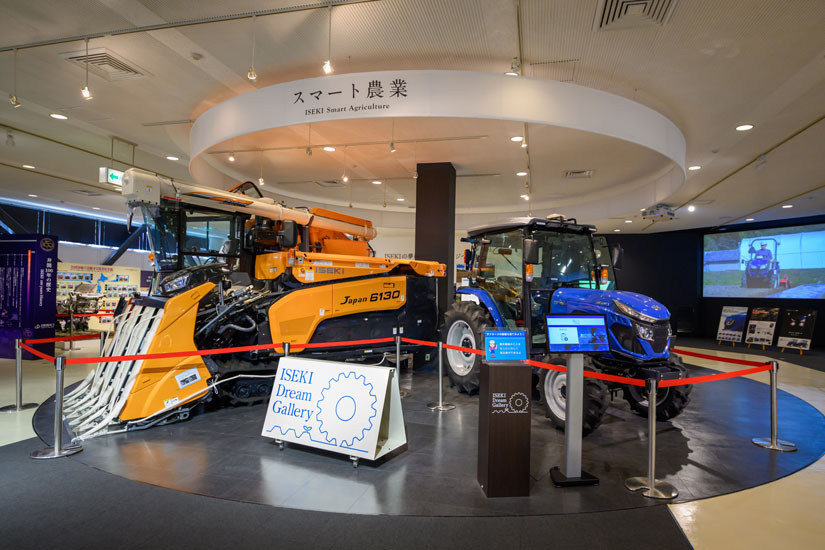
Ehime Prefecture is the birthplace of the company’s founder, Kunisaburō Iseki. The “ISEKI Dream Gallery” in Matsuyama City showcases the history and technology of Iseki Agricultural Machinery Co., Ltd. From a young age, Kunisaburō Iseki was involved in the family farming business. Farm work at that time was backbreaking labor, and he is said to have harbored a strong desire to “free farmers from grueling labor.” Amid an era of transition from manual labor to mechanization, driven by his passion for creating better products, he founded “Iseki Agricultural Tools Trading Company” in Matsuyama City in 1926. The first piece of agricultural machinery he developed was a “fully automatic rice hulling machine.” The company continued to contribute to the mechanization and modernization of agriculture, evolving into a business that supported postwar food production increases and Japan’s period of rapid economic growth.
Manufacturing from Matsuyama That’s Shaping the Future of Agriculture
In 1936, the company established a factory in Matsuyama City. Since then, it has developed and produced numerous agricultural machines that contributed to the mechanization and modernization of agriculture, supporting postwar food production increases and the period of rapid economic growth. In 1978, the Matsuyama Factory began production of large tractors. This factory, with its long history, continues to serve as the manufacturing division of the ISEKI Group’s agricultural machinery business under the name “ISEKI M&D Co., Ltd.” It serves as the core manufacturing hub within the ISEKI Group, providing manufacturing support for initiatives such as “Smart Agriculture” and “Environmentally Sustainable Agriculture.”
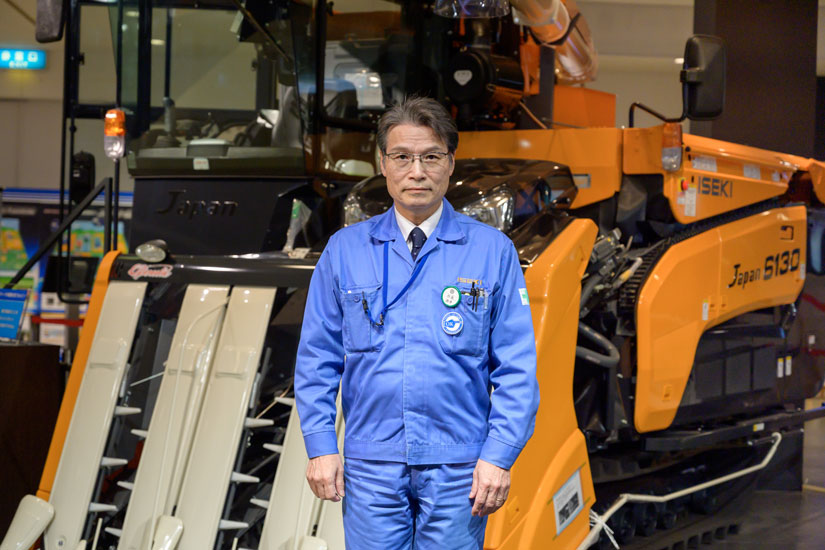
“As we transition from manual labor to mechanization, we want to build machinery that is truly useful. We continue to uphold our founder’s philosophy of ‘Let’s make quality products,’” says Masahiro Sakai, President and CEO of ISEKI M&D Co., Ltd.
The agricultural machinery manufactured by ISEKI M&D ranges widely from models for small-scale farms to high-output 130-horsepower tractors. The company handles a diverse lineup of products, including lawn mowers used overseas and ride-on maintenance machines that perform tasks such as weed control, pesticide and fertilizer application, and soil moisture retention. Because the company has established an integrated in-house production system—from parts machining to painting and assembly—it can quickly respond to the demand for a wide variety of products in small quantities, leading to the creation of products that are easy for farmers to use and affordable.
Smart Agriculture and an Integrated System for Vegetable Production Mechanization
The reality facing the agricultural sector is harsh. Due to the aging workforce and a shortage of successors, the number of workers is steadily declining. Tasks such as harvesting, planting, and crop management must be carried out intensively over short periods in accordance with the seasons and weather, making it impossible for the limited workforce to keep up. What is needed in these fields is agricultural machinery technology that can reliably ensure crop yields with minimal labor.
ISEKI is focusing on “Smart Agriculture,” which balances agricultural efficiency with environmental conservation. By leveraging the latest technologies—such as IT, sensors, GPS, and robotics—to enable operations tailored to crop conditions and field characteristics, the company achieves high productivity even with a limited workforce.
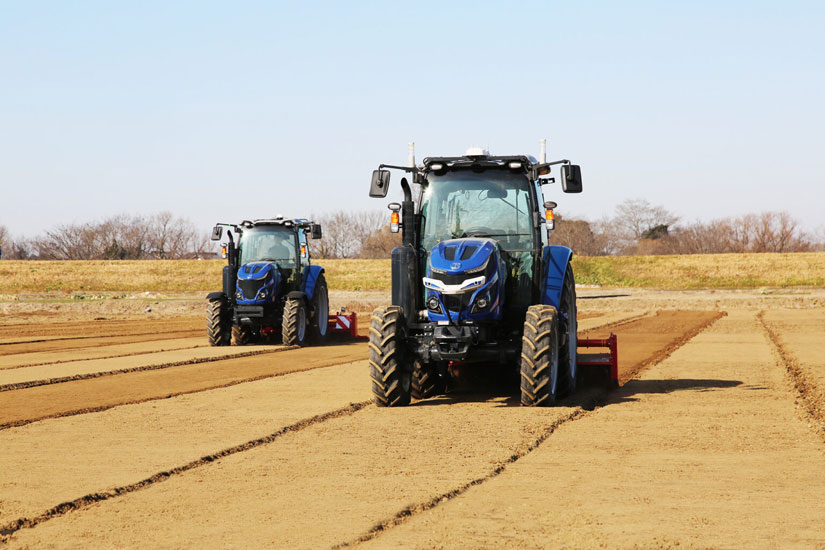
ISEKI also develops and manufactures tractors and robotic tractors equipped with smart agriculture technology. For example, GPS-based positioning assists tractors in maintaining a straight course within the field. This eliminates the need for operators to make frequent, precise steering adjustments, thereby reducing fatigue. Furthermore, robotic tractors contribute to improved operational efficiency by working in coordination with humans under human supervision.
In addition, the company developed “variable rate fertilization technology” in 2015, which adjusts fertilizer application rates based on field conditions. By minimizing fertilizer waste while reducing variations in crop growth and leading to stable quality and yields, the company aims to achieve both reduced environmental impact and improved productivity.
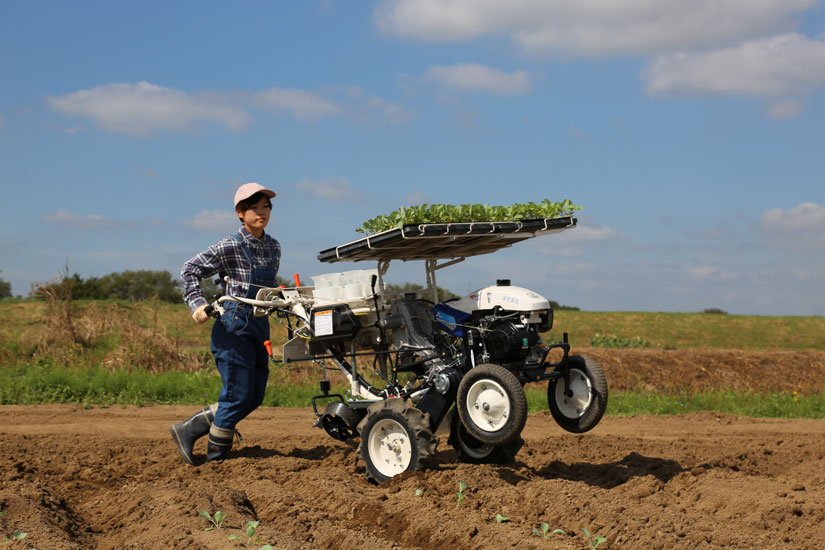
Around 1990, as mechanization advanced, the number of labor hours required for rice cultivation fell to one-fourth of what it had been in 1960, while the need for labor-saving measures in vegetable farming also grew. Compared to rice farming—where an integrated mechanization system involving rice transplanters, combine harvesters, and dryers was well established—vegetable farming at that time lagged behind in mechanization, creating a strong demand for reduced physical labor and labor savings. ISEKI is a company that has focused on developing an “integrated vegetable farming mechanization system,” beginning with the commercialization of the fully automatic vegetable transplanter “Nauel PV101.”
In fact, vegetable farming is characterized by significant regional variations in cultivation methods. Take green onions, for example: even when referred to simply as “long green onions,” the varieties and cultivation methods differ from region to region. There are also regional variations in ridge width and planting spacing, and ISEKI has developed machinery that allows farmers to adjust these settings to suit their specific region.
Furthermore, the company has established an “Integrated Vegetable Production Mechanization System” by offering a full range of machinery and supplies compatible with a wide variety of crops, including daikon radishes, onions, cabbage, broccoli, taro, carrots, lettuce, edamame, green onions, and sweet potatoes. This system enables the consistent mechanization of the entire vegetable production process—from seedling cultivation to planting, management, harvesting, and sorting. This enables flexible adaptation to the production of multiple varieties in small quantities and to differences in growing conditions across regions, allowing for efficient farming operations with consistent quality even with a small workforce.
100 Years Since Our Founding: Connecting the Future of Agriculture Through Technology and People
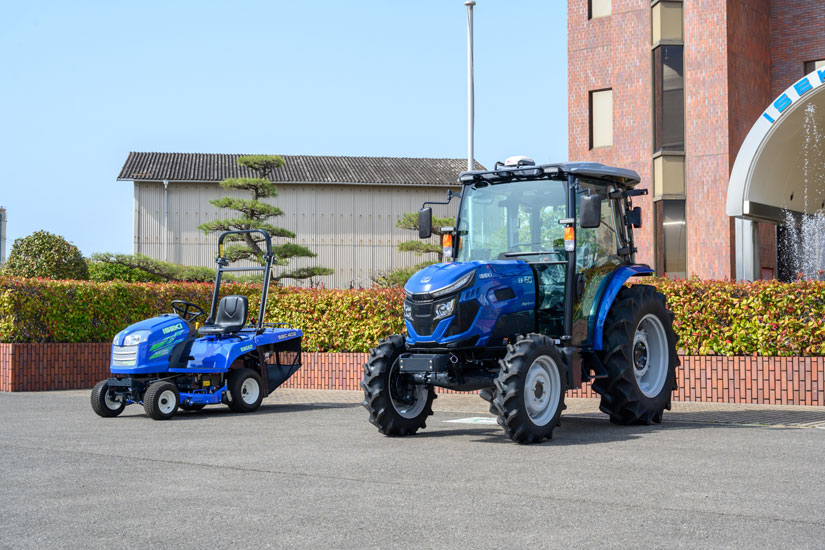
Through continuous technological development aimed at solving real-world challenges on the farm, ISEKI holds approximately 2,200 patents, including technologies related to the development of agricultural machinery such as tractors, rice transplanters, and combine harvesters. The technical expertise the company has cultivated supports the evolution of smart agriculture and is transforming on-farm work into a more reliable and less burdensome process.
The new models manufactured by ISEKI M&D are a prime example of this. The company is also actively engaged in smart agriculture that leverages digital technologies such as GPS. These technologies support the agricultural know-how cultivated through many years of experience. For example, by having machines assist with precise tasks that skilled operators once performed intuitively, even less experienced operators can more easily perform work to a consistent standard. By using digital technology to pass down agricultural techniques—which have traditionally been handed down from person to person—to the next generation, the company is helping to address the shortage of workers and support the realization of sustainable agriculture.
Due to factors such as a declining workforce in the agricultural sector and the impacts of climate change, the number of workers on farms is decreasing. Improving efficiency and environmental considerations are essential. With the government’s “Green Food System Strategy” providing a tailwind, there is a growing demand for a shift toward sustainable agriculture, including labor-saving measures and organic farming.
ISEKI will celebrate its 100th anniversary in 2026 and, as a company proud of its long history of technology and experience, is committed to addressing these challenges. The company develops large-scale, cutting-edge, field-crop, and eco-friendly agricultural machinery that balances labor-saving efficiency with environmental conservation. By expanding its range of eco-friendly technologies—including electrification—ISEKI supports highly productive and sustainable agriculture through high-quality agricultural machinery.
Furthermore, the company is dedicated to nurturing the next generation of engineers. We provide hands-on opportunities in design, manufacturing, and cutting-edge technology to hone problem-solving and decision-making skills, while also emphasizing the importance of learning from the technical expertise and wisdom cultivated over many years. The capabilities of the people and technology nurtured in this way directly contribute to agricultural efficiency and environmental consideration, supporting a more sustainable and prosperous agricultural sector. This approach to manufacturing—woven together by technology and people—will continue to bring new possibilities to agriculture.