
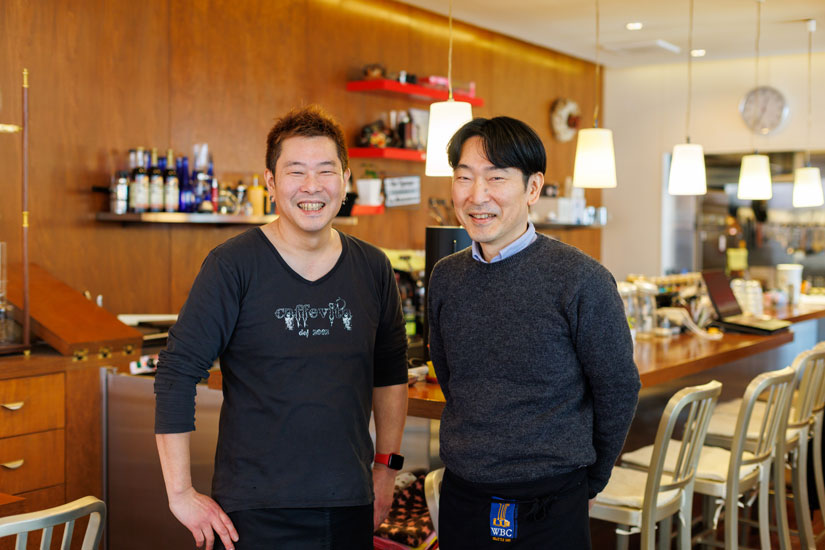
Hiroyuki Kadowaki (pictured right), owner of “CAFE ROSSO,” who took second place at the “World Barista Championship,” one of the world’s largest barista competitions. A barista who has taken on the world from Shimane, he has pursued his own unique cup of coffee through in-house roasting. His younger brother, Yuji (pictured left), who runs “CAFFE VITA,” has also won numerous awards in domestic competitions, including championships, and is active as a seminar instructor and judge. The two are based in Shimane Prefecture, where they were born and raised. Why do they continue to brew coffee here, despite possessing the skills to succeed on the world stage?
My vision of the future was inspired by everyday life with coffee
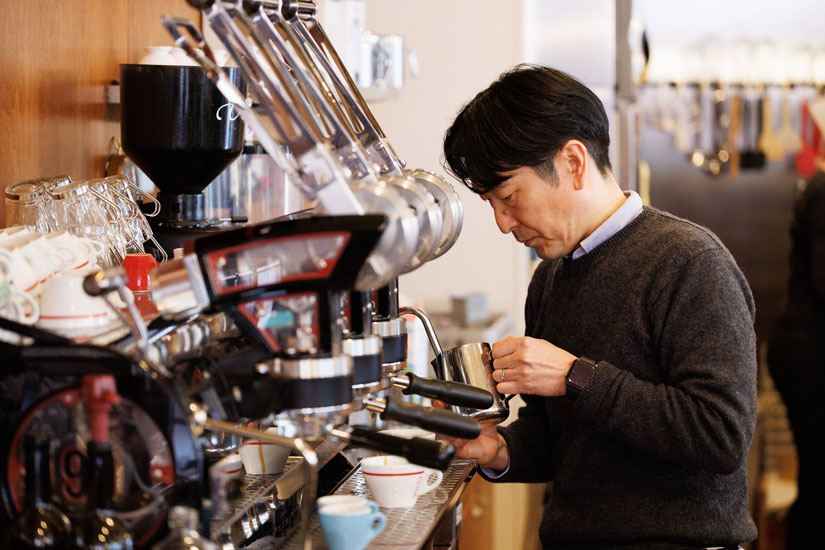
The ground floor of his family home was a coffee shop, where his father, Yoshimi, brewed coffee every day. He always passed by the shop on his way to and from school. It was a scene he took for granted.
“When I was in eighth grade, the shop switched to in-house roasting, and the coffee became much better,” recalls Hiroyuki. “As I visited various shops with my father to compare the flavors, I found it fascinating that ‘only my father could create that particular taste.’”
Watching his father at work, a future in the coffee business naturally began to take shape. However, as he started to think more concretely about his career path, the feeling that “I can’t surpass my father’s coffee” began to take root. Rather than taking over the shop, he decided he wanted to open his own place, expressing himself in a way that only he could. Driven by this desire, after graduating from high school, he took a job at a Western-style pastry shop in Osaka to learn how to make desserts. He worked as a pastry chef for six years, laying the groundwork to expand his creative expression as a café owner.
In search of my own unique flavor, I headed to Italy
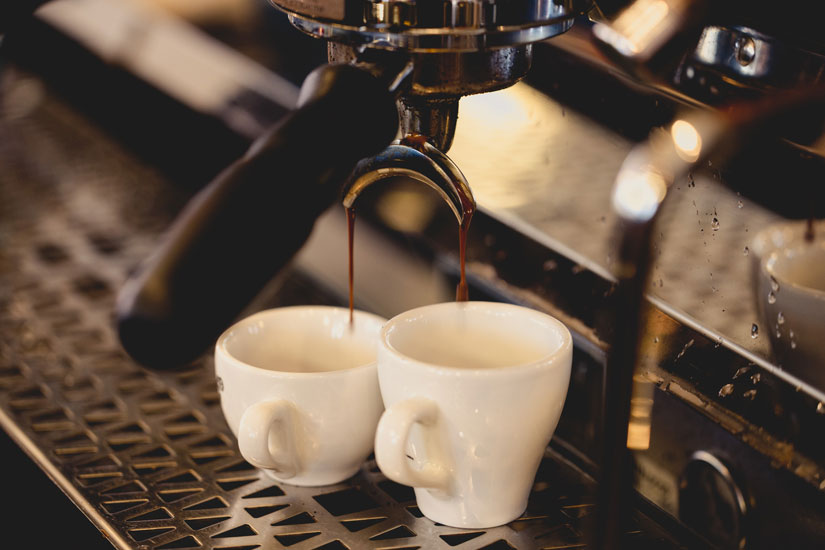
In the mid-1990s, foreign coffee chains began entering the Japanese market. Espresso machines—still a rarity at the time—along with diverse menus and bright, open-concept stores, spread primarily in urban areas, introducing a new way of enjoying coffee. Until then, drip coffee—made by pouring hot water over ground beans—had been the mainstream in Japan. Espresso, brewed under high pressure, was still virtually unknown. “I felt like the possibilities of coffee had suddenly expanded, and I was convinced that ‘this is going to catch on.’” Upon learning that its roots lay in Italy, Hiroyuki traveled there to experience the authentic taste firsthand. He had found the style he wanted to pursue.
Create and nurture your own sense of direction
Espresso is the standard in Italian coffee culture. Yoshi traveled from northern to southern Italy, visiting countless bars (cafés). He gradually developed his own vision for coffee by observing not only the flavors but also the layout of the shops and how customers relaxed. After returning to Japan, he mastered the operation of espresso machines while learning the art of in-house roasting at his father’s shop. Then, in 1999, he opened his own shop, “CAFE ROSSO,” in Yasugi City, the same town as his father’s. Watching his older brother, Yuji naturally decided to pursue a career in coffee as well. Like his brother, he worked at a pastry shop and explored his own style in Italy. He later opened “CAFFE VITA” in Matsue City.
Taking on the Barista Championship
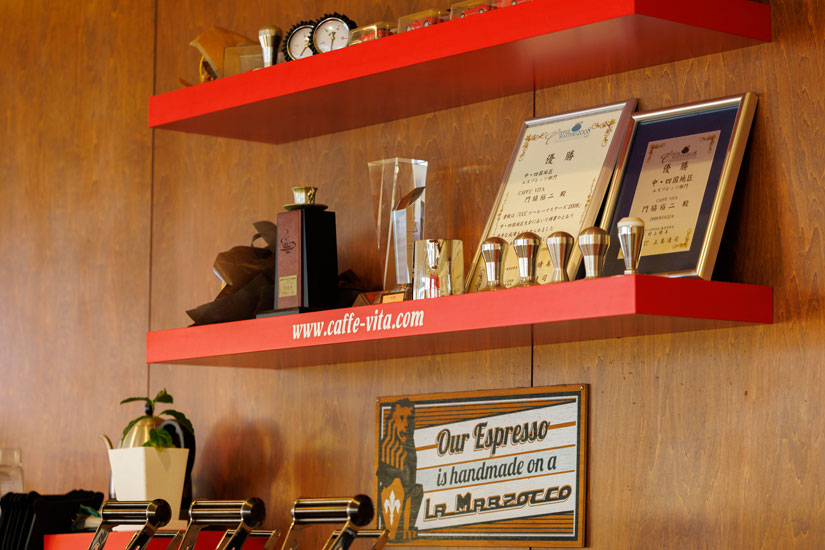
A few years after opening, a turning point arrived. A business partner asked them, “There’s a contest coming up—would you like to enter?” The competition in question was the “Japan Barista Championship,” organized by the Japan Specialty Coffee Association. It is one of the largest barista competitions in the country, held with the aim of promoting a culture of high-quality coffee. Specialty coffee refers to high-quality coffee that meets specific evaluation standards, and a barista’s brewing skills are essential to bringing out its full flavor. The competition evaluates participants comprehensively on factors such as flavor quality, technical skill, and hospitality. They entered the 2003 competition simply to test their skills. To their surprise, Hiroyuki won first place and Yuji took second. It was the moment their skills were objectively recognized.
Runner-up at the World Championship. The decision to roast their own beans that led to this achievement
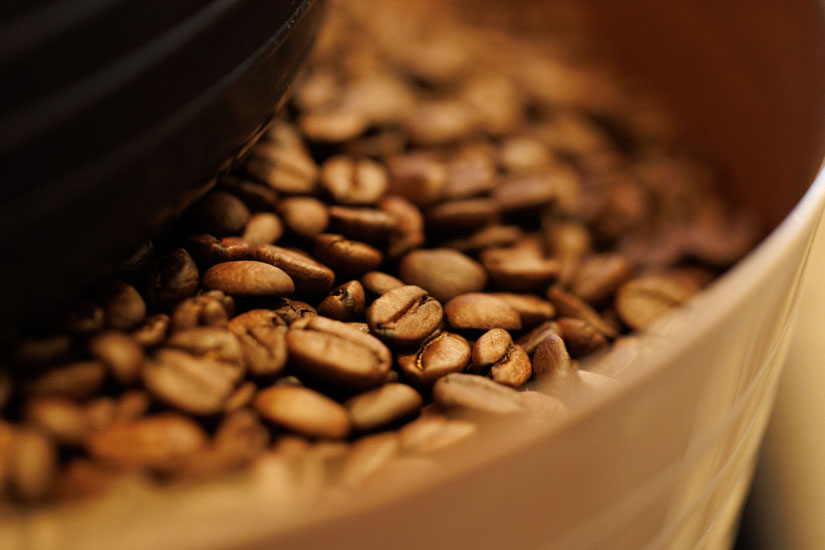
In 2005, Hiroyuki competed in the World Barista Championship. This global competition, open only to winners of the aforementioned national tournament, marked his debut as a representative of Japan. The judging criteria included not only taste but also service skills and presentation. At the time, it was no easy feat for an Asian to take on the espresso culture of Europe and the United States.
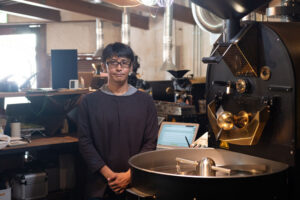
However, Hiroyuki took second place with a unique presentation featuring beans he had roasted himself. “Back then, almost everyone used commercially available beans. But I used beans I roasted myself and competed with an original flavor profile.” He established the foundation of the flavor through roasting and maximized that flavor during extraction. This choice, made to create a taste unlike any other, is undoubtedly still alive in his coffee-making today.
Our Commitment to Roasting: What Defines the Taste of Our Coffee
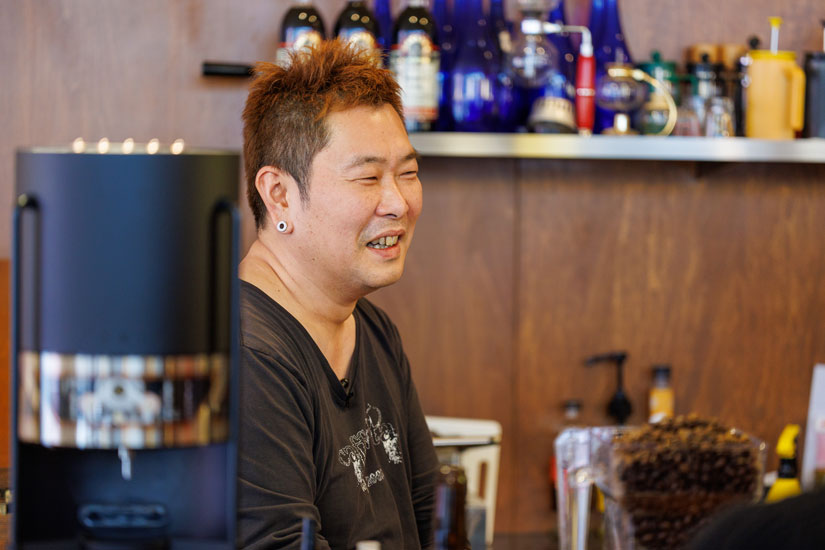
Even with the same beans, the flavor of coffee can vary greatly depending on the roast. Slight differences in heat and time can affect the acidity, sweetness, and body. “I once drank coffee brewed by a top-tier barista and was amazed by the depth of flavor. I thought, ‘I want to aim for this taste,’ but I realized that brewing alone wasn’t enough—I needed to create the flavor through roasting. That’s when I decided to seriously pursue roasting,” he says, recounting his beginnings. He wants to take full responsibility for the flavor, right to the very end.
Designing the flavors we want to deliver
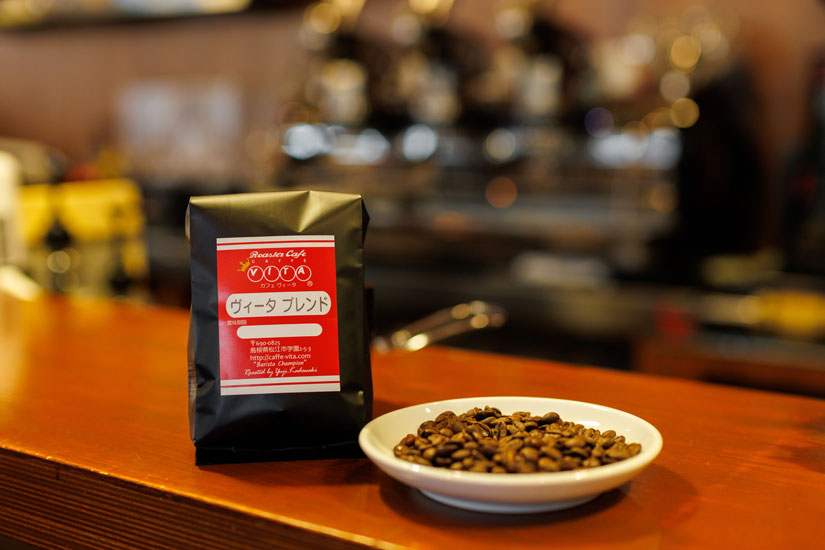
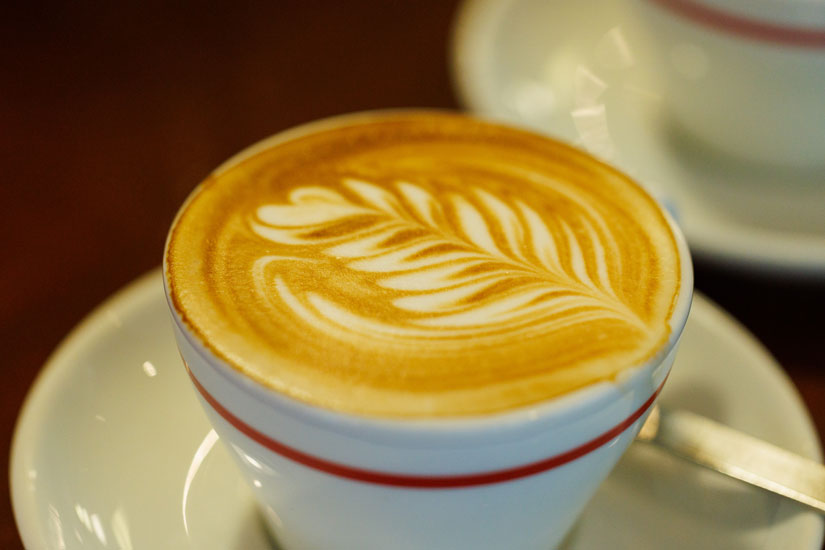
Since the onset of the COVID-19 pandemic, more people have been enjoying coffee at home. At the shop run by the two of them, they also sell coffee beans and drip bags. Authentic ways of enjoying coffee, such as grinding the beans and brewing them yourself, are becoming increasingly popular. “To ensure our customers can enjoy delicious coffee, we deliver beans that have been carefully roasted to bring out their full flavor. While our baristas bring out the maximum flavor in the shop, it’s difficult to replicate that at home. That’s why we’re researching the timing of the roast and the proportion of the bean’s outer layer to ensure it tastes great no matter who brews it,” says Yuji. Their current goal is to achieve a rich, reddish-brown crema (foam) and a body that holds its own against milk.
Hiroyuki, too, remains unwavering in his pursuit of the ideal flavor, saying, “I want to convey the thrill I felt when I drank coffee in Naples, Italy.”
They aim to bring happiness through coffee. Roasting is simply one means to that end.
We continue to create coffee that complements any occasion
In recent years, there has also been growing interest in specialty coffee that emphasizes specific origins. Single-origin coffee, made from beans produced in a specific region, stands out for its distinct character. On the other hand, the appeal of blends—which combine beans from multiple origins—lies in the diverse flavors they offer depending on the mix.
The shop carries two types of coffee beans: Arabica and Robusta. While Arabica beans have a vibrant aroma and fruity acidity, Robusta beans are characterized by their strong bitterness and deep body. By carefully assessing each origin and its unique characteristics, they create the optimal flavor profile.
With coffee bean prices continuing to rise, they suggest a variety of ways to enjoy coffee: “For everyday life, enjoy a wide range of flavors with an affordable blend, and on special occasions, treat yourself to the luxurious experience of single-origin coffee.”
The coffee they serve isn’t meant to impress with its “greatness”; rather, it’s a cup that naturally makes you say, “This is delicious.”
In a town where the tea ceremony culture runs deep, we are dedicated solely to coffee
The Matsue area is also known for the fact that during the Edo period, the feudal lord Matsudaira Fumai promoted the tea ceremony. In this town, where the culture of the tea ceremony has taken root, a daily cup of tea has always been cherished. Coffee, too, is something to be enjoyed naturally as part of everyday life. What they seek is not a taste that surprises, but one that makes you want to have another cup.
When asked about their future plans, Hiroyuki says, “We want to pursue our own unique coffee and share it with the whole country. We aim for a flavor that makes people think, ‘I didn’t know coffee could taste this good.’” Yuji adds, “We want to offer ways to enjoy coffee from various angles. We don’t just run a café; we also hold coffee machine demonstrations and seminars.”
Hiroyuki refines the “flavor,” while Yuji spreads the “culture.” While their approach of staying close to everyday life is a common thread, their individual passions are guiding coffee-infused living in a positive direction. The cup of coffee born in Shimane will continue to enrich the daily lives of many people.