
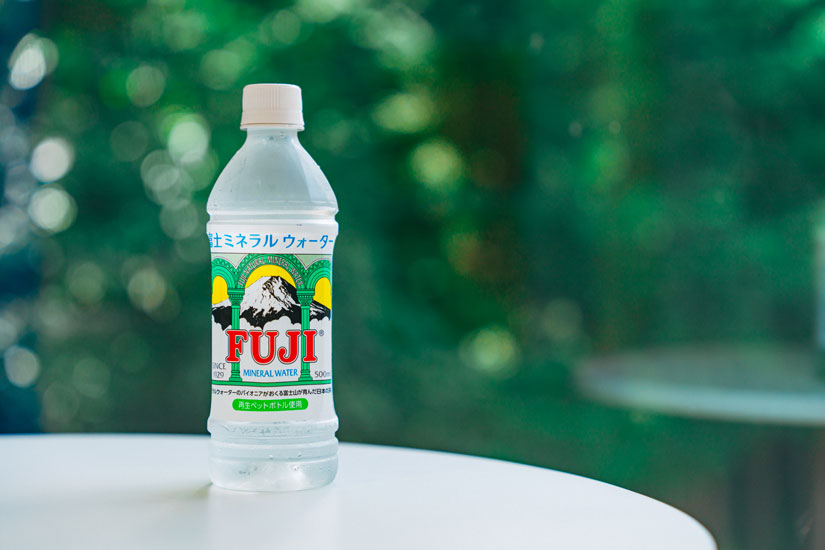
Yamanashi Prefecture boasts one of the highest water extraction volumes in the country, and its mineral water shipments rank first in Japan. “Fuji Mineral Water,” produced at a factory located within the Fuji-Hakone-Izu National Park in Fujiyoshida City, is Japan’s first mineral water brand, established in 1929. What has been the journey of this brand up to the present day—an era in which people buy water—and what impact has it had on society?
From Founding to Growth
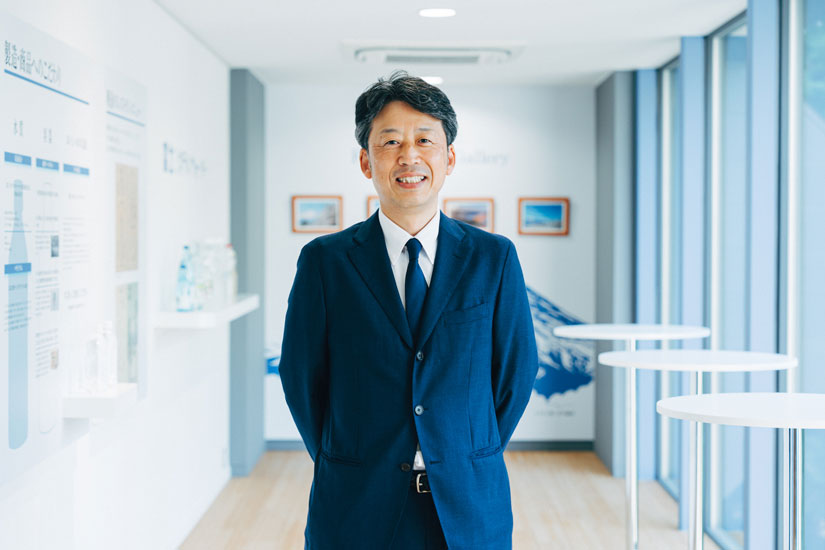
Fuji Mineral Water was founded in 1929 (Showa 4) as Horiuchi General Partnership by Ryohei Horiuchi, the founder of the Fujikyu Group (Fujikyu Corporation), which operates transportation services and resort developments primarily in the foothills of Mount Fuji. Under the brand name “Japan Evian,” the company began manufacturing and selling Japan’s first mineral water. Since Japan is blessed with abundant water resources, the concept of buying water was unheard of at the time, and the venture was reportedly ridiculed with comments like, “There’s no way water can be sold.” Amid these difficulties, what helped raise awareness of mineral water was the existence of a subscription club called the “Water Drinking Society,” which founder Ryohei Horiuchi helped establish. Launched at the recommendation of Shinpei Goto, a politician who was a close friend of Mr. Horiuchi at the time, this club reportedly brought in natural water from all over Japan for its members—including celebrities, politicians, and cultural figures—to enjoy. When the company began selling mineral water in bottles at a price of 3 yen for a set of 10 one-liter bottles, membership gradually grew to about 300 people, and the number of enthusiasts, primarily among the wealthy, increased. “I think there was a desire to let everyone across Japan enjoy delicious water,” say current President Hirohiko Yamamoto and Plant Manager Haruhito Moriya.
The Imperial Hotel was the first to do business with Horiuchi & Co. at that time, and Japan Evian was served as table water. Then, around the time of the post-war period of rapid economic growth, a boom in whiskey on the rocks took hold, and sales at bars surged. Furthermore, as water pollution became a growing concern, the selection of the “100 Famous Waters of Japan” began, interest in “safe and delicious water” grew, and mineral water bars appeared, leading to a gradual increase in demand.
Changing Attitudes Toward Water
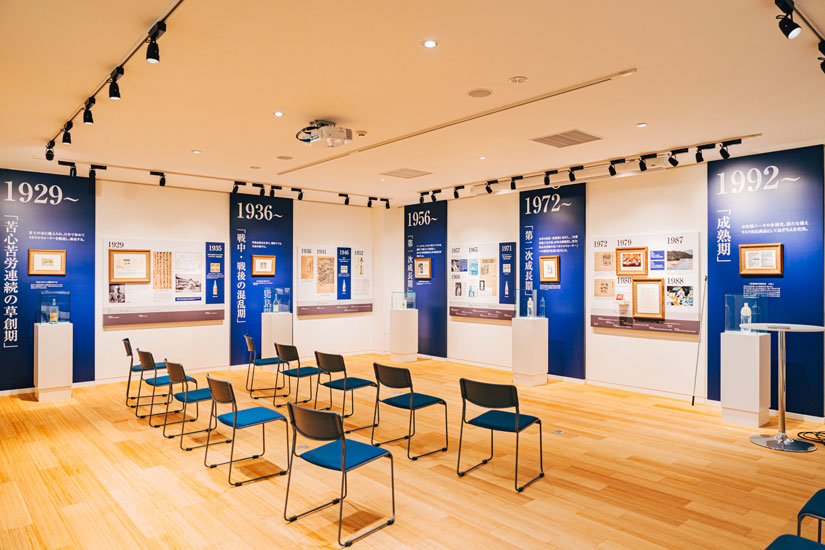
As the country entered wartime, the use of “enemy languages”—terms referring to the languages of hostile or belligerent nations—was prohibited, and the product was renamed from “Japan Evian” to the Japanese name “Fuji Mineral Water.” Subsequently, in 1946 (Showa 21), following the end of the war, the brand name was changed to its current name, “Fuji Mineral Water.”
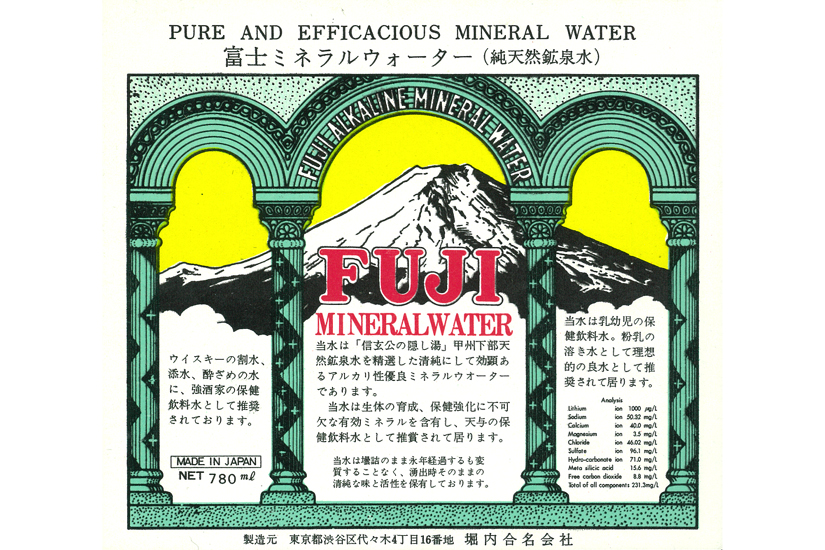
As mineral water became more widely known, another event brought the company into the spotlight. In 1965 (Showa 40), a fishing boat involved in a maritime accident in Yamagata Prefecture was found to be carrying a stockpile of water from Horiuchi & Co., labeled “lifesaving water.”
When reports emerged that this supply had enabled the crew to survive an 11-day drift and return safely, regulations were established requiring ships to stock “lifesaving water,” and its importance became widely recognized.
In fact, “Kyusei-mizu” was not an exclusive product of the company; it was a general term for long-term storage water that became mandatory for passenger ships and fishing vessels following the revision of the Ship Safety Act in the 1950s. While several manufacturers initially produced and sold it, Horiuchi Gomei Kaisha’s Kyusei-mizu—which excelled in technologies such as heat sterilization—is said to have been the pioneer in this field and held a significant market share domestically.
Building on this legacy, the company launched emergency-use preserved drinking water in polyethylene containers in 1971 (Showa 46), followed by the release of Fuji Mineral Water Emergency-Use Preserved Water in 1996 (Heisei 8).
In 1995 (Heisei 7), the company joined the Fuji-Q Group, and at that time, it changed its name to “Fuji Mineral Water Co., Ltd.” to match its brand name, a name it retains to this day.
Natural spring water from the foothills of Mount Fuji, a source of pride for Japan
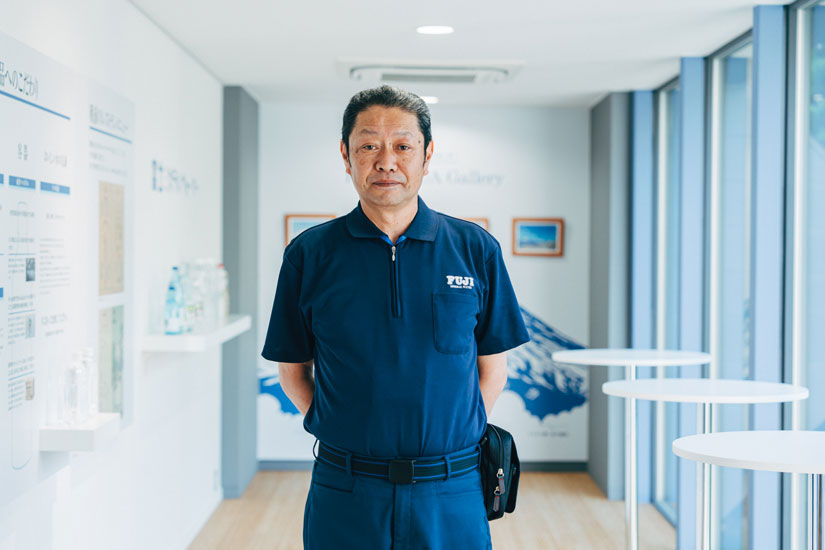
This project is said to have been inspired by Shinpei Goto, who was involved in the founding of the “Water Drinking Society,” when he visited Shimo-Onsen in Yamanashi Prefecture and praised the local spring water. For many years, the water was sourced in the former town of Shimo (now Minobu Town), but the source has since been moved to Fujiyoshida City. Yamanashi Prefecture is blessed with water sources such as the Southern Alps and Mt. Daibosatsu, and the character of the water varies depending on the source. Regarding the decision to choose the foothills of Mt. Fuji, Plant Manager Moriya explains, “Mt. Fuji is attracting attention from overseas, and the area is particularly rich in water resources, making it highly suitable for water collection. It is the soft water preferred by Japanese people, and we are confident in offering it as delicious.”
The source water, collected at the foot of Mount Fuji at an altitude of approximately 1,000 meters, is rain and snowmelt that has slowly filtered through basalt layers over a period of about 40 years before emerging as a spring. It is a soft water with a slightly alkaline pH and a hardness of 38 mg/L, offering a smooth, mellow taste. The multi-layered basalt strata are rare even on a global scale, and as the natural water seeps through, it absorbs and becomes rich in the four major minerals—calcium, magnesium, potassium, and sodium.
Delicious, safe, and high-quality water
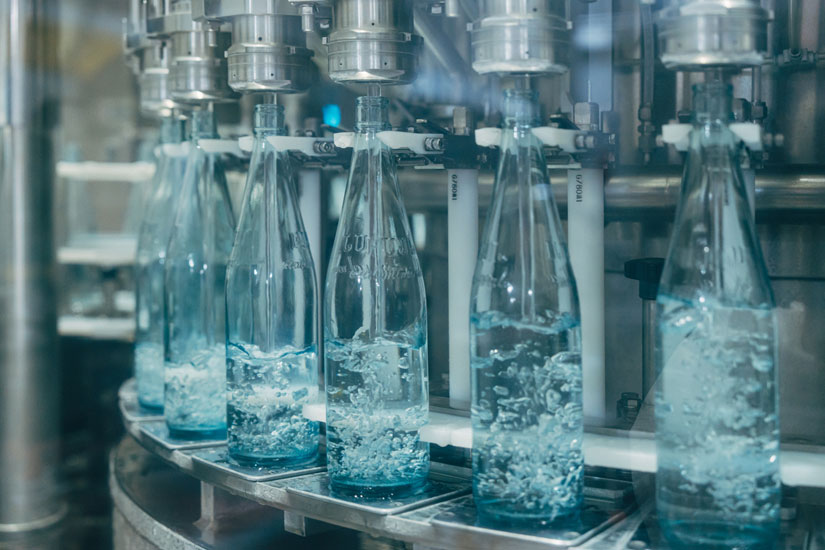
At the “Aqua Works” plant, which opened in 2016, every step of the process—from drawing the raw water to the final production—is carried out on-site. Plant Manager Moriya explains, “The most critical step in the manufacturing process is pasteurization.” He notes that groundwater contains microorganisms and mold; if left untreated, these would multiply and cause the water to spoil. Therefore, the water must be pasteurized to kill all microorganisms and mold before it can be bottled. At Fuji Mineral Water, the raw water is sterilized using Ultra-High Temperature (UHT) pasteurization, which involves heating it to 120°C for 2 to 3 seconds. While the Food Sanitation Law typically requires heating at 85°C for 30 minutes, raising the temperature allows for sterilization in a much shorter time. After pasteurization, the water is cooled from 120°C to 85°C before being bottled. The reason it is not cooled to room temperature is that the company employs a method called “hot filling,” in which the containers are sterilized simultaneously while the water is still at a high temperature.
Following production, the water undergoes further analysis by external agencies. Thanks to these rigorous quality control measures, the aforementioned emergency storage water achieves an extended shelf life of 5 years and 6 months. Plant Manager Moriya explains that the company’s ability to maintain safe and reliable quality since its founding stems from “the pride and dedication of the Fuji Mineral Water brand.”
High-quality products made possible by a mineral water brand from Yamanashi
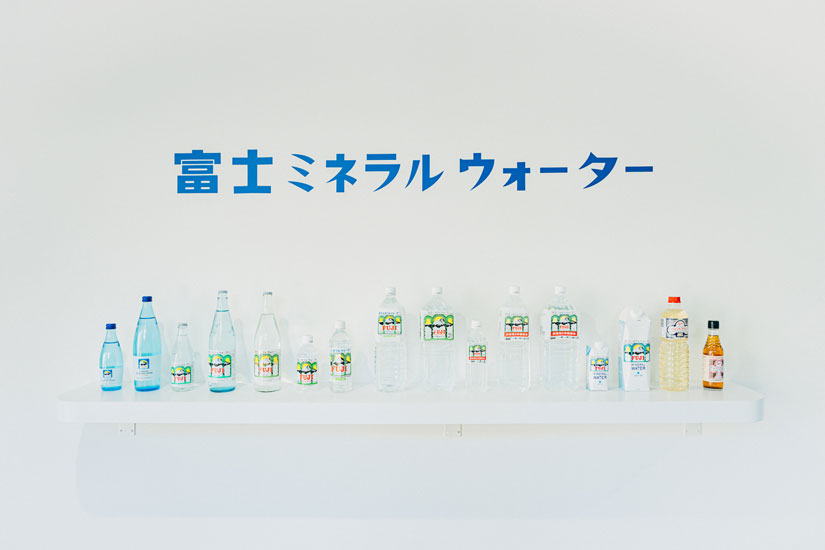
In addition to mineral water, the company launched “Holis Wine Vinegar” in 1935 (Showa 10), which became Japan’s first wine vinegar. “Perhaps they wanted to create a product that truly embodied Yamanashi, known for its wine production and grape-growing regions,” says Mr. Yamamoto. Made from 100% locally grown grapes and aged to perfection, the vinegar is currently available in two sizes: a 1,000ml bottle favored by restaurants and other commercial establishments, and a 250ml alcohol-free version designed to be safe for households with young children. Since 1959 (Showa 34), production has been outsourced to Asaya Foods Co., Ltd., a local company that had been sourcing the raw wine mash, and the product became a long-selling favorite known affectionately as “Holis.”
Furthermore, amid the recent carbonated beverage boom, the company launched “Fuji Premium Sparkling Water” in 2015. As the name suggests, it embodies the vision of creating “a premium sparkling water that represents Japan.” Because it uses high-quality, easy-to-drink soft water, it retains a smooth texture while featuring delicate bubbles distinct from those of strongly carbonated waters. The company is particular about maintaining a gas volume of “4.2,” which represents the amount of carbon dioxide dissolved in the water. “If it’s too high or too low, we can’t achieve this mouthfeel,” says Plant Manager Moriya.
The product has achieved success, including being selected as table water at international conferences such as the 2016 G7 Hiroshima Foreign Ministers’ Meeting, and being certified under the “TOKYO & AROUND TOKYO” brand—a government-backed initiative that promotes local products from the Kanto region (Tokyo and seven prefectures) to international visitors.
Our Commitment to Bottles
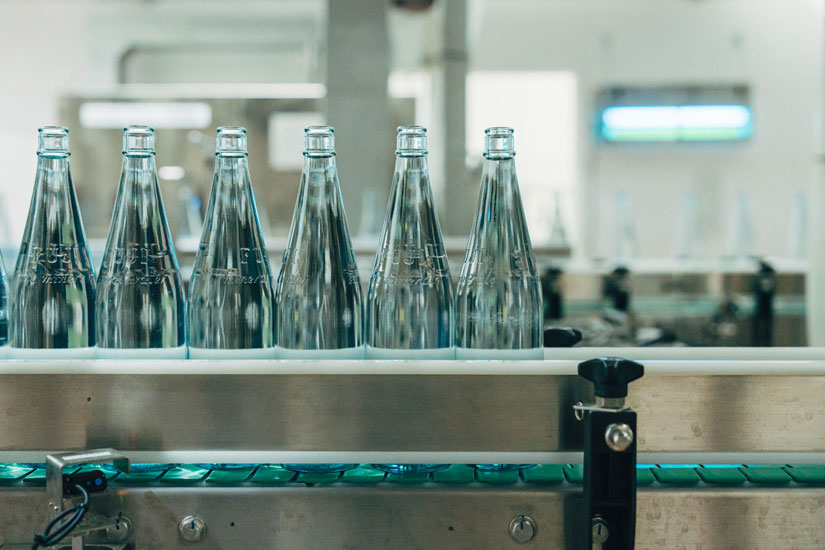
Fuji Premium Sparkling Water is bottled in an original, easy-to-hold, rounded bottle featuring a pale blue hue that evokes the Japanese spirit of “Wa.” The company remains committed to its roots in “bottled water” dating back to its founding and continues to uphold that tradition today. While the bottle itself conveys a “premium” image, the company also handles returnable bottles for its commercial mineral water products, demonstrating its commitment to the environment through initiatives such as collecting, cleaning, and reusing the bottles after use.
A New Take on Mineral Water
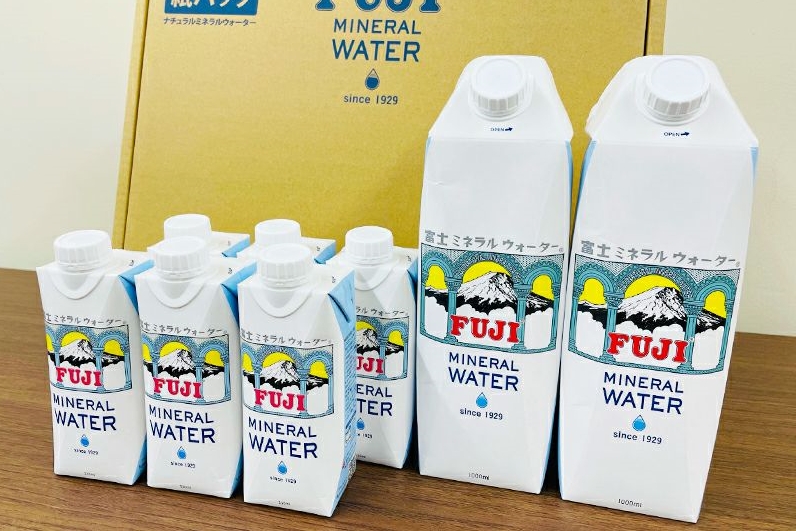
Amid growing calls for action on the SDGs (Sustainable Development Goals) in recent years, the company launched a paper-packaged mineral water product in 2021 as part of its efforts to reduce plastic use. The inner lining of the container is made of aluminum foil, a material with excellent light-blocking properties, allowing the product to be stored at room temperature for approximately one year. This innovation reduces plastic use by approximately 74–75% while maintaining the same quality as previous products. At the 2023 G7 Hiroshima Summit, the product was selected as the official table water, symbolizing sustainability, and garnered attention from around the world. Furthermore, the company plans to replace the caps on some products with bio-caps made from sugarcane-derived materials by April 2024. “While PET bottles remain the mainstream packaging for mineral water among major domestic beverage manufacturers, and paper cartons still hold a minority position, we intend to seize this opportunity as demand grows and focus our efforts on sales promotion,” Yamamoto said with conviction.
“富士”のブランドが目指す先
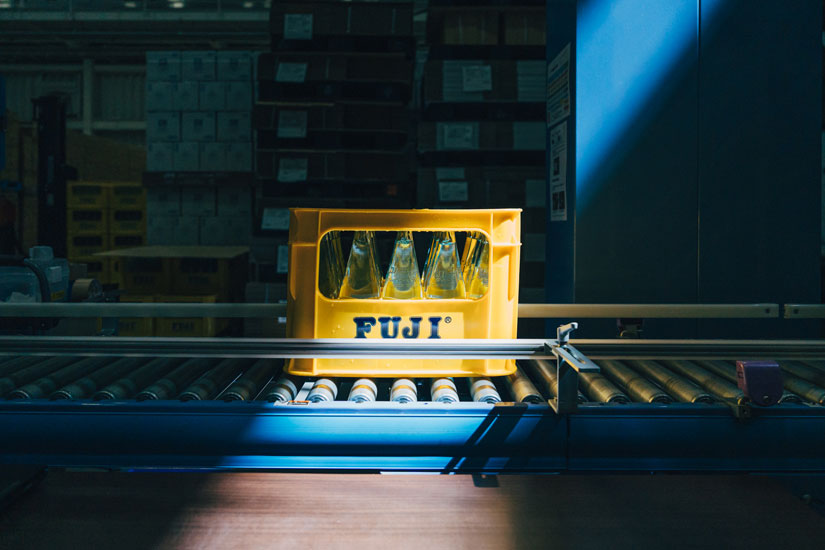
When it was first established, Fuji Mineral Water was more of a luxury item than a daily beverage, initially served in high-end hotels and restaurants. While it has firmly established itself as a “premium brand” still served on special occasions, the company has also expanded its business to meet the evolving needs of the times regarding “water.” Emergency water reserves, which took their current form in response to past maritime accidents, are increasingly recognized as essential for disaster preparedness amid the recent surge in natural disasters. Furthermore, as a sustainable, circular society becomes a global goal, the company has urgently initiated efforts to reduce its environmental impact, such as moving toward label-free PET bottles and offering products in paper cartons.
Although we now live in an era where various types of water from major manufacturers line the shelves of mass retailers, Mr. Yamamoto states, “Our mission is to continue our branding efforts so that people can enjoy the ‘delicious, safe, and high-quality water’ we have cultivated for over 90 years, while maintaining a clear distinction from price competition.” “We aim to differentiate our products based on usage: bottled water, which represents our roots since our founding, for special occasions, and paper cartons for practical purposes like portability,” he says, outlining his vision for the future.
The reason the design symbolizing “Fuji” has remained virtually unchanged even with the new container is the desire to “establish a traditional brand image that transcends time.” With plans to expand export sales channels in the future, expectations are high for the further global success of this brand bearing the name of Mount Fuji, a symbol of Japan.