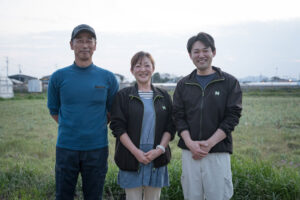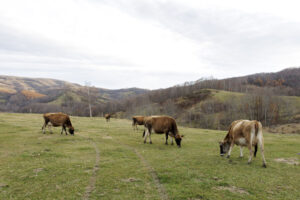


Cows stroll leisurely across a small hill where the reddish-brown soil lies bare. Their lean, muscular builds, which exude a sense of wildness, are the result of being raised entirely on free-range pastures in the mountains. The ranch owner, Nozomi Yano, is a former engineer. After leaving her corporate job, she spent 10 years developing a plot of land roughly three times the size of Tokyo Dome, where she now raises 30 Jersey cows.
She entered the mountains penniless, cleared the land, and started a dairy farm
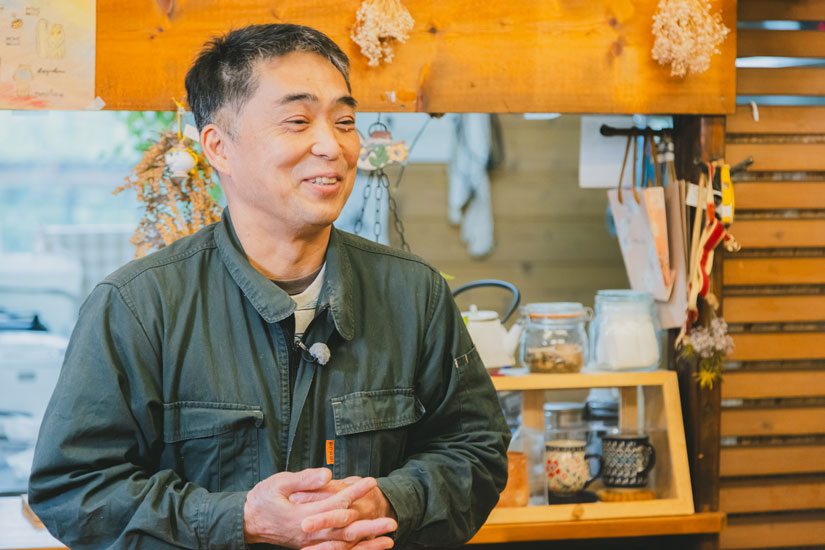
Tamana City, located in northern Kumamoto Prefecture, is blessed with abundant natural beauty—including the Ariake Sea, Mount Kodai, and the Kikuchi River—and enjoys a mild climate. It is an agricultural town where rice, vegetables, and fruit cultivation thrive. It was around the year 2000 that Yano took her first steps in this region.
Originally from Kitakyushu City, Fukuoka Prefecture, Mr. Yano had been working as a plant engineer designing equipment for a local steel mill, but he suddenly felt a sense of unease about continuing his life as a company employee. Having suffered from allergies since childhood, he began to fundamentally reevaluate his lifestyle and diet. During this process, he met a farmer practicing natural farming methods that use neither pesticides nor fertilizers, and his interest in food and agriculture deepened.In his late 20s, he left his corporate job and decided to settle in the mountains where his current ranch is located, aiming for self-sufficiency and sustainable agriculture.
“Settling” refers to entering uncharted territory and starting a new life there. Mr. Yano came across the site of a former ranch, now overgrown with mixed woodland at an elevation of about 200 meters, and was convinced that here he could pursue a form of mountain dairy farming unique to Japan. In 2000, he decided to move there penniless, bringing with him one cow, one pig, and one dog.He built a small hut in a corner of the land, cut down and thinned out the trees, cultivated the barren soil, and established Tamana Farm.
It wasn’t until seven years later, in 2007, that Mr. Yano was able to begin dairy farming in earnest. While selling milk, he also started processing and selling cheese to break even, gradually building the kind of ranch he envisioned. The ranch is named Tamana Ranch, after the local area. It took a full decade to expand the ranch to its current size, all while making a living by selling rice, vegetables, and eggs raised using natural farming methods.
A farm where vigorous, nature-oriented farming thrives
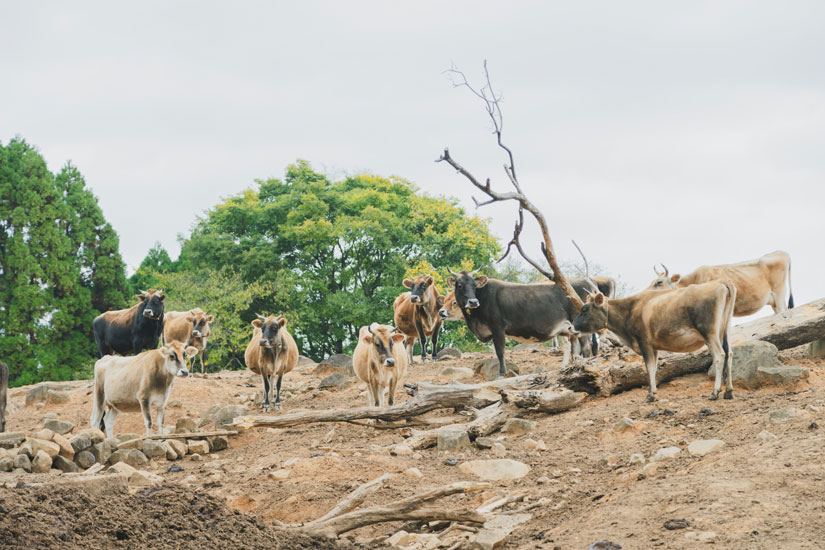
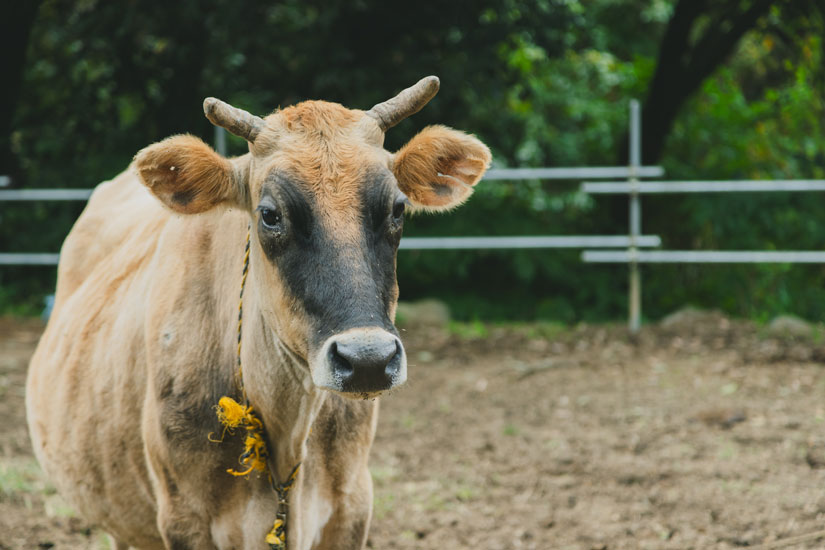
Thirty dairy cows live on the vast 15-hectare property. The cows are of the Jersey breed. Compared to the Holstein breed, which accounts for over 90% of the domestic herd, Jerseys are about 200 kg lighter and produce less milk. However, this makes them less prone to knee and hoof injuries caused by their own weight, making them well-suited for grazing on hilly terrain.
Beyond their suitability for this environment, we chose Jersey cows because the milk they produce is exceptionally rich in fat and protein, giving it a rich, creamy texture—a key factor in setting our milk apart in terms of taste.
Incidentally, Tamana Farm does not feed the grain or mixed feed typically used in conventional dairy farming. When the cows are hungry, they eat the grass that grows naturally in the mountains; when they are full, they take walks or doze off.
While most farms have barns to house and manage their cattle, Tamana Farm has no barns; the cows spend the entire year roaming freely on the mountain pastures. Naturally, they defecate and urinate in the mountains, but the manure from cows that eat only grass looks just like a clump of soil. It’s not watery, and it doesn’t have that pungent, nose-stinging odor.Mr. Yano picked up a piece, and it looked fluffy to the eye; it crumbled between his fingers and blended right into the mountain soil. Watching this, it’s easy to imagine how it returns to nature without human intervention and circulates within this land. There are only about 20 dairy farms nationwide that practice free-range grazing like Tamana Farm.
The cows at Tamana Farm have visible spines and faintly visible ribs. If you imagine the Holsteins kept in barns, they might seem thin, but Mr. Yano says this is a state closer to the wild.Since they do not feed the cows high-protein, high-calorie feed to accelerate growth and maximize milk production, the cows remain slim, and their milk yield is less than half that of typical Jersey cows. Yet, this is precisely why they are healthy. Because they eat a diet that does not strain their bodies, get moderate exercise, sleep well, and live stress-free lives, they do not become obese and are less prone to illness. The cows breed naturally in the mountains, and calving occurs without human assistance—the cows give birth on their own.
Tamana Farm is alive with a vigorous rhythm that follows the laws of nature. Mr. Yano believes that this cycle represents the ideal form of dairy farming, and that mountain dairy farming is the best choice for producing the finest milk.
Tamana Farm’s Dairy Products Reflecting the Seasons and Local Climate
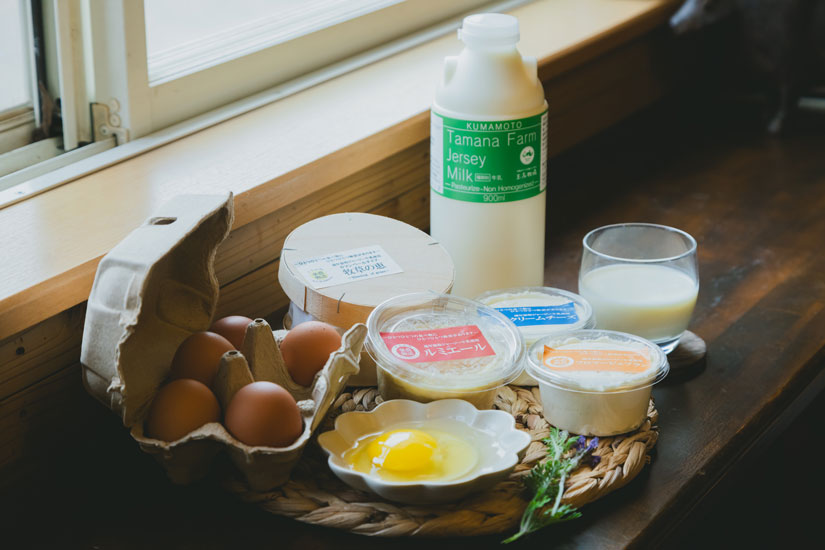
The milk from cows raised in this environment is characterized by a creamy color with a faint yellowish tint. While the average milk fat content of commercially available milk is around 3% for Holsteins and 4% for Jerseys, Tamana Farm’s milk reaches 5%. This high milk fat content creates a rich, full-bodied flavor, yet the aftertaste is surprisingly refreshing.Another distinctive feature of Tamana Farm’s milk is that its flavor subtly changes with the seasons, influenced by temperature and the condition of the pasture grass. While high-temperature pasteurization—heating milk to 120–130°C for 3 seconds—is the standard in Japan, Tamana Farm uses low-temperature pasteurization at 65°C for 30 minutes, resulting in minimal protein denaturation. This preserves the raw milk’s natural, clean flavor and the seasonal nuances, giving it a smooth, light mouthfeel.There is no heaviness from proteins or fat clinging to the tongue; instead, it leaves a lingering aftertaste that fades away cleanly.
Made from this milk, Tamana Farm’s signature product—the original chèvre-style cheese “Lumière”—first surprises you with its aroma. A refreshing, faintly sweet scent reminiscent of fresh grass gently wafts up. When you take a bite, a rich depth and umami slowly spread across your tongue, yet you also sense a crisp freshness like mountain air. As it ages, the flavor gains depth, and the way it melts smoothly is another highlight of Lumière.Developed by Mr. Yano after searching for a production method that perfectly suited the quality of the milk he produces himself, this cheese encapsulates the natural environment where the cows live and the changing seasons. It is a masterpiece that won the Grand Prize at the Kumamoto Food Science Research Association Awards in 2011.
Passing on sustainable dairy farming that supports a livelihood to the next generation
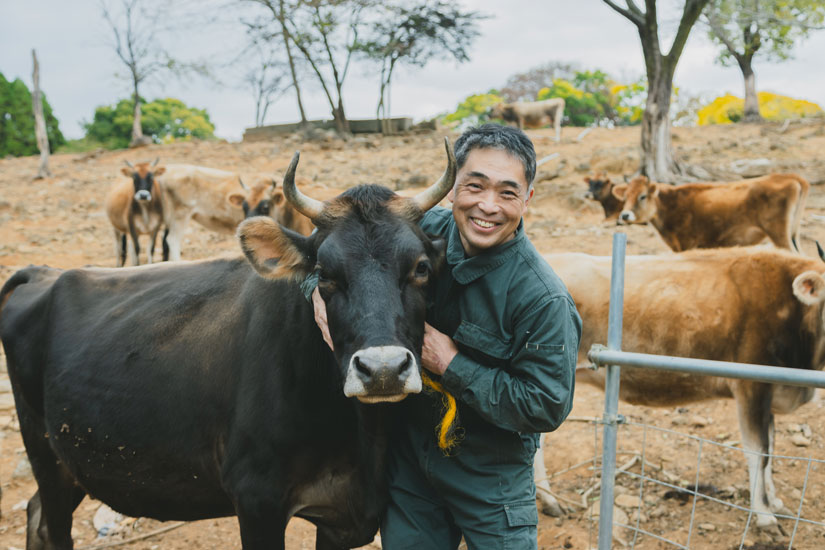
Tamana Farm’s dairy products—including milk, cheese, and butter—are sold directly to the public and enjoy strong support from chefs, pastry chefs, and natural food stores both within and outside the prefecture. However, Mr. Yano’s goal is not to increase production beyond current levels, but to maintain quality.
The ranch, developed on a mountaintop, has many slopes, and grass struggles to grow in shaded areas. Furthermore, due to the frequent torrential rains in recent years, soil erosion has become a reality, making it increasingly difficult to secure enough grass within the ranch itself. While they currently make up for the shortfall by growing grass on separate fields, securing sufficient land for the ranch remains an immediate challenge.
Mr. Yano also feels a sense of responsibility toward the next generation of dairy farmers. While there is a constant stream of visitors coming to observe and train with the aim of adopting farming methods like those at Tamana Farm, it is not uncommon for them to face obstacles related to funding and land.Mr. Yano believes that agriculture is only sustainable when it not only produces food but also provides a livelihood. To achieve this, he believes it is important not only to pass on know-how to the younger generation but also to create an environment where they can take on new challenges with confidence. He also notes that to address these issues, consumers need to change their criteria and mindset when choosing food.
To this end, Tamana Farm actively conducts farm tours and events aimed at both consumers and producers to encourage them to think about food and its production environment. Perhaps as a result of these efforts, consumers, producers, chefs, and even local governments who resonate with Mr. Yano’s vision have begun voluntarily promoting the appeal of Tamana Farm’s products and the excellence of its initiatives.In this way, the seeds sown by Mr. Yano are gradually bearing fruit, and the circle of his activities is expanding—deepening understanding of the potential and value of mountain dairy farming in Japan, where approximately 70% of the land area consists of mountains and plateaus.
The name of the cheese into which Mr. Yano has poured his heart and soul is “Lumière.” Just like this cheese, whose name means “light” in French, the small light born from life in the mountains has now reached maturity and is beginning to illuminate the next generation.