


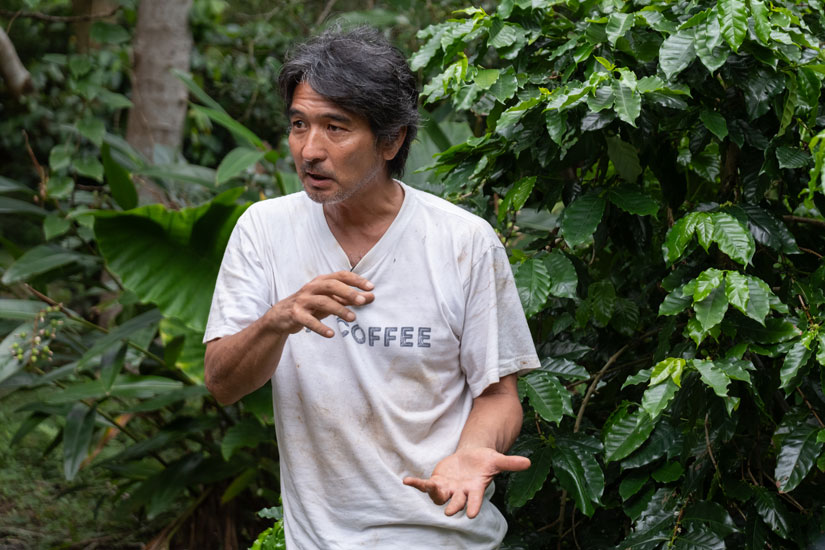
The encounter between Okinawa’s lush soil and the coffee plant, and the bonds formed with fellow coffee lovers. ADA Farm creates special coffee beans packed with a passionate story, carefully cultivated over more than a decade. This richly flavored coffee, distinctive to Okinawa, has become a rare treasure that attracts keen interest from roasters and collectors around the world.
Japan’s First Specialty Coffee, Grown in Lush Forests
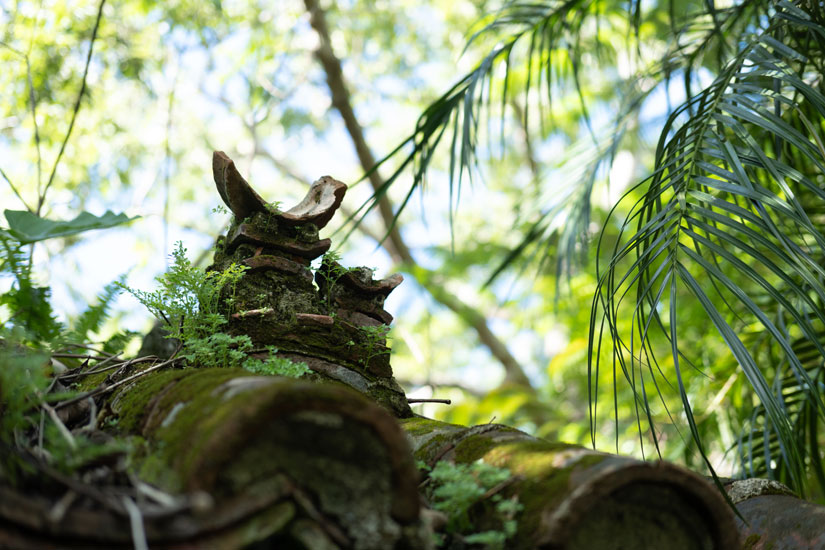
Located in the Yanbaru Forest in northern Okinawa Prefecture, “ADA Farm” is the first farm in Japan to receive specialty coffee certification. This designation is awarded only to beans that achieve an extremely high score of 80 or higher out of 100 in a cupping (tasting evaluation). During the evaluation, quality is assessed against strict criteria across 10 categories, including “clean cup,” “distinct acidity,” and “sweetness.”
Despite being situated in an environment that is far from ideal for cultivation, the fact that the beans’ flavor and aroma potential have reached global standards is the culmination of CEO Taijiro Tokuda’s relentless passion. This remarkable achievement has now become a source of great hope for the entire Okinawan coffee industry.
“Mr. Tokuda is constantly evolving. Even after gaining global recognition, he continues to take on new challenges, and that is reflected in the quality of his beans,” says Yoshiyuki Nakamura. Nakamura won the 2017 Japan Coffee Roasting Championship (JCRC) and subsequently represented Japan at the 2019 World Coffee Roasting Championship (WCRC) in Italy, where he took second place in his debut appearance. He runs “Mame Pole Pole” in Okinawa City, Okinawa Prefecture, and is one of Japan’s leading roasters who loves ADA Farm’s beans.
Mr. Tokuda explains why he started growing coffee in Okinawa: “First, there was wonderful farmland here, and rich soil. Then, I encountered coffee as a plant. Furthermore, I met fellow coffee lovers in Okinawa. It was all a matter of fate, and before I knew it, I had come this far.”
With Okinawan soil and coffee
The ideal region for coffee cultivation is the tropical zone known as the “Coffee Belt,” which stretches between the Tropics of Cancer and Capricorn, centered on the equator. While Brazil, Ethiopia, and Indonesia are among the most well-known coffee-producing regions, Okinawa lies just outside the northernmost edge of this belt. With typhoons, cold winter temperatures, and acidic soil, it is by no means a “comfortable” environment for coffee.
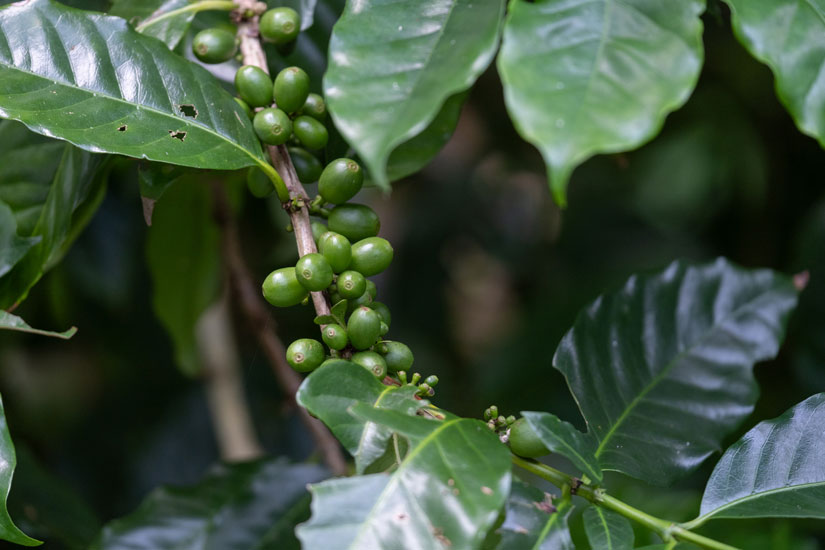
However, rather than forcibly altering the environment through soil improvement, Mr. Tokuda chose a farming method that makes full use of the blessings and natural cycles provided by the mountains. Specifically, it is a groundbreaking farming method that preserves the surrounding virgin forests, cultivates crops within them, and avoids disrupting the natural forest cycle.
The climate of each year is directly imprinted on the beans’ character. For example, if there is plenty of rain in the summer, healthy fruit grows robustly; conversely, in years marked by drought or extreme temperature fluctuations, the beans’ vitality becomes concentrated.
Mr. Tokuda says, “The beans tell the story of what kind of year it was in Okinawa.” Drinking ADA Farm coffee is synonymous with reliving the sound of Okinawa’s rain and the warmth of its sunshine from that particular year. It is not merely a beverage, but a one-of-a-kind cup filled with a “record” of Okinawa’s nature.
We wait for them to ripen, then carefully hand-pick each berry one by one
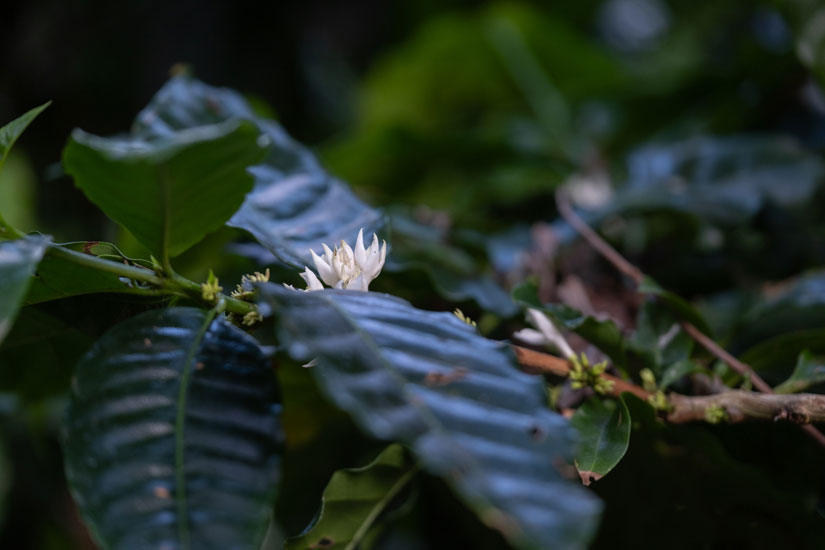
The flowering season for coffee at ADA Farm typically runs from April to July. It takes 7 to 8 months from flowering for the fruit to grow and fully ripen, with the harvest season lasting from December to April. Because coffee flowers have a long blooming period, the harvest window is correspondingly broad; however, coffee generally blooms more readily in climates with distinct wet and dry seasons. In Okinawa, however, the climate is often unstable, which can prevent the coffee plants from triggering flowering, resulting in a longer harvest period. Since coffee beans require not only the growth of the pulp but also the development of the seed, we carefully monitor the condition of the seeds to determine the optimal moment for harvest. It is said that the appearance and condition of the fruit when fully ripe vary depending on the weather leading up to harvest and individual differences among the coffee trees. During harvest, we verify the ripeness with our own eyes, check the texture, taste the fruit, and hand-pick it. This meticulous care is what leads to the quality of ADA Farm’s coffee.
“I’m not doing anything special,” says Tokuda, yet he nurtures each and every coffee cherry with meticulous care.
Processing refers to the steps of extracting the seeds (coffee beans) from the harvested cherries and drying them. Coffee beans harvested at their peak are carefully assessed for their unique characteristics, then hulled, dried, and fermented. The processing methods at ADA Farm are never the same.
“They’re the same beans until harvest,” says Tokuda. “But through processing, we can bring out a surprisingly diverse range of flavors. That’s why I want to hand them over to the roaster in a state where their potential has been maximized.” His goal is not to define the beans’ character as a farmer, but rather to expand the range of possibilities each bean holds through the ‘translation of flavor’ that is processing.
Furthermore, the varieties they cultivate also have their own distinct characteristics. “New World No. 1,” which bears red fruit, is characterized by a vibrant aroma and bright, high-quality acidity. On the other hand, “New World No. 2,” with its yellow fruit, stands out for its robust sweetness, toasty notes, and rich body.