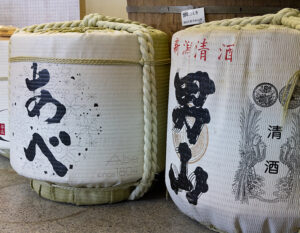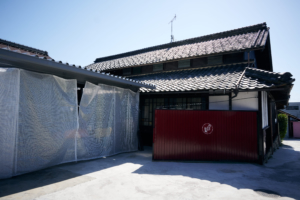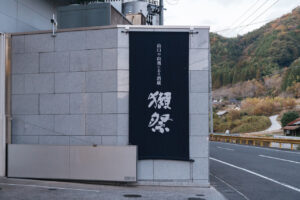


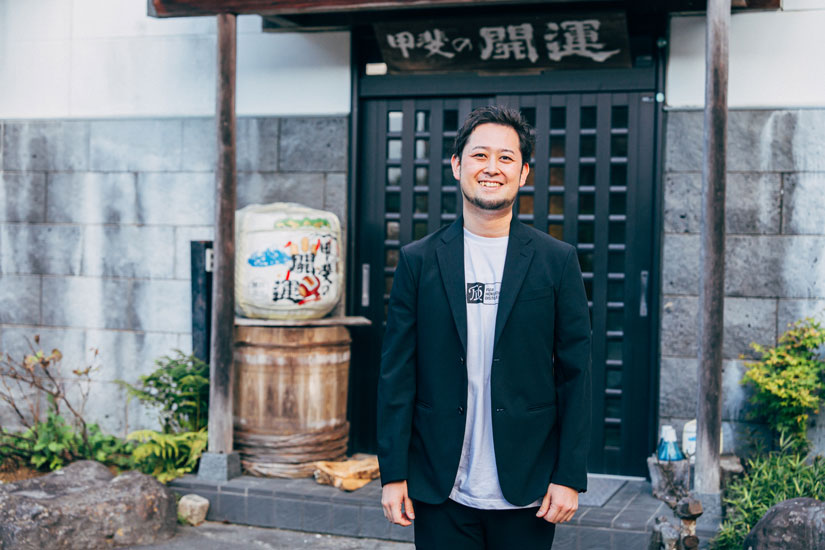
Idejōzōten, a long-established sake brewery with over 300 years of history dating back to the Edo period. Nestled at the northern foot of Mount Fuji, on the shores of Lake Kawaguchi, this brewery has continued making sake for generations. In recent years, it has embarked on a new venture: crafting its own unique whiskey. We spoke with the next-generation representative about his vision for preserving the taste of their traditional sake while embracing this new challenge, and about the future of this venerable brewery.
A Brewery by the Lake
Lake Kawaguchi, one of the Fuji Five Lakes at the foot of Mount Fuji, attracts many tourists every year. Nearby stands the long-established brewery “Ide Brewery,” which has been in operation since the mid-Edo period, over 300 years ago. We spoke with Takaoshi Ide, the 22nd-generation owner, who is currently involved in brewing and selling sake, and now also in the new venture of whisky production.
A brewery that began with soy sauce production
The origins of “Ide Brewery” date back to around 1700. Located on the northern foothills of Mount Fuji, this region boasts abundant spring and groundwater. However, the absence of rivers and the hard bedrock made digging irrigation channels difficult. Consequently, the land was unsuitable for supplying water to rice paddies and thus not ideal for growing rice, the key ingredient for sake.Conversely, soybean cultivation using rainwater flourished. Consequently, the 11th generation owner, Yogoemon Ide, opened a brewery to begin brewing soy sauce using these soybeans. Around 1850, the 16th generation owner, Yogoemon Ide, recognized the cool climate at an elevation of 850 meters and the abundant spring water flowing from Mount Fuji.He began sourcing rice from regions within Yamanashi Prefecture where rice cultivation was thriving and started brewing sake. This marked the beginning of sake production at Ide Brewery.
While it’s difficult to source all ingredients solely from rice grown in the northern foothills region, which has few paddy fields, the brewery now procures rice from various farmers nationwide, primarily within Yamanashi Prefecture. However, driven by the desire to “create sake that becomes a source of pride for local people,” they have recently expanded their offerings to include brands like the special junmai sake “Hokuroku,” made using “Tamasakae” rice from the northern foothills of Mount Fuji.However, no matter how carefully suppliers are selected, some variation in rice quality based on the year and region is unavoidable. “I believe a key technical point in sake brewing is how to minimize impact on the product and effectively deliver the brewery’s signature taste, the consistent flavor, to consumers,” said Ushun, revealing confidence in his company’s techniques.
Sake Pride of Ide Brewery
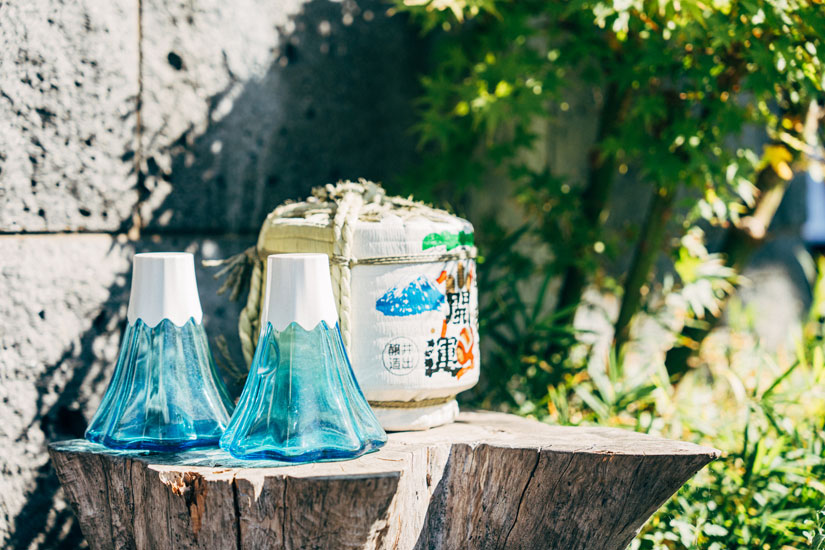
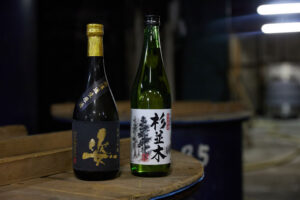
With “using Fuji Mountain spring water” as the overarching concept, Ushun states, “We strive to create pure sake that upholds that image.” The representative brand of Ide Brewery is “Kai no Kaiun” (Fortune of Kai). Around 1850, when sake brewing began, it coincided with the marriage of Princess Kazunomiya.Inspired by this, the sake developed with the wish “for fortune to open and lead to happiness” was named “Kaiun” (Good Fortune). Later, in 1985, Kaiun, beloved by people for many years, was renamed Kai no Kaiun to emphasize its regional identity as a Yamanashi brewery, and it continues to be brewed today. Its taste is smooth on the palate with a slightly dry flavor.It finishes cleanly, making it the perfect accompaniment to a meal.
Kai no Kaiun: Crisp and Unwavering
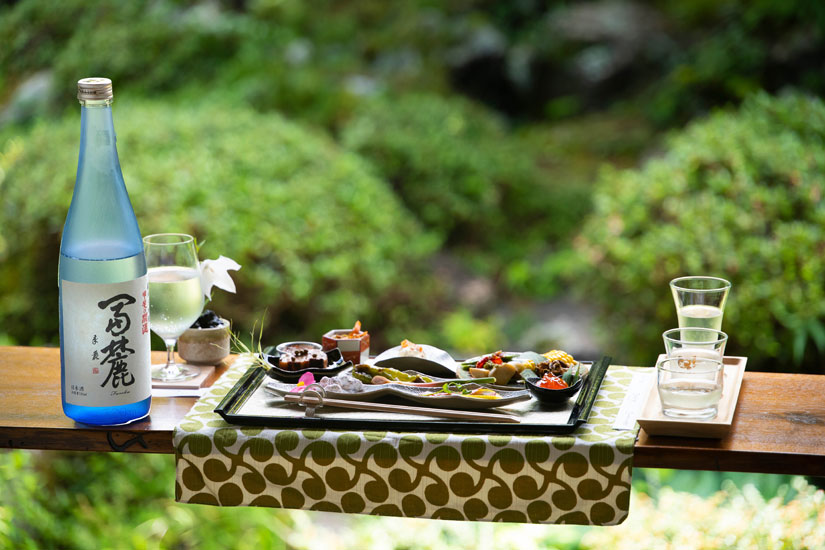
The quality of Iide Brewery’s sake is underpinned by the “Fuji Water” flowing directly beneath the brewery. This underground water, drawn from a point at approximately 1,100 meters above sea level, takes 80 years to pass through the volcanic layers of Mount Fuji. It is then naturally filtered through basalt layers and other formations, resulting in a refined, crystal-clear softness. This water is the very core of the “clean sake quality” the brewery strives for.”Refreshing and clean.” This fundamental principle remains unwavering. The pleasant sharpness of their flagship brand, “Kai no Kaiun,” harmonizes with the transparency of Fuji’s water, enhancing its appeal as a sake to enjoy with meals.
For fermentation, stable association-type yeast is used, prioritizing the straightforward expression of the ingredients’ flavors while minimizing off-flavors. Among these steps, Mr. Ushun emphasizes the “particularly crucial” practice of pasteurization immediately after pressing. Minimizing exposure to air and meticulous management to stabilize the sake are indispensable.After pasteurization, the sake is stored quietly in an environment with minimal temperature fluctuations. Meanwhile, the unpasteurized sake is kept year-round in refrigerators maintained below 0°C. This meticulous management, dedicated to preserving the delicate flavor, creates a sake of unwavering purity.
“Raw Unpasteurized Sake” You Can Only Taste Here
The shop “Sakaboushi,” attached to the brewery, offers a lineup including sake and foods made using sake lees, a byproduct of the brewing process. Additionally, since April 2010, tours of the brewery have been available to the general public.They also offer a limited-edition unpasteurized sake, “Special Junmai Nama Genshu ‘Kakoi’,” available only to visitors. During sake brewing, rice is fermented to produce alcohol. The liquid pressed from the mash (moromi), a mixture of fermented rice and sake, is called nama genshu.Most commercially distributed sake undergoes pasteurization (hi-ire) for sterilization and dilution with water to adjust alcohol content at this stage. However, Special Junmai Nama Genshu “Kakoi” skips these processes entirely. Experience the unadulterated alcohol sensation and fragrant rice flavor of “pressed and served as is.” Savor its smooth taste and the faint lingering ginjo aroma.
A New Challenge: Launching the “Fuji North Foot Distillery”
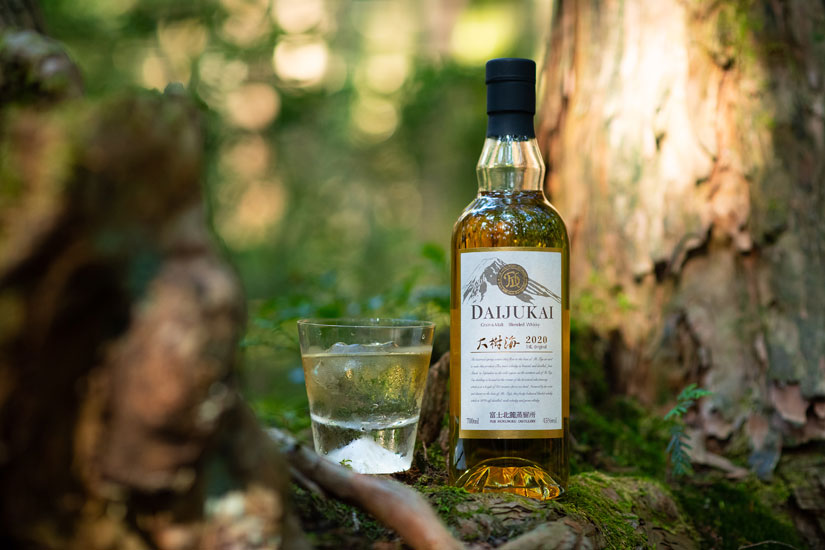
In July 2020, Ide Brewery embarked on a new challenge, beginning whisky production under the brand name “Fuji North Foot Distillery.” Globally, alcoholic beverages are broadly categorized into “brewed spirits,” made by fermenting raw materials like rice or barley, and “distilled spirits,” created by heating the fermented liquid, vaporizing it, cooling it, and condensing it back into liquid form.For whisky specifically, the distilled base spirit must undergo “aging” – long-term storage in wooden casks. For Ide Brewery, which had previously focused solely on brewing, the processes of “distillation” and “aging” were entirely new territory.
“We had knowledge and hands-on experience with fermentation, but distillation and aging were completely unknown to us. We truly started from scratch,”
“It took several years to finally establish our own unique production methods, but there’s still so much to learn,” Ushun shares, reflecting on the challenges. While his desire to make distilled spirits grew stronger, he hesitated about the significant capital investment required to start whisky production. What ultimately pushed him forward was the noticeable increase in inbound demand in recent years.Even if foreign visitors to the brewery primarily came for sake, wouldn’t they be even happier if the lineup included a whiskey originating overseas? It was this thought that led him to decide to take the plunge into whiskey production.
Whiskey made from rice by a sake brewery
“Japanese whiskey is currently popular worldwide. I believe one factor is its drinkability. While maintaining that, I want to express the unique character of Ide Brewery.”
Many of the aging barrels used for Japanese whiskey are made from Mizunara oak, which imparts an elegant, sweet aroma and a subtle sweetness to the whiskey. Beyond this “drinkability,” Ide Brewery’s whiskey incorporates an extra layer of craftsmanship. One example is using “sake yeast” for fermentation, instead of the typical whiskey yeast.Another is the use of rice, the same base ingredient as sake, instead of the more common corn, rye, or wheat. This adds a distinct sweetness derived from the rice, resulting in a whisky with a deeper, smoother mouthfeel. Behind these meticulous choices lies the desire to “create a whisky that only we can make.””A rice-based whiskey made by a sake brewery. I believe it possesses a unique character you won’t find elsewhere,” states Ushun proudly. Currently, they offer two products: the whiskey ‘Taijukai’, made with the aforementioned sake yeast and rice, and the ‘Fuji Kitakoku Distillery Highball’, which incorporates carbonated water and spring water to further enhance its “drinkability”.
“This product was created to widely announce our new venture: ‘Ide Jozoten, known for making sake, has started making whisky.’ We’re excited to see how the market responds.”
Creating an everyday sake that never gets old
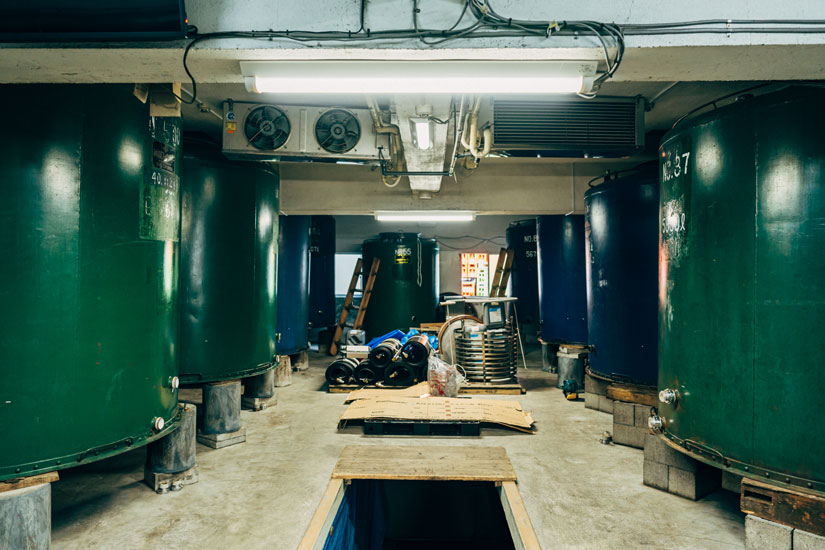
Mr. Ushun, who will lead Ide Brewery as its 22nd-generation head in the future, shared his vision: “I want to continue making sake without straying from the core characteristics that define Ide Brewery’s current flavor profile: ‘refreshing clarity’ and ‘elegant purity.'” He also expressed his enthusiasm for focusing on brewing “Kai no Kaiun,” a standard sake.”While ‘special designation sake’ tends to draw attention across Japan these days, I also want to properly craft ‘ordinary sake,’ which has been deeply rooted in daily life for generations.”
Long before the “Sake Production and Quality Indication Standards” were established, “Kai no Kaiun” has been brewed without altering its flavor since 1850. It represents the unwavering identity of Ide Brewery. “It may not be flashy, but it has been cherished as a companion for ‘ordinary’ moments, like family meals at the daily dinner table. I hope it continues to be loved by people without ever growing tiresome.”There is an irreplaceable happiness in being able to be “ordinary,” in being able to live everyday life. The sentiment poured into “Kai no Kaiun” connects the history and spirit of Ide Brewery.
The Future of Ide Brewery
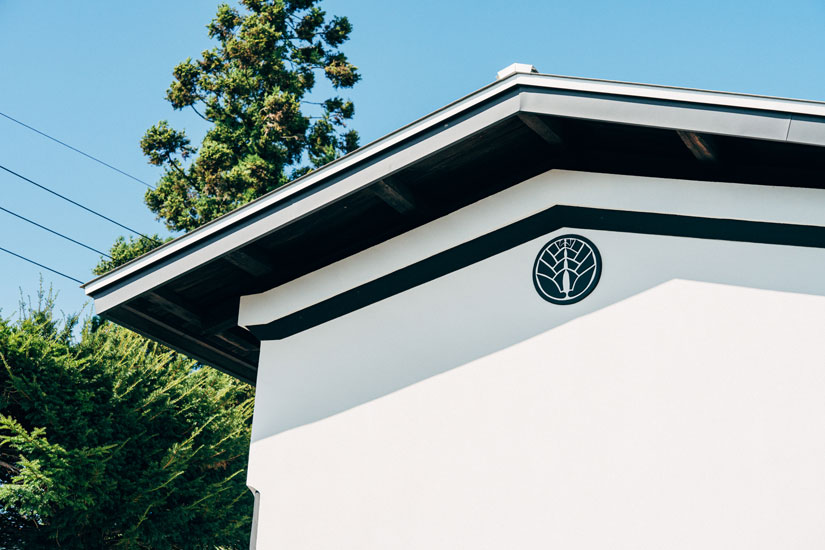
“Sake, representing Japanese culture, will continue to attract global attention given recent inbound demand. That’s precisely why I believe there’s ample need to keep producing ‘Kai no Kaiun,’ which connects time-honored traditions to the present. Building on this strong foundation, we aim to develop products like whiskey that meet modern needs. Times keep changing, after all.”
Ide Brewery’s sake-making journey began with soy sauce production, rooted in observing the region’s unique characteristics and blessings. Moving forward, the brewery will remain deeply connected to the community, steadfastly preserving its inherited flavors while flexibly adapting to changing times and embracing new challenges.