
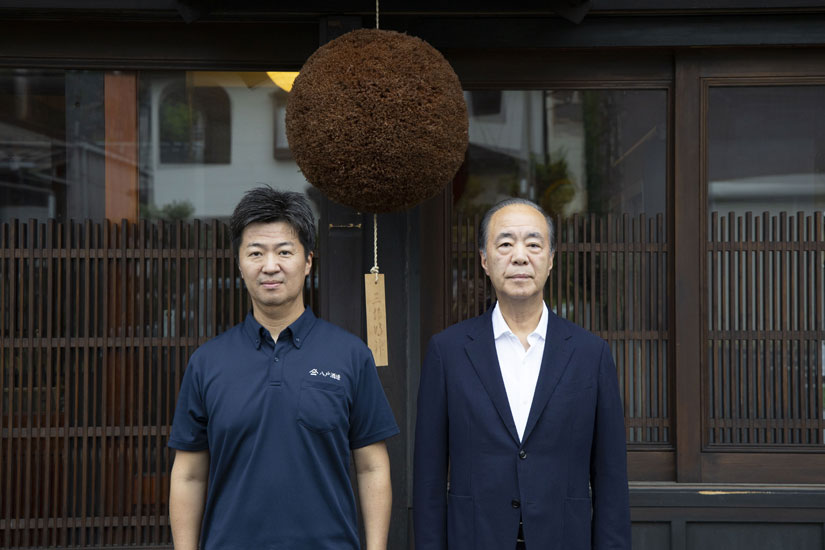
Hachinohe Shuzo has been brewing sake continuously for 250 years since its founding in 1775.In 1910 (Meiji 43), they trademarked “Mutsu Otokoyama.” Then, under the current head, the eighth-generation Komai Shōzaburō, they introduced the renowned sake “Mutsu Hassen” to the world in 1998 (Heisei 10). Today, the eighth-generation head’s two sons, Managing Director Shūsuke and Toji (Master Brewer) Shinsuke, lead the brewery. They preserve tradition while continuing to challenge themselves for the next generation.
The Eighth Generation Who Blazed the Trail and Created the Premium Sake
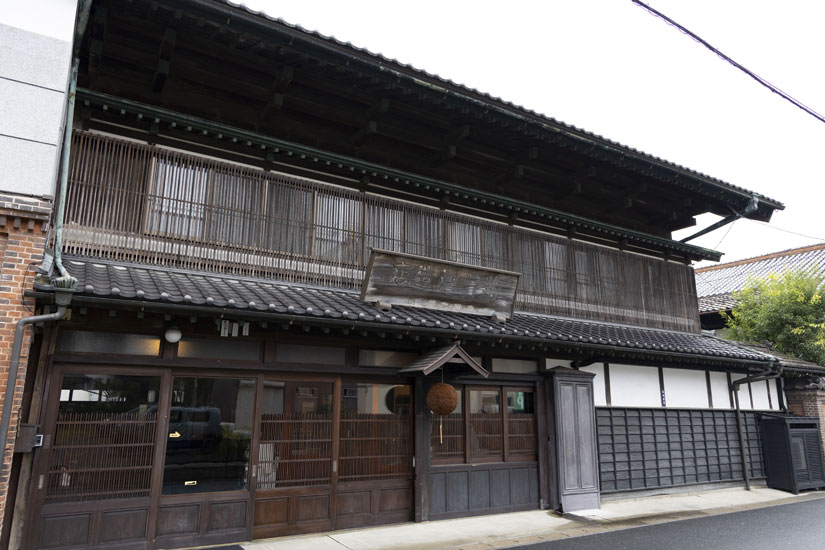
The history of Hachinohe Shuzo began with the first Komai Shosaburo, who left Omi Province during the Genbun era and entered the sake brewing trade in Mutsu. He established a brewery in southern Aomori Prefecture in 1775 (An’ei 4).The brewery relocated to Hachinohe during the Meiji period. The current brewery building, still in use today, was constructed during the Taisho era. Situated along the Nitta River, it has long been cherished as an iconic symbol of Minato Town.
Incidentally, around 1984, when the current head, the eighth-generation Komai Shōzaburō, joined the brewery as a successor, the Komai family was not operating as a single brewery. Instead, they were part of a cooperative-like organization formed under the wartime Corporate Reorganization Order.
This Corporate Reorganization Order consolidated the 16 sake breweries that existed before the war into just five.
The Komai family initially complied with this structure, but the organization’s performance was lackluster. Sales were poor for all brands except the Komai family’s own Mutsu Otokoyama.
Witnessing this situation, Shōzaburō felt a sense of crisis, thinking, “If things continue like this, the Komai family’s sake brewing will eventually become unsustainable.” He sought independence from the organization. He rented a new brewery and established the new company “Hassen Shuzō.”
He then created the new brand “Mutsu Hassen” and changed the company name to “Hachinohe Shuzo” in 1999. In 2009, he moved back from the rented brewery to the current one, making a fresh start with Mutsu Otokoyama and Mutsu Hassen as the pillars.
The Diverse Flavors of “Mutsu Hassen”
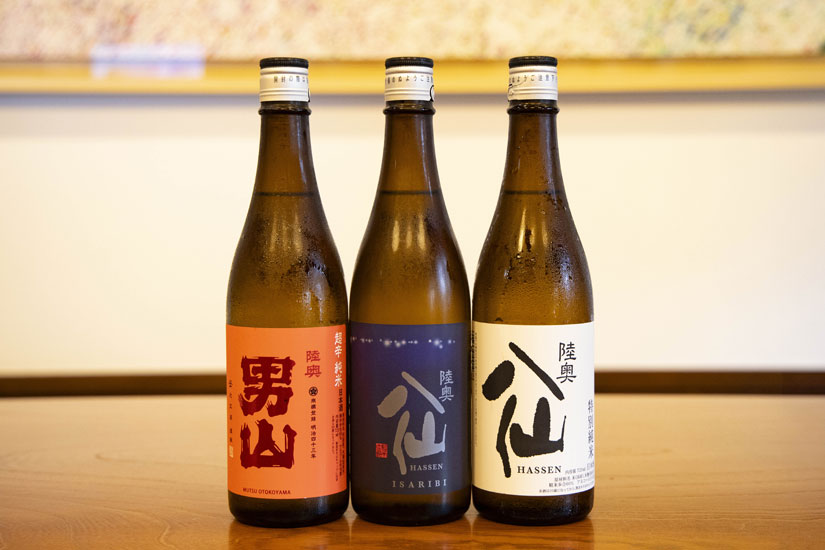
The name “Hassen” originates from the Chinese tale of the Drunken Immortals (a story of eight immortal drinkers). “I was deeply moved by the anecdotes of these drunken immortals and the fascinating ways they enjoyed sake,” Shōzaburō explains. “I named this sake with the hope that people would enjoy it in the same state of blissful intoxication.”
Based on a modern brand concept of “vibrant and fruity,” the lineup offers a wide variety of items. Over 20 types of standard and seasonal limited-edition sakes are always available, with new types like sparkling sake, kijo-shu (sake made with rice lees), and high-acidity sake continuously being developed. This thoroughly delights fans and embodies the sentiment behind the name.
“Originality is key,” Shōzaburō states. “To thrive in today’s sake industry, where breweries nationwide are releasing delicious sakes one after another, we want to clearly express what makes Hachinohe Shuzō unique. To highlight our identity as an Aomori brewery, we switched to using only Aomori-grown rice when we created Hassen.The yeast is also an original Aomori strain. Furthermore, by brewing with local spring water and expressing the land’s terroir, we aim to create sake that truly represents the region.” For the rice, they directly contract with farmers, working together as partners in sake production. “However, compared to wine grapes, for example, it’s difficult to differentiate sake based on rice alone. Within that challenge, how can we express our uniqueness? Hassen is a brand that allows us to challenge ourselves with a wide range of product development, so we are constantly researching.”
The results of this research are evident in their awards.In recent years, it has received high praise at international competitions like France’s “Kura Master” and London’s “International Wine Challenge.” “Moving forward, we’ll focus more on the overseas market and continue our outreach,” says Shōzaburō. The brand has already expanded into 28 countries and aims for 50. “At the same time, we want to work hard to stimulate demand in the shrinking domestic market. After all, Japanese sake is recognized worldwide alongside Japanese food culture.”
Mutsunomiyama: Captivating with Simplicity
(1185)
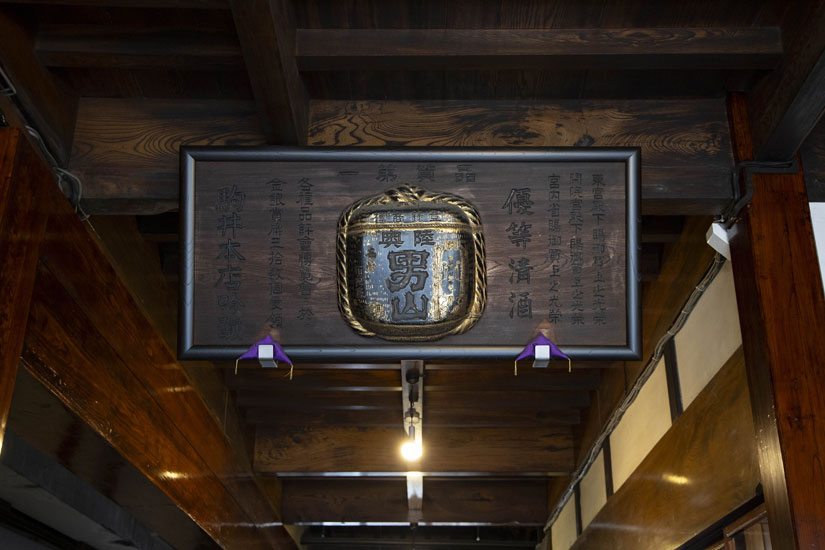
“Mutsu Oyama” is the brewery’s founding brand. It was the first trademark in Japan to use the name “Oyama,” a term long used by breweries nationwide for renowned sake brands. For over 100 years since its trademark registration, it has been the brewery’s mainstay, positioned as a traditional brand line in contrast to the Hassen brand.”Mutsu Otokoyama has a long history as a beloved local sake. While maintaining the traditional image of ‘Otokoyama means dry sake,’ we also emphasize its roots in a fishing town. It’s a sake meant for evening drinks with meals. It’s refreshingly crisp and clean, ensuring you never tire of it,” says Shōzaburō.
Its simplicity is also a defining feature, with two basic labels: Classic and Ultra Dry. It remains a brand with a loyal fan base. Overseas, it receives favorable reviews in markets like the United States, where dry-style sakes tend to be preferred.
The difference from the diverse Mutsu Hassen lineup is clear; each brand has its own established direction, resulting in a broad fan base. This is the brewery’s greatest strength.
Sake Brewing in the Reiwa Era: A Brotherly Challenge
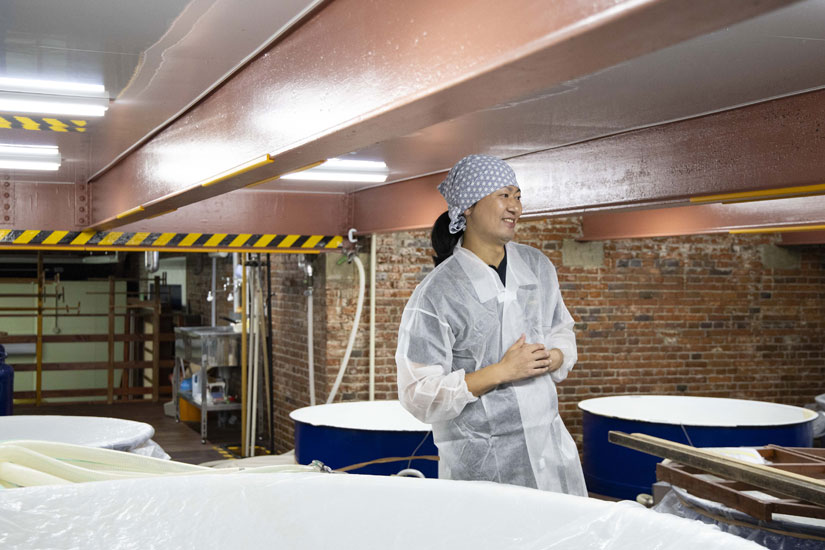
For Shōzaburō’s two sons, older brother Shūsuke and younger brother Shinsuke, the brewery was a familiar place from childhood. It was their playground, and they sometimes helped with work. Today, the Komai brothers manage the brewery’s operations: Shūsuke as Managing Director and Shinsuke as Toji (Master Brewer).
Shusuke joined the brewery in 2002 (Heisei 14). He witnessed Shōzaburō’s challenging times firsthand and has worked alongside him for nearly 20 years as his trusted partner, through to the present day.
After graduating from university in Tokyo, the younger brother, Shinsuke, worked for a beverage manufacturer in the capital. However, he returned to the brewery in 2009. He joined the brewery urgently to help transform the seasonal winter employment system for sake brewing into a year-round staff system. Four years later, he replaced the previous master brewer and took on the role of responsible brewer.
It has been over a decade since the two brothers began managing the sake brewing business in earnest. Through their continuous study and research, Hachinohe Shuzo’s sake brewing evolves daily.
“Fundamentally, we want to make clean sake. Sake that is easy to drink, straightforward, and delicious. Our brewery has a wide range of products, but we strive daily to brew sake that is genuinely delicious no matter which one you drink, and that also has a sense of clarity,” says Shinsuke. “There are trends of the times, and I feel that sweet, acidic sake still sells well now. Even within that, we are conscious of not relying too much on sweetness.”
Using Aomori yeast and rice to express the character of Aomori’s local sake
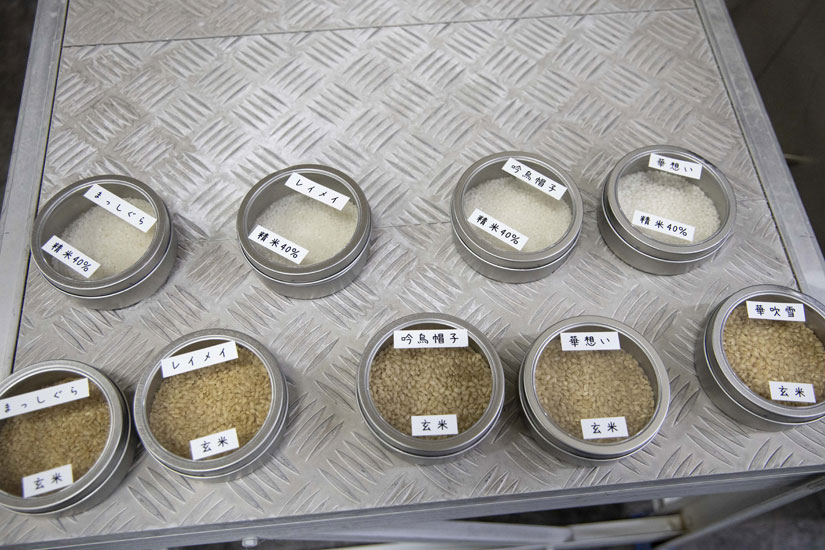
As Shōzaburō mentioned, the brewery uses Aomori-grown rice and Aomori’s original yeast strains. The five basic rice varieties are “Masshigura,” “Reimei,” “Gin-Eboshi,” “Hana-Omoi,” and “Hanabuki.” Masshigura and Reimei are table rice, while Gin-Eboshi, Hana-Omoi, and Hanabuki are sake-brewing rice varieties.The two table rice varieties are selected when aiming for a clean, crisp finish. The most frequently used is Hanabuki, characterized by its elegant flavor and vibrant aroma. “While Aomori rice generally tends to express its flavor well, Hanabuki often excels by drawing out the rice’s umami to its absolute limit,” Shinsuke explains.
They utilize four distinct original Aomori yeasts, selecting them individually or blending them to define the flavor. Hassen uses Mahoroba Gin, which highly produces the aromatic compound “ethyl caproate” – known for its fresh, juicy aroma reminiscent of apples and pears – as its base.while Otokoyama uses Mahoroba Hana, which produces a mild aroma within the isoamyl acetate family, resulting in a sake suited for pairing with food.
The use of Hachinohe’s renowned “Kanisawa Spring Water” as brewing water is another mark of originality. Hachinohe Shuzo pursues a distinctive character achievable only through its unique flavor profile.
250 years of history, and the future ahead
(1500)
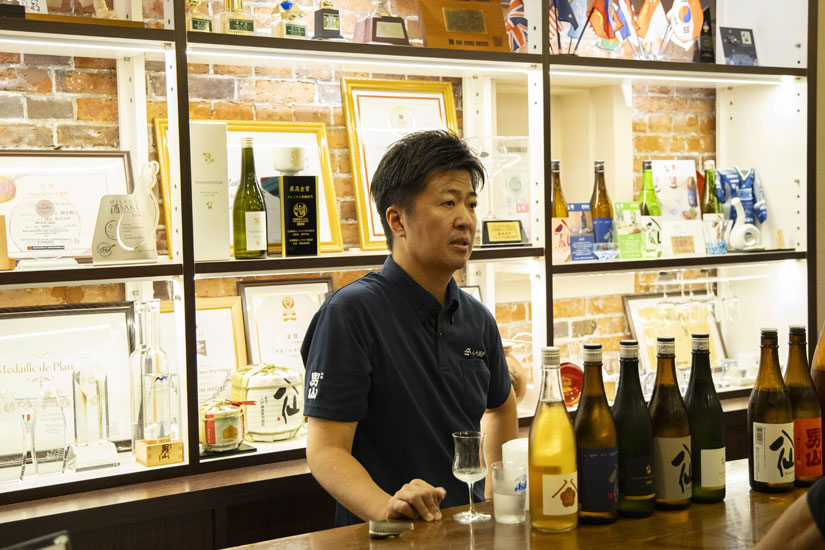
With a playful spirit, Shinsuke smiles, “I want to use local ingredients to make not just sake, but all kinds of alcoholic beverages. It would be interesting to have a lineup where our sake alone could cover the entire table.”
Hidesuke, in his supervisory role, adds, “While sake is our foundation,” and then, narrowing his eyes, continues, “One of our brewery’s strengths is our wide variety. We want to design products under the Mutsu Hassen brand that can be enjoyed throughout a course meal, from before the meal to after.” The brothers are perfectly in sync.
These two carry the brewery’s 250-year history on their shoulders and value their relationship with the community as much as the sake-making itself. “Here in the Minato area, the population is steadily declining, and we’re seeing a trend of decline, like major festivals disappearing. In that sense, we have this desire to become something that can revitalize the region again. But that won’t happen unless we build our own strength. For example, we offer brewery tours, but to attract more people, we need to raise our profile even further.Also, to increase local employment, we need to boost sales. To achieve these goals, we first need to solidify our foundation as a brewery,” says Shusuke. His strong determination was evident in his resolute gaze. We look forward to the future endeavors of these two individuals, focused on both carrying on the tradition and looking toward the world.