

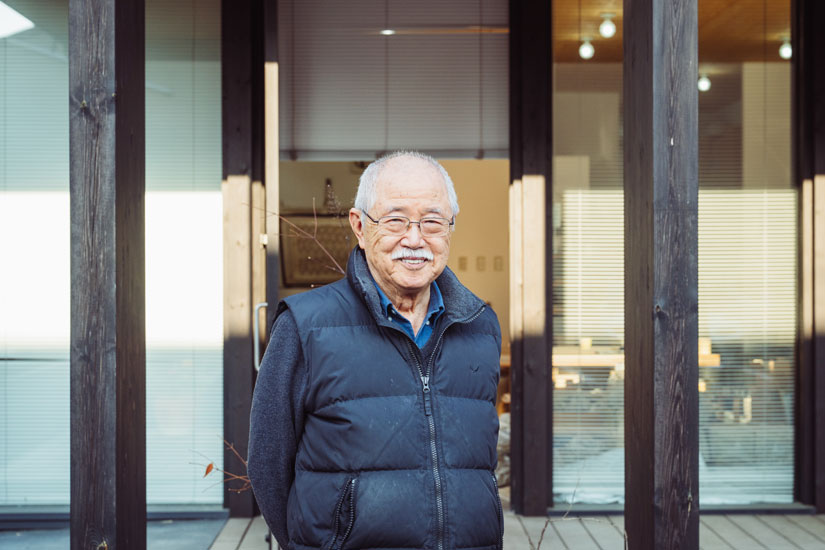
Fujio Ishimoto, a textile designer at Marimekko and creator of more than 400 designs, has returned to his hometown of Ehime after 50 years of living in Northern Europe, and has chosen Dogo as his new creative home. With Mustakivi, a brand he launched with Eisaku Kurokawa, he delivers expressions rooted in the people, the region, and their daily lives.
Mustakivi” was born in their hometown, Ehime.
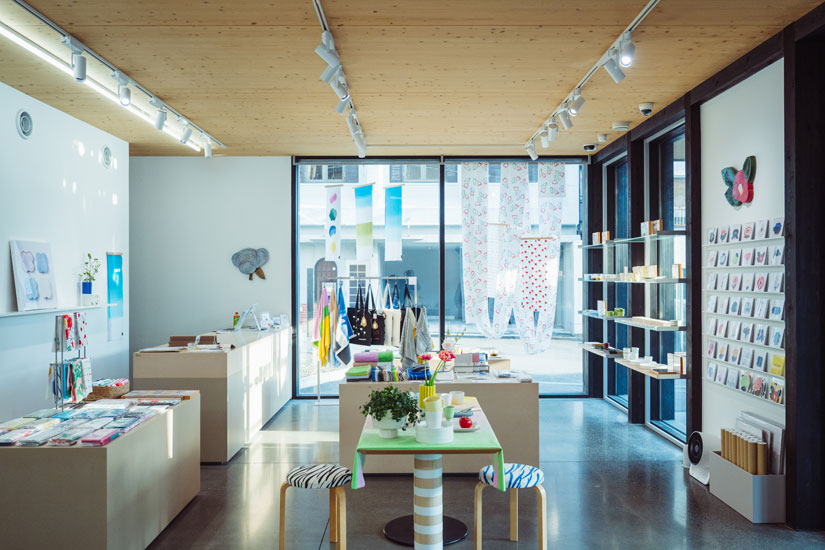
Mustakivi is a lifestyle brand that deals with tableware and textiles, etc. Mustakivi was coined from the Finnish words “Musta,” meaning “black,” and “Kivi,” meaning “stone. The two names are superimposed on each other.
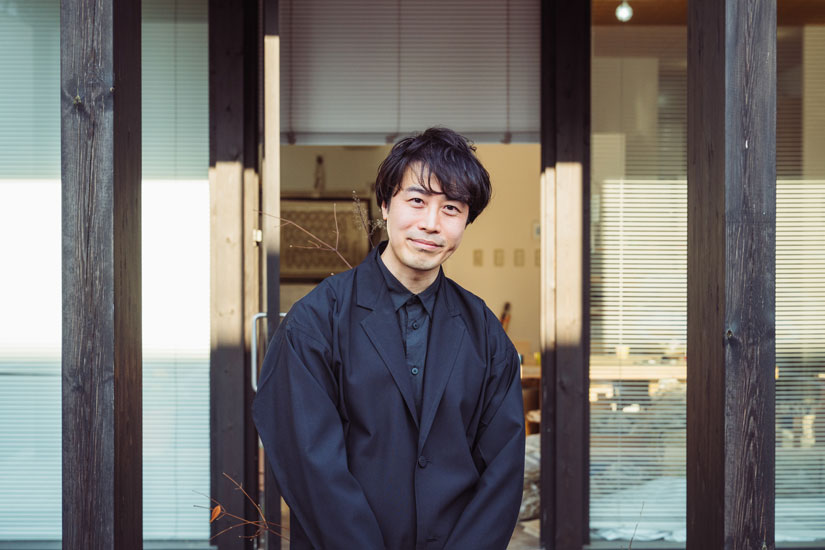
How did the two meet? It all started when Mr. Kurokawa visited Finland on business and was attracted by the charm of Finnish design. After returning to Japan, he continued to deepen his interest, and finally met Mr. Ishimoto for the first time in 2013, when he held his first solo exhibition in Ehime.
Since its launch, Mustakivi has been collaborating with Japanese handicrafts to create vessels and fabrics that accompany daily life.
Mr. Kurokawa says, “We want to be more than just a product seller; we want to be a cultural creator and transmitter. He hopes to create such a place where people can become aware of the value of the local community through Mr. Ishimoto’s works.
Ehime and Scandinavia, two original landscapes, are the source of his creations.
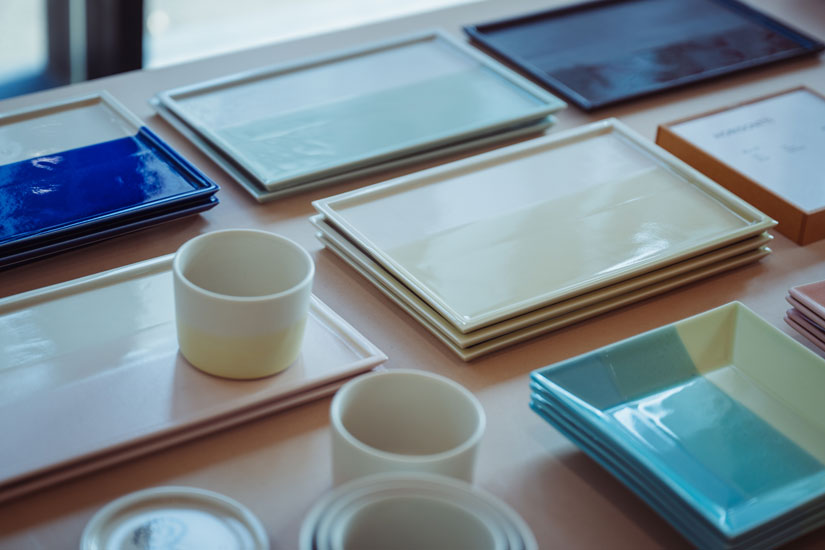
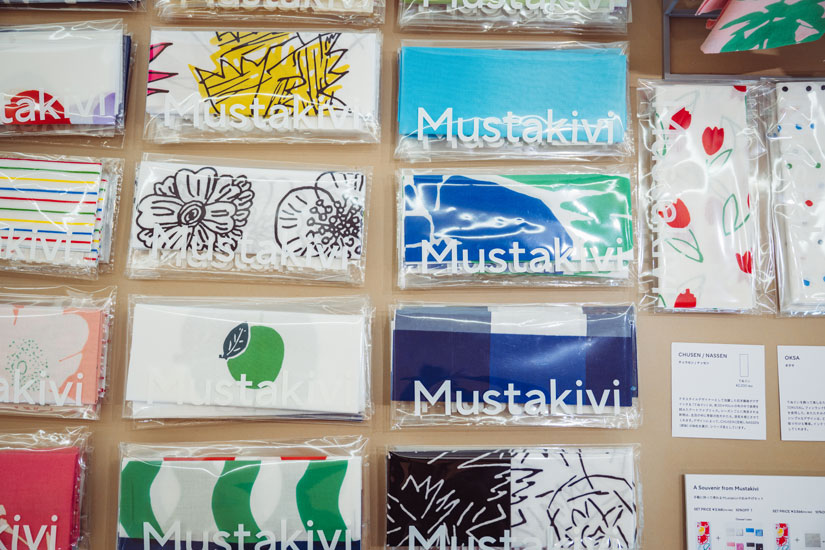
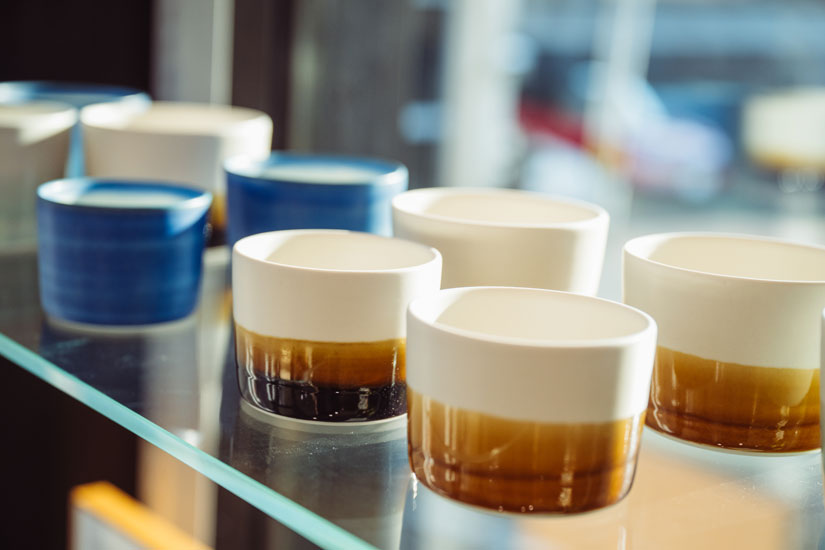
The beautiful glazed designs of his pottery and fabrics such as tenugui (hand towels) and towels are based on motifs of things found in nature. Ishimoto’s designs evoke Japanese aesthetics and techniques, such as depicting nature in chic color schemes and using blurring effects. The source of his designs lies in the original landscape of his hometown, Ehime.
Ishimoto was born in 1941 in the town of Tobe, Ehime Prefecture, known for its Tobe pottery. His family was a mandarin orange farmer, and the ruins of a defunct climbing kiln and chimneys around his house, where pottery shards and kiln tools lay scattered about, became the starting point for his later creative endeavors.
I used to collect the pottery shards that were lying around and use them as playthings,” he said. There were three climbing kilns large enough for an adult to enter standing up, and I used to play in them. The memories of his childhood are still vivid.
After studying at the Tokyo National University of Fine Arts and Music, he traveled around the world, eventually ending up in Finland.
From 1974 to 2006, he worked as a designer at Marimekko, a leading Finnish design house, and created over 400 textile designs.
Marimekko has developed bold and unique textile designs and still has fans around the world more than 70 years after its establishment. Many famous designers have supported the foundation of Marimekko, and Mr. Ishimoto is certainly one of them. His designs, which make full use of a variety of techniques and styles, remain a Marimekko staple.
Ishimoto also turned his attention to ceramics in the 1980s, working in the art department of Arabia, a traditional Finnish pottery, and creating expressive ceramics incorporating natural motifs.
He began making things in his hometown of Ehime.
In 2020, Ishimoto returned to Japan for the first time in half a century, saying, “I have always wanted to go back to Japan to work. Having lived abroad for so long, he has come to see the beauty that resides in Japanese life and the original landscape of his hometown. He wanted to express these in his hometown.
Eisaku Kurokawa supported his new start in his hometown, opening the store and gallery “Mustakivi gallery&” the year after the completion of his atelier in 2021.
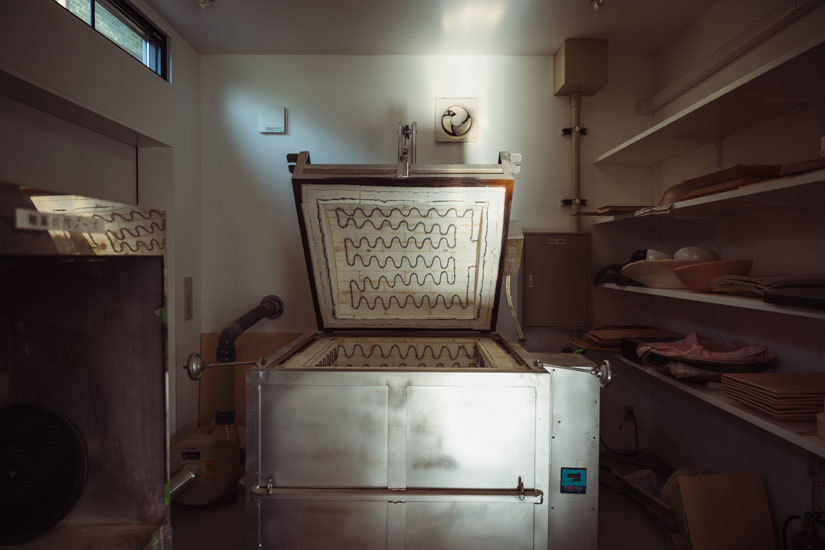
The atelier is equipped with an electric kiln, and Mr. Ishimoto devotes himself to creative activities such as designing and making ceramics every day. Creating is fun. It’s good for my health,” he smiles.
His parents’ home was located near the kiln opened by Josuke Sugino, the founder of Tobe pottery. It is a coincidence that Mr. Ishimoto, who was born and raised there, is now involved in pottery making.
Nature is interesting because it is not as it seems.
The source of Mr. Ishimoto’s design lies in the limitations imposed by the materials.
In both Finland and Japan, wood has brought about a great deal,” he says. In the past, people used to make their own plates by cutting trees that were close to them. That is why I think the Finnish sense of “form” is rooted in wood. In Japan, too, there are many shapes made from wood.
Nature does not always do things the way we want them to. That is why some forms are born. The same is true of ceramics. Mr. Ishimoto seems to enjoy the beauty of design that comes from a kind of limitation that does not allow his will to be fully carried out.
A spirit of respect for the four seasons, which Japan and Finland have in common
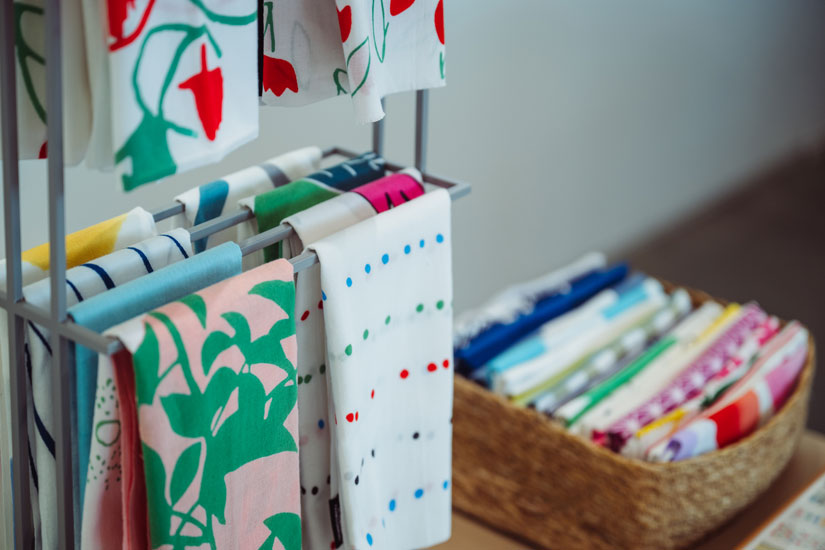
There is one more thing that Finland and Japan have in common. The four seasons. Finland also has four distinct seasons, and there is a sense of celebrating and enjoying the seasons,” says Kurokawa.
Mustakivi releases a new tenugui every three months. The tenugui, featuring motifs of flowers, fruits, landscapes, colors, and shapes, add color to the season. These tenugui are perfect for spread on the table or displayed on the wall as an item to enjoy the four seasons in your daily life.
Culture takes root in our daily life.
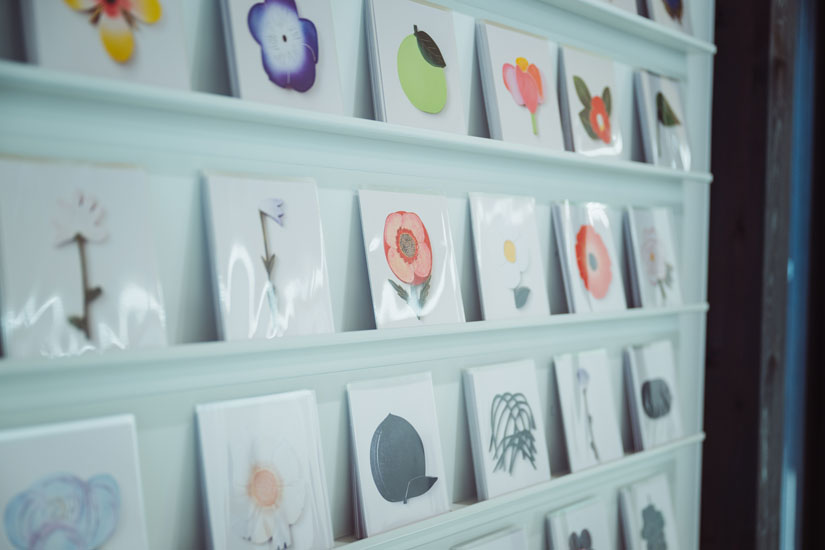
Kurokawa says, “I was happy when a local person saw Mr. Ishimoto’s design and said, ‘I’m so glad to hear that he is from Ehime. Through her works, which are based on the motifs of Ehime’s natural features, she is able to appreciate the beauty of her hometown anew and take pride in it. He believes that such pride will become a source of unity that unites the community.
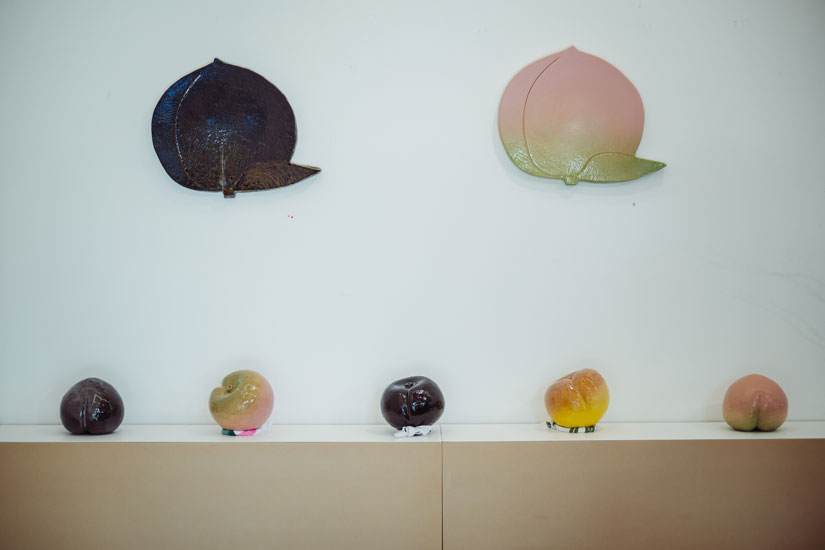
With this in mind, he plans to open the “Ishimoto Fujio Design Museum” near Matsuyama Castle in 2026.
Kurokawa’s thoughts on the new cultural center are filled with a sense of “pure connection, valuing people-to-people relationships, and wanting to continue what only we can do in this area for a long time,” he says.
A Place to Discover Happiness in Everyday Life
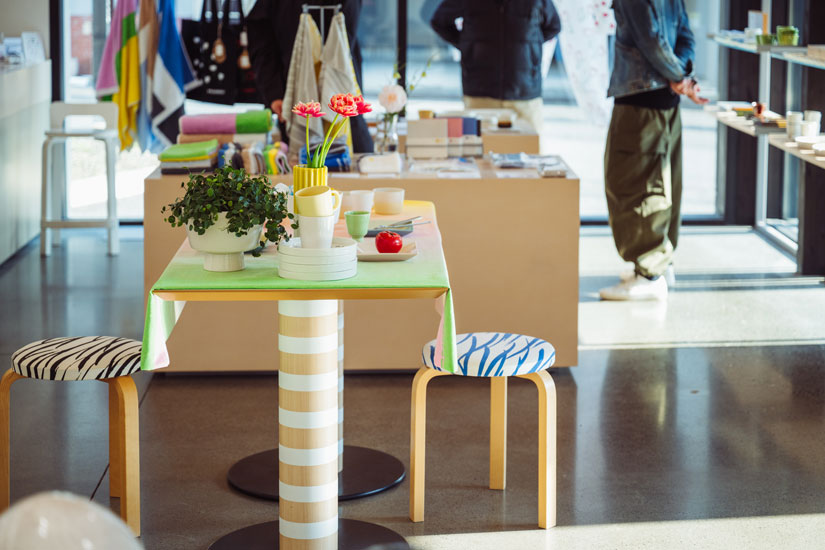
While moving freely between the two fields of art and design, Mr. Ishimoto has been able to capture the small flashes of inspiration that lurk in everyday life and incorporate them into his designs. Mr. Kurokawa has carefully taken that sensibility and crystallized it into a brand. The time and memories that the two of them have shared are still quietly spreading through “Mustakivi”.
The works created from the memories of Finland, where they spent half a century, and the original landscape of Ehime, will show us new landscapes while staying close to our daily lives.