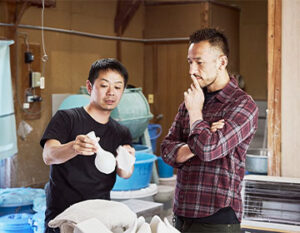


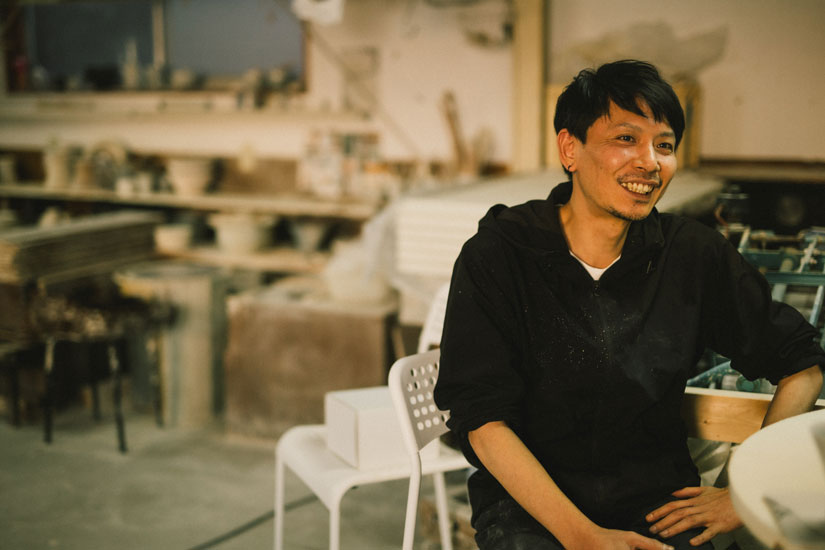
It has been about 250 years since Tobe ware was first produced in Tobe Town, Iyo County, Ehime Prefecture, adjacent to Matsuyama City. Kazuya Yamamoto of Wajogama creates pottery in a free style that combines practicality and originality with the traditional regional craft of Tobe-yaki.
Tobe Pottery has been close to me since I was a child.
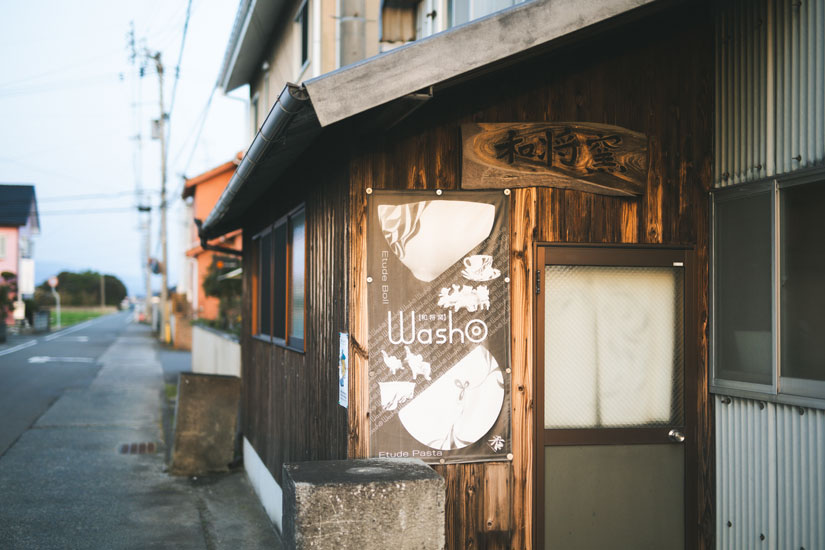
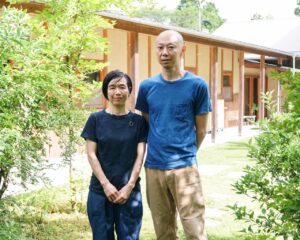
There are currently about 80 Tobe pottery studios, each of which produces its own unique pieces in accordance with the Tobe pottery production standards. The individuality and texture of each piece reflects the creator’s personality, which is another unique aspect of Tobe Pottery. The Wasagama kiln is located in the town of Masaki in Iyo County, which is the same as the town of Tobe, and was established in 1998 by Yamamoto’s father, Shunichi, when he was 18 years old.
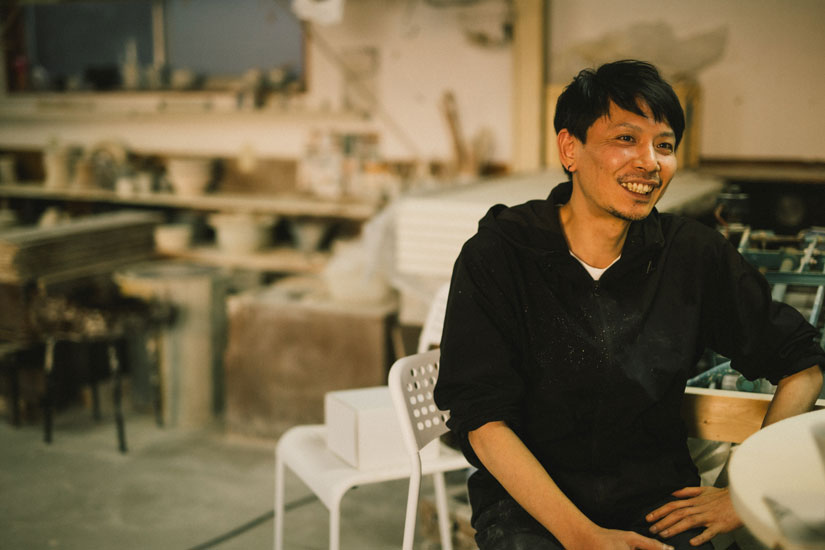
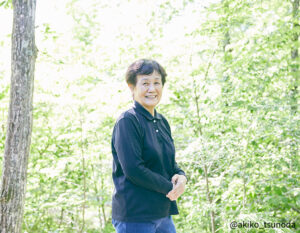
He says, “I started the kiln not because I liked Tobe pottery, but because it was the first clay I came in contact with. I have tried other clay, but the one that still feels good in my hands is Tobe clay,” Yamamoto said. For Mr. Yamamoto, Tobe pottery has been a part of his life ever since he can remember. As a child, he and his son learned the basics of pottery making under the tutelage of Mr. Fukuoka at the Fukko Kiln in Tobe Town. Later, when his father, Shunichi, quit his job and purchased a kiln at home, Tobe Pottery became more familiar to him. At the age of 20, he began helping out at the “Wasagama Kiln” and became a full-fledged ceramic artist.
Etude Patterns in Black and White
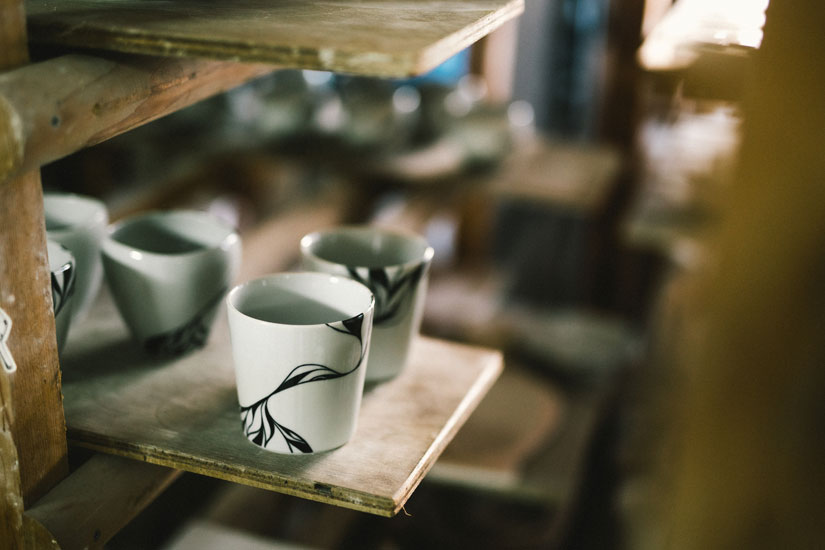
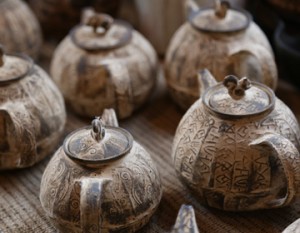
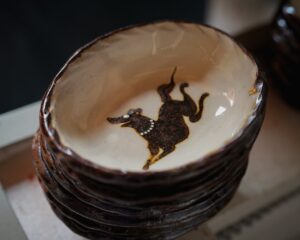
Mr. Yamamoto’s representative work is a flowing “etude pattern. When he first began his career as a potter, he often painted traditional patterns. Sometimes for fun, he would draw free patterns that differed from the traditional patterns that were the starting point of his etude patterns. I started drawing free-form patterns that were different from traditional patterns,” he says. In 2007, he won the Grand Prize at the Ehime Ceramic Art Exhibition. With the concept of black and white, his unique “Washo” series of design art was born, opening the way for his work.
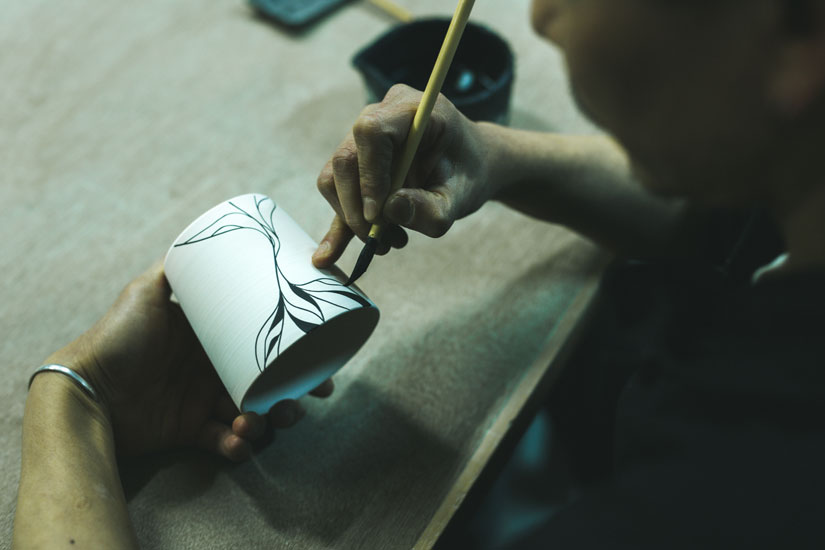
Molded by rokuro making and tatara making. Although the motifs are not specific, he draws freehand through his own filter, depicting scenes he saw as a child, such as the local sea and waves. The core of his work is “a pleasant sensation when drawing.” He is not bound by traditional patterns such as arabesques and whirlpools, but rather trusts his own sense of style and draws freely.
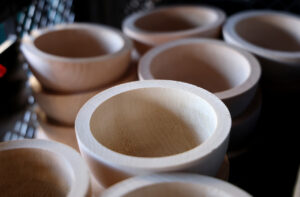
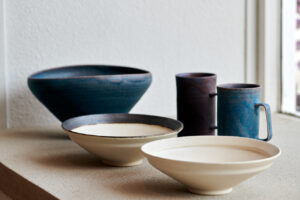
His use of color is also characteristic. While white porcelain and indigo or blue are often associated with Tobe ware, Yamamoto’s etude patterns are unified with black gosu, which has a strong black coloring. This creates a contemporary and tightened look. The glaze is applied thinly. Unlike the heavy weight of Tobe ware, the practical aim is to make it as light as possible as a tool to be used in the hand, and the effect is to clearly show the border between black and white, a characteristic of Yamamoto’s design.
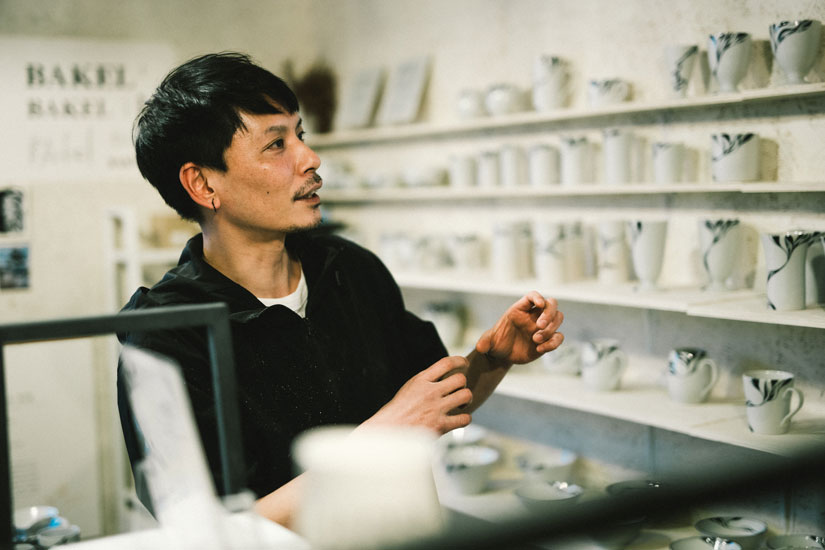
There are whiter clay than Tobe ware all over the country, and I was tempted to think what kind of expression I could achieve if I added black to it. But I wanted to use Abobe clay. I am familiar with it, but I also want to protect it in the world of Tobe pottery, which is open to new expressions. This is how Yamamoto’s work is born, with its beautiful contrast between the soft bluish white porcelain and deep black with cobalt tints, a characteristic of Tobe ware.
Combining practicality and originality
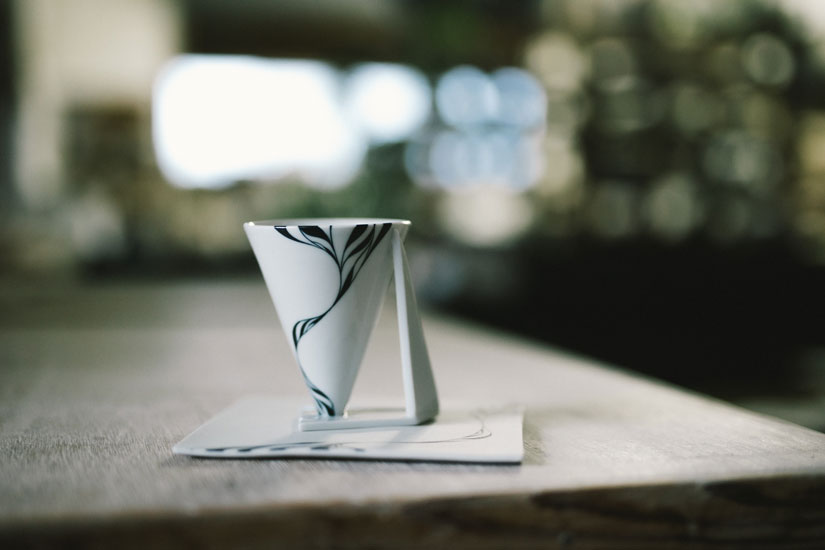
In 2017, the “tension” product, a set of cup & plate, sauce container & plate, was selected for the “LEXUS NEW TAKUMI PROJECT 2017. He says he likes to think about and create not only vessels but also practical things. The driving force behind his creations is the idea of “making something that fits the scene,” with an emphasis on practicality. He is conscious of adding new elements of his own to tools that can be used in everyday life. As soon as an idea is born, he starts working on it, and the number of works he has produced is too large to keep track of.
Sometimes he feels that simply following standard shapes is not enough for his products. One of his goals is to explore forms and uses that he has conceived from scratch, rather than using products that already exist.
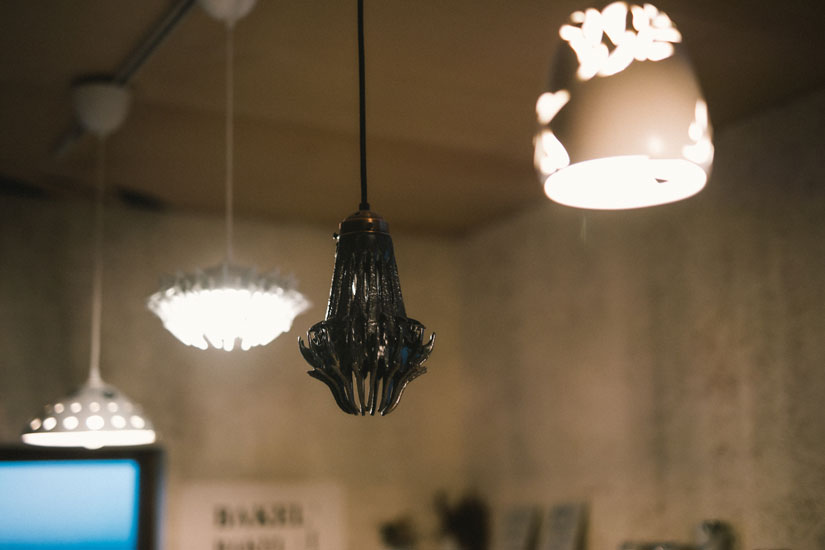
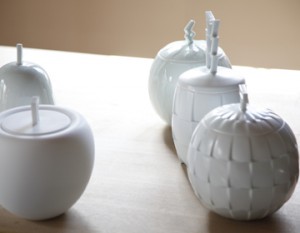
His style is also broad. They range from designs that make it easy to incorporate Tobe ware into daily life to the “UNLEASH” series, which incorporates Yamamoto’s skills in three-dimensional molding of skulls, dragons, and other shapes. Many of the works are born from requests, and all kinds of requests arrive, including lighting fixtures, calligraphy tools, urns, and reproductions of memorable dolls. The requests feel like a challenge and inspire him to create.
The Freedom of Tobe Pottery and What It Should Preserve
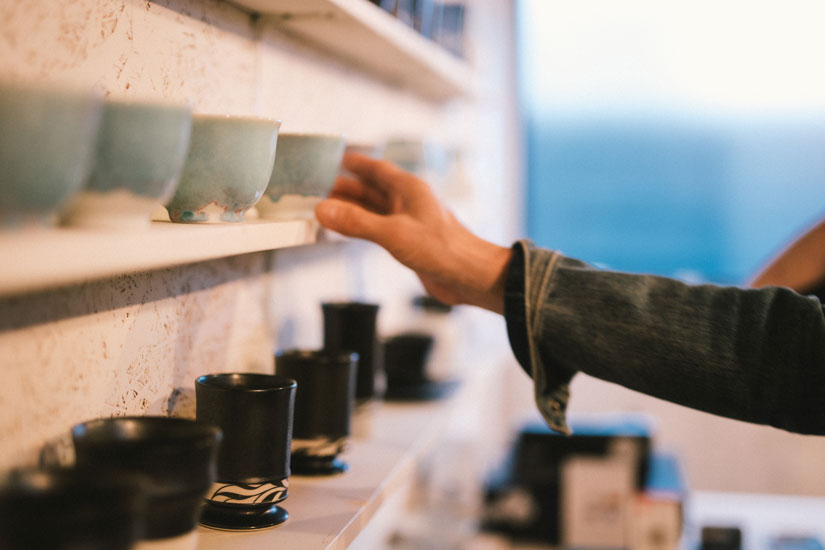
Yamamoto says that Tobe Pottery is a free environment where tradition and innovation coexist. There are many opportunities for young people to learn in Tomochi, including the “Tomochi Ceramic Art School,” and the entire community is making efforts to nurture them. Because the world of Tobe pottery accepts free expression, there is a “foundation of freedom” in the use of Tobe clay, and each piece is handmade and hand-painted.
The company is also looking to the future as a long-lasting traditional craft, not only in terms of training the makers and successors, but also in terms of sustainability as a ceramic stone production center. The senior potters of Tobe Pottery are still searching for new ideas and continuing to create new works. I want to continue making pottery even when I am 80 years old,” Yamamoto says.
It is not easy to get people to choose expensive traditional crafts for their everyday tools,” he says. That is why we need to communicate the values of each brand.
Tobe ware, which has accumulated 250 years of history, not only preserves the past, but also continues to create forms and designs that are in tune with the lifestyle of the times. While the traditions are still there, they evolve to suit the sensibilities and lifestyles of the users. This progress will never cease.