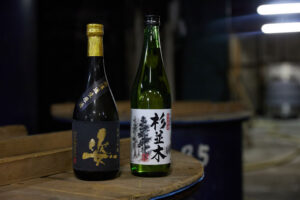

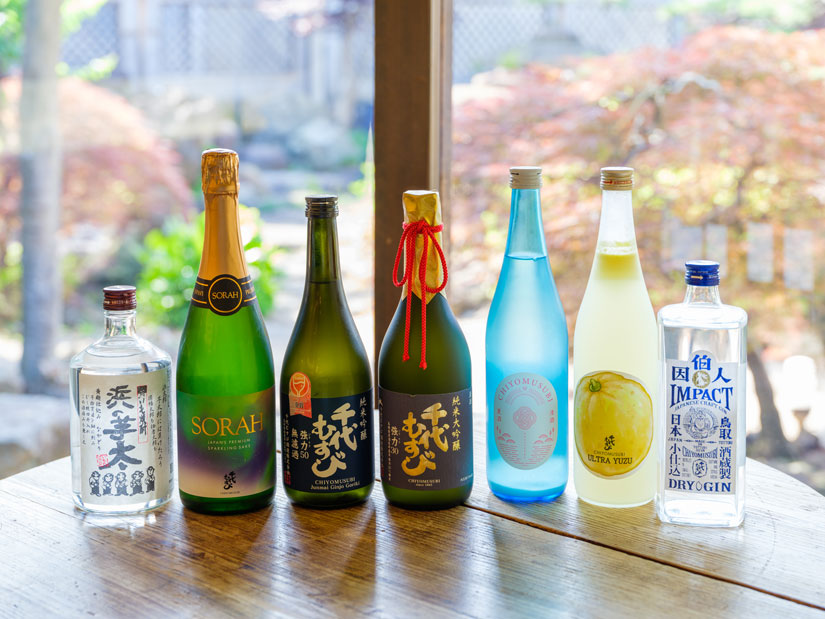
Sakaiminato City, home to Tottori Prefecture’s premier port, is where Chiyomusubi Shuzo continues to safeguard its generations-old sake brewery. They boast an extensive lineup, including beloved local sake, shochu, amazake, and gin. In recent years, they’ve relentlessly pursued new product development, such as sparkling sake and whiskey. We delve into the story behind this sake brewery’s new challenges as it aims to become a 200-year-old company.
Sake Brewing in Sakaiminato and Its History
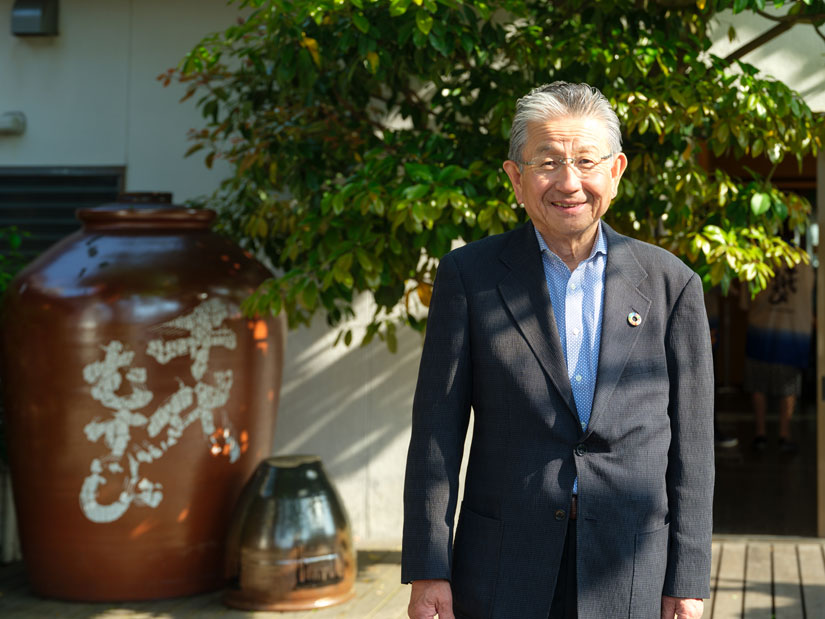
Sakaiminato City lies at the northwestern tip of Tottori Prefecture. It boasts one of Japan’s top catches of snow crab and tuna, and is famous for its excellent port, Sakaiminato, representing the San’in region. It is also the birthplace of Shigeru Mizuki, known for “GeGeGe no Kitaro.” Along the “Shigeru Mizuki Road” passing through the port and station area, bronze statues of characters from Kitaro welcome visitors.
Chiyomusubi Sake Brewery, which has its brewery in Sakaiminato, began brewing sake in 1865 (Keio 1). Originally founded in a location surrounded by rice fields within the city, it relocated to the heart of the port area with the development of the Kitamae ships traveling the Sea of Japan.Furthermore, when the San’in Railway opened between Sakaiminato Station and Mikuriya Station in northern Daisen Town, considering distribution convenience, the grandfather of the current president, Mr. Hayashitaro, relocated the brewery to the front of Sakaiminato Station in 1912.
The brands at that time were “Yamato Tamashii” and “Oka Masamune,” but later, inspired by a dance performance Hayashitaro saw, the brand was changed to “Chiyomusubi.” This brand name, meaning “to tie happiness for generations to come,” is still carried on today.
Establishing a distinctive flavor through steady business practices
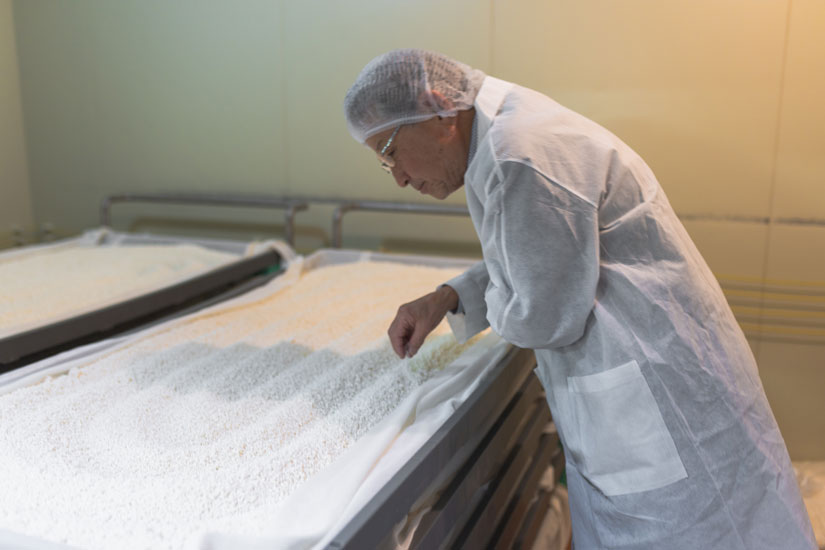
The flavor Chiyomusubi has consistently preserved is robust, full-bodied, and richly savory. Carefully steaming the rice over time and brewing with natural spring water from the foothills of the Chugoku Mountains allows the rice’s inherent umami to shine while developing a vibrant aroma.
This rich, umami-forward profile was already established by the time Mr. Okazora took over, but its development is deeply rooted in history. In 1945, the ship “Tamayoshi Maru” docked in Sakaiminato exploded, destroying one-third of the city. Chiyomusubi Brewery’s buildings were nearly completely destroyed.
From the ashes, Mr. Okazora’s father rebuilt the brewery. Amidst the resource scarcity of the postwar era, he focused on steady business practices to sustain operations. He avoided selling their raw sake to other breweries (“barrel sales”) and instead produced small batches diligently in modest tanks. Furthermore, he never discounted their products, steadfastly preserving their unique brewing methods without yielding to external pressures. This dedication helped establish the distinctive flavor profile unique to Chiyomusubi Brewery.
Watching his father’s back as he grew up, Mr. Okazora decided, “From now on, we won’t just protect Chiyomusubi’s flavor in Tottori; we’ll also promote it outside.” He began sales efforts in the Tokyo metropolitan area. At that time, a clean, dry taste was mainstream, but he didn’t follow that trend, steadfastly maintaining their own flavor. As a result, Chiyomusubi’s taste is now highly regarded and popular.
Bringing out the robust umami of Goryoku
The main rice varieties used are Tottori Prefecture’s sake-brewing specialty “Goryoku,” along with the long-established “Yamada Nishiki” and “Gohyakumangoku.” Among these, Goryoku, a Tottori-specific rice, is particularly favored by Chiyomusubi Shuzo because it imparts acidity and a robust flavor when brewed into sake.
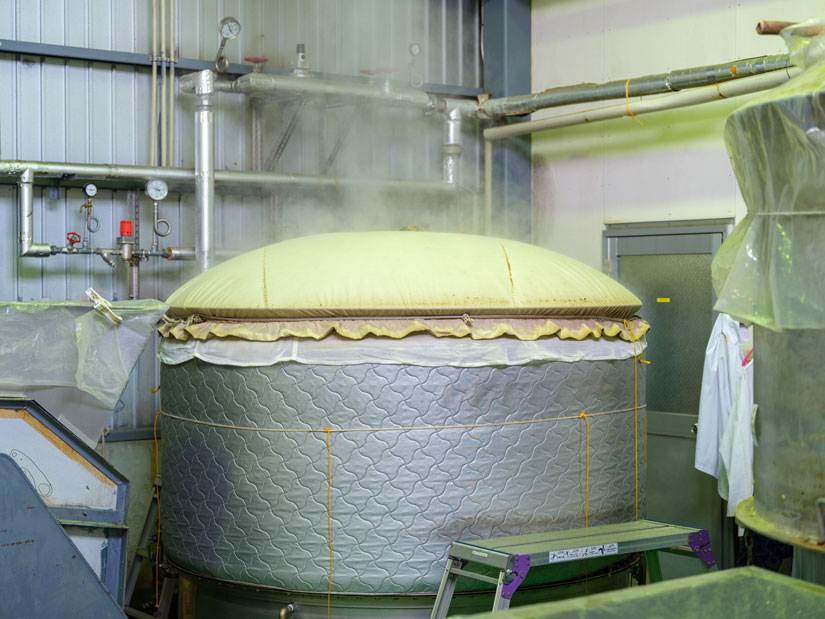
Because Goryoku rice is hard, it requires longer soaking and more intensive steaming than other varieties. Generally, steaming methods are divided into “direct steam,” where steam is applied directly to the rice, and “indirect steam,” where steam is applied through the steaming pot or steaming basket without direct contact with the rice.Chiyomusubi Brewery employs indirect steam using boiler machinery. This method ensures steam is applied uniformly throughout the rice, steaming it slowly over time. This process preserves the rice’s umami, resulting in sake with a robust flavor.
Kokuryu rice is known for its bold umami flavor, but its difficult cultivation led to production ceasing in the 1950s. Since then, Tottori University and local breweries collaborated to revive Kokuryu as Tottori Prefecture’s prized sake rice.Production continues today through farmer partnerships, but challenges persist: the tall, prone-to-falling plants make new cultivation unstable, compounded by the aging farming population. Increasing total output also requires time-consuming propagation from the original seed stock. We plan to support continued production by maintaining high purchase prices for the rice.
Embracing New Challenges
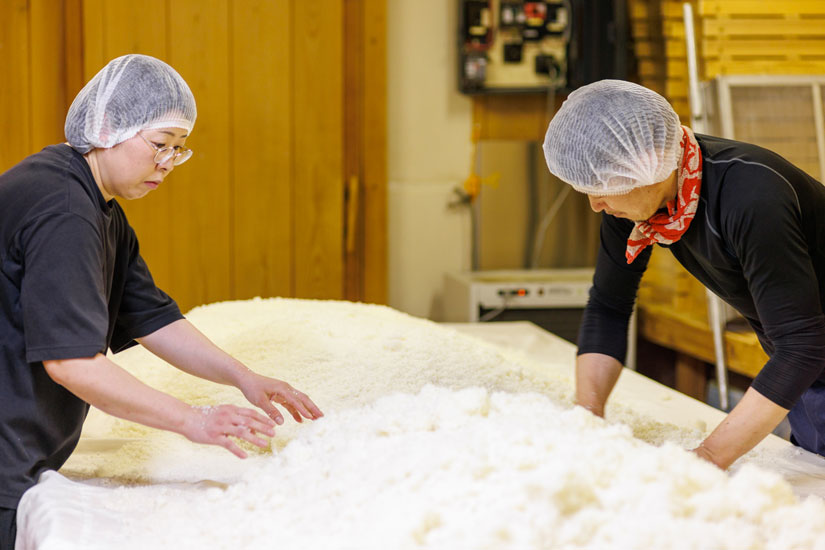
While Chiyomusubi Shuzo has consistently crafted sake with meticulous care, since 2000, it has also begun producing sweet potato shochu, fruit liqueurs, gin, and other beverages. While many breweries focus solely on sake production, Chiyomusubi Shuzo pursues diverse product lines for two primary reasons.
One is job stability. Sake brewing primarily occurs from autumn to early spring, leaving workers without employment during the rest of the year, making year-round employment difficult. However, at Chiyomusubi Shuzo, all master brewers and brewery workers are full-time employees. During periods when sake isn’t being brewed, they can work on producing other types of alcohol, creating a stable employment structure.
The other reason is Mr. Okazora’s passion for mastering fermentation. He originally specialized in fermentation studies at Hiroshima University. With his wife Kyoko’s family background in soy sauce brewing, he has energetically pursued developing various products, saying, “I want to challenge anything related to fermentation,” including soy sauce, amazake, and pickles.
Actively Expanding Overseas
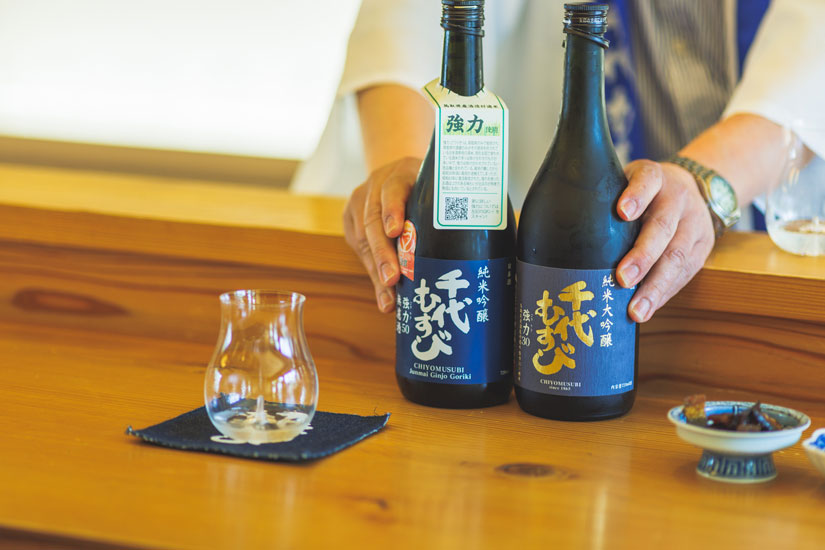
To spread the word about their prized sake, Okazora actively works to expand sales channels not only domestically but also overseas. They began exporting in 1995. Initially, they relied on a trading company specializing in imports and exports in the US to establish connections with local wholesalers.
However, in recent years, word of Chiyomusubi Shuzo has spread. Wholesalers from various cities have reached out directly, and through these connections, they’ve been introduced to wholesalers in other countries, broadening their client base. Dealing solely with Chiyomusubi Shuzo allows wholesalers to stock a full range of alcoholic products, from Japanese sake to Western spirits and shochu, earning high praise locally.
Furthermore, in 2009, coinciding with the launch of regular container shipping from Sakaiminato, they established a wholly-owned local subsidiary, “JIZAKE CY KOREA,” in South Korea. Initially, they handled only Chiyomusubi Shuzo’s sake, but since 2013, they have introduced sake from various breweries across Japan.The company continues its activities not merely as a retailer, but as a promoter of sake culture and health, sharing knowledge on proper sake storage and food pairings.
Today, overseas sales account for about 40% of its business. The remaining 60% is split equally between domestic and local markets, reflecting its efforts to expand distribution channels and the many fans it has gained through these efforts.
Further Expansion with Sparkling Sake and Japanese Whiskey
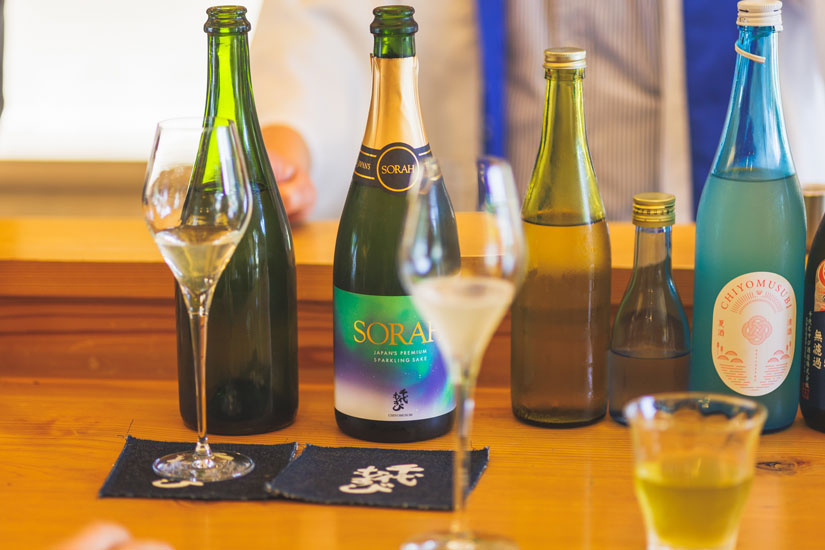
Beyond the sake and shochu that have gained many fans, sparkling sake and whiskey have been gaining attention in recent years.
“SORAH” is a sparkling sake made using the same bottle-fermented method as Champagne, infused with carbon dioxide. During the standard sake brewing process, the mash is roughly pressed, then bottled before pasteurization. Secondary fermentation occurs in the bottle, generating gas. Finally, the sediment is removed and the cork is sealed, completing the sparkling sake.
It has earned high praise overseas, including winning the top Platinum Award at the “Kura Master” competition judged by French sommeliers and others in 2023.
“We want people to drink it more, not just overseas but in Japan too,” says master brewer Tsuboi. “We also aim to improve the quality to achieve a crisp acidity and effervescence like Champagne.”
Amidst developing various products, he also expressed a desire to “try making whiskey,” starting production in 2021. Utilizing the distillation equipment used for shochu production, they also introduced copper distillation apparatus in 2023. Using sake yeast, they aim for a mild flavor profile. Aged in barrels crafted from Japanese woods like Mizunara oak and cherry, it is scheduled for release in spring 2025 or later.
Building Chiyomusubi into a 200-Year Enterprise
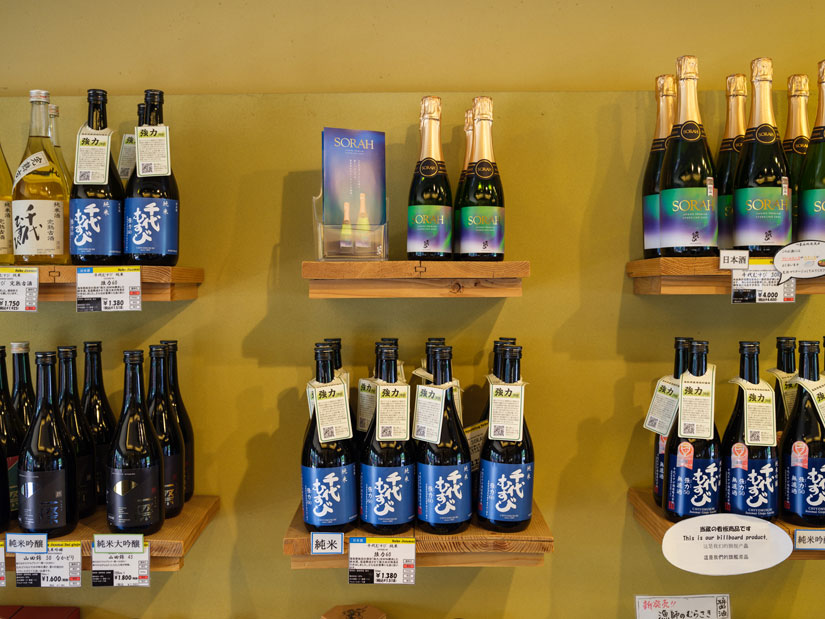
Chiyomusubi Shuzo has already achieved remarkable success. Mr. Okazora’s next goal is to build Chiyomusubi Shuzo into a 200-year company.
To achieve this, he is determined to establish and pass on two pillars: the sake brewed continuously since the company’s founding and the whisky that will be nurtured over a long period. The next generation will be led by Satoshi, the son-in-law of the eldest daughter, and Takumi, the son-in-law of the third daughter. Expectations are high that Satoshi, focusing on sake, and Takumi, focusing on whisky, will propel Chiyomusubi Shuzo to new heights.
With the steadfast preservation of its robust, powerful flavor and the inheritance of Okasora’s pioneering spirit, the day when Chiyomusubi Shuzo’s sake gains even wider recognition is surely approaching.