

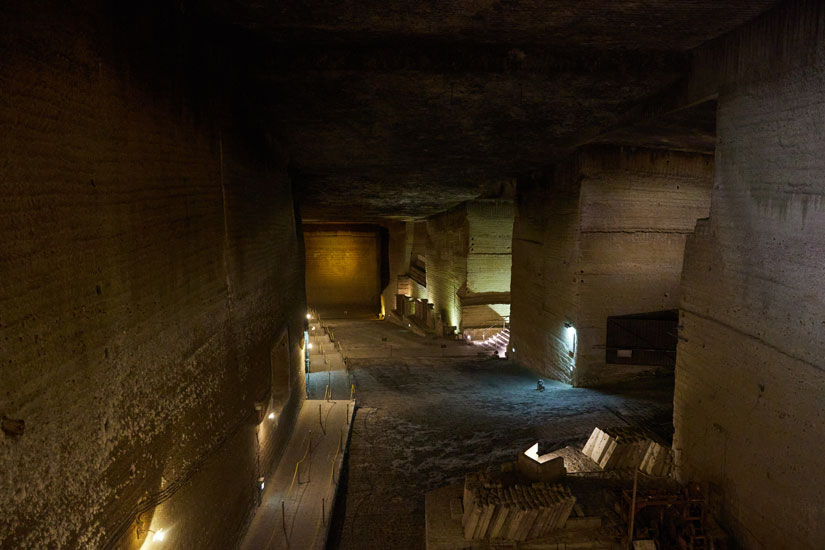
Oya Stone, quarried in the Oya district of Utsunomiya City. Known for its fire resistance and softness, making it easy to work with, it is widely used as a building material. The Oya Stone Museum allows visitors to explore the former quarry sites. Its breathtaking, massive underground space, reaching 30 meters below ground, captivates all who see it.
Oya, the Stone Town: Where Stone and Nature Weave a Unique Landscape
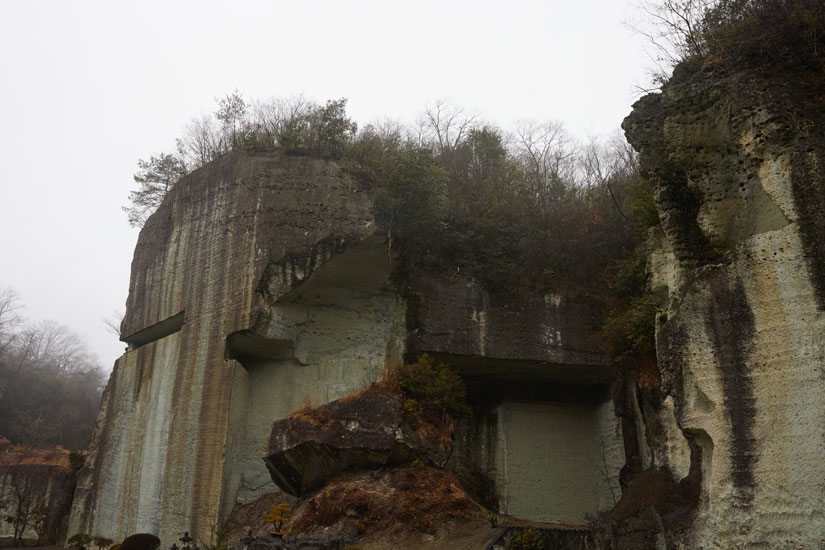
About a 25-minute drive from central Utsunomiya City. The scenery of dense buildings suddenly changes, arriving in an area surrounded by greenery and mountains. Though called mountains, it’s a unique landscape resembling rocky hills. This is the major production area for Utsunomiya City’s specialty, “Oya Stone,” known as the “Stone Town of Oya.”
What is “Oya Stone”?
Oya Stone is a tuff rock formed by volcanic eruptions 20 million years ago. It is named after the Oya district in Utsunomiya City, where it is primarily quarried.
Its softness and workability have made it a long-used building material; many stone walls and old storehouses in the prefecture are built with Oya Stone. It also offers fire resistance and humidity-regulating properties, and its natural texture is highly popular. In recent years, it’s increasingly used as interior material in homes and shops. For those living in Tochigi Prefecture, “Oya Stone” is a very familiar stone, known to almost everyone.
Oya Stone Used in the Former Imperial Hotel
Full-scale quarrying of Oya Stone is said to have begun around the middle of the Edo period. At that time, without machinery, miners used pickaxes and manually extracted the heavy stones by hand. While it was primarily used for shrines, temples, Utsunomiya Castle, and private home walls within the prefecture, the quarrying industry grew significantly after the Meiji period with the development of transportation methods like railways. Shipments increased substantially to areas like Tokyo and Kanagawa.
In 1922 (Taisho 11), Frank Lloyd Wright, an American architect known as one of the “Three Great Masters of Modern Architecture,” utilized Oya Stone in the main building (the Wright Building) of the former Imperial Hotel in Hibiya.It is said that Oya Stone was chosen because sufficient quantities for the construction could be secured and because of its softness, which made it easy to carve intricate details. Shortly after the Imperial Hotel opened, the Great Kanto Earthquake struck. The hotel suffered minimal damage during the quake, demonstrating the stone’s excellent seismic and fire resistance. This led to the widespread recognition of the name “Oya Stone.”
Subsequently, the introduction of mining machinery and increased construction demand during Japan’s period of rapid economic growth combined to bring the industry to its peak in the 1960s. Annual shipments reached approximately 890,000 tons, with mining operations conducted at about 120 sites.
The Oya Stone Museum: The Core of Tourism in the Oya District
Parallel to the development of the Oya Stone industry, the Oya district also grew as a tourist destination. In 1956, a massive 27-meter-tall “Peace Kannon” statue was carved into the wall of a quarry south of Oya Temple, where Japan’s oldest stone Buddha is carved into a rock face. This attracted many visitors to Oya, leading to an increase in souvenir shops, restaurants, and drive-ins in the surrounding area.This further accelerated its transformation into a tourist destination. Meanwhile, however, demand for Oya Stone gradually declined, influenced by factors like the diversification of building materials. Amidst this, the Oya Stone Museum emerged as a privately run facility opening the former quarry site to tourists. This was back in 1978, over 45 years ago.
A breathtaking underground space created by human hands
Our guide through the Oya Stone Museum was its director, Mr. Yasutoshi Okubo.
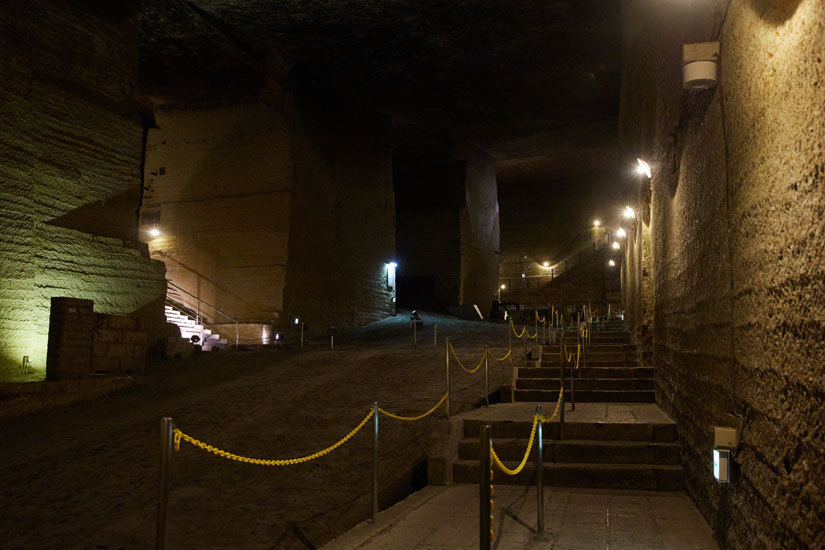
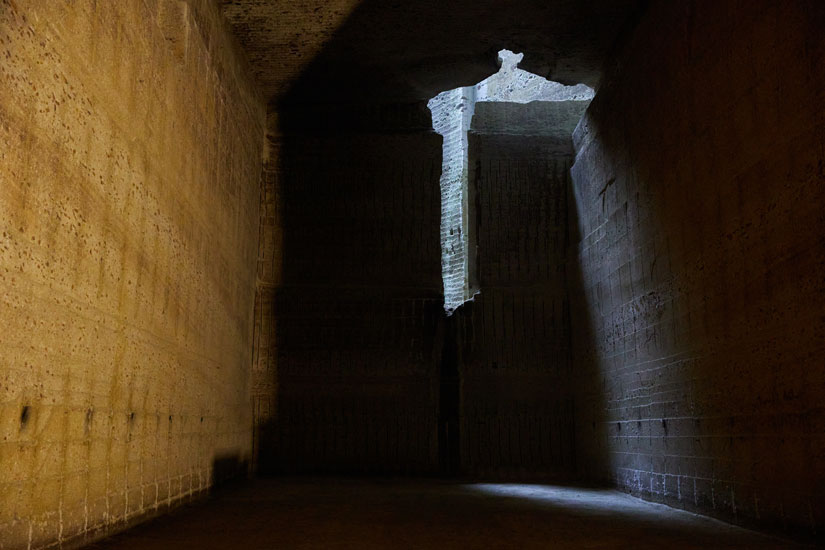
Visitors can walk through the vast underground quarry ruins, located 30 meters below ground and spanning an area of 20,000 square meters. The interior remains cool and refreshing, even in midsummer, with an average annual temperature of around 8°C (51°F). The towering rock walls are etched with numerous fine, line-like marks, which are the traces left from cutting the stone.
The Oya Stone Museum operated as an actual quarry for approximately 70 years, from 1919 (Taisho 8) to 1986 (Showa 61) (quarrying is no longer conducted). Until around 1960 (Showa 35), workers used pickaxes to extract stone, sometimes carrying heavy stones weighing nearly 120kg out on their backs using a “shoiko” (backpack).Later, mining machinery like chainsaws was introduced, enabling more efficient extraction of larger quantities of stone. Observing the rock face from top to bottom, the upper section appears uniformly pitted and uneven, transitioning to a flatter surface with sharp, knife-like cuts in the middle to lower sections.
Looking further up, the ceiling appears sooty black. Mr. Okubo believes this is likely due to stonemasons burning fires to keep warm in the cold underground caverns.
It is not a modern, large-scale structure reflecting the latest technology. Yet it is also distinct from a natural limestone cave. The Otani Museum allows visitors to experience a unique space and history born from the fusion of natural rock and human effort.
More than just sightseeing: Utilization as a wedding and event venue
Since opening in 1978, the Oya Stone Museum has remained a core tourist attraction in the Oya district. Its convenient location along the route to Nikko made it a popular stop for field trips and school excursions for students both within and outside the prefecture.
Its fame also grew through being used as a filming location for movies, TV shows, and music videos. Oya Stone’s fire resistance has made it suitable for filming scenes involving fire. Numerous photos documenting these productions are displayed inside the quarry, often drawing curious visitors who exclaim, “So that movie was filmed here?”
Many companies also seek to utilize this mysterious underground space for product promotions and events. It has been used for receptions for cars, watches, and global luxury liquor brands.
Furthermore, it is possible to hold weddings by specially opening non-public areas. Natural light streaming through an opening above and candlelight alone create a fantastical and solemn atmosphere, making for unforgettable memories. By responding to diverse needs beyond just sightseeing, it has become a representative spot of Oya.
Declining Tourist Numbers, Closure Due to the Earthquake. The Decline of the Ōtani District
The “Oya Stone Museum” established its unique presence as a tourist facility. However, this success was limited to the museum itself. For the Oya district as a whole, a rapid decline began in the early Heisei era.
One cause was the ground collapse accident in 1989. Shocking footage of the large sinkhole left people with the impression that “Oya is dangerous,” tarnishing the entire region’s unique beauty—where one could normally enjoy abundant nature and mountains revealing Oya stone rock faces. Furthermore, demand for Oya stone as a building material declined year by year due to cheaper foreign alternatives, and the number of quarry operators steadily decreased.Surrounding restaurants and lodging facilities also withdrew, and it was inevitable that tourists would stay away from an area with fewer attractions and activities. The sight of numerous tour buses and people walking the streets diminished, making the former bustle seem like a distant memory.
Even so, the Otani Museum managed to continue operating as a tourist facility, thanks to its uniqueness and the impact of being able to tour the vast underground spaces.
Amidst this situation, the Great East Japan Earthquake struck in 2011.
Utsunomiya City, where the Oya Museum is located, recorded a seismic intensity of 6 upper, and the damage to the area was extensive. This unprecedented disaster led to the decision to close the Oya Museum.
Many people misunderstood the reason for this closure, assuming it was due to physical damage from the earthquake. However, that was not the case. The interior of the Otani Museum was exceptionally sturdy, having been used as an underground military aircraft factory during the war, and suffered no physical damage from the quake. The then-director decided to close the museum to prevent visitors from being startled by aftershocks, potentially causing injuries or anxiety.
Regardless of the reason, the closure of this representative tourist facility in the Oya district accelerated the area’s decline. With no prospect of reopening and the owner at the time considering selling the business, it was Mr. Okubo’s father, Keiichi, who took over management to reopen the museum and preserve it for future generations.
The Path to Revival as a Tourist Spot
Keichi, who had previously run a civil engineering and stone business in the Oya district, took on this unfamiliar venture in a visibly declining area. It seemed a reckless move. Yet, Keichi was driven by a strong desire: “I want to bring back the Oya of the past, bustling with people.” He was spurred on by his own earnest wish to see once again the vibrant scene of the area where he grew up.
Mr. Okubo, who was working outside the prefecture at the time, also resonated with his father’s vision. To help his increasingly busy father, he decided to return to Ōtani, the place where he was born and raised.
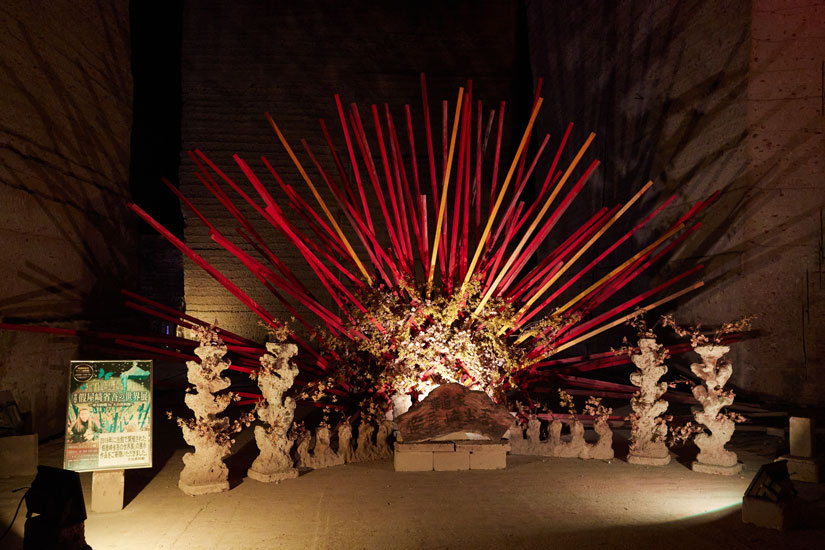
Thus began days of trial and error for father and son. They explored various initiatives. Among them, an exhibition of works by flower arrangement artist Shogo Kariyazaki drew significant attention. Combined with events like collaborations with popular anime, these efforts increased awareness of the museum. Furthermore, allowing photography—previously prohibited—made the museum a popular photogenic spot. (※Photography exceeding two hours without permission, and the use of tripods, selfie sticks, or other photography equipment is prohibited.)
Parallel to these efforts, the entire Otani area saw a gradual recovery in visitor numbers. Driven by people wanting to “bring back the old bustle,” events were held and new shops opened. Today, annual attendance exceeds 450,000, and the area has regained its vibrancy, with buses carrying overseas tourists visiting daily.
To ensure visitors feel safe exploring this unique underground environment
Mr. Okubo explains that managing this unique underground environment presents many challenges.
Humidity inside is extremely high, consistently around 80%. Electrical systems are prone to corrosion, requiring meticulous attention to prevent leaks. During typhoons or heavy rains, massive amounts of water flood in, sometimes requiring three full days of pumping to remove it.
Additionally, when bringing vehicles in for events, they must be vigilant about carbon monoxide poisoning.
In recent years, to alleviate concerns about crowding underground, they introduced a machine at the entrance that counts the number of visitors. They also installed infection control equipment that displays the number of people inside in real time.
Amidst these efforts, the utmost focus remains on ensuring safety. Oya stone is lightweight and prone to cracking, so skilled craftsmen conduct monthly inspections to check for any new cracks. They also regularly monitor the width of existing cracks in the non-public underground areas to ensure visitors can enjoy their tour with peace of mind.
Today, not only have tourist numbers increased, but companies and organizations nationwide are continuously proposing events and projects. “We allow the use of fire, but we ask them to refrain from explosions,” says Mr. Okubo with a slightly troubled smile. Yet, he clearly takes pleasure in seeing the museum bustling with visitors once more.
Moving forward with Oya
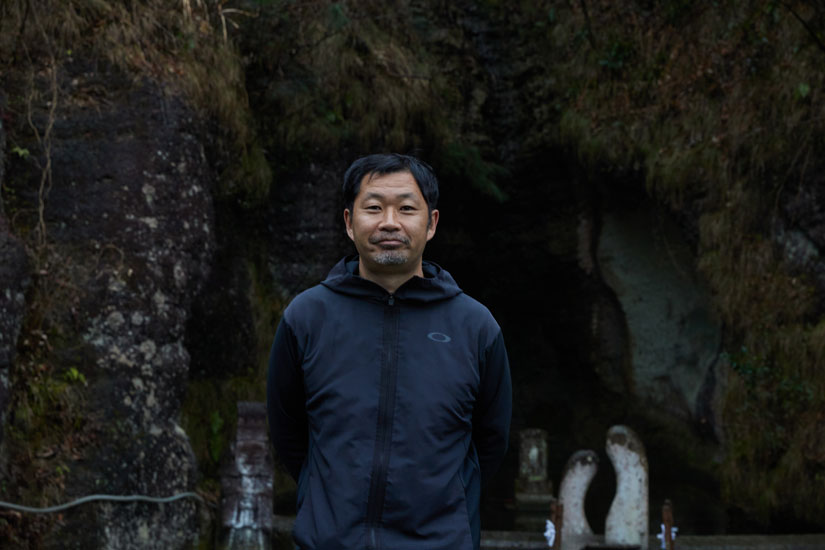
“I believe this place is truly unique, even on a global scale,” says Mr. Okubo. While many visitors come to see locations from their favorite films, he adds, “I’d be happy if children also learned about the history of how people used their minds and hands to mine here in the past.”
In the past, many visitors to the Oya district would leave after seeing the Oya Stone Museum. Over the last decade or so, stylish restaurants and shops have opened up around the area, revitalizing the entire Oya district into an enjoyable destination. This transformation was driven by people like Mr. Okubo and his son – individuals who remembered Oya’s former vibrancy, believed in its potential for revival, and dedicated themselves to making it happen.
Mr. Okubo’s life in tourism began when his father raised his hand. It was something he never expected, but now he finds daily joy in meeting all kinds of people.
“I’d like to expand the tour routes, but safety considerations make it difficult. Still, the scenery above ground is beautiful in every season, not just underground. After visiting the museum, I hope people will explore the entire Oya area,” says Mr. Okubo.
It’s not just about the “Oya Museum”; it’s about many people visiting the Oya district and the entire area thriving. That is surely the wish of the people who have witnessed the rise and fall of this land.