
Pearls have traditionally been valued in the market for their “perfect roundness.” Nami Yamashita, who crafts her own cultivated pearls into jewelry and sells them under her original brand “L’ de pearl,” creates unique value by discerning the individual character of each pearl and bringing out its charm, rather than focusing solely on market value.
Yamashita Pearl: Three Generations of Pearl Cultivation in a Nationally Renowned Production Area
Founded in 1963, Yamashita Pearl Co., Ltd. is a long-established pearl farming business in Uwajima City, one of Japan’s premier pearl production areas, where the family has cultivated pearls for four generations. Nami Yamashita, the fourth-generation head, initially had no clear intention of joining the family business. After graduating from university, she took a job at a general company in Hiroshima Prefecture. However, around that time, the novel coronavirus began spreading, making it impossible not only to go to work but even to return to her hometown.Amidst this, casual remarks from her boss and business partners—things like “Having a family business is really something, isn’t it?”—became the catalyst. She began thinking about returning home to help with the family business. Around the same time, her younger brother, Yuhei, who had been working as a salaryman outside the prefecture, also returned to Uwajima. This led the family to join forces and dedicate themselves to pearl farming.
One day, Nami was asked by a friend, “Where can I buy pearls from Yamashita Pearls?” That casual question made her realize she didn’t know where or how the pearls they cultivated were being sold after being processed into jewelry by manufacturers.”We want to deliver the pearls we cultivate with our own hands.” Driven by this desire, they resolved to handle everything from accessory processing to sales themselves. Then, in 2023, while continuing to assist with pearl farming, they launched their own jewelry brand, “L’ de pearl,” using their company’s pearls. They create and sell accessories that showcase the inherent beauty of pearls, free from conventional values.
We want to convey the true beauty of pearls, something only producers can understand
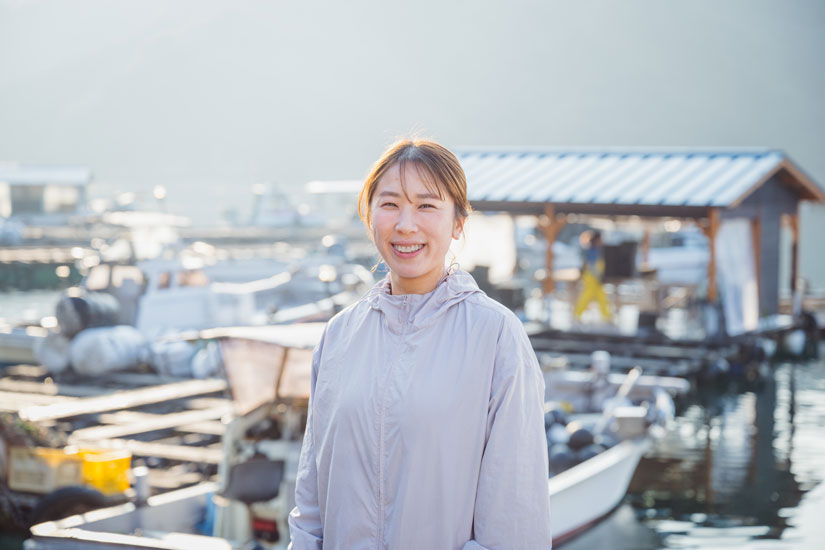
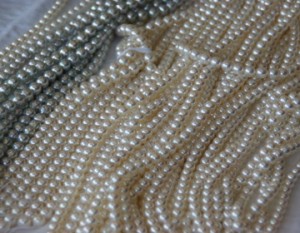
Pearls are natural gems nurtured over time within the Akoya oyster. No two pearls share the same color, shape, or luster. Yet, pearls have long been judged by a standard that prioritizes perfect roundness above all else. No matter how beautiful their sheen or luster, or how uniquely shaped, pearls that don’t meet this ideal are not recognized as valuable in the market.Through her work in pearl cultivation, Nami grew to feel sympathy for these pearls, which in a sense have been treated unfairly. Her desire for others to recognize their charm led to the founding of “L’ de pearl”.
The name “L’ de pearl” originates from the German word “erde,” meaning “earth, land, or specific territory.” It was chosen to embody the belief that the pearls, nurtured robustly and beautifully in the waters of Uwajima—blessed with ideal conditions for pearl cultivation—carry within them the life force of the Akoya oyster and the deep affection of the people who carefully cultivate them.
Her grandfather, the first generation, was a pioneer of pearl cultivation in this region.
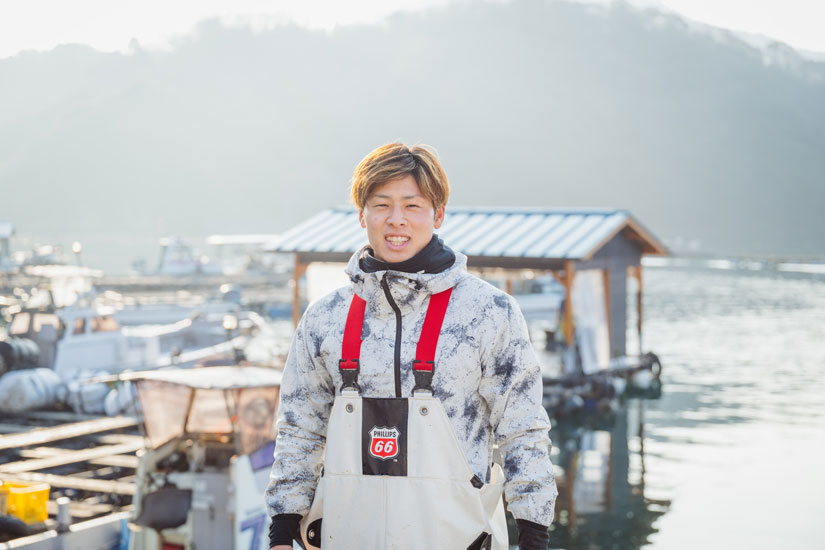
The Yamashita family began pearl farming here about 65 years ago, dating back to Nami’s great-grandfather and grandfather. Pearl farming originated in the Ise-Shima region of Mie Prefecture and gradually spread nationwide, including to Uwajima City.Pearl farmers from Mie Prefecture ventured into the Uwa Sea. Starting with mother-of-pearl harvesting work, Nami’s grandfather later learned pearl farming techniques, becoming part of the first generation of pearl farmers in this area.
In recent years, the Uwa Sea area, including Uwajima City, has seen a decline in production compared to its peak due to issues like mass deaths of Akoya oysters, an aging workforce, and a lack of successors. However, new business developments are also advancing, such as pursuing even higher quality and implementing brand strategies.
Amid these environmental changes, Yuhei Yamashita is now the pillar supporting the Yamashita family’s pearl farming.
Currently at the center of the Yamashita family’s pearl farming operations, Yuhei says, “Even with the same mother oyster, the same nucleus, the same sea, and the same cultivation methods, differences emerge depending on the producer. In the past, techniques and know-how were kept secret, but that trend is fading now.I’m a rookie in my fourth year of pearl farming. With the fearlessness of a newcomer, I’m eagerly asking questions everywhere,” he says with a laugh. It is precisely because they are diligently cultivating pearls through their own trial and error that they can sensitively perceive the unique beauty of each individual pearl.
Rich hues and beautiful luster created solely by nature’s power
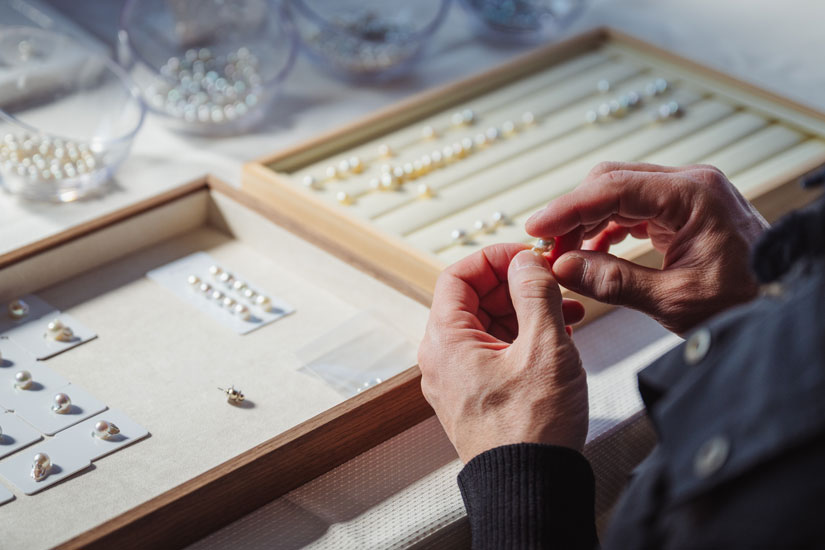
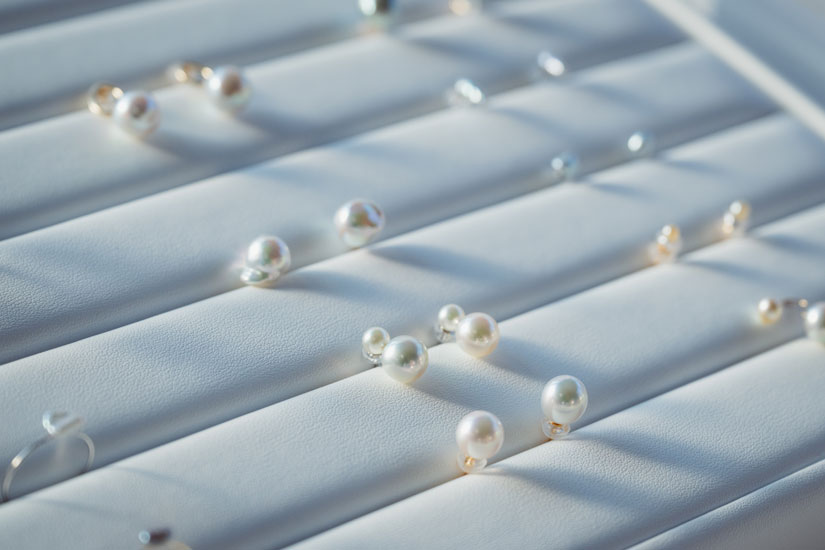
Generally, pearls are valued for being perfectly round, free of blemishes or dimples, and possessing a strong luster. However, such pearls account for less than 1-2% of the tens of thousands harvested annually. Therefore, “L’ de pearl” actively uses pearls with unique individuality, even if they lack conventional market value, transforming them into jewelry.While occasionally using near-round pearls, the collection primarily features uniquely shaped pearls like baroque, drop, and feathered varieties. Furthermore, only the processing necessary to preserve the pearl’s quality is applied, allowing the wearer to enjoy the rich, natural hues with their subtle variations.Because these distinctive pearls are designs in themselves, we consciously use small, delicate components to highlight their beauty. This reflects Nami’s vision: “Precisely because these aren’t pearls that easily grow into conventional beauty, I want them to be pieces cherished and passed down across generations.”
To convey this vision directly, she has carefully crafted her sales approach. While primarily sold through her online shop, she also participates in pop-up stores and events. Her semi-custom service, where customers select their favorite pearl from a variety of colors, shapes, and sizes to be made into jewelry, is particularly popular.
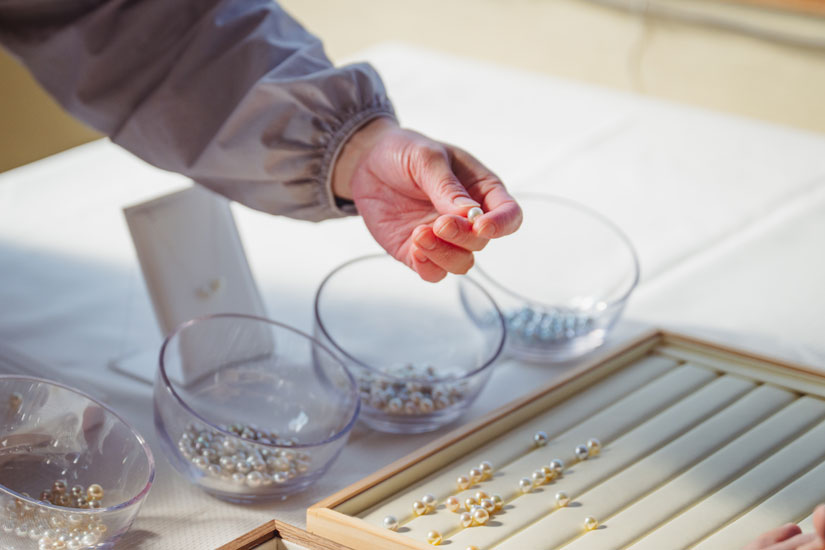
While driven by a desire to bring recognition to previously undervalued pearls, Nami maintains the pride of a professional from a long-established pearl farming business, working with pearls daily. She insists on uncompromising standards for the deep luster, sheen, and color beauty characteristic of Akoya pearls, even if their shape is irregular.”Seeing customers select each pearl individually—whether for themselves as a one-of-a-kind treasure or as a gift for someone special—brings me joy. It’s a moment of pure happiness,” says Nami. She continuously experiments with designs and pricing to make pearls accessible not just for formal occasions, but also for everyday wear.
Transforming a pearl, one of a kind in the world, into someone’s special radiance
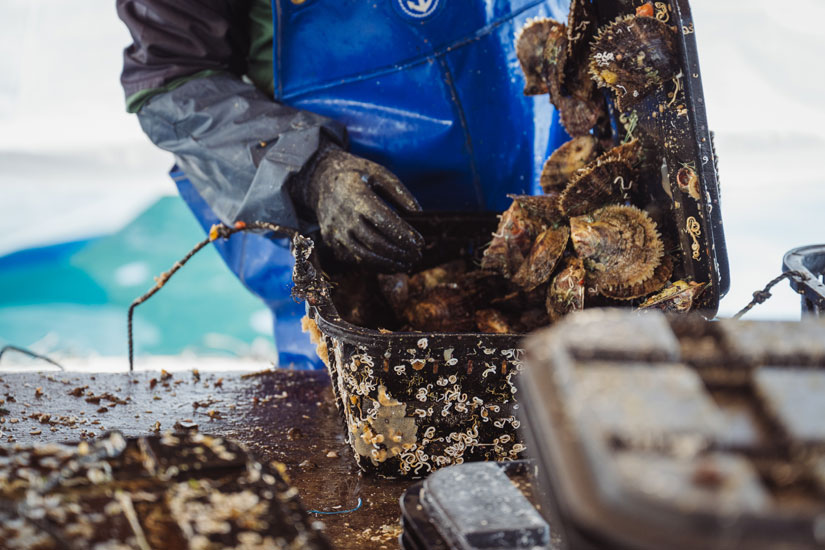
“There are countless pearl accessories in the world. That’s precisely why defining our unique selling point is challenging,” Nami reflects. “But I believe our greatest strength lies in using pearls we’ve cultivated ourselves. Because of this, we deeply understand the inherent beauty of pearls and know how to bring it out.” Guided by this philosophy, she began with online sales via social media, gradually expanding her reach through pop-up events, temporary sales at rental spaces, and limited-time pop-up stores.
Amid these efforts, the brand has also expanded, launching the “NAMIOTO COLLECTION.” This line features deeply blue pearls selected from the diverse array of pearls they cultivate, the name blending Nami’s name with the Japanese word for ocean waves.
This shift has also impacted the pearl farming operations. Yuhei shares, “I used to be desperate to cultivate perfectly round, white pearls with excellent nacre. But after my sister started making jewelry, I realized I didn’t have to be so fixated on existing standards of value. Knowing they could be utilized in new ways made me feel more at ease. At the same time, it also fueled my desire to cultivate even better pearls.”As times change, so do the nature of fishing and people’s values. In this era of diversity, L’de pearl’s accessories may well become cherished by many, regardless of age or gender.